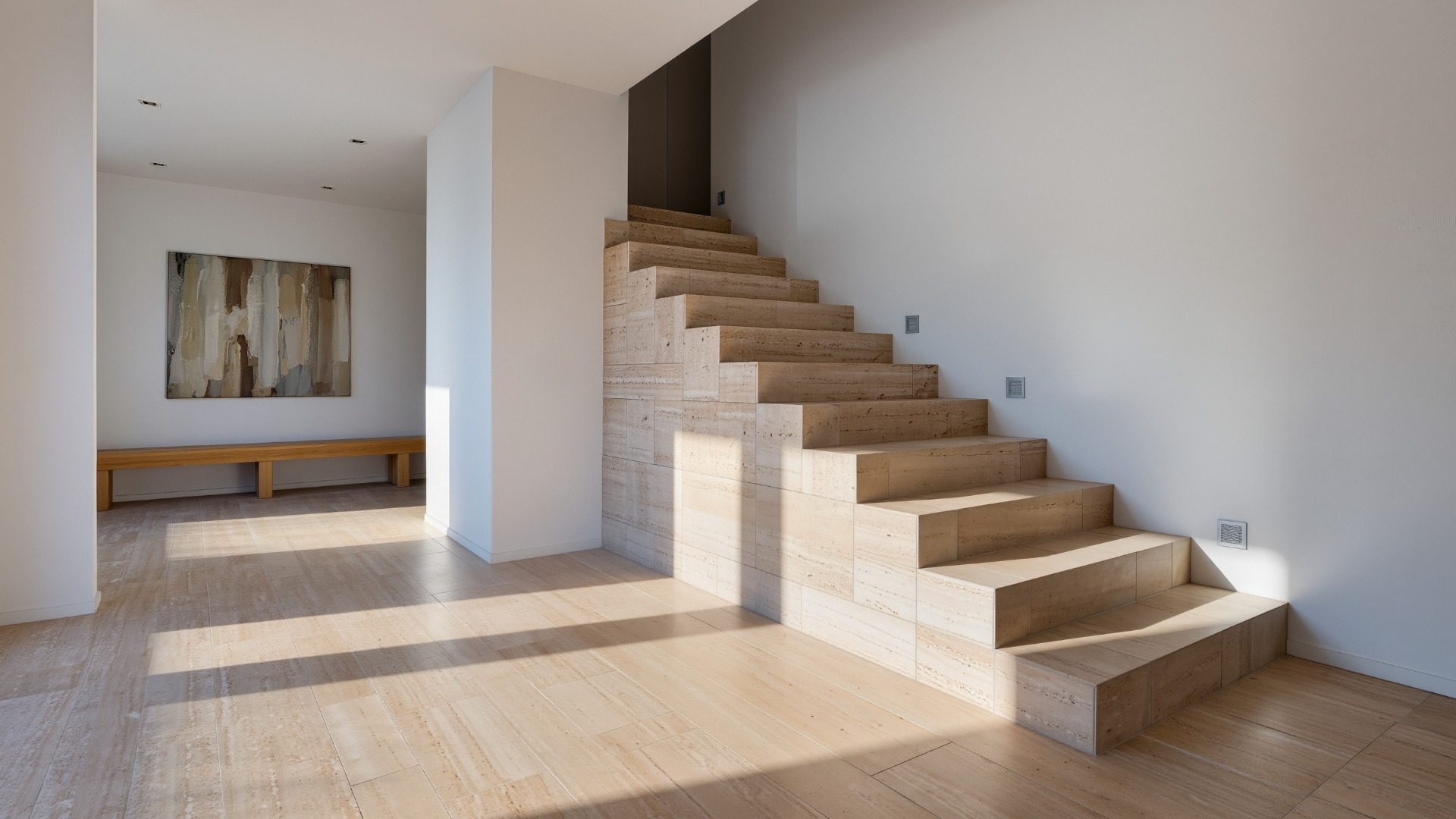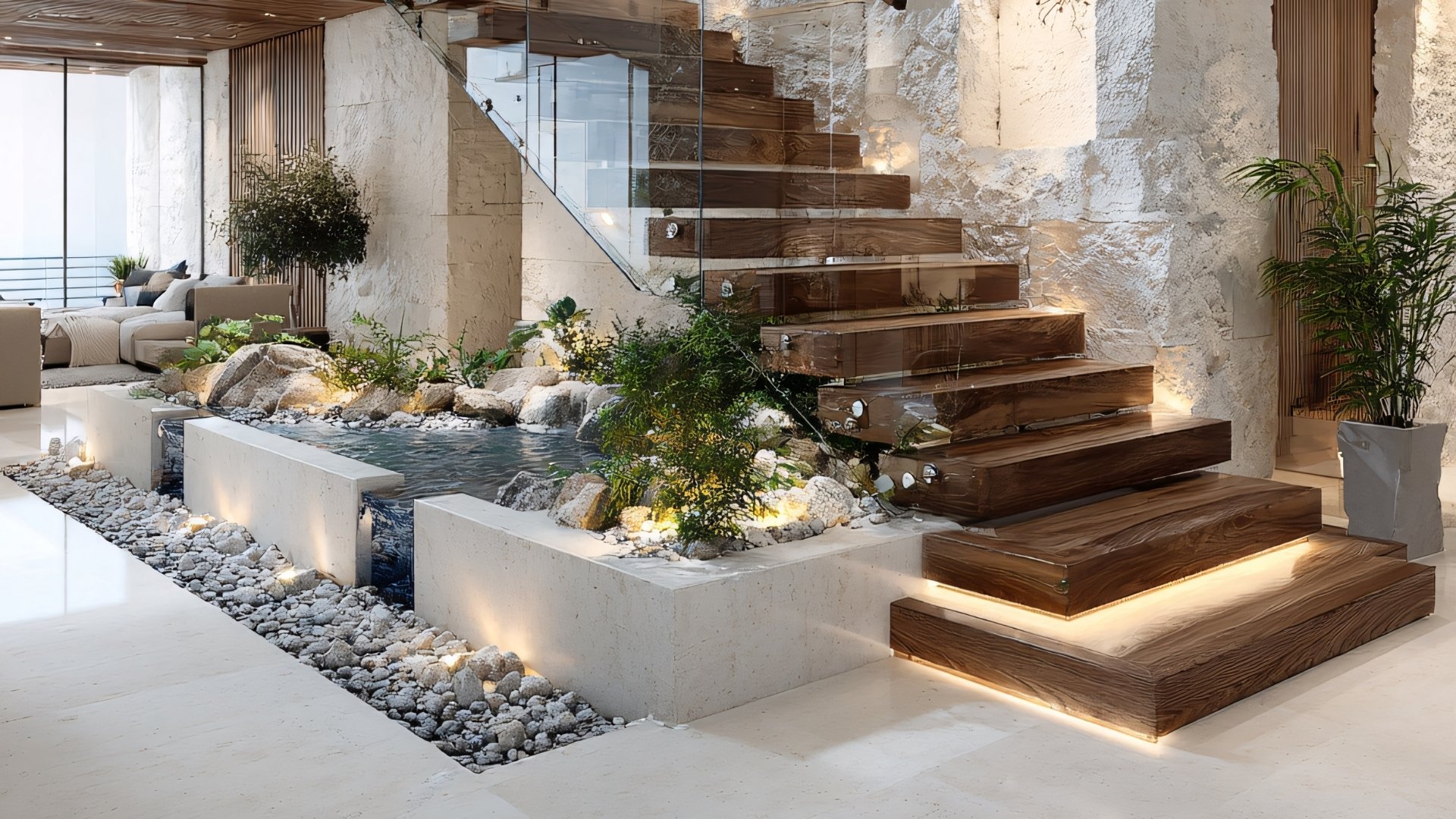
Whether you're building new, renovating, or simply refreshing your space, the right staircase can elevate your home's aesthetic while improving functionality. This guide covers 20 distinct staircase ideas organized by style and function, suitable for a range of home types, budgets, and design preferences—from sleek floating metal stairs to classic carpeted runners and creative painted risers.
Key Takeaways
- Staircases function as both practical connectors and striking visual centerpieces
- Design options range from modern floating metal stairs to classic wood-and-iron combinations and decorative tiled risers
- Material choices—metal, wood, glass, stone—dramatically shape the staircase's overall feel and durability
- Targeted upgrades like LED lighting and accent risers can refresh existing stairs without a full rebuild
- Selecting the right design depends on layout, ceiling height, available space, and interior style
Modern & Floating Staircase Ideas
Modern and floating staircase designs prioritize openness, clean lines, and architectural drama—making them especially popular in contemporary homes with open floor plans. These designs allow light to flow freely, create visual breathing room, and often become the focal point of an entryway or living area.
Floating Open-Riser Metal Stairs
Open-riser metal stairs create a sense of airiness by eliminating the vertical riser between treads, allowing each step to appear as though it's floating. Light passes through the stairwell, making narrow spaces feel larger and brighter. Metal stringers—whether powder-coated steel or stainless steel—paired with wood, stone, or metal treads are the hallmark of this look.
Acadia Stairs builds custom metal staircases in three stringer configurations, each suited to different widths and aesthetics:
- Single-stringer: Heavy-duty center beams (4×6 or 6×8 steel rectangular tube) rated for 300 lbs per tread—the most open look available
- Double-stringer: Recommended for stairs wider than 48 inches, balancing openness with structural support
- Side-stringer: Channels run along the outer perimeter for added strength in high-traffic applications
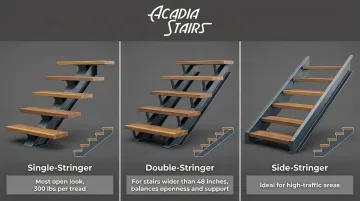
Tread options include red oak, white oak, maple, walnut, stone, and glass.
Critical code consideration: Open-riser stairs must comply with the 4-inch sphere rule, which prevents openings large enough for a child to slip through. Designers often use metal bars, glass panels, or partial risers to maintain the open aesthetic while meeting safety standards.
Spiral Staircase
Spiral staircases are the ultimate space-savers, fitting into footprints as small as 5 feet in diameter while ascending multiple stories. They work exceptionally well in tight floor plans or as secondary staircases connecting lofts, mezzanines, or rooftop decks. Beyond their practicality, spirals double as sculptural focal points—especially when fabricated in metal with custom finishes.
Acadia Stairs offers both custom spiral staircases and ready-to-go kits in 4-foot and 5-foot diameters. Custom spirals can be fabricated in one piece or as kits, with tread options including smooth plate, diamond plate, wood, stone, or glass. Their exterior spiral stairs use marine-grade stainless steel hardware and weather-resistant coatings to withstand harsh conditions.
Glass Panel Railings
Replacing traditional balusters with frameless or semi-frameless glass panels opens up sight lines, makes narrow stairwells feel larger, and suits both modern and transitional interiors. Glass railings are especially effective in homes with limited natural light or small footprints.
Safety standards: The IBC 2021 mandates that glass used in guards must be laminated or fully tempered to prevent shattering. Laminated glass is often required because the interlayer holds shards together if breakage occurs, maintaining the barrier. All glass panels must be permanently marked with the manufacturer's mark and safety standard compliance.
Acadia Stairs fabricates custom panel railing systems that accommodate glass panels, integrating seamlessly with their metal stringer systems. Customers can choose from various framing options to achieve the desired level of transparency.
Cantilevered Staircase
Cantilevered stairs are anchored into a central wall or stringer with no visible underside support, creating a dramatic, gravity-defying appearance ideal for high-ceiling entryways. Each tread appears to float independently, maximizing visual openness beneath the staircase.
Acadia Stairs' single-stringer floating stairs use heavy-duty center beams to achieve this effect. The structural steel construction handles substantial loads while preserving the clean, minimalist appearance cantilevered designs require. The area beneath stays open and unobstructed—useful as storage, a reading nook, or simply open floor space.
Switchback / Multi-Flight Design
The switchback layout features two parallel flights connected by a landing, creating a dynamic visual moment while working efficiently in taller homes. This configuration is particularly effective when combined with cable or rod railing infill, which maintains openness while meeting safety requirements.
That same layout also solves a common floor plan constraint: where a straight run would eat up too much horizontal space, a switchback keeps the footprint compact. The mid-flight landing doubles as a functional pause—a reading nook, display shelf, or simply a place to catch your breath.
Classic & Traditional Staircase Ideas
Traditional staircase designs offer timeless appeal and complement colonial, craftsman, Victorian, and farmhouse-style homes. These designs emphasize warmth, detail, and craftsmanship while maintaining functional durability.
Straight Staircase with Wood Treads and Painted White Risers
This is the most common staircase configuration in residential homes. Painting risers white while keeping treads in natural wood creates a clean, classic contrast that works with most interior color palettes. The combination brightens the stairwell while showcasing the natural grain of hardwood species like oak, maple, or walnut.
Cost consideration: Hardwood stairs average $2,400, with red oak being the most popular choice due to its durability and affordability. Premium woods like walnut or mahogany increase costs but offer richer tones and distinctive grain patterns.
Grand Curved Staircase
A curved or sweeping staircase creates immediate elegance and drama, most often associated with formal entryways in traditional or luxury homes. Unlike spiral stairs with a central pole, curved stairs follow a gentle arc with a continuous handrail.
Curved designs require custom fabrication and professional installation due to their complex geometry. Acadia Stairs builds custom curved staircases with heavy structural steel stringers, allowing clients to specify tread material, finish, and railing profile — so the staircase integrates with the entryway rather than simply occupying it.
L-Shaped Staircase with Wainscoting
The L-shaped (quarter-turn) layout is a practical, space-efficient option that changes direction 90 degrees at a landing. Adding wainscoting along the staircase wall ties the design back to the home's overall millwork and elevates the look, creating visual continuity with adjacent rooms.
It also protects walls from scuffs and foot traffic damage — a practical payoff that comes alongside the texture and depth it adds to the stairwell. Painted in classic white or a contrasting color, wainscoting works equally well in traditional and transitional interiors.
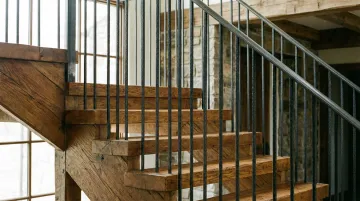
Farmhouse-Style Staircase with Wood Treads and Iron Balusters
Pairing warm, natural wood treads with dark wrought iron or powder-coated steel balusters achieves the popular modern farmhouse aesthetic — warm and grounded, but sharp enough to read as intentional design rather than reclaimed salvage. The wood-to-metal contrast does the visual work without relying on ornament.
Acadia Stairs produces farmhouse-style staircases with two railing directions: ornamental wrought iron with curves and loops for a more romantic feel, or powder-coated steel with clean lines for a leaner look. Wood tread options come pre-sanded and ready to stain or finish:
- Red oak
- White oak
- Maple
- Cherry
- Mahogany
- Walnut
Staircase with a Carpet Runner
A well-chosen carpet runner adds warmth, reduces noise, and introduces texture and color to wood or painted stairs. Runners also improve traction, reducing slip hazards on polished treads.
Acoustic benefits: Research by the Carpet and Rug Institute confirms that carpet significantly reduces impact noise. Installing carpet with cushion can increase the Impact Noise Rating (INR) and Impact Insulation Class (IIC), with wool runners achieving Noise Reduction Coefficient (NRC) values as high as 0.7.
Popular runner materials include:
- Wool: Durable, naturally flame-retardant, excellent acoustic properties
- Seagrass: Textured, casual, eco-friendly
- Synthetic (nylon/olefin): Stain-resistant, affordable, available in countless patterns
Creative & Statement Staircase Ideas
A staircase and its surrounding wall offer a canvas for personal expression. These creative approaches transform ordinary stairs into memorable design moments without requiring structural changes.
Bold Color-Drenched Staircase
"Color drenching" involves painting the entire stairwell—walls, ceiling, trim, and risers—in the same bold hue. This technique blurs boundaries between architectural elements, making small or awkward stairwells feel larger and more cohesive — all without touching the structure.
Deep jewel tones, forest greens, navy, or charcoal create dramatic, cocoon-like atmospheres. Major paint brands like Farrow & Ball promote this style, often using different finishes (matte for walls, gloss for trim) of the same color to add depth while maintaining the monochromatic effect.
Alternating Painted Riser Colors
If full color drenching feels like too much commitment, alternating riser colors let you introduce personality one step at a time. This technique uses two complementary or contrasting paint colors on alternating risers — works especially well on traditional open-baluster staircases with white or natural wood treads.
Color combinations to consider:
- Navy and white for nautical charm
- Charcoal and pale grey for modern sophistication
- Sage green and cream for soft contrast
- Black and white for graphic impact
Tiled Staircase Risers
Patterned or solid ceramic tiles applied to the vertical face of each riser add texture, color, and Mediterranean or bohemian character. Tile is resistant to scuffs and kicks, protecting the riser from wear while creating a decorative focal point.
The range of available tile options—from hand-painted artisan tiles to durable ceramic prints—allows customization from rustic farmhouse to sleek modern. Spanish Colonial and Mediterranean interiors are natural fits, but the look translates to eclectic and bohemian spaces just as easily.
Staircase Accent Lighting
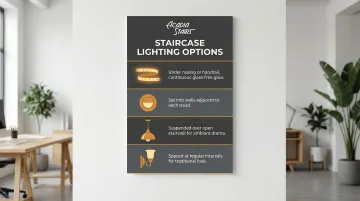
Strategic lighting serves both aesthetic and safety purposes. IRC Section R303.7 requires interior stairways to be illuminated to at least 1 foot-candle measured at the center of treads and landings, with wall switches required if the stairway has six or more risers.
Popular lighting options:
- LED strips tucked under nosing or along handrails for continuous, glare-free illumination
- Recessed step lights set into the walls adjacent to each tread
- Pendant fixtures suspended over open stairwells for ambient light and visual drama
- Wall sconces spaced at regular intervals for a more traditional look
Wallpaper or Mural Feature Wall
Hanging bold wallpaper or a mural along the staircase wall is one of the fastest ways to transform a stairwell. The vertical height of these walls makes them ideal for oversized botanical prints, geometric patterns, or photographic murals that wouldn't work elsewhere.
Scale matters here — large patterns read well on staircase walls, while small, busy prints can feel chaotic as you move up. Removable wallpaper is a low-commitment option for renters or anyone who likes to refresh their décor without permanence.
Functional & Space-Smart Staircase Ideas
Beyond aesthetics, well-designed staircases work intelligently within their footprint—especially important in smaller homes where every square foot counts.
Under-Stair Storage
The triangular void beneath a staircase offers real storage potential. Solutions range from pull-out drawers and wine cellars to hidden powder rooms and reading nooks.
Popular under-stair conversions:
- Built-in shelving for books or display
- Coat closet with hanging rods and shoe storage
- Pet nook with bed and food bowls
- Compact home office with desk and filing
- Beverage station or bar area
The primary constraint is the sloping ceiling. Code dictates that any habitable space placed under stairs must maintain usable headroom at the fixture or work surface.
Built-In Shelving Along the Staircase Wall
Installing open shelving or a built-in bookcase along the staircase wall turns a transitional space into a functional library or display area. This works particularly well in homes with long, straight runs where the wall would otherwise stay blank.
Secure shelves directly to wall studs to handle the weight of books or décor. Vary shelf depths for different items, and add picture lights or LED strips to highlight displayed objects.
Staircase with a Reading Nook or Window Seat at the Landing
A mid-flight landing can be transformed into a cozy reading nook with a built-in bench, cushions, and access to natural light. The result is a quiet retreat built into the home's natural traffic flow.
A few details make the space genuinely usable:
- Throw pillows and a cushioned bench surface for comfort
- A small side table or wall-mounted shelf for books and drinks
- Task lighting or a window-facing bench orientation for natural light
Narrow Staircase Design Tricks
Making a narrow or dark staircase feel more spacious requires strategic design choices:
- Open risers: Allow light to pass through
- Light-colored walls: White, cream, or pale grey reflect light
- Continuous handrail: Sleek profile without bulky newel posts
- Strategic mirrors: Placed on landings to reflect light
- Glass or cable railings: Maintain transparency
- Recessed lighting: Avoids visual clutter of fixtures

The IRC requires a minimum clear width of 36 inches above the handrail height, with allowances for handrail projection below that height.
Outdoor / Exterior Staircase Ideas
Exterior stairs face environmental challenges and must meet specific durability and safety standards. Weather-resistant materials include powder-coated steel, treated wood, stone, and concrete. For custom metal exterior staircases, Acadia Stairs fabricates with hot-dipped galvanized steel, marine-grade stainless steel (#316), and aluminum finished with zinc-rich primer and powder coat for superior corrosion resistance. Tread options include diamond plate for slip resistance, perforated plate for water drainage, and stone or concrete surfaces.
Design considerations:
- Slip resistance: Treads must maintain traction when wet
- Water drainage: Design should shed water to prevent ice buildup
- UV protection: Finishes must resist fading and degradation
- Material expansion: Account for temperature-related expansion and contraction
Concrete steps average $4,800 for a full flight, while metal stairs with protective coatings offer durability with less visual mass.
How to Choose the Right Staircase Style for Your Home
Selecting the right staircase design requires evaluating several key factors before committing to fabrication and installation.
Available floor footprint and ceiling height determine which layouts are viable. Spiral stairs fit into footprints as small as 5 feet in diameter, while straight runs require 12-14 feet of horizontal space. L-shaped and U-shaped configurations work well in taller homes with limited horizontal floor area.
Architectural style should guide material and design choices. Modern and contemporary homes suit open-metal-and-glass designs, floating treads, and clean lines. Traditional, colonial, and farmhouse styles pair better with wood-and-iron combinations, closed risers, and detailed millwork. Transitional homes can blend elements from both approaches.
Material selection carries both aesthetic and practical weight. Hardwood stairs average $2,400, while complex custom designs can exceed $30,000. Steel and glass require professional fabrication but deliver superior durability. Wood provides warmth and traditional character at the cost of ongoing maintenance. Stone and concrete offer permanence but add considerable structural load.
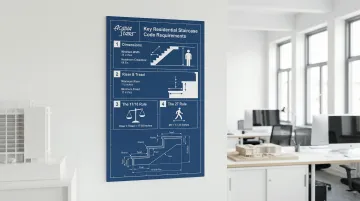
Code compliance sets firm boundaries on what's buildable. Key residential requirements include:
- Minimum clear width: 36 inches; minimum headroom: 6 ft 8 in (spiral stairs: 6 ft 6 in under specific exceptions)
- Maximum riser height: 7¾ inches; minimum tread depth: 10 inches
- The "17/18 rule": riser height + tread depth should equal 17–18 inches for a comfortable climbing rhythm
- The "27 rule" (2R + T = 27) aligns with average human stride length
Working with a custom staircase manufacturer simplifies translating inspiration into a code-compliant result. Acadia Stairs, for example, works directly with homeowners, architects, and contractors to build custom staircases around specific measurements, layouts, and budgets. Their 3D rendering process lets clients approve the design before any metal is cut — a practical step that prevents costly changes later.
Frequently Asked Questions
How can I make my stairwell more interesting?
Quick-impact options include bold paint or wallpaper on the staircase wall, swapping outdated balusters for modern metal ones, adding a statement carpet runner, and installing LED accent lighting beneath treads or along the handrail. None of these require structural changes, making them realistic weekend projects.
What are common stair design rules for stairwells (like the 17/18 and 27 rules)?
The "17/18 rule" requires riser height plus tread depth to equal 17–18 inches for a comfortable walking rhythm. The "27 rule" sets tread depth plus two riser heights at roughly 27 inches, matching average human stride and preventing the awkward "stutter step" effect.
What type of staircase is best for a small home?
Spiral stairs and L-shaped designs consume the least floor area, with spirals fitting into footprints as small as 5 feet in diameter. Open-riser designs and glass railings help smaller stairwells feel more spacious by improving light flow and maintaining visual transparency.
What materials are most popular for modern staircases?
Steel or iron stringers paired with hardwood treads are the most popular combination for contemporary homes. Glass railing panels and stainless steel cable systems are common modern infill choices, creating openness while meeting safety requirements.
What is the difference between open-riser and closed-riser stairs?
Open-riser stairs have no vertical panel between treads, creating a floating appearance and allowing light to pass through. Closed-riser stairs have a solid vertical face, offering a more traditional look and better suitability for homes with young children or pets due to the lack of gaps.
How much does a custom staircase typically cost?
Basic stair replacement averages $2,049 and hardwood installations around $2,400, while complex custom designs—floating, curved, or glass-heavy systems—can exceed $30,000. For an accurate number, getting a quote from a manufacturer like Acadia Stairs based on your specific materials and design is the most reliable approach.