This guide covers why white oak outperforms common alternatives, which railing materials and styles complement it best, design combinations for different interior styles, and key decisions to make before investing in a custom staircase system.
Key Takeaways
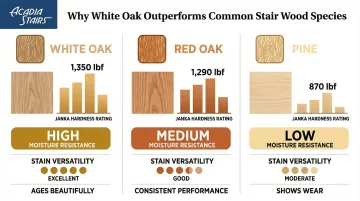
- White oak's 1,350 Janka hardness rating and natural moisture resistance make it more durable underfoot than red oak or softer wood species
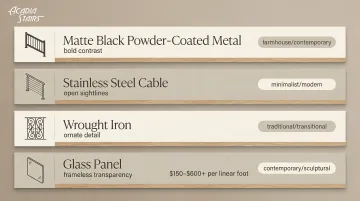
- Matte black powder-coated metal railings create the most popular high-contrast pairing with white oak treads
- For contemporary homes, cable or glass railings keep sightlines open; wrought iron suits traditional interiors
- White oak takes both light natural finishes and deep stains evenly, with minimal blotching risk
- Acadia Stairs custom-fabricates metal railings to exact dimensions, with full control over finish and powder coating color
Why White Oak Is the Premium Choice for Stair Treads
White oak's reputation as a premium stair material stems from measurable performance characteristics, not just aesthetic preference.
Superior Hardness and Durability
White oak registers a Janka hardness rating of 1,350–1,360 lbf, outperforming red oak (1,290 lbf) and well ahead of softer species like pine (870 lbf). In high-traffic stair applications, that gap shows over time—white oak holds its surface integrity while softer woods accumulate dents, heel marks, and visible wear.
Distinctive Grain Structure
The tight, straight grain of white oak creates a refined architectural quality that reads as premium without visual overwhelm. Quartersawn white oak reveals distinctive ray fleck patterns—silvery ribbons that catch light and add depth. The effect is visually interesting without being busy, which suits both spare minimalist spaces and more detailed traditional interiors.
Exceptional Stain Versatility
White oak's neutral wheat-colored undertones and closed-pore structure allow it to accept stains evenly across the spectrum. Unlike cherry or pine, which blotch unpredictably, white oak takes color consistently. That means:
- Light natural finishes bring out warm honey tones
- Deep espresso stains create bold, high-contrast drama
- Gray-toned or whitewashed finishes work cleanly for contemporary palettes
- Wire-brushed finishes add texture without obscuring the grain
Few wood species perform this reliably across such a wide finish range.
Natural Moisture Resistance
White oak contains tyloses—membranous growths that plug the wood's pores—making it significantly less permeable to liquids than red oak. For entryway staircases exposed to wet shoes and outdoor moisture, that cellular structure actively resists water absorption, reducing the risk of warping and surface degradation over time.
Graceful Aging
Unlike softer woods where wear appears as damage, white oak develops a patina that enhances its character over time. The surface acquires depth and warmth through use rather than showing scratches and dents as flaws. Most homeowners find they like their white oak stairs more at year ten than they did at installation—that's a rare quality in any building material.
Premium Railing Styles That Complement White Oak
The railing system serves as the visual counterpart to the tread material. White oak's warmth and natural texture are best balanced by railings that offer contrast, clean lines, or refined industrial character rather than competing wood tones.
Powder-Coated Metal Balusters and Handrails
Matte black powder-coated metal currently dominates as the most popular premium pairing with white oak. The high contrast between warm wood and crisp dark metal creates a modern yet grounded look that suits both farmhouse and contemporary interiors.
Powder coating provides superior durability compared to painted wood balusters—the factory-applied finish resists chipping and scratching while maintaining consistent color across all components. For spaces where high contrast feels too bold, white or warm gray powder-coated railings offer a softer alternative that reflects light and brightens smaller entryways.
Acadia Stairs fabricates fully custom powder-coated metal railing systems to exact dimensions and finish colors. Standard specifications include:
- Standard colors: flat black, white, silver
- Extended palette: Prismatic Powders, Tiger Drylac, RAL Colors, and Rustoleum catalogs
- Panel sections: up to 20 feet long with pre-drilled posts
- Construction: continuous elements welded for seamless installation
Cable and Stainless Steel Railings
Horizontal cable railing with stainless steel posts defines the contemporary minimalist aesthetic. Open sight lines let white oak treads remain the visual focal point, while stainless steel provides a cool, clean contrast to the wood's warmth.
Cable systems prove especially effective in open-concept homes or spaces with views, where solid balusters would block sightlines and close off the space. Custom cable systems from Acadia Stairs use #316 marine grade stainless steel with swaged threaded rod terminals cut to precise lengths for each panel. Finish options include natural stainless, blackened patina, or custom powder-coated colors.
Maintenance considerations: Stainless steel cables require annual cleaning with warm water and mild soap (2-3 times yearly in coastal environments) and periodic tension checks to maintain code compliance.
Wrought Iron Railings
Wrought iron balusters with ornate scrollwork or geometric patterns pair with white oak to create traditional or transitional aesthetics with elevated elegance. White oak's tight grain holds its own visually against intricate ironwork without being overwhelmed—ideal for formal entryways or homes with period-inspired architecture.
Traditional wrought iron railings and decorative iron banisters are part of Acadia Stairs' fabrication capabilities. These systems hold up for decades and can be powder coated in custom colors while preserving the ornamental detail that defines the style.
Glass Panel Railings
Frameless or minimally framed glass panel railings create the most visually dramatic pairing. Transparency allows white oak treads to appear almost as floating planes of warm wood, creating a sculptural effect suited to modern and contemporary interiors.
Cost considerations:
- Frameless glass systems: $400–$600+ per linear foot (thicker glass, specialized hardware, expert installation)
- Framed glass systems: $150–$300 per linear foot (thinner glass, metal support structure)
Acadia Stairs fabricates panel railing systems that accommodate glass with clips welded in place or provisions for customer-supplied hardware. Glass railings require more frequent cleaning than metal systems but provide unmatched visual openness.
White Oak Stair Designs for Every Interior Style
White oak's design versatility is one of its defining advantages. The same wood species reads completely differently depending on stain choice, finish sheen, and railing selection, allowing it to anchor nearly any interior design language.
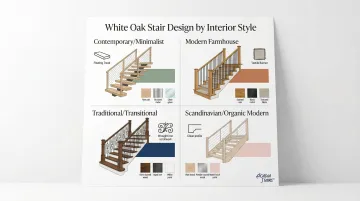
Contemporary and Minimalist
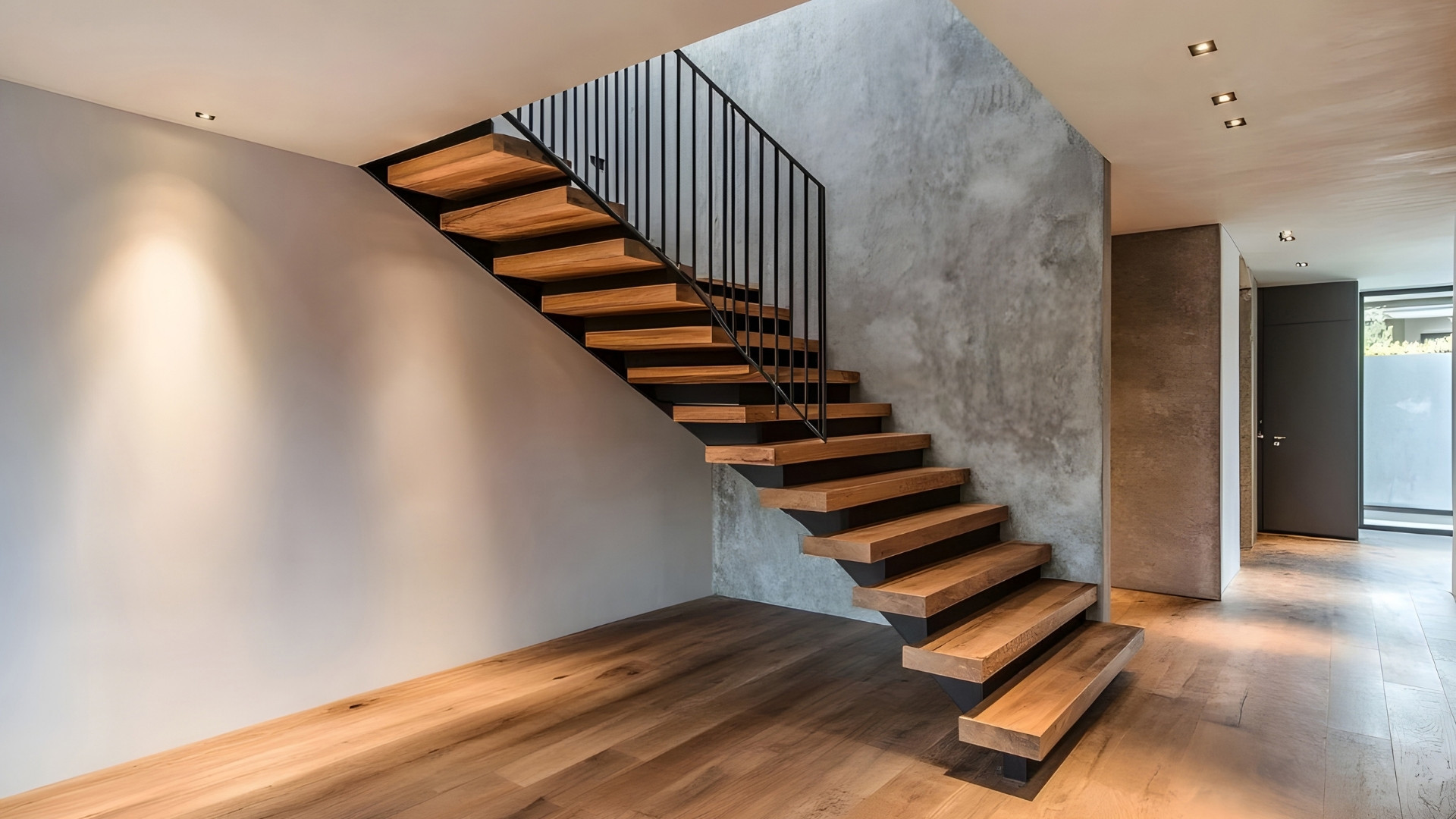
Combination: Lightly oiled or natural-finish white oak treads + open risers + matte black cable or thin steel rod railings
This pairing creates clean, architectural staircases with strong horizontal lines. Open risers preserve sightlines, while cable or thin-rod railings keep the profile lean without disappearing entirely.
Floating stair construction — treads cantilevered from a single steel stringer — pushes this further. Four-inch-thick oak treads paired with horizontal steel railing lines produce an open, geometric look that defines high-end contemporary design.
Modern Farmhouse
Combination: White oak with warm medium-tone stain + sturdy square newel posts + simple vertical black metal balusters
Adding a natural fiber stair runner grounds the design and introduces texture without competing with the wood. The white oak grain reads as more refined than the pine or builder-grade oak found in standard farmhouse staircases. Painted white risers create the two-tone effect that makes this style feel intentional rather than default.
Traditional and Transitional
Combination: White oak with richer walnut-toned stain + wrought iron balusters with classic detail work + substantial newel posts
This combination honors traditional architecture while avoiding the dated heaviness of all-wood railings. Painting risers white to contrast with oak treads adds visual clarity and makes the staircase feel custom-designed. The tight grain of white oak prevents the wood from being visually overwhelmed by ornate ironwork.
Scandinavian and Organic Modern
Combination: Unfinished or lightly waxed white oak treads + white or warm gray metal railings + minimal baluster profiles
No stain competes with oak's natural color here — the wood does the work. This style suits homes with light walls, natural linen textiles, and abundant daylight. Oak's neutral wheat tones and subtle grain create warmth without visual weight.
Design Details That Elevate the Finished Look
The Riser Decision
Painted white risers create high-contrast two-tone effects that make white oak treads pop—one of the easiest ways to make a staircase feel custom and intentional. The contrast emphasizes the warm grain and creates visual separation between each tread.
Open risers (no riser board) achieve more contemporary floating appearances that maximize light flow. Building codes vary on open riser requirements—the International Residential Code mandates that openings not allow passage of a 4-inch diameter sphere. Verify local requirements before specifying.
Consistent Material Language
Railing finish—black, brushed steel, or white—should echo other metal finishes throughout the home: door hardware, light fixtures, plumbing fixtures. Consistent material language keeps the staircase feeling like part of the home rather than an afterthought.
For example, if kitchen cabinet pulls are brushed nickel, stainless steel cable railings will read more cohesively than matte black metal.
Stair Lighting
Lighting serves both safety and aesthetic functions. The IRC requires interior stairways to be illuminated by artificial light providing at least 1 foot-candle (11 lux) at tread centers and landings.
Effective options:
- Recessed tread lighting that highlights each white oak tread edge
- Wall sconces along the stairwell for ambient illumination
- Statement pendant chandeliers over double-height entries
- Layered lighting combining ambient and task sources
The right lighting strategy turns a well-built staircase into something you notice—while keeping it safe to use after dark.
What to Know Before You Invest in White Oak Stairs with Premium Railing
Stock vs. Custom-Fabricated Railing Systems
Stock/prefabricated systems limit material, dimension, and finish options and often require design compromises. They work for standard configurations but struggle with unique geometries or specific aesthetic requirements.
Custom-fabricated systems—like those from Acadia Stairs, which ships nationwide—allow railings to be built precisely to staircase geometry, ceiling height, and aesthetic intent. Acadia fabricates panel-built railings in sections up to 20 feet long, accounting for elbows, turn-outs, goosenecks, and splices for easier shipment and installation.
The collaborative design process includes:
- Shop drawings at no extra charge (one revision set included)
- 3D renderings available on request
- Pre-shipment consultation with customers and contractors on installation details
- Support for straight, L-shaped, U-shaped, and floating stair configurations
White Oak Finish Options
White oak stair treads are typically sold as raw lumber or pre-finished boards. The finish decision shapes both final appearance and maintenance requirements.
Finish types:
- Oil finishes: Emphasize natural grain, easy to touch up, require periodic reapplication
- Polyurethane: Durable protective layer, available in matte/satin/gloss sheens
- Hardwax oil: Combines penetrating oil with surface wax for protection and easy maintenance
Matte or satin finishes are more forgiving of daily wear and better suited to high-traffic households than high-gloss alternatives. Acadia Stairs provides wood treads pre-sanded and ready for treatment, with optional semi-gloss clear coat polyurethane services (3-4 coats) available.
Key Practical Questions to Answer Before Specifying
Before engaging a fabricator, work through these four areas:
- Stair geometry: Straight, L-shaped, U-shaped, open stringer vs. closed? Floating or cantilevered construction?
- Building codes: Residential codes typically require handrails at 34–38 inches high; commercial applications may require 42-inch guard rails with baluster spacing under 4 inches.
- Project type: New construction or remodel determines how railings are anchored and what structural modifications are feasible.
- Material integration: Will you supply wood treads separately, or do you need a complete system? Acadia Stairs provides white oak treads integrated with metal structural components — not railing-only solutions.
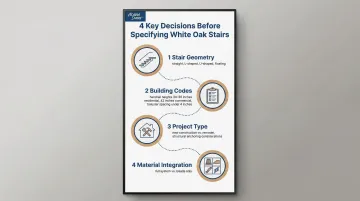
Clarifying these details upfront prevents costly redesigns mid-project.
Frequently Asked Questions
What is the best color for stair railings?
Matte black is the most popular choice for its strong contrast with light wood tones like white oak, but the right color depends on your interior style. White works well in traditional or coastal spaces; brushed steel or brass suits contemporary and transitional interiors.
Do stairs look better with white risers?
Yes, white risers create a two-tone effect that makes wood treads stand out and gives the staircase a clean, intentional look. With white oak specifically, the contrast highlights the warm grain and visually brightens the stairwell.
What is the trend for stair railings?
Matte black metal railings, horizontal cable systems, and mixed-material designs (wood handrail with metal balusters) dominate current trends. Open riser and floating tread styles with minimal railings are also strongly trending in new construction and high-end remodels.
Is white oak a good wood for stairs?
Yes, white oak is one of the best hardwoods for stairs due to its high Janka hardness rating (1,350 lbf), tight grain, stain versatility, and natural moisture resistance. It outperforms red oak in durability and offers more refined aesthetics than pine or softer species.
What railing material pairs best with white oak stairs?
Matte black powder-coated metal and stainless steel cable systems are the most popular pairings because they offer clean contrast to warm wood tones. Wrought iron suits traditional styles, while glass suits contemporary interiors seeking maximum visual openness.
How do I maintain white oak stair treads?
Dry mop regularly to remove grit, and reapply the original finish on a periodic schedule—annually for oil finishes, less often for polyurethane. Avoid wet mopping, as excess moisture can raise the grain or cause warping over time.