Introduction
The staircase is the architectural backbone of a modern home: a vertical sculpture that connects levels while setting the visual tone for everything around it. More than a functional necessity, it's the first thing guests notice and the element that anchors your entire interior.
Contemporary spiral staircases are experiencing a design renaissance. According to industry projections, the residential spiral staircase market is expected to grow at a 7.5% CAGR through 2032, driven by urbanization and the demand for space-efficient design. Real estate experts increasingly identify statement staircases as top home features that measurably influence perceived property value.
The space efficiency argument is hard to ignore. In open-concept floor plans, a spiral staircase can reclaim 20–30 square feet compared to a traditional straight run—a meaningful gain in urban lofts, mezzanines, and infill projects where every square foot earns its keep.
Modern manufacturing advances—CNC fabrication, robotic welding, and precision powder coating—have moved spiral stairs beyond the industrial kit aesthetic, enabling custom, high-precision designs with minimalist profiles and an extensive range of color palettes.
Key Takeaways
- Contemporary spiral staircases serve as architectural focal points while maximizing floor space in modern homes
- Material combinations—steel frames with wood treads, glass panels, bold powder-coated finishes—define the aesthetic personality
- Key planning factors: diameter (4–6 feet), floor-to-floor height, railing style, and IRC code compliance
- Custom fabrication ensures the design fits your exact space, structural requirements, and interior palette
Why Spiral Staircases Are a Natural Fit for Modern Homes
Clean Geometry Over Ornamentation
Contemporary spiral staircases distinguish themselves from traditional designs through radical simplification. Clean geometry replaces ornamental flourishes. Open risers eliminate visual bulk. Minimal detailing allows the structure itself—the helix, the materials, the negative space—to become the design element rather than something to conceal behind decorative panels or carpeting.
In a modern home, the staircase isn't just a way to get between floors — it's part of the architecture itself.
Space Efficiency in Open-Concept Floor Plans
The practical advantages of spiral stairs align perfectly with modern residential priorities:
- Compact footprint: Rotating around a central axis, spiral stairs use vertical space without consuming valuable floor area
- Reclaimed square footage: Installing a spiral staircase reclaims approximately 20-30 square feet compared to straight or L-shaped configurations
- Placement flexibility: The compact circular footprint allows installation in tight corners or room centers without disrupting traffic flow — ideal for lofts, mezzanines, and basement connections
Manufacturing Precision Expands Design Possibilities
Modern fabrication tools have pushed residential spiral stair design well beyond what standardized kits once allowed. Today's fabricators can produce complex geometric forms with accuracy that was simply out of reach a decade ago:
- Laser cutting, water jet machining, and CNC milling achieve intricate patterns and tight tolerances across custom designs
- Robotic welding produces consistent, high-quality joints while reducing material waste — enabling cleaner, more minimalist stringer profiles
- Custom fabrication moves spiral stairs from off-the-shelf industrial components to purpose-built architectural elements
Powder coating has emerged as the dominant finish, offering AAMA-rated durability and a vast color palette that allows staircases to function as bold architectural accents.
Contemporary Spiral Staircase Design Ideas by Style
Minimalist Steel and Glass Spirals
The defining goal of this style is near-transparency: a staircase that barely interrupts sight lines while pulling natural light deeper into the floor plan. Slender center columns in steel or stainless steel, open treads with no risers, and glass panel or cable railings keep the structure visually light.
This approach suits large-windowed modern homes, loft-style spaces, and interiors with Scandinavian or industrial-minimalist palettes. Think open-plan Manhattan lofts or Pacific Northwest homes where floor-to-ceiling glazing is the dominant design feature—anywhere the staircase needs to compete as little as possible with the view.
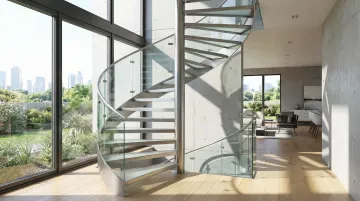
Pair with concrete or light wood flooring for material cohesion. The interplay between solid horizontal planes and transparent vertical circulation creates a layered spatial effect without visual clutter.
Wood Treads with Black Metal Structure
This widely popular hybrid pairs powder-coated steel or iron frames—typically matte black—with natural hardwood treads and complementary handrails. The metal provides structural clarity and contemporary form; the wood adds tactile warmth that keeps the staircase from reading as cold or purely industrial.
Common tread options include Red Oak, White Oak, Maple, Cherry, Mahogany, and Walnut, each offering distinct grain patterns and color tones. White Oak (Janka hardness 1,350 lbf) is a strong choice for high-traffic residential use given its durability. For matching flooring, it's one of the most cohesive combinations available.
This style fits well in:
- Transitional and modern farmhouse homes
- Urban contemporary interiors
- Spaces that want industrial structure with natural warmth
Bold Color Spiral Staircases
Powder-coating the entire structure in a single standout hue turns the spiral staircase into the room's focal point — no additional statement décor required.
Current color directions lean toward deep navy, burnt orange, olive green, and matte black for refined drama, or bright yellow and coral for spaces that want outright energy. The approach works best against neutral backdrops — white walls, concrete floors, minimal competing surfaces — where the staircase can hold the room without fighting for attention.
On the technical side, powder coating resists impact, abrasion, chemicals, and UV exposure. Custom Pantone matching means the color can align precisely with a broader design scheme rather than approximating it.
Sculptural and Mixed-Material Spirals
Architectural-grade spirals treat the staircase as structure first, furniture second. Materials like reinforced concrete, glass treads, and stone-and-steel combinations create pieces that work from every angle in the room.
Bestor Architecture's spiral — illuminated through oval red cedar windows — is a well-cited example of the staircase as the building's primary sculptural gesture. The form itself (elliptical openings, floating helixes, cantilevered treads) carries the visual weight so that the surrounding space can stay calm.
These designs perform best in:
- High-ceiling spaces with double-height volumes
- Luxury residential and duplex projects
- Any interior where the staircase will be visible from multiple vantage points simultaneously
At this level, the staircase stops being a transition between floors and becomes the reason to move through the space.
Materials and Finishes That Define the Contemporary Look
Metal Options: Performance and Aesthetics
| Material | Characteristics | Aesthetic Outcome | Maintenance Profile |
|---|---|---|---|
| Mild Steel | Iron-carbon alloy; highly versatile and cost-effective | Smooth, paintable surface ideal for powder coating in custom colors | Requires protective finish (paint/powder coat) to prevent rust; low maintenance if coating intact |
| Stainless Steel | Chromium alloy with inherent corrosion resistance | Sleek, modern metallic luster; available in brushed (#4), polished, or glass bead blasted finishes | Excellent corrosion resistance; requires only occasional cleaning to maintain shine |
| Aluminum | Lightweight alternative with good corrosion resistance | Accepts powder coating well; significantly lighter than steel | Can be sandblasted, primed, or powder coated; good for outdoor applications |
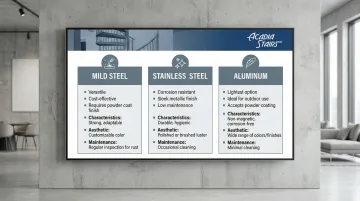
Recommendation by application: Steel provides cost-effective versatility with extensive customization. Stainless steel offers premium performance with minimal maintenance, ideal for coastal properties or harsh environments. Aluminum delivers lightweight solutions for situations where weight is a concern.
Wood Species and Finishes
Solid hardwoods or engineered alternatives are primarily used for treads and handrails in combination with metal structures.
Popular species:
- White Oak: Dense, durable (Janka 1,350 lbf), excellent wear resistance
- Walnut: Rich dark tones, sophisticated appearance
- Red Oak and Maple: Traditional choices with proven performance
- Mahogany: Excellent for exterior applications, naturally weather-resistant
Finish considerations: Wood species and finish—natural, dark-stained, whitewashed—dramatically shift the staircase's personality. Natural finishes highlight grain patterns, while dark stains create dramatic contrast with metal frames.
Stability note: Engineered wood is more dimensionally stable than solid wood, less prone to warping in varying humidity. Indoor relative humidity should be maintained between 30-50% to preserve wood stability.
Glass: Transparency and Light
Tempered and laminated glass play dual roles in contemporary spiral staircase design.
As balustrade panels: Glass railings maximize light flow and create airy, modern aesthetics that keep small spaces feeling open. Metal balusters provide structural support.
As treads: Laminated glass treads with diamond pattern tops and anti-skid surfaces create dramatic visual statements with genuine visual lightness, allowing light to pass freely through the structure.
Safety standards: Current building codes (IBC 2021) generally mandate laminated glass for guards and balustrades. It consists of multiple layers bonded with an interlayer that holds shards in place if broken — a critical safeguard against falls. Glass must meet ANSI Z97.1 Class A or CPSC 16 CFR 1201 Category II impact requirements.
Thickness specifications: Minimum 1/4 inch for balustrade panels; structural treads often range from 1 to 2 inches thick.
Concrete: Monolithic Architecture
Concrete spiral staircases represent the boldest material choice—typically poured in place or precast—giving a monolithic, architectural character that suits modernist and brutalist-inspired interiors.
Design advantage: Concrete allows for self-supporting, sculptural forms that can be finished with wood linings or left exposed for raw aesthetic impact.
Best applications: High-design residential projects, architectural statements in double-height spaces, and interiors embracing industrial or brutalist aesthetics.
Powder Coating: Color and Durability
Powder coating is now the dominant finish for metal stairs — it outperforms liquid paint on every practical measure: impact resistance, color consistency, and longevity.
Durability standards:
- AAMA 2603: Suitable for interior residential use
- AAMA 2604/2605: High-performance standards for exterior applications requiring superior color retention and weather resistance
Color versatility: Available in virtually unlimited colors including custom Pantone matches. Stock colors typically include flat black, white, and silver, with custom colors accommodating most design visions.
Process advantage: Powder coatings provide exceptional resistance to impact, abrasion, chemicals, and UV light—thicker and more consistent than traditional paint.
Acadia Stairs handles powder coating in-house during the custom build process, sourcing from Prismatic Powders, Tiger Drylac, RAL Colors, and Rustoleum. Available finishes include matte, gloss, textured, and metallic — precise color matching to your interior palette is standard, not an add-on.
Design Accents That Elevate a Spiral Staircase
Railing and Baluster Styles
The balustrade is often the most expressive element of a spiral staircase, shaping how open or enclosed the staircase feels from every angle.
Popular contemporary options:
- Vertical steel balusters suit both traditional and contemporary homes, with patterns ranging from simple verticals to decorative spindles
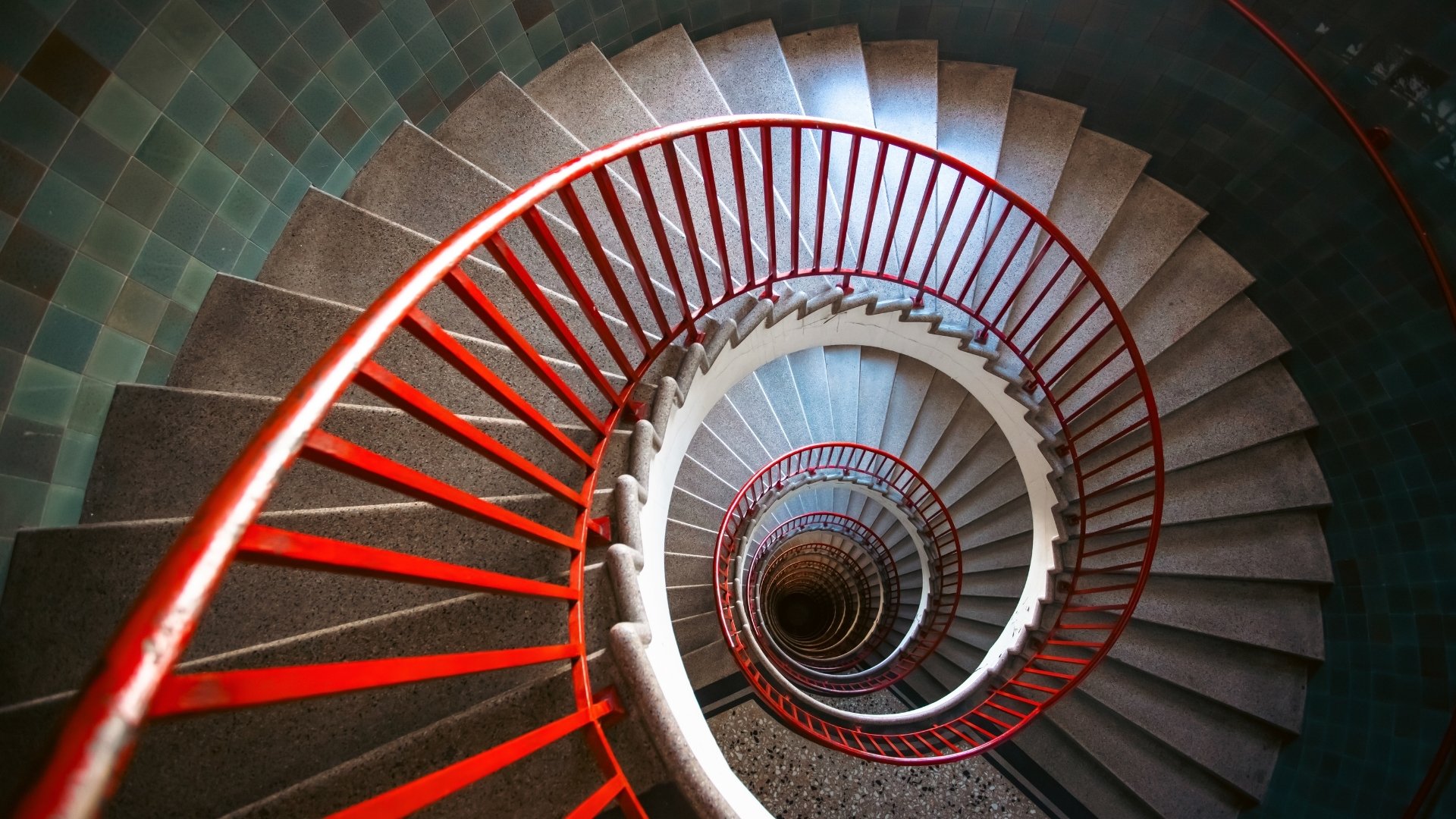
- Cable railing systems using #316 marine-grade stainless steel create an industrial look while keeping sightlines open — thin cables make rooms feel noticeably larger
- Glass panel systems provide safety without blocking views, paired with metal balusters for structural support in contemporary spaces
- Solid wood or metal railings take a minimalist approach, using clean, uninterrupted lines suited to modern homes with simpler visual preferences
Code compliance note: Baluster spacing must not allow passage of a 4-inch sphere per IRC requirements.
Lighting Integration
Once the railing style is set, lighting is the next detail that shifts a staircase from functional to striking. LED options work well for spiral forms and meet IRC safety codes.
Code requirement: The IRC requires interior stairways to have artificial illumination of at least 1 foot-candle (11 lux) at the center of treads and landings.
Design applications:
- LED strip lighting under treads creates a floating effect
- Recessed step lighting highlights each tread edge
- A statement pendant hung through the center void draws the eye upward
- Uplighting at the base traces the helix and pulls attention through the full vertical rise
The Space Beneath the Spiral
Beyond the staircase itself, the tapered cone of space beneath it is one of the more overlooked design opportunities in a home.
Functional uses:
- Built-in shelving or library (as seen in a Mexico City home utilizing double-height stairwell space)
- Reading nook with integrated seating
- Bar cart area or beverage station
- Sculptural planting or vertical garden
- Storage solutions for compact homes
Space reclamation: Utilizing this vertical volume allows homeowners to reclaim 20-30 square feet for functional purposes, converting otherwise wasted floor area into usable square footage.
Space, Placement, and Planning Considerations
Getting a spiral staircase right starts before you pick a style. Diameter, ceiling height, and code requirements all interact — and understanding each one saves costly surprises during installation.
Footprint and Diameter Requirements
A 5-foot (60-inch) diameter is the absolute minimum needed to achieve the code-mandated 26-inch clear walking path. Most residential spirals fall between 5'0" and 6'0" to balance comfort with compliance.
Even at 6 feet across, a spiral staircase takes up roughly 28 square feet of floor space — less than the 40–60 square feet a straight or L-shaped stair typically demands. That compact circular footprint allows installation in tight corners or centered in a room without disrupting traffic flow, making spirals a practical choice for connecting mezzanines, lofts, and basements.
Ceiling Height and Floor-to-Floor Calculations
Total rise — the floor-to-floor height — drives everything else in the calculation. With a maximum riser height of 9.5 inches per IRC, a standard 9-foot ceiling (108 inches) requires at least 12 risers.
Rotation matters too. Standard spiral stairs rotate 30 degrees per tread, so builders must calculate total rotation to confirm the exit landing aligns safely at the upper floor without headroom conflicts. The IRC sets minimum headroom at 6 feet 6 inches (1,982 mm), measured vertically from the leading edge of each tread. Get this wrong and the stair fails inspection — regardless of how well everything else is executed.
Code Compliance: IRC Section R311.7.10.1
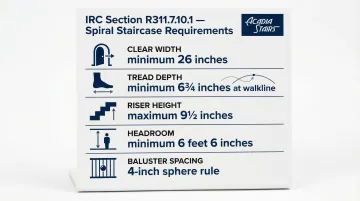
Those dimensional requirements connect directly to IRC Section R311.7.10.1, which lays out the specific numbers your stair must hit:
- Clear width: Minimum 26 inches (660 mm) at and below the handrail
- Tread depth: Minimum 6¾ inches (171 mm) at the walkline (12 inches from the narrow edge)
- Riser height: Maximum 9½ inches (241 mm)
- Headroom: Minimum 6 feet 6 inches (1,982 mm)
- Baluster spacing: Must not allow passage of a 4-inch sphere
On egress: the IRC permits spiral staircases as a means of egress within individual dwelling units, provided they meet dimensional criteria. They're often restricted from serving as primary egress in commercial or multi-family buildings, though. Large-diameter spirals can be engineered to meet curved stair codes for primary egress; standard spirals typically serve as secondary access.
Working with a Custom Staircase Manufacturer
Why Custom Fabrication Matters
Spiral staircases benefit from custom fabrication more than most home elements. Every home has unique floor-to-floor height, opening dimensions, and aesthetic context. A custom-built staircase can be engineered precisely to those parameters while incorporating your material and finish preferences.
Standard kits often force compromises in dimensions, materials, or aesthetics. Custom fabrication ensures the staircase fits your measurements, layout, codes, décor, and budget without compromise.
The Collaborative Design Process
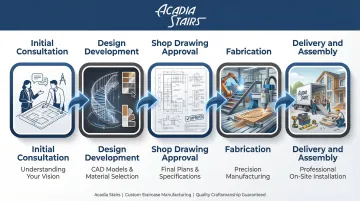
Working with an experienced manufacturer involves several key phases:
1. Initial consultation: Share floor plans, measurements, and design vision. Discuss space requirements, style preferences, and budget parameters.
2. Design development: Review material options (steel types, wood species, glass configurations), railing profiles, tread styles, and powder coat colors. Many manufacturers provide 3D renderings to help visualize the staircase in its environment.
3. Shop drawing approval: Receive detailed fabrication drawings showing dimensions, style, material, and layout. These serve as the construction blueprint and require your verification that designs meet local building requirements.
4. Fabrication: Custom staircases are built to exact specifications, pre-assembled in the shop to ensure perfect fit, then broken down into manageable sections for shipping.
5. Delivery and assembly: Staircases ship nationwide with detailed installation instructions. Many designs are accessible enough for handy homeowners to install, though most carpenters and contractors can handle assembly. Acadia Stairs, for instance, supports homeowners, architects, and contractors through every step — from design consultation to post-delivery questions — drawing on over 40 years of combined experience.
Treating Design Consultation as Opportunity
The design consultation is more than a measurements exercise. Once the specs are confirmed, use the conversation to explore:
- Finish options that align with your interior vision
- Railing profiles that balance safety with openness
- Tread materials that provide the right tactile and visual warmth
- Powder coat colors that make the staircase a deliberate design statement
The best manufacturers bring genuine design input to these conversations — helping you arrive at a staircase that functions well, looks intentional, and holds up for decades.
Frequently Asked Questions
What is the difference between a spiral staircase and a curved staircase?
A spiral staircase winds around a central vertical pole with a compact circular footprint, structurally supported by that center column. A curved (helical) staircase follows a sweeping arc with a larger radius and no central column, requiring complex structural support and significantly more floor space. Curved staircases feel grander and more open; spirals are more compact and sculptural.
How much floor space does a spiral staircase typically require?
Residential spirals typically range from 4 to 6 feet in diameter, with 5 feet being the practical minimum to achieve the code-required 26-inch clear width. Even a 6-foot diameter spiral occupies only about 28 square feet, significantly more space-efficient than straight or L-shaped stairs.
Are spiral staircases practical for everyday use as a primary staircase?
Modern spiral staircases can serve as a home's primary staircase when built to IRC specifications. They work best in households without young children or mobility-limited residents, however, as the steeper pitch and turning geometry make them difficult to navigate for some users and incompatible with stairlifts.
What materials are most popular for contemporary spiral staircases?
Steel and powder-coated metal are the most common structural choices, often paired with wood treads (White Oak, Walnut, Maple) for warmth or glass panels for openness. Stainless steel is preferred in minimalist or coastal contexts for its corrosion resistance, while concrete is best suited to statement designs in high-end residential projects.
Can I customize the color of a metal spiral staircase?
Yes. Powder coating allows metal spiral staircases to be finished in virtually any color—from matte black and warm bronzes to bold custom hues. Many custom manufacturers offer color matching services, working with suppliers like Prismatic Powders, Tiger Drylac, and RAL Colors to ensure the staircase integrates precisely with your home's palette.
Do spiral staircases need to meet building codes in residential homes?
Yes. Residential spiral staircases must comply with local building codes governing minimum tread depth (6 3/4 inches at walkline), maximum riser height (9 1/2 inches), headroom clearance (6 feet 6 inches), clear width (26 inches), and handrail specifications. Working with an experienced manufacturer or contractor ensures the design is engineered to meet these requirements from the start.