You are midway through a project. The layout is locked. You know exactly what you want the space to feel like. And then comes the staircase.
This is where projects slow down. Not because the staircase is hard to build, but because choosing the wrong design early creates problems that surface later, like fabrication delays, inspection pushbacks, or on-site rework.
If you are someone scoping a contemporary staircase for a residential or commercial build, this guide covers what actually matters, design options that work, materials that hold up, and the coordination details that keep things moving.
Key Takeaways
Contemporary staircases require early coordination because design choices directly affect structure, fabrication accuracy, code approval, and installation timelines.
Stair configuration selection determines footprint efficiency, load requirements, fabrication complexity, and suitability for residential or commercial projects.
Material choices such as steel, wood treads, glass, and cable railings impact performance, tolerance control, durability, and code compliance.
Renovation projects need earlier field verification and fabrication input due to fixed openings, headroom limits, and existing framing constraints.
Involving a custom stair fabricator before shop drawings are finalized reduces rework, inspection delays, and schedule risk.
What Is a Contemporary Staircase?
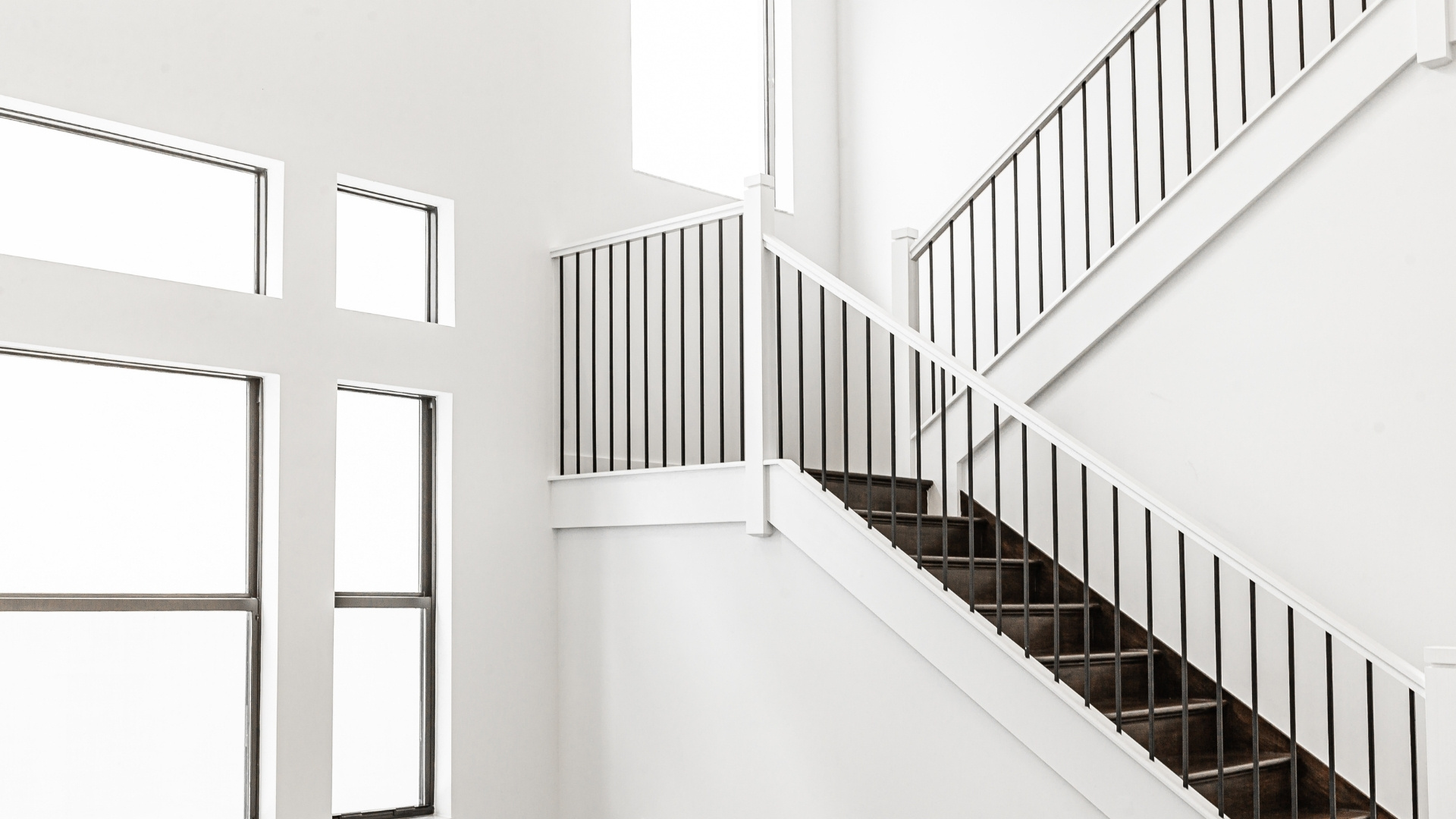
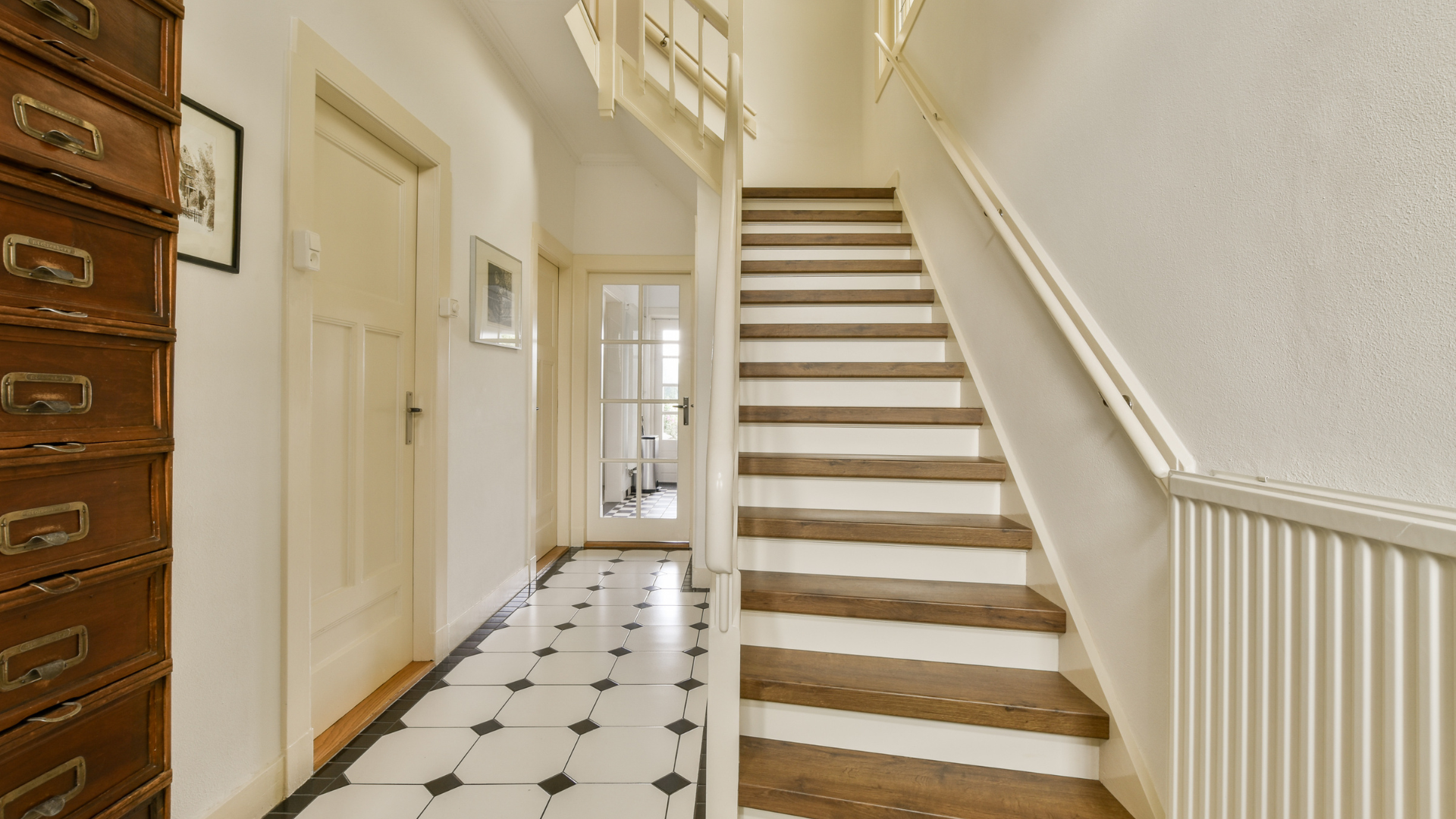
A contemporary staircase is not a single style. It is a design category that prioritizes clean geometry, minimal visual weight, and open structure over ornamentation.
In practical terms, a contemporary staircase tends to share a few common traits:
Open or reduced risers that let light pass through the structure.
Exposed metal stringers, single or double, as a visible design element.
Mixed materials like steel framing paired with wood, glass, or stone treads.
Minimal railing systems such as cable, glass panels, or flat-bar designs.
Tight tolerances across every connection and finish.
What sets contemporary staircases apart from traditional builds is not just how they look. It is the precision with which they need to be fabricated. A small misalignment in a mono-stringer system or a railing post that sits even slightly off-grid becomes immediately visible.
This is why contemporary staircases demand a different level of coordination, from design through fabrication to final installation.
Types of Contemporary Staircases Used in Residential and Commercial Builds
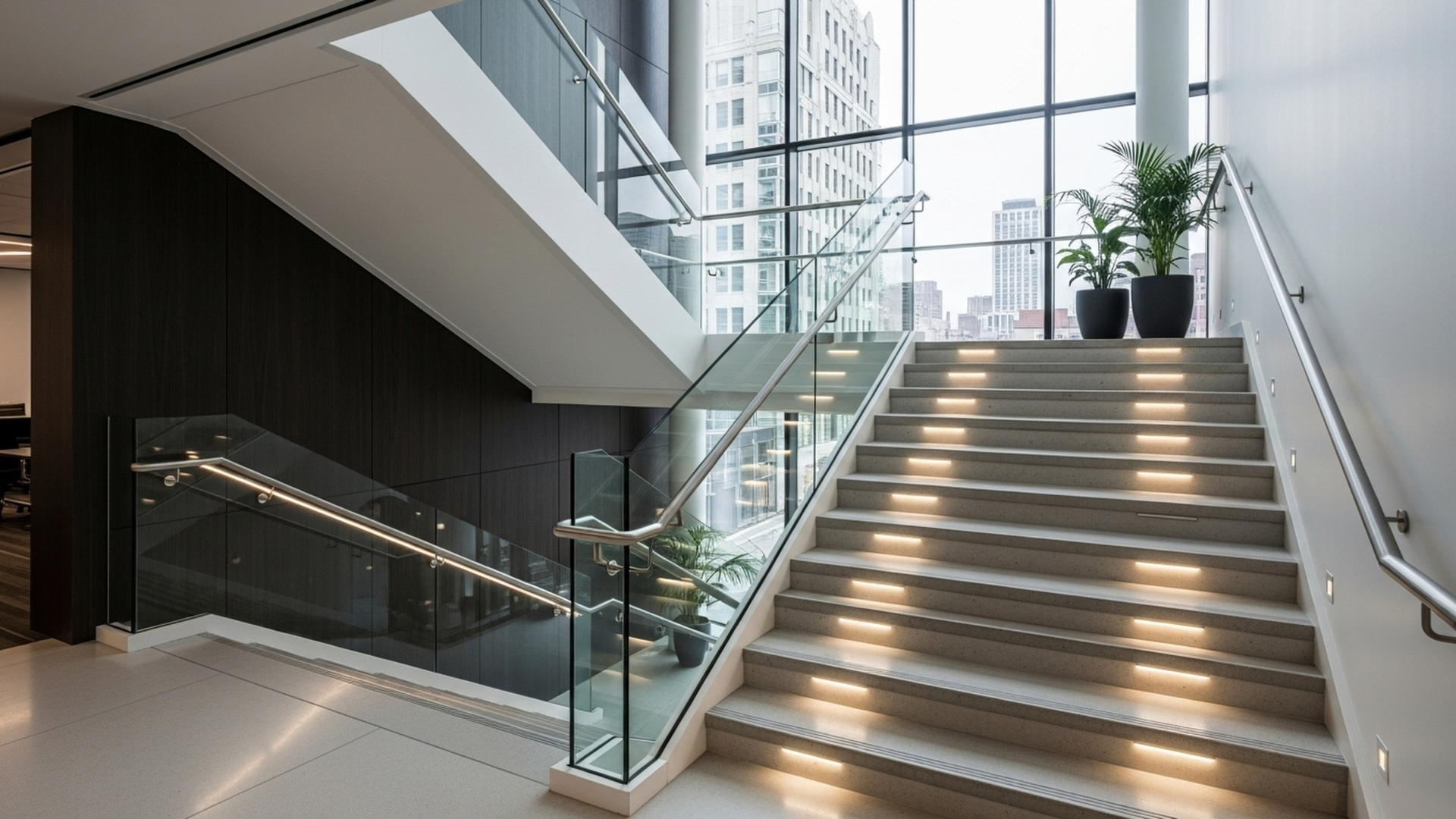
The type of staircase you specify shapes everything that follows: structural sizing, shop drawing complexity, fabrication lead time, and installation sequencing. Here is a breakdown of the three configurations most commonly used in contemporary builds today.
Straight & Mono-Stringer Contemporary Staircases
Straight mono-stringer staircases are among the most widely used contemporary designs, especially in residential and commercial settings. A single central steel stringer runs beneath the treads, supporting the entire flight from one structural point.
This configuration works well because it does a few things at once:
Reduces visual bulk. The single stringer keeps the structure lean and open, which suits tighter floor plans and modern interiors.
Simplifies the footprint. Straight runs are the easiest to fit into both existing framing and new construction layouts.
Opens up the space below. No side stringers blocking sight lines means the area under the stairs can remain usable.
Mono-stringers also come in sub-configurations, such as L-shaped or switchback layouts, via reinforced landings or splices, using the same structural logic with a change in direction.
One thing fabricators need to watch for is that mono-stringers carry the full load along a single beam. If the span is long or the riser count is high, the stringer size needs to be sized up accordingly. Getting this right at the shop drawing stage avoids deflection issues and costly field corrections.
Curved Contemporary Staircases for Architectural Spaces
Curved staircases carry more fabrication complexity than straight designs. The geometry does not repeat; every tread, every stringer segment, and every railing post has a slightly different dimension. This makes shop drawings more involved and tolerances tighter across the board.
That said, curved contemporary staircases are specified when a project calls for a visual focal point, open-plan homes, commercial lobbies, and multi-level retail spaces where the staircase is meant to be seen, not just used.
Key considerations for fabricators and builders:
Stringer continuity through the curve. Whether it is a single, double, or side stringer layout, the stringer must bend or be built in segments that join smoothly.
Inner radius matters. Tighter inner radii create more complex fabrication but can fit into smaller floor openings.
Railing alignment. Cable or glass railing systems on a curved stair need to follow the arc precisely. Any deviation becomes visible immediately.
Curved staircases are available in single stringer, double stringer, and side stringer configurations, each with a different structural profile and visual weight.
Floating Contemporary Staircases and Open-Riser Designs
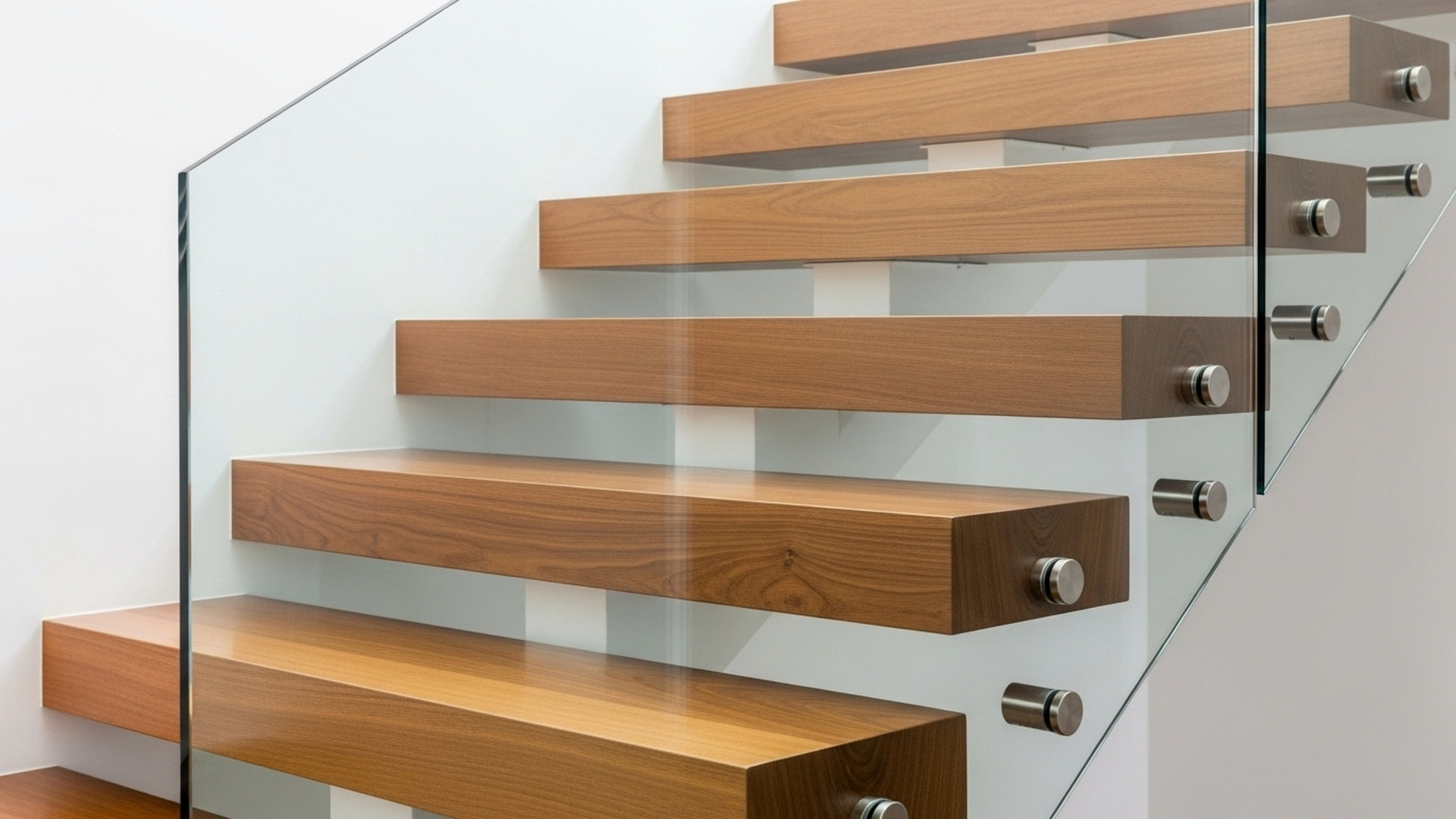
Floating staircases are the design that gets the most attention. Treads appear to hang in mid-air with no visible support beneath them. The effect is clean, open, and distinctly contemporary.
Behind that visual, though, is a well-engineered structural system. Most floating staircases rely on one of these support methods:
Mono-stringer systems, a single steel beam runs beneath the treads, with brackets holding each tread in place.
Wall-cantilevered supports, metal brackets are hidden inside the wall, projecting outward to carry each tread independently.
Double-stringer systems, two parallel steel members share the load, allowing slightly thinner profiles than a single stringer.
Open-riser designs, with no vertical panel between treads, pair naturally with floating layouts. They increase light flow and maintain the open feel. But they also come with a code requirement: the gap between treads must not allow a 4-inch sphere to pass through in most residential applications under the IRC.
When a Contemporary Staircase Makes Sense, and When It Doesn't
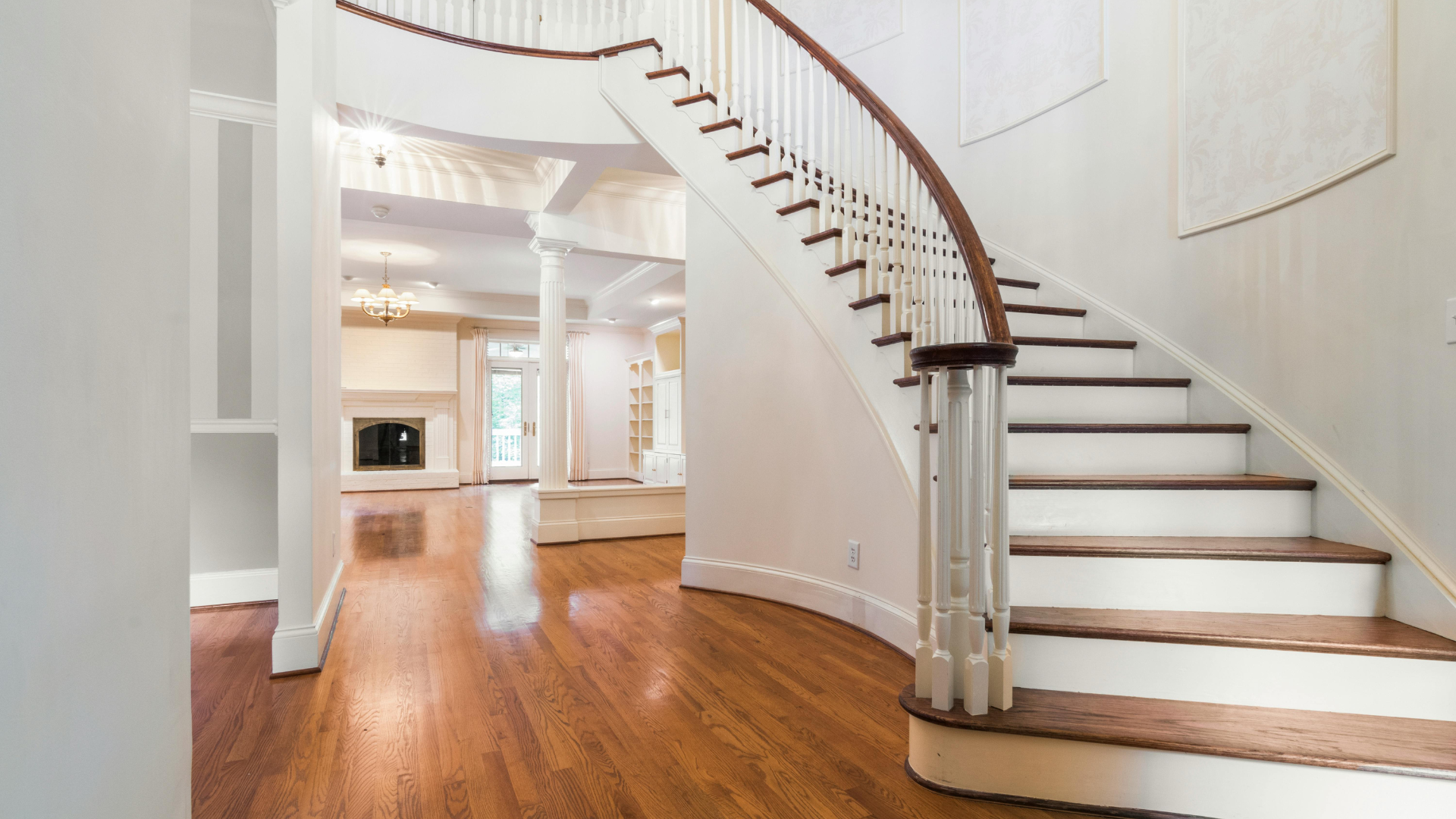
Not every project needs a contemporary staircase. Picking the right design for the right space saves time, budget, and headaches during inspection.
A contemporary staircase is a strong fit when:
The project has an open floor plan with good vertical clearance.
The client or end user wants the staircase to be a visible design element.
The build is new construction or a significant renovation with enough scope to rework framing.
The application is for residential, commercial, office, retail, or hospitality use.
A contemporary staircase may not be the best choice when:
The space is tight, and a closed, traditional staircase uses the footprint more efficiently.
The building is industrial or warehouse-use, where durability and lead time matter more than aesthetics.
Local code amendments add restrictions on open risers or guard heights, increasing project complexity.
Budget is constrained, and a simpler configuration can meet the same functional requirements.
Getting this decision right early keeps the project on track. If your project sits in the gray area between design intent and practical constraints, an early review can prevent costly changes later. Reach out to fabricators like Acadia Stairs for project-specific guidance to confirm whether a contemporary staircase is the right fit.
Problems Contemporary Staircases Solve in Real Projects
Beyond aesthetics, contemporary staircase designs address real coordination and performance issues that come up in multi-level builds. Let’s go through a few of them:
Tight floor openings. Open-concept staircases, especially mono-stringer and floating designs, use less horizontal footprint than bulky closed-riser systems. This matters in townhomes, urban builds, and commercial interiors where square footage is at a premium.
Light flows between levels. Open risers and glass or cable railings let natural light move through the stair volume, reducing reliance on artificial lighting in stairwells and adjacent rooms.
Visual coordination with modern interiors. A contemporary staircase integrates cleanly with open-plan layouts and minimalist finishes. A traditional closed staircase in the same space would feel out of place.
Usable space below. When the staircase structure does not block sight lines or physical movement underneath, the area can function as storage, workspace, or circulation.
When circulation, light, and spatial flow are considered together, the staircase becomes an organizing element rather than an obstacle within the plan.
Materials Commonly Used in Contemporary Staircases, and Why
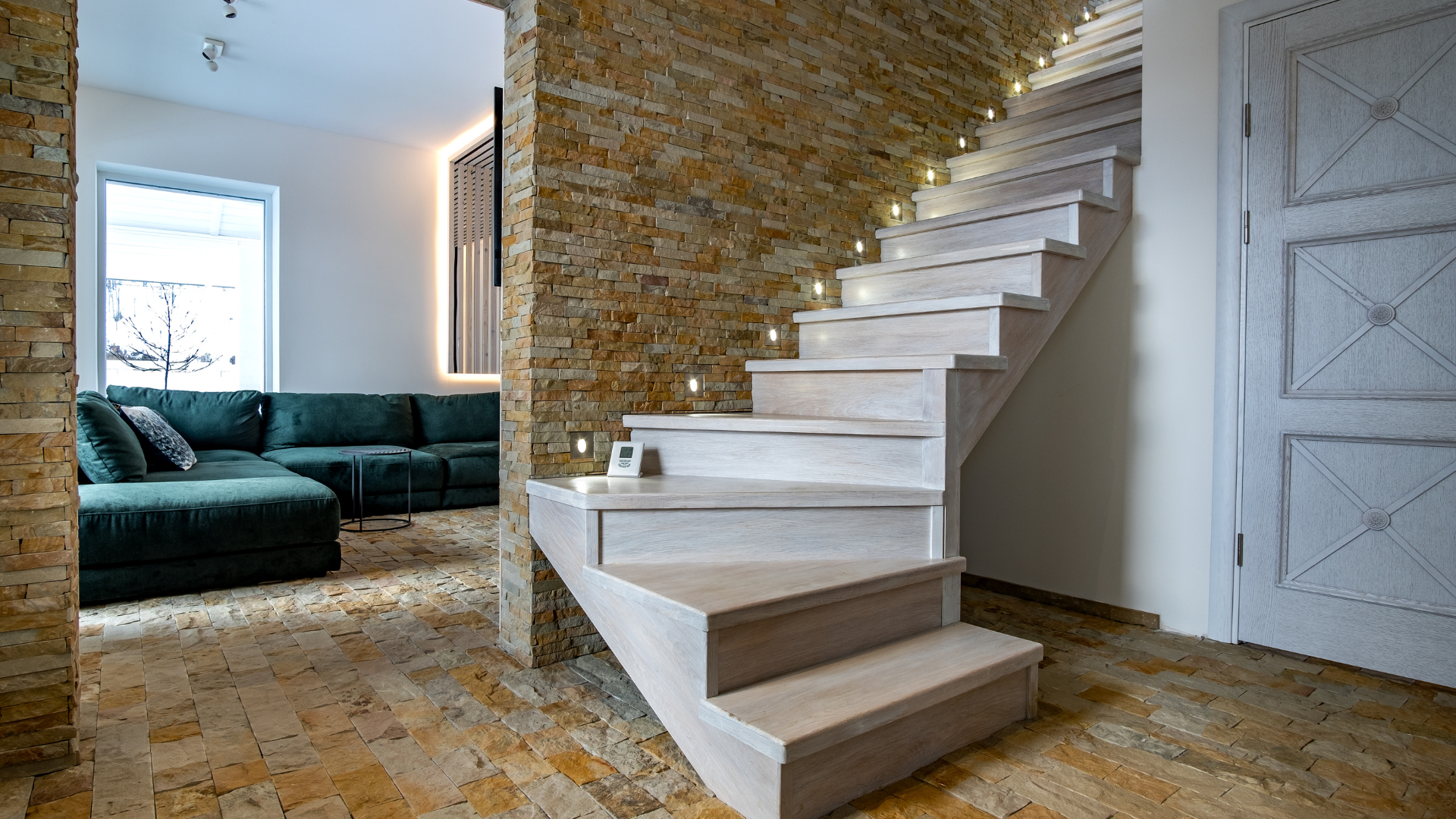
Material choice in a contemporary staircase directly affects three things: how the stair performs structurally, how it is fabricated, and how it holds up over time. Here is what is typically used and why each option gets specified.
Steel
Steel is the primary structural material in most contemporary staircases. It offers high load capacity in slim profiles, which is exactly what mono-stringer and floating designs require.
Tight fabrication tolerances are achievable with steel.
It works well with powder coating, bare metal, or painted finishes.
Steel stringers and connection plates can be shipped pre-fabricated, reducing on-site work.
Steel is the default choice for any contemporary staircase where the stringer is exposed and visible as part of the design.
Wood Treads
Wood treads are the most common finish surface paired with steel structures in contemporary builds. They bring warmth and visual contrast to what would otherwise be an all-metal staircase.
Common species used in contemporary staircase treads include oak, maple, walnut, and cherry. Each has a different grain pattern, hardness, and finish response.
Oak and maple are durable and widely available.
Walnut and cherry bring a richer tone but cost more.
Tread thickness matters: thicker treads (3–4 inches) reduce deflection on longer spans.
Glass and Cable Railings
Glass panels and cable systems are the two most common railing choices for contemporary staircases. Both keep the visual profile low and maintain sight lines through the stairs.
Glass panels require precise framing and tempered safety glass to meet code.
Cable systems are more forgiving during installation but require proper tension and post spacing.
Both options require attention to guard-height requirements, a minimum of 42 inches on open sides in most commercial applications under the IBC.
Stone and Other Tread Surfaces
For projects that need a heavier, more durable tread surface or a specific finish to match surrounding flooring, stone, concrete, or laminated glass, treads are available options. These are less common in residential contemporary builds but are more common in commercial and hospitality projects.
Contemporary Staircases in Renovations vs. New Construction
The scope of work varies significantly depending on whether the staircase is being installed in a new build or replacing an existing one.
New Construction
In new construction, the staircase can be designed into the structural layout from the start. Floor openings, header sizing, and framing can all be coordinated with the staircase geometry before any construction begins.
This is the easier path. Fabricators get accurate dimensions early, shop drawings align with structural drawings, and installation sequencing is straightforward.
Renovations
Renovations add layers of complexity. The existing framing, floor thickness, and ceiling height are already fixed. A contemporary staircase needs to fit within those constraints.
Common issues in renovation projects:
Floor openings that are too small or poorly positioned for the selected stair geometry.
Existing framing that conflicts with the new stringer or landing supports.
Headroom clearance that falls short once the new stair profile is factored in.
Early field measurement and coordination with the fabrication partner pays off here. Getting accurate dimensions before shop drawings are started avoids mid-project changes that add cost and delay.
Why Custom Fabrication Is Often Required for Contemporary Staircases?
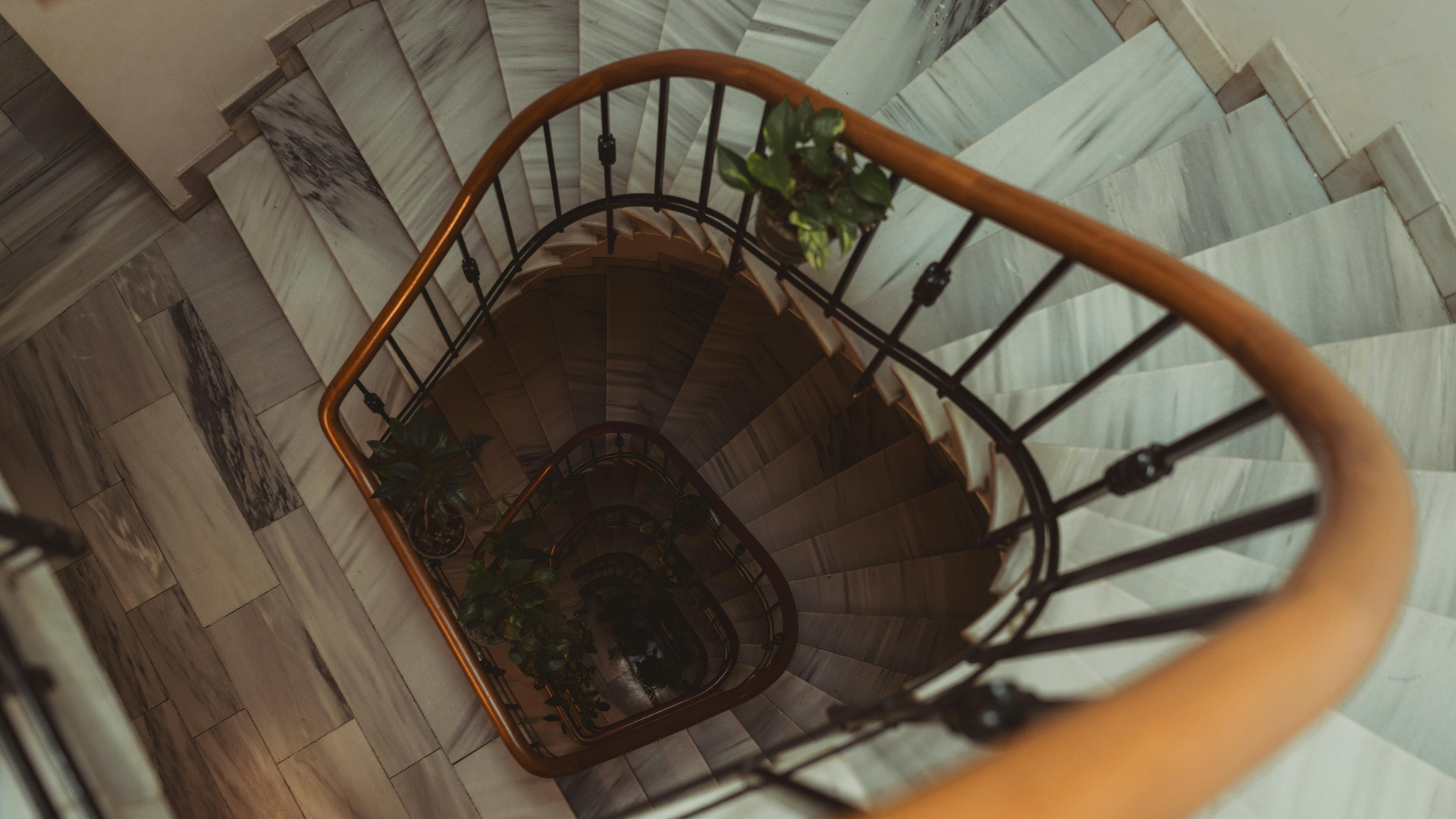
Off-the-shelf stair kits are built for standard configurations. Contemporary staircases, especially curved, floating, or mono-stringer designs, rarely fit a standard template.
Here is why custom fabrication becomes necessary:
Geometry is project-specific. Floor-to-floor height, opening size, and landing position change from one building to the next. Stringers, tread brackets, and connection plates must all match.
Material and finish coordination. The stair structure, treads, and railings need to visually align, which requires fabrication under a single scope or tight coordination between suppliers.
Tight tolerances. A mono-stringer that is off by a quarter inch throws off every tread above it. This level of precision requires shop-built components.
Code compliance needs to be built in. Riser uniformity, handrail height, guard loads, and open-riser spacing all need to be addressed in fabrication, not corrected during inspection.
Custom fabrication also means the staircase ships ready to install. This reduces on-site labor, shortens the installation window, and keeps the project schedule on track. This is where working with a custom stair fabricator makes the difference.
Acadia Stairs helps teams resolve geometry, materials, and code requirements before fabrication begins. Contact Acadia Stairs to review your stair layout early and avoid downstream corrections.
Code, Safety, and Coordination Considerations Professionals Look For
Contemporary staircases, particularly open-riser and floating designs, get more scrutiny during inspection than closed, traditional builds. Here is what to watch for.
Key IRC and IBC Requirements That Apply
Most residential projects in the US are subject to the International Residential Code (IRC). Commercial and multi-family builds typically follow the International Building Code (IBC). Local jurisdictions may adopt amendments that add or modify requirements.
Here are the numbers that matter most for contemporary staircase design:
Requirement | IRC (Residential) | IBC (Commercial) |
Max riser height | 7¾ inches | 7 inches |
Min tread depth | 10 inches | 11 inches |
Min stair width | 36 inches | 36 inches (44 in. if occupant load > 50) |
Min headroom | 6 ft 8 in | 6 ft 8 in |
Handrail height | 34–38 inches | 34–38 inches |
Guard height (open sides) | 36 inches | 42 inches |
Handrails required | 1 side (4+ risers) | Both sides (regardless of risers) |
Open-Riser Specifics
Open risers, common in floating and mono-stringer designs, have their own requirements. Under the IRC, the opening between treads must not allow a 4-inch sphere to pass through (IBC allows ≤4" or triangular openings ≤6" for egress stairs).
Railing and Guard Load Requirements
Glass and cable railing systems on contemporary staircases must meet load requirements, not just height requirements. Guards need to resist a 200-pound concentrated load applied in the outward and downward direction. This affects how posts are attached and how the railing system connects to the stair structure.
Illumination
Interior stairways must be lit to at least 1 foot-candle at the center of every tread and landing. LED stair lighting systems, built into the tread or mounted along the stringer, satisfy this requirement while also fitting the contemporary design language.
Addressing code requirements during fabrication shifts shifts inspection responsibilities. Projects that do this rarely stall at the approval stage.
How to Choose the Right Contemporary Staircase for Your Project?
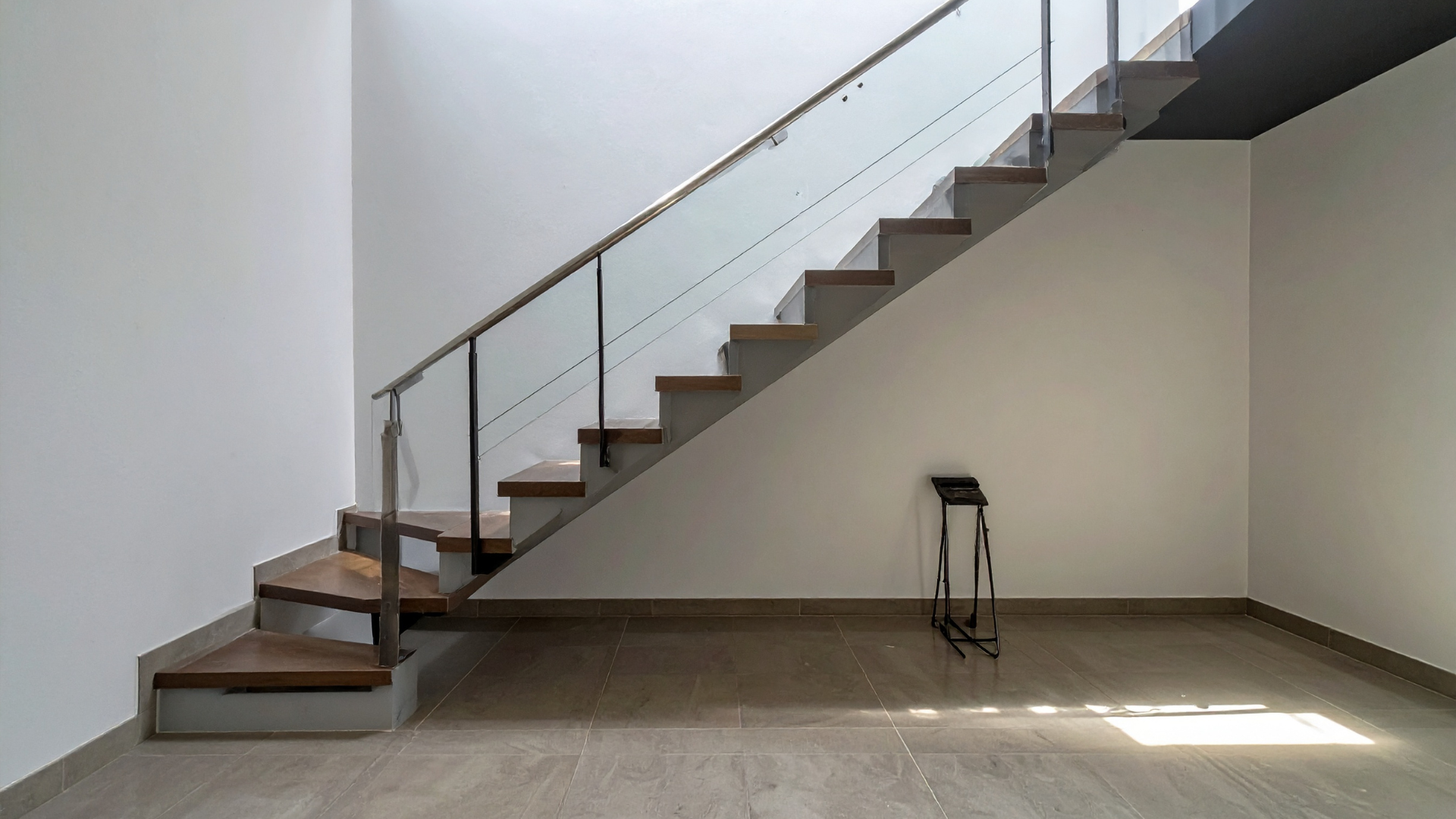
The decision comes down to a few questions that should be answered before fabrication is scoped:
1. What does the floor plan allow? Measure the available opening, the floor-to-floor height, and headroom clearance. These three numbers dictate which configurations are possible.
2. What is the primary use? A staircase in a high-traffic commercial lobby needs different structural sizing than one in a private residence. Usage drives load requirements and finish durability.
3. How visible is the staircase? If it is a focal point, design and material details matter more. If it is tucked into a corridor, function and code compliance take priority.
4. What is the timeline? Curved or floating designs take longer to fabricate than straight configurations. Understanding lead times early keeps the project schedule realistic.
Answering these questions before locking in a design keeps fabricators, builders, and inspectors aligned.
How Acadia Stairs Supports Complex Contemporary Staircase Projects?
Acadia Stairs is a custom staircase manufacturing and metal fabrication company based in Fishkill, New York. We have been designing and fabricating staircases since 2011 and have shipped custom stair systems to projects across the United States.
Our focus is on the types of staircases, which include straight stairs in single-, double-, and side-stringer configurations; curved stairs built to project-specific geometry; and LED stair systems with dimmable, tunable lighting built into the treads.
Here is where Acadia Stairs adds value for trade professionals:
Shop-drawing-level fabrication. Stringers, tread plates, and connection details are built to tight tolerances before shipping.
Tread and finish coordination. Wood treads (oak, maple, walnut), steel plate, and stone or glass surfaces are matched to the stringer and railing finish.
Custom railing and guard systems. Cable, glass, and flat-bar designs are fabricated alongside the stair structure, keeping load paths and code requirements coordinated from the start.
Nationwide shipping. Fabricated stair systems ship directly to the job site, ready for installation.
Free design consultation. Acadia offers no-cost consultations for stairwell layout and railing design before shop drawings begin.
By addressing the hard constraints early, we help teams move through fabrication and installation without last-minute compromises.
Conclusion
A contemporary staircase is not just a design choice. It is a coordination challenge that involves structural sizing, fabrication tolerances, material selection, and code compliance simultaneously.
Getting these elements aligned before shop drawings are issued and before framing is locked is what separates projects that move smoothly from those that stall at inspection or require on-site rework.
The configurations covered here, straight mono-stringer, curved, and floating designs, each come with their own requirements. But they share one common thread: precision matters more in contemporary staircases than in traditional builds.
Working with a fabrication partner like Acadia Stairs, who understands that and delivers components ready to install without field modification, reduces risk at every stage. Reach out today to discuss your needs.
FAQs
1. How long does it take to fabricate a contemporary staircase?
Fabrication timelines vary by design complexity, materials, and approvals, but custom contemporary staircases typically require several weeks from finalized shop drawings to delivery.
2. Are contemporary staircases more expensive than traditional staircases?
Costs are higher due to custom fabrication, steel structures, tighter tolerances, and engineered supports, especially for floating or curved designs.
3. Can contemporary staircases be installed outdoors?
Yes, contemporary staircases can be designed for exterior use with weather-resistant materials, proper drainage, and finishes suited for outdoor exposure.
4. Do contemporary staircases increase property value?
Well-executed contemporary staircases often enhance perceived quality and design appeal, which can positively influence resale value in residential and commercial properties.
5. When should a staircase fabricator be involved in the project timeline?
A fabricator should be involved before shop drawings and framing are finalized to confirm geometry, structure, and code requirements early.