Introduction
Your staircase is often the first architectural feature guests notice when they enter your home—yet most homeowners treat the railing as an afterthought. This is a missed opportunity. The railing defines whether your staircase becomes a design focal point or fades into the background.
A chunky wood baluster setup creates a traditional, enclosed feel. A sleek glass panel system opens up the space, floods it with light, and makes the room feel larger. That difference is more far-reaching than it first appears. Stairs span multiple floors and stay visible from adjacent rooms, so your railing choice ripples through your home's entire aesthetic.
What follows covers popular modern railing styles, material comparisons, how to match the right look to your space, and the mistakes worth avoiding before you commit to installation.
Key Takeaways
- Modern railings turn a staircase into one of the most noticed design elements in a home
- Leading styles include frameless glass, cable/rod systems, vertical metal balusters, and mixed-material combinations
- Choose railing material and finish based on your home's overall design, not just the staircase alone
- Verify local code requirements for height, baluster spacing, and graspability before finalizing your design
Why Your Stair Railing Design Matters More Than You Think
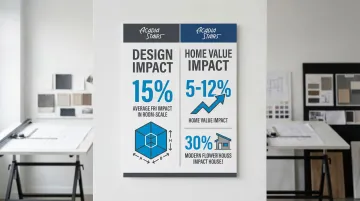
A railing isn't just a safety element—it's a structural piece of décor that fundamentally affects light flow, perceived room size, and the visual cohesion of your home's interior. Design surveys indicate that frameless glass infill can increase perceived room size by approximately 15% by removing visual barriers and maximizing natural light transmission between floors.
Consider the contrast: a traditional setup with solid wood balusters creates visual weight and blocks sightlines. A modern glass or cable system maintains transparency, allowing light to pass uninterrupted and making smaller spaces feel significantly larger than their actual square footage.
Staircases are visible from entryways, living rooms, and upper hallways simultaneously—which means your railing choice ripples across every connected space. A mismatched railing style creates friction; a cohesive one ties your home's floors together visually. The financial case is just as clear: market analysis suggests modern railing features like glass or black powder-coated finishes can boost home asking prices by 5–12%, with 30% of homebuyers specifically prioritizing modern railing design.
Sleek and Transparent: Glass Railing Design Ideas
Frameless Glass Panels
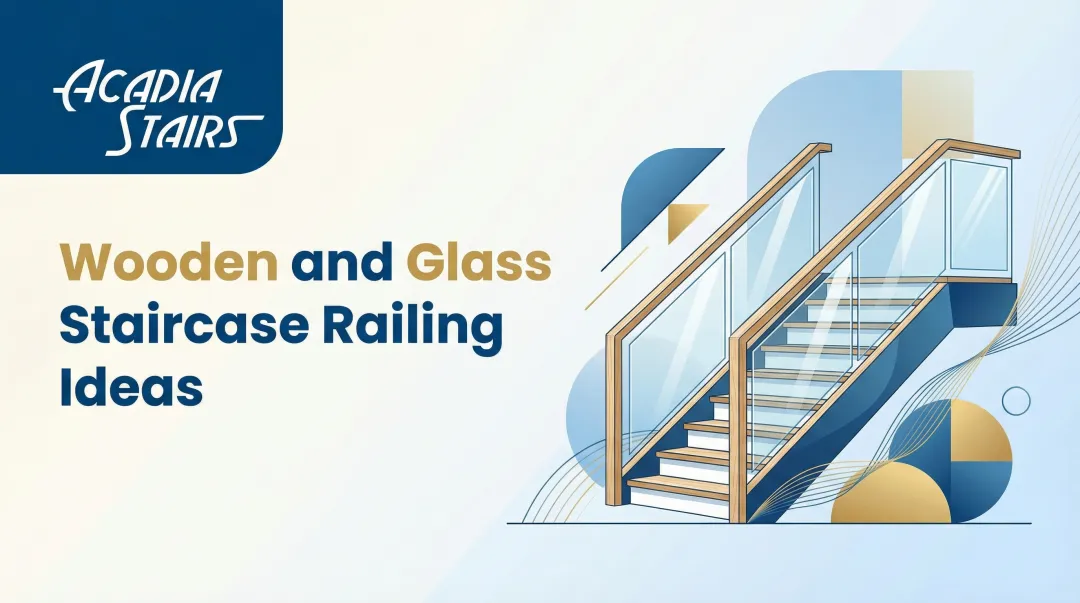
Frameless glass panels create a "barely-there" effect that lets light pass uninterrupted between floors, makes spaces feel larger, and delivers a clean, minimalist aesthetic ideal for modern and contemporary interiors.
The transparency eliminates visual barriers while maintaining safety. This style works especially well with floating stair treads, where the goal is an illusion of steps suspended in air. Without posts or frames breaking your view, the treads themselves become the focal point.
Glass types and safety standards:
- Laminated glass is the standard for most guard applications under current building codes. The IBC requires glass in guards to be laminated, fully tempered, or heat-strengthened so the interlayer holds shards together if breakage occurs
- Tempered glass may be permitted where no walking surface exists below the railing, or where the surface is permanently protected from falling glass
- All glass must meet CPSC 16 CFR Part 1201 Category II or ANSI Z97.1 Class A safety glazing standards
Pin-Mounted and Standoff Glass
Pin-mounted or standoff glass styles attach hardware directly to the stair tread or wall rather than using vertical posts. The result is a post-free walkway that maximizes visual continuity and preserves floor space.
This approach works best in:
- Compact stairwells where every inch of visual space matters
- Open-concept homes where preserving sightlines to adjacent rooms is a priority
- Modern interiors where minimal hardware reinforces a clean, uncluttered look
Installation typically positions standoffs 1.75 to 2 inches from the edge of the mounting surface, with stainless steel pins anchored into the stair stringer or floor slab. Note that IBC 2021 requires a top rail for structural glass baluster panels unless the laminated glass is specifically tested to remain in place after breakage.
Glass with Contrast Framing
Pairing glass infill with bold metal framing (black powder-coated steel or brushed stainless) creates a more defined, architectural look. The glass provides transparency while the metal frame adds visual weight and intentionality.
This approach suits homeowners who want the openness of glass but also want the railing to register as a deliberate design feature rather than disappear entirely. The contrast between transparent panels and dark metal creates a graphic, high-impact aesthetic that works particularly well in transitional or industrial-leaning interiors.
Custom-built systems like those from Acadia Stairs let you specify exact frame dimensions, metal finishes, and powder-coat colors so the railing fits your space rather than the other way around.
Industrial and Open: Metal and Cable Railing Ideas
Cable and Rod Infill
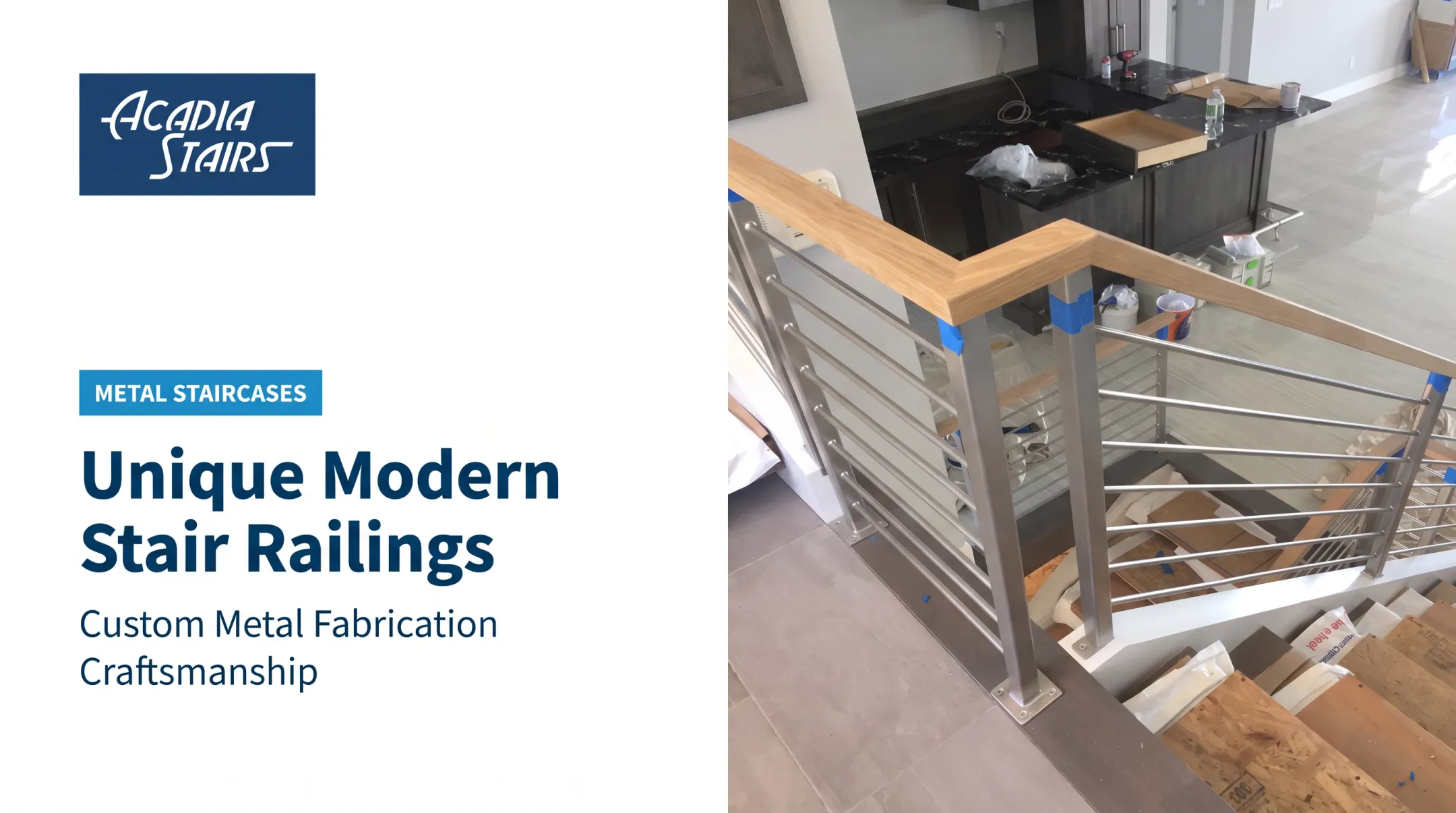
Horizontal cable and rod railings emphasize the staircase's rise with taut, linear elements that maintain open views between cables. This style suits both modern industrial and coastal/contemporary aesthetics.
Cable vs. rod differences:
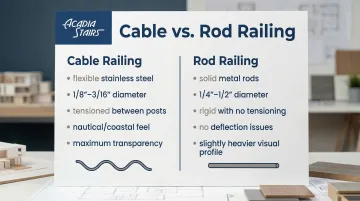
- Cable railing uses flexible stainless steel cables (typically 1/8" or 3/16" diameter) tensioned between posts, offering a nautical feel and maximum transparency
- Rod railing uses solid metal rods (1/4" to 1/2" diameter) that are rigid, require no tensioning, and eliminate deflection issues, though with a slightly heavier visual profile
Cable railings pair especially well with wood cap rails and dark metal posts. The contrast between warm wood and cool metal adds dimension without visual clutter.
Code compliance considerations:
Cable railings must meet the IRC 4-inch sphere rule, which presents unique challenges due to cable flexibility. Manufacturers recommend spacing cables 3 to 3-1/8 inches on center to account for deflection under load. Structural posts should be spaced no more than 4 feet apart to maintain proper tension.
Vertical Metal Balusters
Where cable systems run horizontally, vertical metal balusters take the opposite approach — drawing the eye upward and emphasizing ceiling height. Modern metal versions feature flat, square, or slim round profiles that replace the ornate turned wood baluster with something cleaner and more graphic.
Black powder-coated balusters against light walls or natural wood treads create a striking high-contrast aesthetic that ranks among the most popular current trends. Paired with white oak treads or painted risers, black balusters work equally well in a new modern build or a renovated Victorian home.
Code requirements:
Vertical balusters must adhere to strict opening limitations. The IRC requires that openings not allow passage of a 4-inch diameter sphere, with a slightly more permissive 4-3/8-inch sphere allowance on the open side of stairs. The triangular opening formed by riser, tread, and bottom rail cannot allow a 6-inch sphere to pass.
Floating Stair Railings with Minimal Hardware
The floating railing concept makes hardware intentionally minimal or hidden, creating the appearance that the staircase rises without visible structural support. This demands precise fabrication and installation to maintain both the visual effect and structural integrity. Panel-built systems fabricated in sections up to 20 feet allow for pre-assembly verification before installation, ensuring that minimal hardware doesn't compromise safety.
Powder-Coated Metal Finishes
The finish you choose shapes a railing's personality more than most people expect:
- Matte black reads as bold and contemporary
- Brushed silver or satin nickel leans refined and transitional — a good fit for spaces that blend old and new
- Custom colors (warm bronze, navy, forest green) allow for personalized statement pieces
Powder coating offers superior durability over paint, resisting chipping, fading, and corrosion. The process applies dry powder electrostatically and cures it under heat, producing a hard, uniform surface that bonds to the metal rather than sitting on top of it.
Industry standards:
- AAMA 2603: Suitable for interior use with good abrasion resistance
- AAMA 2604: Intermediate specification ideal for high-traffic interiors or residential exteriors, requiring 5-year Florida exposure testing
- AAMA 2605: High-performance (often PVDF/fluoropolymer) requiring 10-year Florida exposure testing, best for coastal or high-UV environments
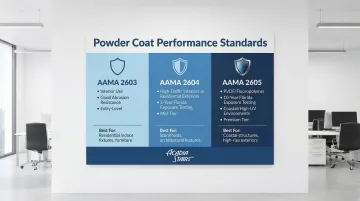
For most indoor residential applications, AAMA 2604 provides the optimal balance of durability and cost.
Warm Meets Modern: Wood, Mixed Material, and Statement Railing Ideas
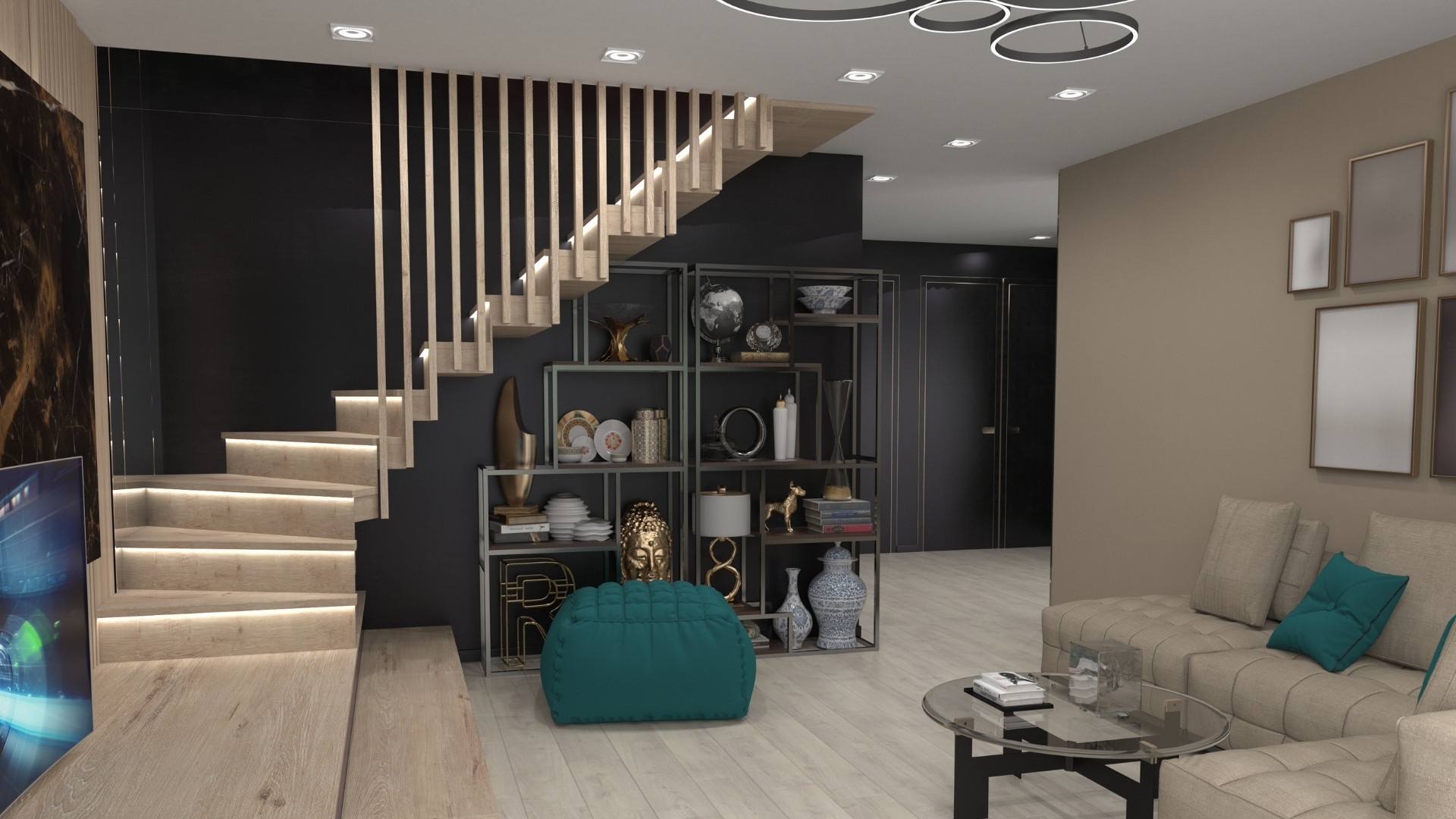
Pairing a wood cap rail or handrail with metal posts and infill softens an otherwise industrial design. The warmth of natural wood—walnut, oak, hickory—against black metal creates the popular "warm industrial" or "organic modern" aesthetic.
Mixed-material railings succeed when finishes are deliberately coordinated:
- Match wood stain to flooring or cabinetry tones
- Keep metal finishes consistent across all hardware in the space
- Use the wood species that already appears in your home's architecture
Once the material pairing is dialed in, some homeowners take it further. Statement railings push into bold curved forms, custom geometric patterns, or unconventional materials like blackened steel or weathered wood. In open-plan homes, a staircase with this kind of presence pulls double duty—it divides the space and defines it.
For homeowners who want this level of customization without the guesswork, Acadia Stairs fabricates steel railing structures pre-drilled for wood handrail caps. You can specify exact wood species—red oak, white oak, maple, cherry, mahogany, or walnut—alongside your preferred metal finish, so the railing works with what's already in the space.
How to Choose the Right Railing Style for Your Home
Three key factors determine the right railing for your space:
1. Overall interior design style
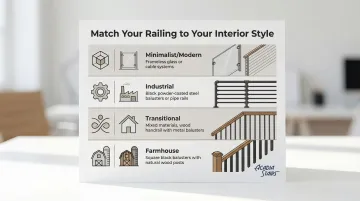
Match your railing to your home's broader aesthetic:
- Minimalist/Modern: Frameless glass or sleek cable systems
- Industrial: Black powder-coated steel balusters or pipe rails
- Transitional: Mixed materials—wood handrails with metal balusters or cable infill
- Farmhouse: Square vertical balusters (often black) with natural wood posts and rails
2. Stair configuration and architectural constraints
Consider your staircase type and surrounding context:
- Straight runs and switchbacks accommodate longer panel sections (up to 20 feet), making installation more efficient
- Curved and spiral staircases require precise custom fabrication to accommodate curved geometry
- Open-concept layouts benefit from transparent materials (glass, cable) that maintain sightlines
- Enclosed stairwells can support more solid infill without making the space feel cramped
3. Budget and long-term maintenance expectations
Survey data reveals that 78% of homeowners prioritize aesthetics over budget, but practical considerations matter:
- Powder-coated steel requires minimal maintenance (occasional soapy water cleaning)
- Stainless steel (Type 316) offers superior corrosion resistance for high-humidity environments
- Glass panels require frequent cleaning to manage fingerprints but provide long-term clarity
- Mixed materials balance cost with visual interest
Beyond these three factors, think about the railing in context—not just the staircase itself but adjacent rooms, flooring materials, window placement, and ceiling height. A railing that looks beautiful in isolation can feel disconnected if it ignores the surrounding design.
Custom-built railings let you specify exact dimensions, materials, and powder-coat finishes so the railing fits the space precisely. Acadia Stairs works with homeowners, architects, and contractors throughout the US—shipping nationwide—to make custom fabrication practical for any project, regardless of location.
Common Stair Railing Design Mistakes to Avoid
Three mistakes show up repeatedly in stair railing projects — and all three are avoidable with a little planning.
Choosing Trends Over Context
Cable railing looks sharp in a modern loft. In a traditionally styled home with crown molding and paneled doors, it creates visual dissonance — and can hurt resale value. Your railing should work with the home's architectural language, not against it.
Ignoring Baluster and Infill Spacing
Too-wide spacing feels unsafe and looks unfinished. Too-dense infill in a narrow stairwell blocks light and makes the space feel closed in. The right balance satisfies code requirements without sacrificing the open, airy quality good railing design delivers.
Mismatched Metal Finishes
Mixing brushed nickel hardware, matte black balusters, and chrome fixtures in the same stairwell creates a cluttered, inconsistent look. Commit to one metal family throughout. If mixing metals is intentional, keep one finish dominant and limit accent finishes to one or two supporting roles — never equals.
Getting these three things right won't make your railing invisible, but it will make everything else in the space look more intentional.
Frequently Asked Questions
What are the trending stair rail designs?
Current trends favor frameless glass panels for an open sightline, horizontal cable and rod infill for industrial aesthetics, vertical black metal balusters for high-contrast graphic impact, and mixed wood-and-metal combinations with powder-coated finishes that bridge modern and traditional styles.
What's the code for stair railing?
The IRC generally requires railings on stairs with 4 or more risers, a minimum height of 34-38 inches, and graspable handrail profiles. However, codes vary by jurisdiction—verify specific requirements with your local building department before finalizing any design.
What are common staircase design mistakes?
The most frequent errors are:
- Choosing a railing style that clashes with the home's overall aesthetic
- Mismatching metal finishes across hardware and fixtures
- Ignoring baluster spacing rules that affect both safety compliance and visual balance
What is the most durable material for indoor stair railings?
Powder-coated steel and stainless steel rank among the most durable options, offering resistance to wear, corrosion, and impact. AAMA 2604 powder coatings provide superior hardness and mar resistance, while tempered glass panels are also highly durable when properly mounted and maintained.
Can you mix materials in a modern stair railing design?
Yes—mixed-material railings are a hallmark of modern design. The key is deliberate coordination:
- Match wood tones to existing flooring
- Keep metal finishes consistent across the space
- Ensure the combination looks intentional, not arbitrary