Introduction
Most staircases don't fail because of bad taste — they fail because the design doesn't match the space. The best simple stair designs combine clean lines, smart materials, and purposeful details to create something that feels both effortless and finished. Yet it's easy to get lost in elaborate inspiration that doesn't reflect what's actually achievable for your home's scale, style, or budget.
This guide covers practical staircase shapes, material choices, railing styles, and finishing details that make a real difference. By the end, you'll know exactly what to look for — and what to avoid — when narrowing down a design that works for your home.
Key Takeaways
- Straight and switchback staircases offer timeless appeal with minimal visual clutter and straightforward construction
- Floating and open-riser designs create airy, modern aesthetics without requiring dramatic footprints
- Material choices like wood treads, metal frames, and glass or cable railings define the overall tone more than shape alone
- Small upgrades like step lighting and under-stair storage deliver outsized visual and functional impact
- The right staircase starts with your space: layout, ceiling height, and home style should guide every decision
Simple Straight Staircase Ideas
Straight staircases remain the most popular choice for simple stair design. They're space-efficient, easy to build, and naturally complement both modern and traditional interiors. The National Association of Home Builders supports stair geometry standards that facilitate this common configuration, with provisions limiting maximum riser height to 8¼ inches and minimum tread depth to 9 inches for residential dwellings. The right finishes — from contrast paint to natural wood treads — transform a straightforward run into a genuine design statement.
Clean Lines with a Classic Straight Run
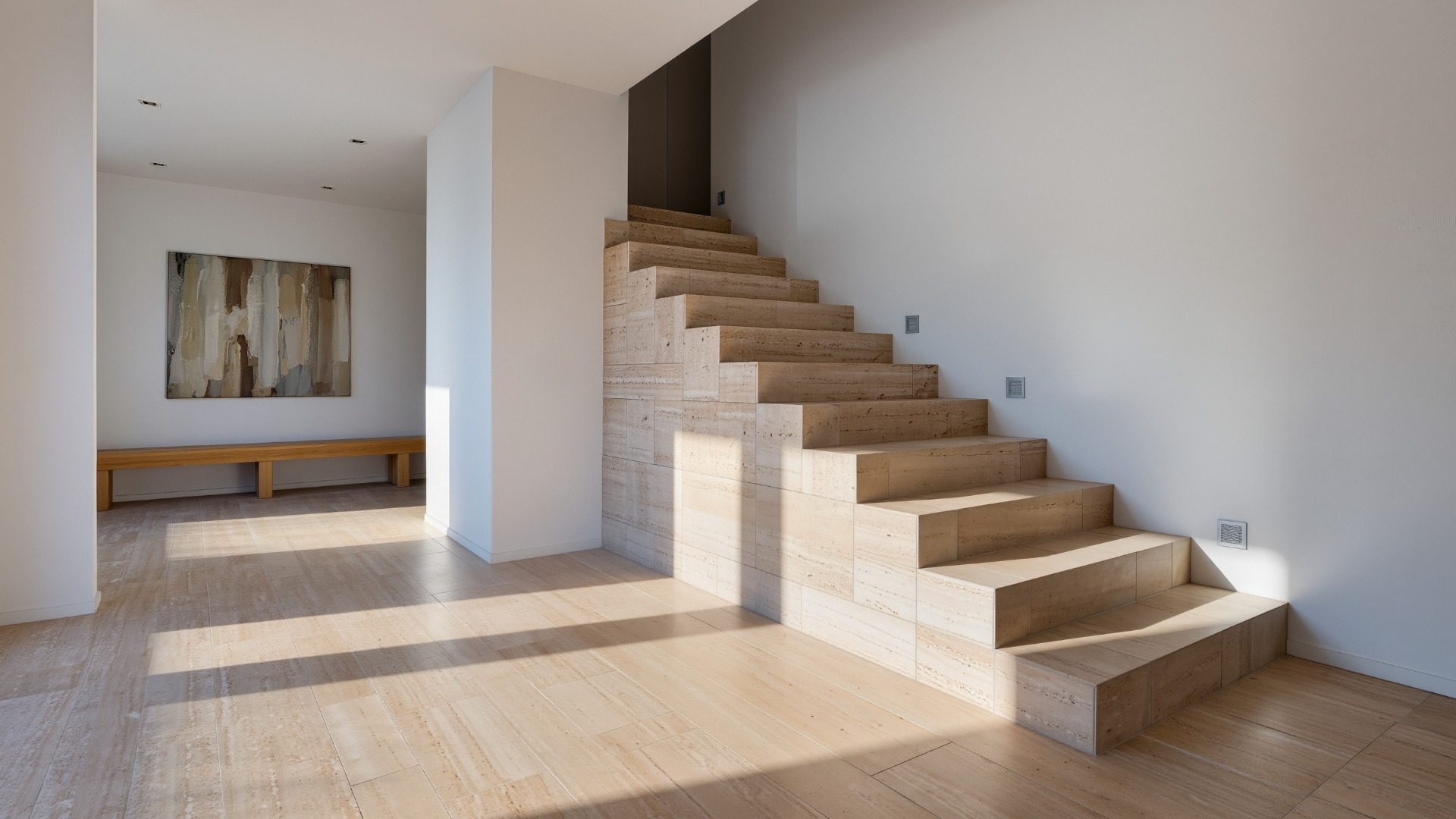
A clean, straight staircase with a single stringer or closed stringer design, white risers, and natural wood treads creates a sharp, classic look that blends into nearly any interior. This combination delivers a "classic, high-contrast look" that matching hardwood throughout simply can't replicate.
Paint contrast between risers and treads—white risers with dark oak treads, for example—is one of the easiest ways to add visual interest to a minimal design. White risers visually open up darker spaces, brighten staircases, and provide an elegant balance when paired with natural wood, fitting styles from farmhouse-inspired to sleek contemporary.
Switchback and L-Shaped Staircase Designs
Switchback (U-turn) and L-shaped staircases suit homes where a straight run would consume too much floor space. These configurations use landings or turns to break up the run and keep the overall footprint compact.
The shape itself becomes a design detail — a switchback seen from above creates a striking geometric form, especially when paired with open railings. Acadia Stairs builds both configurations across all stringer types and incorporates geometric winder treads where space is particularly tight.
Neutral Palettes, Contrast, and Color
Color and finish keep a staircase looking simple yet intentional. Neutral tone-on-tone schemes—whites, grays, natural wood—create seamless elegance, while high-contrast pairings like black railings against white walls or blonde wood against dark metal deliver more visual punch.
Quick updates for existing staircases:
- Repaint traditional spindles in matte black or white for an instant railing refresh
- Add a stair runner — inexpensive, traction-improving, and structurally non-invasive
- Paint risers a bold color or graphic pattern while leaving treads natural wood
Open and Floating Staircase Designs
Floating and open-riser staircases are a natural fit for modern, contemporary interiors. Their defining feature is the visual lightness they create by eliminating closed risers and hiding structural supports, making even compact spaces feel more open.
What Makes Floating Stairs Look So Clean
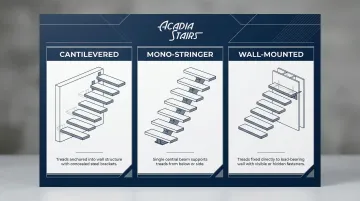
The key elements of a floating staircase include cantilevered or mono-stringer construction, open risers, and flush-mounted treads. Floating stairs are designed to look like they are "floating in mid-air without any structural support," often using hidden steel stringers or support brackets anchored directly into a load-bearing wall.
Common structural approaches:
- Cantilevered: Treads project from a load-bearing wall with hidden brackets
- Mono-stringer: A central steel spine runs beneath the treads, providing support while maintaining openness
- Wall-mounted: Treads attach directly to structural walls with minimal visible hardware
Floating stairs work especially well in open-plan homes where the staircase is visible from multiple rooms, serving as both a functional element and a visual focal point. Open risers allow "visibility and light to pass between steps," maximizing light flow and making spaces feel larger.
Railing Styles That Keep Things Light and Open
Three railing options dominate modern open staircase designs:
- Glass panels: Tempered glass (typically 8mm or thicker) delivers maximum visibility and an ultra-modern look, mounted with minimal hardware to preserve the floating effect
- Cable railing: Stainless steel cables (typically 1/8 inch diameter) create a sleek, industrial-contemporary feel while keeping sightlines open; horizontal lines add visual rhythm without bulk
- Thin metal rod infill: Vertical or horizontal rods offer clean architectural lines with a slightly warmer feel than cable systems
Railing finish significantly shapes the overall tone. Matte black creates bold contrast, brushed stainless reads as quietly sophisticated, and powder-coated colors let you tie the staircase directly to your interior palette.
Acadia Stairs builds floating staircase systems to exact specifications using stainless steel (#304 and #316 grades), glass, and wood. Every project goes through a collaborative design process, and finished systems ship nationwide—so you get a cohesive result without juggling multiple fabricators.
Materials and Finishes for a Simple, Timeless Staircase
Material choice is the single biggest factor in determining how a staircase feels. The same straight staircase looks completely different in white oak versus dark walnut versus concrete. Understanding the options helps homeowners make confident decisions.
Wood Tread Options and 2025 Trends
Popular wood species and characteristics:
| Species | Janka Hardness | Best For | Typical Finish |
|---|---|---|---|
| Hickory | ~1820 | High-traffic areas; rustic aesthetics | Distressed, wire-brushed |
| Hard Maple | ~1450 | Contemporary spaces; uniform look | Light stains, natural |
| White Oak | ~1360 | Versatile applications; water resistance | Matte, wire-brushed |
| Red Oak | ~1290 | Traditional homes; warm tones | Medium stains, satin |
| Walnut | ~1010 | Luxury spaces; rich color | Clear coat, natural |
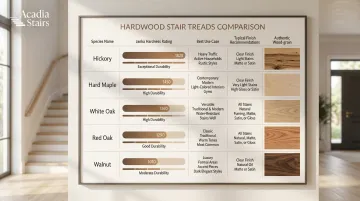
White Oak is prized for versatility and water resistance, while Hickory offers extreme durability for high-traffic stairs.
2025 finish trends favor natural and textured surfaces:
- Sheen: Low matte finishes (10-20% gloss) are becoming standard for mid-to-high-end applications
- Texture: Softer wire-brushed effects, particularly on White Oak, deliver durability and organic appeal
- Color: Warm mid-tones and "greige" (grey + beige) are replacing cool grays and high-gloss dark stains
Those finish choices carry naturally into the structural frame — where material selection shapes the staircase's overall character just as much as the tread.
Metal Frames, Stringers, and Hardware
The stringer and structural frame define a staircase's style:
- Open mono-stringer: A single central beam creates maximum visual openness — the go-to for contemporary builds
- Closed box stringer: Solid sides enclose the treads, lending a formal, traditional look
- Cantilevered stringer: Hidden supports produce a true floating effect, with treads appearing unsupported from the side
Metal frames in powder-coated black or brushed steel give a clean, durable look. Powder coating is a finishing process where dry powder is electrostatically applied and then heat-cured at 385°F. This creates a coating that is resistant to chipping, fading, scratches, or wear, outperforming standard paint in long-term durability. AAMA 2604/2605 specifications ensure long-term color and gloss retention (5 to 10 years).
Mixing Materials for Added Depth
The most successful material pairings work because each element earns its place. Two or three tones, used deliberately, add character without competing:
- Walnut treads + black steel frame: Rich warmth against industrial strength
- Light oak treads + frameless glass railing: Scandinavian minimalism with transparency
- Concrete-look treads + stainless cable: Urban contemporary with refined details
Stick to two or three tones. Beyond that, the palette starts working against itself.
Small Details That Elevate a Simple Staircase
Step Lighting
Two main approaches to stair lighting serve both safety and atmosphere:
Recessed riser lights: Integrated into each step for a flush, modern look. Quality LED step lights can deliver 80 lumens at just 2.5W, and motion-sensor options cut energy use further by activating only when someone is present.
Handrail or wall-mounted sconces: Provide ambient lighting along the stairwell for a softer effect.
Color temperature matters: 3000K (warm white) creates cozy residential ambiance, while 4000K (neutral white) suits contemporary spaces. Motion-activated LEDs handle both goals well — safer treads at night, without lights burning all day.
Under-Stair Space
The space beneath a staircase is easy to ignore during planning — and hard to retrofit once construction is done. Popular uses include built-in shelving, reading nooks, home offices, pantries, and concealed storage. Deciding how you'll use it before the staircase is built makes the integration cleaner and less costly.
A few approaches worth considering:
- Fit a compact home office with a desk, shelving, and task lighting under the upper flights
- Build a reading nook with a cushioned bench and recessed overhead light
- Install a climate-controlled wine rack or display cabinet
- Tuck a powder room beneath the stairs if plumbing access allows
- Create a dedicated pet space with a built-in bed and storage for supplies
How to Choose the Right Simple Staircase Design for Your Home
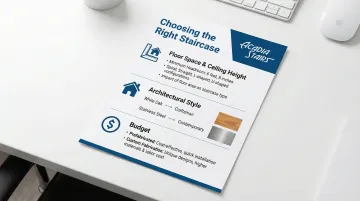
Three primary factors should guide any staircase design decision:
- Floor space and ceiling height: The International Residential Code requires minimum 6 feet 8 inches headroom and 36 inches of width. A straight run needs a long linear footprint; spiral or switchback configurations handle tighter spaces.
- Architectural style: Materials and finishes should speak the same language as your home. White oak with oil-rubbed bronze suits a craftsman bungalow; brushed stainless with glass fits a contemporary interior.
- Budget: Determines material grade and whether the design is prefabricated or fully custom. Prefab systems work well for standard layouts and tighter timelines. Custom fabrication is worth the investment for non-standard openings, unusual dimensions, or when the staircase is meant to be a focal point.
Once you've worked through these factors, the next step is translating them into an actual design. Acadia Stairs brings over 40 years of combined experience to that process—working with homeowners, architects, and contractors to resolve material, structural, and layout questions before fabrication begins. Their process includes 3D renderings and shop drawings so there are no surprises, and they ship finished staircases nationwide from their Fishkill, NY facility.
Frequently Asked Questions
What is the 7-11 rule for stairs?
The 7-11 rule is a guideline for stair proportions: riser height should be approximately 7 inches and tread depth approximately 11 inches. The International Residential Code specifies maximum riser height of 7¾ inches and minimum tread depth of 10 inches. Following this ratio ensures comfortable, safe climbing while meeting most residential building codes.
What is the trend in wood stairs in 2025?
2025 wood stair trends favor natural, minimally processed finishes: wire-brushed textures, matte or satin coatings, and warm mid-tones in species like white oak and hickory. The shift moves away from dark stains and high-gloss lacquers toward surfaces that feel organic and suit open-plan, contemporary interiors.
What type of staircase is best for a small home or tight space?
Spiral staircases and floating mono-stringer designs are the most space-efficient options. Spiral stairs require as little as 3.5 square feet of floor space while providing safe vertical access. Open risers and glass or cable railing also help small staircases feel less visually bulky by allowing light to pass through.
What is the difference between floating stairs and traditional stairs?
Traditional stairs have closed risers, visible stringers, and a solid enclosed structure. Floating stairs use an open-riser design with hidden or minimal structural supports, giving each tread the appearance of floating—ideal for modern interiors where visual openness is a priority.
Can a staircase be customized to match my home's existing decor?
Yes. Staircases can be fully customized in terms of material, finish, railing style, tread profile, and structural form. Working with a custom manufacturer like Acadia Stairs allows homeowners to match the staircase precisely to their home's existing palette and overall style.