Introduction
Most homeowners don't think about railings until they're mid-project — and then suddenly every choice feels high-stakes. The right system can define your staircase or deck's entire look, whether you're building a floating indoor stair or framing an outdoor deck with open views.
The challenge is that material, style, budget, and code compliance all collide at once. This guide breaks down the top modern railing materials, design ideas for stairs and decks, emerging 2025 trends, and how to choose the right system for your space.
Key Takeaways
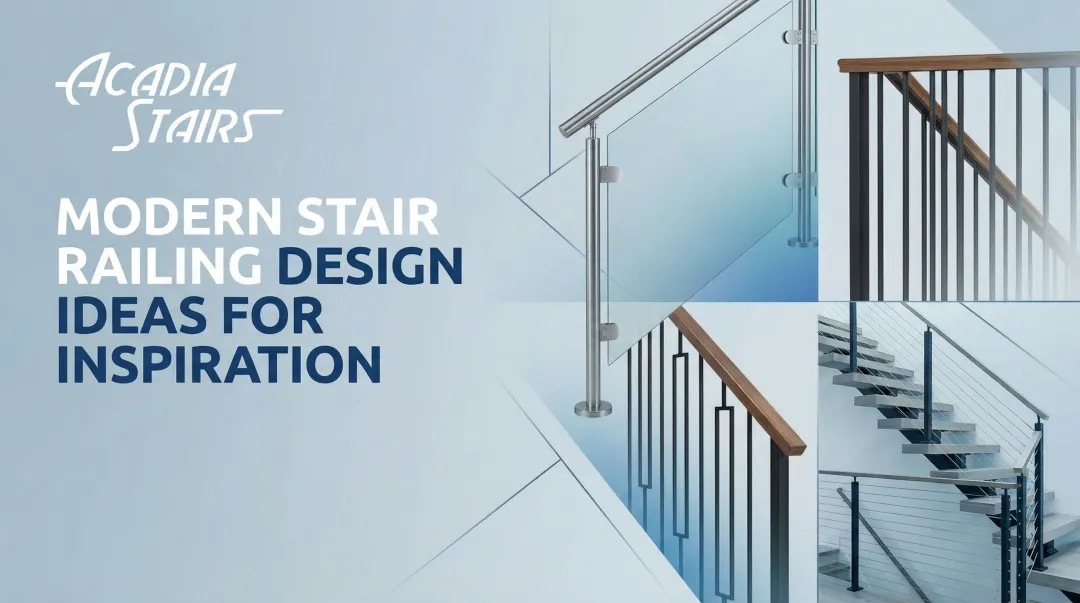
- Modern railings fall into five main categories: glass, cable, metal, wood, and mixed media—each with distinct aesthetics and maintenance needs
- Glass and cable dominate modern homes because they preserve sightlines and let light move freely through a space
- Stair railings emphasize clean lines and visual contrast; deck railings also need to hold up against weather and moisture year-round
- 2025 trends favor matte black metal, mixed-material combinations, integrated LED lighting, and low-profile horizontal cable systems
- Always verify local building codes—especially the 4-inch sphere rule—before finalizing your design
Modern Railing Materials: What Are Your Options?
Material choice affects durability, maintenance, cost, and visual weight. Where the railing will be used—interior stairs versus outdoor decks—and your home's architectural style should drive that decision. Five primary categories cover most modern applications:
Glass Railing
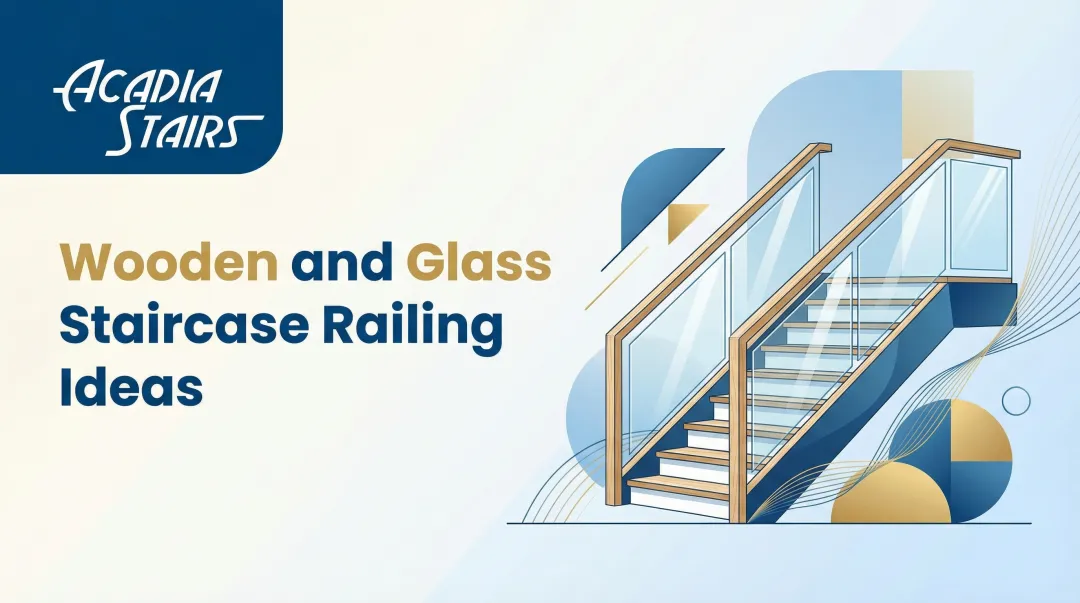
Glass panels—framed, semi-framed, or fully frameless—create a nearly invisible barrier that maximizes natural light and preserves views. This style is ideal for modern, minimalist, and open-concept homes.
Key requirements:
- Tempered or laminated glass for safety
- Frameless systems use standoff pins or base channels to mount panels without visible posts
- Laminated glass is now the standard for guardrails to prevent fallout if the glass shatters
Cable Railing
Cable railing systems use horizontal stainless steel cables strung between metal or wood posts. They offer a semi-transparent, industrial-modern look that works equally well indoors and on decks with views to preserve.
Code considerations:
- Post spacing and cable tension must meet the 4-inch sphere rule
- Cables typically spaced at 3 inches on center to prevent deflection under load
- Stair installations require angled cable fittings or adjustable terminals to maintain tension along the rake angle
Metal Railing (Steel, Wrought Iron, Aluminum)
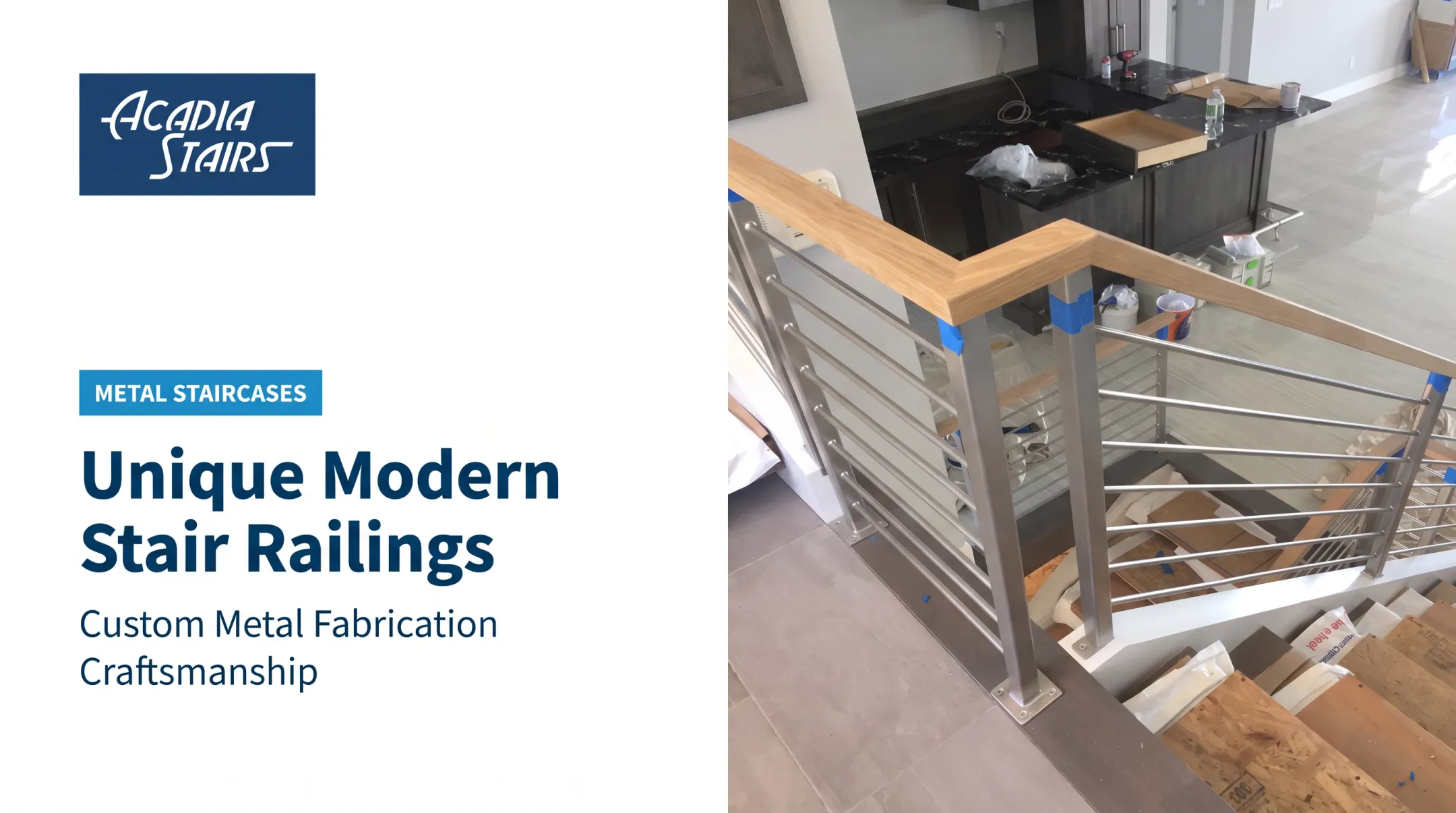
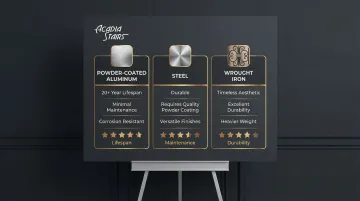
Metal railings range from simple powder-coated steel balusters to ornate wrought iron designs. Steel and aluminum resist corrosion and can be powder coated in a wide range of colors for long-lasting customization. This is the most versatile category, working for both modern and traditional aesthetics.
Durability comparison:
- Powder-coated aluminum lasts 20+ years with minimal maintenance
- Steel requires quality powder coating to prevent rust
- Wrought iron offers timeless appeal with excellent durability
Wood Railing
Wood railing is the most traditional and warmest-looking option, available in pressure-treated lumber, cedar, ipe, and hardwoods. It works best for classic, craftsman, or rustic styles.
Maintenance reality:
- Requires regular staining or sealing every 1-3 years
- Without maintenance, wood warps, cracks, and rots
- Cedar and redwood offer better natural decay resistance than pine
Mixed-Material Railing
Combining materials lets you balance warmth and modernity in a single railing system. Common pairings include:
- Metal posts with wood cap rails for an industrial-meets-natural look
- Cable infill within wood frames to preserve sightlines while keeping warmth
- Glass panels alternating with metal balusters for rhythm and light
- Powder-coated steel bases with live-edge wood handrails for a bold contrast
Modern Stair Railing Ideas
Stair railings are often the first design feature guests notice when entering a home, so material and style choices carry real weight. These five approaches cover the most popular directions in modern residential and commercial design:
Floating Stairs with Glass Panel Railing
Frameless or pin-mounted glass panels complement floating stair systems by allowing treads to appear to hover in space. The railing visually recedes, keeping attention on the staircase form itself.
Design tip: This look works especially well with dark-toned or wood treads against light-colored interiors, creating maximum contrast and visual drama.
Cable Railing with Mixed Metal and Wood
Pairing stainless steel cable infill with black steel posts and a natural wood cap rail gives the look of an industrial loft softened by warm materials. Matching the post finish to the stair stringer ties the whole assembly together.
Technical requirement: Cable railing on stairs requires angled cable fittings or adjustable terminals to maintain the required tension along the rake angle—standard straight fittings will cause cables to kink or lose tension.
Powder-Coated Metal Balusters with Custom Finish
Vertical metal balusters—available in square, round, or twisted profiles—can be powder coated in matte black, brushed bronze, or custom colors to match any interior palette. This style balances enclosure with airiness and is highly durable and low-maintenance.
Working with a fabricator: Acadia Stairs builds custom powder-coated metal stair railings to exact project specifications. Every system is designed through a direct client process, then shipped anywhere in the continental US ready for installation.
Horizontal Rod Railing for a Seamless Flow
Horizontal rod infill is a sleeker alternative to cable that eliminates the visual "sag" between posts. This style works particularly well on straight or switchback stairs where the eye naturally follows horizontal lines upward.
Best applications:
- Modern, Scandinavian, and minimalist interiors
- Stairs where you want to emphasize room height
- Spaces where cable deflection is a concern
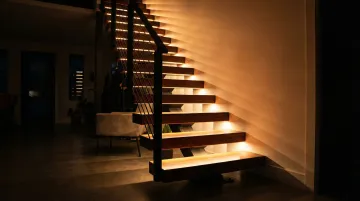
LED-Integrated Railing for Nighttime Drama
LED lighting integrated into stair treads, post caps, or baluster recesses creates dramatic nighttime effects. Beyond aesthetics, it serves a practical purpose — illuminating the stair path for safer navigation after dark.
Recommendation: Pair LED-lit elements with matte black or dark metal for maximum contrast and visual impact.
Modern Deck Railing Ideas
Deck railings face demands that indoor stairs don't—UV exposure, moisture, wind loading, and stricter height codes for elevated structures. The four styles below handle all of that while keeping the look sharp.
Horizontal Cable Railing for View-Preserving Decks
Horizontal cable railing is the go-to choice for decks that overlook scenic views—water, mountains, or landscapes. Stainless steel cables are virtually invisible from a distance while meeting safety requirements.
Installation details to know:
- Post spacing typically cannot exceed 4–6 feet
- Corner posts require extra reinforcement to handle cable tension
- Use marine-grade stainless steel (316) for coastal applications
Black Metal with Wood Cap Rail for Contrast
Matte black powder-coated metal posts and balusters paired with a warm wood or composite cap rail create high-contrast looks that photograph well and age gracefully outdoors.
Powder-coated aluminum or steel resists rust and UV degradation, making this a genuinely low-maintenance pairing. Expect 20+ years of service life with minimal upkeep.
Glass Panel Railing for Unobstructed Outdoor Views
Exterior glass panel railings use tempered or laminated safety glass mounted in aluminum base channels or between stainless steel standoffs. Frameless designs create the effect of a floating barrier—a look that works especially well for elevated decks with strong views.
Glass requires periodic cleaning but no staining, sealing, or repainting—maintenance is about as minimal as it gets.
Mixed Horizontal Boards and Metal for a Modern Privacy Screen
Horizontal cedar or composite boards spaced 1–2 inches apart between metal posts offer a semi-private look with a contemporary feel. This pairs well with modern farmhouse and transitional home styles.
The board spacing also reduces wind exposure on elevated decks—a practical bonus that makes the space noticeably more comfortable for outdoor entertaining.
Each of these four styles can be mixed and matched with different post materials, finishes, and cap rail profiles to suit your deck's architecture and site conditions.
2025 Railing Trends to Watch
Railing design has shifted noticeably heading into 2025. These three trends are showing up across residential decks, interior stairs, and commercial installs alike:
Matte Black Metal Dominates Modern Exteriors
Matte black powder-coated railings have become one of the most searched finishes for both indoor stairs and outdoor decks. The dark finish creates sharp contrast against light decking, white walls, or natural wood. It reads equally well in contemporary, industrial, and farmhouse settings.
Industry reports highlight that matte black is "everywhere" in 2025. The powder coat finish also holds up well outdoors — resisting UV fading and surface corrosion better than painted alternatives.
Mixed-Material Combinations and Warm Metals
The shift toward combining materials in a single railing run—such as cable with wood posts, or glass panels with bronze hardware—is well established and still growing. There's also growing interest in warm metal tones (aged bronze, brushed gold, copper) as alternatives to the cool silver of stainless steel.
Warm metals add depth and texture, blending naturally with wood decking and stone hardscapes in a way that polished stainless rarely achieves.
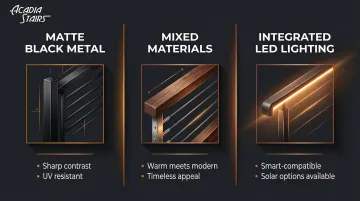
Integrated Lighting and Smart-Compatible Features
Railings that incorporate low-voltage LED strip lighting under handrails or post cap lights with motion sensors are rapidly growing in popularity. Solar-powered post cap lights for decks offer a sustainable and code-friendly lighting option that eliminates complex wiring.
Built-in LED strips on handrails can often connect to smart home platforms, letting you adjust brightness and timing without running new wiring or flipping a physical switch.
How to Choose the Right Railing for Your Space
Three factors drive most railing decisions: architectural fit, location, and whether a standard kit or custom fabrication makes sense for your project.
Match Railing Style to Home Architecture
The railing style should feel like a natural extension of your home's overall architectural language:
- Cable and glass: Modern and contemporary homes
- Wrought iron and wood: Traditional, colonial, or craftsman styles
- Mixed metal and wood: Transitional designs
Reference points: Look at your home's exterior materials, window frames, and hardware finishes to guide your railing selection.
Consider Location, Exposure, and Maintenance Tolerance
Outdoor deck railings need to withstand UV exposure, moisture, and temperature cycles. Powder-coated metal, aluminum, composite, and stainless steel are the most durable choices, with lifespans exceeding 20 years.
Indoor stair railings have more material flexibility but should still be chosen for durability in high-traffic areas. Wood requires the most maintenance regardless of location—expect to restain or reseal every 1-3 years.
Work with a Custom Fabricator for a Truly Tailored Result
Off-the-shelf railing kits can work for straightforward projects, but homes with irregular stair angles, unique layouts, or specific design visions benefit from working with a custom fabricator.
Acadia Stairs works directly with homeowners, architects, and contractors to specify exact dimensions, materials, and powder coat finishes. The result is a railing that fits the space precisely and reflects the client's style — shipped nationwide and installed by local contractors.
Railing Safety and Code Basics
Railing codes exist for good reason — and no design choice overrides them. Before installation, confirm requirements with a licensed contractor or your local building authority.
The 4-Inch Rule and Height Requirements
The 4-inch sphere rule (IRC R312.1.3 / IBC 1015.4) states that no opening in a residential railing system should allow a 4-inch sphere to pass through. This prevents children from getting their heads or bodies stuck.
Standard height requirements:
- 36 inches minimum for residential decks under 30 inches off the ground
- 42 inches minimum for elevated decks and commercial applications
- 34-38 inches for stair handrails (measured from the sloped plane of the stair nosing)
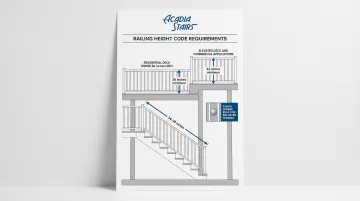
Requirements vary by jurisdiction, so always verify local amendments before finalizing your design.
Load Requirements and Material Integrity
Railings must withstand a minimum concentrated load of 200 pounds applied in any direction at any point along the top (IBC 1607.8.1 / IRC R301.5). Each component of the system must be engineered to meet that threshold, including:
- Cable tension and termination hardware
- Glass panel thickness and frame connections
- Post anchoring and base plate fastening
An experienced fabricator will account for all three during the design phase — not as an afterthought during installation.
Frequently Asked Questions
What is the average cost to install stair railings?
Costs vary widely by material. Wood railings average $40–$50 per linear foot installed, cable systems range from $50–$200, and glass railings run $100–$600 per linear foot. Custom metal railings sit at the higher end, reflecting their durability and fabrication precision.
What are the railing trends for 2025?
Top trends include matte black metal finishes, mixed-material combinations (cable with wood, glass with bronze hardware), integrated LED lighting, and warm metal tones like aged bronze as alternatives to polished stainless steel.
What is the 4-inch rule for railings?
The 4-inch rule is a standard building code requirement specifying that no gap in a railing system should be large enough for a 4-inch sphere to pass through. This applies to baluster spacing, cable spacing, and any infill openings, designed to prevent children from getting trapped.
What are the alternatives to stair railings?
Some codes waive railing requirements for low-rise stairs (typically fewer than 4 risers or under 30 inches high). Half-walls, solid privacy panels, or built-in bench seating along stair edges are common substitutes — but always verify your local code before skipping a railing.
What is the best material for outdoor deck railings?
Powder-coated aluminum and stainless steel cable are among the most durable options for outdoor use due to their resistance to UV, moisture, and temperature changes. Composite and glass are also strong performers, while wood requires the most ongoing maintenance.
Can the same railing style work for both interior stairs and an outdoor deck?
Yes, using a consistent railing system — such as black cable railing on both interior stairs and an adjoining deck — ties the two spaces together visually and reinforces a unified design throughout the home. Material choices may need to adjust slightly for exterior durability, but finishes and profiles can be matched closely.