Introduction
Wood and glass railings have become one of the defining details of modern and transitional home design. The pairing works because each material does what the other can't: wood adds warmth and texture, glass keeps the staircase open and light-filled. Together, they turn a purely functional element into an architectural statement.
Many homeowners assume they have to choose one or the other. In reality, combining both materials gives you more design flexibility than either option alone.
This guide covers design ideas, glass and wood type choices, cost expectations, and maintenance tips to help you plan your railing upgrade with confidence.
Key Takeaways
- Wood and glass railings blend warmth with openness, suiting modern to transitional styles
- Glass railings can boost home value by 5–15%
- Frameless designs require laminated glass — tempered glass works for framed systems
- Stick to hardwoods like oak, maple, or walnut — pine won't hold up long-term
- Expect $200–$700 per linear foot installed for glass systems
Why Choose a Wood and Glass Staircase Railing?
The Best of Both Worlds
Wood adds warmth, texture, and a connection to natural materials. Glass creates openness, amplifies light, and prevents the railing from visually choking the staircase. Together, they balance coziness with contemporary elegance—wood provides the tactile comfort of a handrail while glass maintains sightlines and lets light flow freely through your home.
Traditional wood railings can feel heavy and block views; all-glass systems sometimes feel cold or clinical. Combining the two sidesteps both problems.
Universal Design Versatility
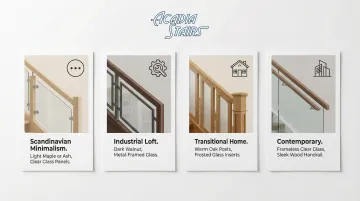
Wood and glass combinations suit a wide range of interior styles:
- Scandinavian minimalism: Light maple or ash with clear glass
- Industrial lofts: Dark walnut with metal-framed glass panels
- Transitional homes: Oak posts with frosted glass inserts
- Contemporary spaces: Frameless glass with sleek wood handrails
The pairing customizes easily to match existing flooring, cabinetry, or architectural details—which is why it works in new builds and renovations alike.
Measurable Impact on Home Value
High-quality staircase railings deliver tangible returns. Industry data indicates that glass railings can increase a home's resale value by 5% to 15%, driven by the high-end look and unobstructed views that modern buyers actively seek. For modern home settings specifically, glass stair railings can deliver ROI as high as 75%, making this upgrade both beautiful and a strong investment relative to its cost.
Wood and Glass Staircase Railing Design Ideas
Frameless Glass Panels with a Wood Handrail
This is the most popular configuration: large, unframed tempered or laminated glass panels held by floor-mounted or post-mounted hardware, topped with a continuous wooden handrail. The design delivers a clean, gallery-like aesthetic that keeps sightlines open while the wood rail adds warmth and a natural touch point.
Floating and open-riser staircases benefit most from this pairing — the glass transparency amplifies the sculptural quality of the steps themselves. Specifying the right wood species, glass thickness, and hardware finish together is what separates a cohesive result from something that looks assembled from a catalog.
Best for: Open-concept homes, floating staircases, spaces where light flow is critical
Frosted or Textured Glass with Dark Wood Accents
For a more dramatic, boutique-hotel feel, pair frosted, etched, or lightly patterned glass panels with dark-stained wood—walnut, espresso oak, or ebony-finished hardwood. The frosted glass diffuses light softly while maintaining privacy, and the dark wood grounds the design and adds visual weight.
This style works best in:
- Hallways with privacy considerations
- Staircases adjacent to open-plan living areas
- Homes with moody, dramatic interior palettes
- Spaces where you want to conceal fingerprints and smudges
The contrast between matte glass and rich, dark wood creates a sophisticated, layered look that feels deliberately composed.
Wood Post Framework with Clear Glass Inserts
A wood frame structure — newel posts, bottom rail, and top rail — with clear glass panels inserted between the posts bridges classic craftsmanship with modern transparency. It's a natural fit for transitional or craftsman-style homes that want updated infill without abandoning traditional proportions.
The wood species and finish can be matched to existing flooring, trim, or cabinetry to create a cohesive look throughout the space. The result respects traditional railing proportions while opening up the visual weight considerably.
Best for: Transitional interiors, craftsman homes, spaces with extensive wood trim or cabinetry
Horizontal Wood Slat and Glass Hybrid
Design trend data from Architectural Digest confirms that horizontal railing elements and mixed natural materials are among the strongest emerging directions in staircase design. The combination features horizontal wood slats — often thin and widely spaced — alternating with or adjacent to glass panels.
Horizontal slats add texture and visual rhythm while staying code-compliant on baluster spacing. They also make rooms feel wider — a useful effect in tighter stairwells — and the mix of wood and glass keeps either material from feeling overused.
Best for: Modern homes, coastal interiors, spaces with horizontal architectural elements
Choosing the Right Glass Type for Your Staircase Railing
Tempered Glass: The Safety Standard
Tempered glass is heat-treated to be approximately four times stronger than standard glass. If broken, it shatters into small rounded pieces rather than dangerous shards. Most building codes require tempered or laminated glass for railing applications under IRC Section R308.4, making it the baseline safety choice for any glass railing project.
Laminated Glass: For Frameless Designs
Laminated glass consists of two or more glass layers bonded with a PVB interlayer. Even when cracked, the interlayer holds the glass together—critical for overhead applications or extra-high staircases where a broken panel staying in place is essential for safety.
Critical code distinction: IRC Section R308.4.4.1 allows an exemption from the attached top rail requirement if panels are made of laminated glass with two or more plies. This makes laminated glass mandatory for true "frameless" aesthetics where no metal or wood handrail cap is desired.
Glass Finish Options
- Clear glass — maximizes light and openness; best for small spaces or dark stairwells where visual airiness matters most
- Frosted/etched glass — diffuses light and adds privacy while concealing fingerprints; works well near bathrooms or high-traffic hallways
- Tinted glass (bronze, gray, blue) — reduces glare in sun-exposed areas and ties into specific color palettes
- Low-iron (ultra-clear) glass — removes the faint green tint of standard clear glass; pairs cleanly with light-colored woods like maple or ash
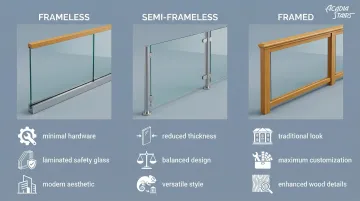
Framed vs. Frameless Installation
Your framing system determines both glass thickness requirements and how much wood detailing you can incorporate:
- Frameless — base-mounted channels or standoff hardware deliver the most minimalist look; requires thicker laminated panels and typically limits wood to a top rail cap only
- Semi-frameless — discrete metal posts support the glass, reducing panel thickness requirements while keeping the profile clean
- Framed — a full surround (top rail, bottom rail, posts) provides maximum structural support, allows thinner glass, and opens up the most options for wood posts, rails, and decorative caps
Choosing the Right Wood for Your Stair Railing
Why Hardwoods Are Essential
For structural railing elements—handrails, newel posts, and framework—hardwood is the only practical choice. Softwoods like pine, while affordable, dent and wear quickly under daily hand contact. Eastern White Pine has a Janka hardness rating of only 380 lbf, making it vulnerable to damage from rings, watches, and everyday friction.
Hardwoods offer 3-4 times that hardness, ensuring your railing holds up and looks good across decades of use.
Popular Wood Species and Their Qualities
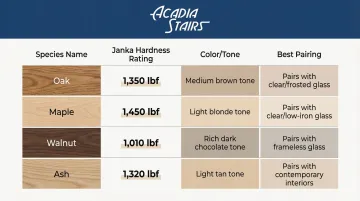
Oak (1,350 lbf Janka hardness) The most common choice for stair railings. White Oak is highly durable, rot-resistant, and features a distinct grain that takes stain exceptionally well. It suits traditional through contemporary styles and works with both clear and frosted glass panels.
Maple (1,450 lbf Janka hardness) Hard Maple is highly resistant to dents and wear, with a fine, uniform texture that suits Scandinavian and modern interiors. Pair it with clear or low-iron glass to maximize brightness in open stairwells.
Walnut (1,010 lbf Janka hardness) Rich dark chocolate tones make walnut a premium choice. It's softer than maple or oak but still durable enough for residential use, and its natural color is striking enough that it rarely needs stain. Frameless glass keeps the visual focus on the wood.
Ash (~1,320 lbf Janka hardness) Strong with a slightly lighter color than oak, ash offers excellent shock resistance and a clean contemporary feel. A good pick when you want wood warmth without visual heaviness.
Finish Choices
Once you've selected a species, finish is the next decision — it determines both durability and how the wood reads alongside glass.
- Stained: Lets grain show while hitting a target color, from light blonde to deep espresso. Oak and ash absorb stain particularly well.
- Painted (black or white): Creates bold graphic contrast with clear glass. White with clear glass reads coastal and airy; black delivers sharp modern impact.
- Natural/oiled: Brings out raw grain and natural color — best suited to walnut, where the wood speaks for itself.
For glass pairings: light woods (maple, ash) work best with clear or low-iron glass; dark woods (walnut, espresso oak) create strong contrast against frosted or tinted panels.
Engineered Alternatives
Solid hardwood isn't the only option. For tighter budgets, engineered wood or wood-look composites offer lower cost and better moisture resistance — though you'll trade some authenticity and long-term durability. They're most practical in painted applications, where grain visibility isn't the point.
How Much Does a Wood and Glass Stair Railing Cost?
Material Cost Ranges
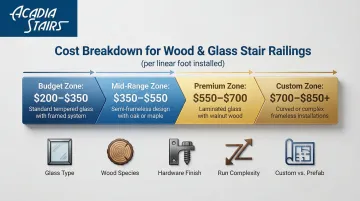
Wood railing materials cost approximately $40-$50 per linear foot for basic species. Glass railing costs range significantly higher: tempered glass averages around $360 per linear foot (material only), while laminated glass runs approximately $530 per linear foot.
Combining both materials typically lands toward the mid-to-high range of this spectrum, with installed costs for glass stair railings ranging from $200 to $700 per linear foot. Complex frameless systems can reach $850 per linear foot.
Key Cost Variables
Several factors determine where your project lands within that range:
- Laminated glass costs approximately 47% more than standard tempered glass — thickness and type drive significant price differences
- Wood species matters: walnut and mahogany command premium prices; pine is cheapest but not recommended for handrails
- Hardware finish adds up — brushed brass, matte black powder coat, and custom finishes all cost more than standard stainless steel
- Straight runs are far cheaper than curved staircases or multi-landing configurations
- Custom fabrication costs more than prefab kits upfront but typically delivers better craftsmanship and longer lifespan
Professional Installation Required
Glass railing systems require precise measurement, structural anchoring, and code-compliant installation. Labor alone can run $75-$200 per hour. Request detailed quotes from experienced stair and railing specialists.
For custom wood and glass configurations, Acadia Stairs works directly with architects, contractors, and homeowners through a collaborative design and quoting process — shipping finished staircases nationwide from their Fishkill, NY facility.
Maintaining Your Wood and Glass Staircase Railing
Glass Panel Maintenance
Tempered and laminated glass panels are low-maintenance — but a consistent cleaning routine keeps them looking sharp. Aim for every 3 months in typical environments, or more often in homes with children or pets.
For cleaning, use a soft microfiber cloth with clean water and mild, non-abrasive soap, then finish with a rubber squeegee to prevent streaking. Never use steel blades, razor scrapers, or abrasive cleaners — these permanently scratch glass.
Hardware needs attention too:
- Inspect clamps, brackets, and fasteners quarterly for loosening, corrosion, or damage
- Tighten standoff brackets on frameless systems as needed to maintain structural integrity
Wood Component Maintenance
The handrail and any wood posts or framing will need periodic refinishing—every few years depending on traffic and sunlight exposure. Restaining or resealing protects against moisture, UV fading, and daily wear.
Keep wood components in good shape with these annual checks:
- Inspect for splinters, sharp edges, or loose fixings; lightly sand any rough spots
- Recoat oiled finishes more frequently to keep the wood nourished
- Refinish film-building finishes (polyurethane, lacquer) every 2-4 years or when surface wear appears
- Match touch-up stain carefully to the original finish — oil, wax, and lacquer surfaces each require different treatments, so identify what you have before applying anything
Frequently Asked Questions
How much does a glass staircase railing cost?
Glass stair railings typically range from $200 to $700 per linear foot installed, depending on glass type, framing style (frameless vs. semi-frameless), and complexity. Custom or curved runs sit at the higher end; straight installations with standard tempered glass cost less.
Are glass stair railings safe?
Yes. Building codes require tempered or laminated safety glass for stair railings—both are engineered to be far stronger than standard glass and to break safely if impacted. Professionally installed and properly maintained, glass railings meet all IRC safety standards.
What type of glass is best for stair railings?
Tempered glass is the most common choice for its strength and safety properties. Laminated glass is preferred for applications requiring the panel to stay intact if cracked, and it's mandatory for frameless designs without a top rail. Low-iron clear glass is ideal when paired with light woods for maximum visual clarity.
Can you mix wood and glass on a staircase railing?
Yes—combining wood and glass is one of the most popular railing approaches today. The most common configurations use glass panels as balustrade infill with a wood handrail on top, or a wood post framework holding glass inserts. This combination works well in both modern and transitional homes.
What wood is best for stair railings?
Hardwoods—oak, maple, walnut, or ash—are recommended for durability and visual character. Oak is the most widely used for its versatility and stain compatibility; walnut is favored for premium contemporary installations alongside frameless glass. Avoid softwoods like pine for handrails.
How do I maintain a wood and glass staircase railing?
Glass panels require regular cleaning with a streak-free cleaner and occasional hardware inspection (quarterly checks recommended). Wood components should be refinished every few years with the appropriate stain or sealant to protect against wear, moisture, and UV exposure—frequency depends on traffic and sun exposure.
Ready to create a custom wood and glass railing for your staircase? Acadia Stairs' design consultants work with homeowners, architects, and contractors nationwide to fabricate railings that perfectly match your space, style, and budget. Contact them at (845) 765-8600 or info@acadiastairs.com to start your custom design consultation.