Introduction
A staircase does more than connect floors — it shapes how a home feels the moment you walk in. U-shaped stairs stand out for their compact footprint and architectural presence, making them one of the most practical yet visually compelling configurations available.
Whether you're renovating a tight urban brownstone or designing a new custom home, a well-executed U-shaped staircase turns vertical circulation from a functional necessity into a genuine focal point.
This guide covers what U-shaped stairs are, how to plan them for your space, creative design ideas across modern and industrial styles, material and railing options, and what to expect when working with a professional fabricator.
TLDR:
- U-shaped stairs make a 180-degree turn at a landing, offering space efficiency and architectural drama
- Typical footprint: 9-10 ft × 7-8 ft, though exact dimensions depend on floor height and code
- Open risers, metal stringers, and glass railings create modern, light-filled designs
- Powder-coated steel components deliver durability and custom color options
- Professional design and fabrication ensure code compliance and structural integrity
What Are U-Shaped Stairs?
U-shaped stairs consist of two parallel flights of steps connected by a landing that creates a 180-degree turn. They're also commonly called switchback stairs or half-turn stairs because the staircase folds back on itself via a landing platform. This configuration stacks the two flights vertically, creating a compact footprint that's ideal for homes and buildings with limited linear space.
How They Differ from Other Stair Types
The 180-degree turn is what distinguishes U-shaped stairs from other configurations:
- L-shaped (quarter-turn) stairs make a 90-degree turn at the landing, creating an "L" shape in plan view
- Straight staircases run in a single direction with no turns, requiring far more linear space
- U-shaped stairs fold back on themselves, staying more compact than straight runs while maintaining consistent tread dimensions
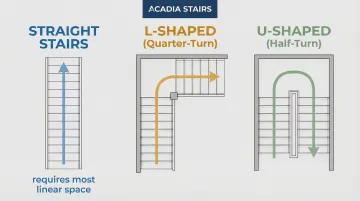
Both configurations follow the same 180-degree logic — they just distribute the landing space differently.
Two Common U-Shaped Configurations
- Single wide landing (true switchback): One large platform, typically 3–4 feet deep, connects the two flights. It works especially well when the landing doubles as a design feature — think a window nook or built-in bench.
- Two quarter-landings with intermediate flight: A short 2–3 step run connects two smaller landings. This layout gives more flexibility in tight spaces and helps when the floor-to-floor height doesn't divide cleanly into two equal flights.
Why Choose a U-Shaped Staircase?
Core Advantages
Space efficiency: U-shaped stairs require a shorter linear run than straight staircases, making them ideal for compact floor plans. According to industry standards, they're widely specified when vertical circulation is needed within a limited footprint.
Safety and rest: The intermediate landing gives climbers a natural place to pause — especially useful for young children, elderly residents, or anyone with limited stamina. The U.S. Access Board classifies landings as functional safety features, and continuous inside handrails through the turn provide uninterrupted support.
Architectural drama: The 180-degree turn creates visual interest and a natural focal point, especially in foyers and entryways. Unlike curved staircases that demand significant space and budget, U-shaped stairs deliver that impact within a manageable footprint.
That said, the design comes with real trade-offs worth understanding before you commit.
Trade-Offs to Consider
More complex to build: U-shaped stairs require more precise measurement and fabrication than straight runs. The intermediate landing becomes a key structural load point, often needing steel beams or specific connections to adjacent floor framing.
Furniture movement: The two direction changes can make moving large items between floors more difficult than with a straight staircase.
Higher cost than straight stairs: U-shaped configurations cost more than simple straight runs — landing support and fabrication complexity add up — though they're still generally more affordable than curved or spiral options.
Space Requirements and Layout Planning for U-Shaped Stairs
Minimum Dimensions and Code Requirements
How much space is needed for U-shaped stairs? A typical U-shaped staircase requires a minimum floor opening of approximately 9-10 feet in one direction (the combined width of both flights plus any well opening between them) and around 7-8 feet in the other direction. Exact dimensions depend on floor-to-floor height, tread depth, and local building codes.
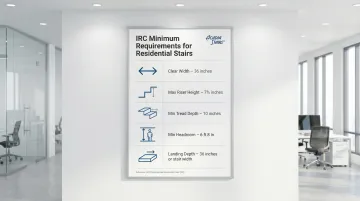
Current 2021 International Residential Code (IRC) standards establish these minimums for residential stairs:
- Minimum clear width: 36 inches at all points above handrail height
- Maximum riser height: 7¾ inches
- Minimum tread depth: 10 inches
- Minimum headroom: 6 feet 8 inches measured vertically from the sloped plane adjoining the tread nosing
- Landing depth: Minimum 36 inches measured in the direction of travel, or equal to the stair width
How Landing Depth Affects Footprint
A deeper landing (3-4 feet) improves comfort and safety, providing a more generous resting point and better sightlines between floors. However, it adds to the total stair run. When working within tight square footage constraints, balance comfort with available space by:
- Using the minimum code-compliant landing depth (36 inches) where space is extremely limited
- Expanding to 42-48 inches when possible for improved user experience
- Considering how the landing will be used—if it's purely transitional, smaller works; if it's a design feature with seating or a window, go larger
Strategic Placement Within Your Home
Foyer and entry locations: Placing U-shaped stairs adjacent to the foyer creates an architectural statement and allows a large landing window to flood both floors with natural light. The stairwell void can become part of the foyer volume, making smaller spaces feel larger and more open.
Interior locations: U-shaped stairs work well along interior walls or within dedicated stairwells. Pay close attention to where the upper flight passes over the lower flight, since inadequate opening length is a frequent cause of headroom failures.
Maximizing the Space Beneath U-Shaped Stairs
The area beneath U-shaped stairs is easy to overlook, but it can serve several practical purposes:
- Install built-in cabinetry with drawers for seasonal items, shoes, or household supplies
- Create a reading nook with built-in bench seating and shelving
- Build a compact home office alcove with a desk and task lighting
- Add a powder room where plumbing access allows
Before finishing any enclosed space, check fire protection requirements. Under the IRC, enclosed space under stairs accessed by a door or panel requires walls and under-stair surfaces protected with ½-inch gypsum board. Commercial applications typically require 1-hour fire-resistance-rated construction.
Importance of Accurate Measurements
Precise floor-to-floor height, ceiling clearance at the landing, and wall placement all determine feasibility and should be confirmed early in the process. A mistake in measurement or load calculation at the landing can compromise safety and require costly redesigns.
Creative U-Shaped Stair Design Ideas
Modern Open-Riser U-Shaped Stairs
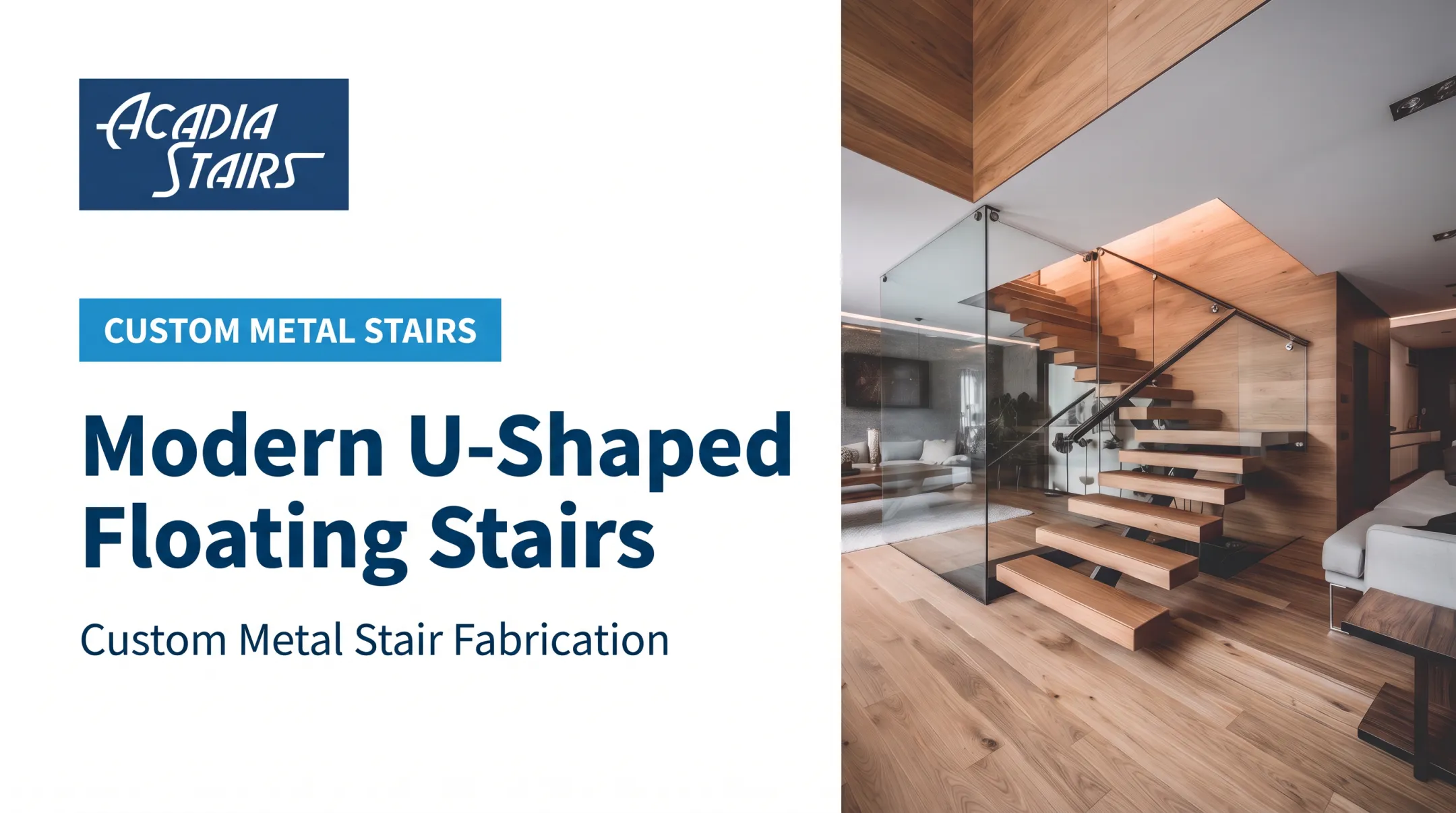
Open risers transform U-shaped stairs into floating, airy architectural features. The absence of vertical riser panels creates visual lightness that works exceptionally well in modern and contemporary interiors. When open-riser treads pair with thin metal stringers, light passes through both flights, making the staircase feel less visually heavy in tighter spaces.
Code compliance: The IRC permits open risers provided that the opening between treads does not permit passage of a 4-inch diameter sphere—a critical safety measure for preventing small children from slipping through.
Open risers work particularly well in homes where sightlines and natural light matter. The transparency helps smaller spaces feel more expansive without compromising the staircase's structural integrity.
Industrial and Metal-Forward Designs
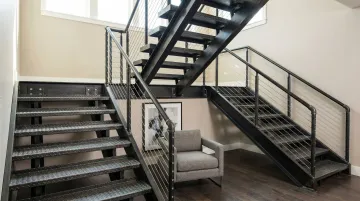
Steel stringers, powder-coated metal railings, and raw or painted metal balusters bring industrial-modern character to U-shaped stairs. Exposed structural elements—visible stringers, welded connections, laser-cut tread supports—are intentional design statements rather than construction shortcuts.
Material choices:
- Heavy structural steel stringers with visible welds and connection plates
- Powder-coated finishes in matte black, charcoal, or custom colors
- Diamond plate or perforated metal treads for texture and slip resistance
- Cable or horizontal bar railings that emphasize the linear geometry
The metal stair market is projected to grow at 5-6% CAGR, driven by commercial demand and industrial-style residential trends. For homeowners and designers drawn to raw materiality, that demand signals a well-supported supply chain and expanding fabrication options.
Two-Tone Wood and Metal Combinations
Contrasting materials create striking visual interest: warm wood treads paired with black or satin-finish metal railings work across traditional, transitional, and contemporary styles. Wood delivers warmth and tactile comfort underfoot; metal stringers and railings deliver superior strength with minimal upkeep.
Design strategies:
- Match tread stain to existing hardwood flooring for visual continuity
- Deliberately contrast tread color with flooring to create a design accent
- Use white oak or walnut treads with matte black steel for modern elegance
- Pair reclaimed wood treads with raw steel for industrial-rustic appeal
Wood treads also absorb sound more effectively than all-metal construction—a practical advantage in open-plan homes where staircase noise carries.
Glass Railing U-Shaped Stairs
Frameless or semi-frameless glass railing panels transform U-shaped staircases into light-maximizing architectural features. Glass is particularly effective in smaller homes where visual openness is a priority, allowing sightlines to pass through the staircase rather than being blocked by solid railings.
Code and safety requirements: The International Building Code (IBC) sets specific standards for glass used in guards and handrails:
- Must be laminated and either fully tempered or heat-strengthened
- Must meet CPSC 16 CFR 1201 Category I or ANSI Z97.1 Class A safety glazing requirements
- Lamination protects occupants if breakage occurs by holding shards in place
Material pairings: Glass railings pair beautifully with both wood and metal treads. For modern aesthetics, combine glass panels with steel stringers and smooth plate treads. For warmer contemporary looks, use glass with white oak or walnut treads.
Maintenance consideration: Glass railings require more frequent cleaning than metal alternatives, especially in homes with children and pets—factor that into your decision if low-maintenance finishes are a priority.
Statement Landing Designs
The landing in a U-shaped staircase is a design opportunity worth planning intentionally. Rather than treating it as a simple pause point, consider these approaches:
- Oversized floor tiles in contrasting material or pattern to differentiate the landing
- Decorative niche with artwork, sculpture, or architectural lighting
- Built-in bench with storage beneath for a functional resting point
- Large window framed with trim detail that functions as a light source for both floors
A tall stairwell window at the landing level can function similarly to a two-story foyer window from the exterior elevation, creating a dramatic architectural feature visible from both inside and outside the home.
Materials and Railing Options for U-Shaped Stairs
Tread Material Options
Solid hardwood: Warm, classic, and works with most design styles. Popular species include red oak, white oak, maple, cherry, mahogany, and walnut. Hardwood treads are delivered pre-sanded and ready for staining or polyurethane application. Best for interior residential applications where warmth and acoustic dampening are priorities.
Engineered wood: More dimensionally stable than solid wood, engineered treads resist warping and cupping in environments with humidity fluctuations. Suitable for both residential and light commercial applications. Mid-tier cost, similar to solid hardwood.
Stone or porcelain: Stone treads (granite, bluestone, slate) and large-format porcelain tiles carry significant weight, so your structural framing needs to account for it before installation begins. The payoff is a striking, long-lasting surface suited to luxury residential and upscale commercial settings. Higher cost tier.
Metal treads: Steel plate (smooth, diamond plate, or perforated) creates industrial/contemporary character. Smooth plate offers clean minimalist lines, diamond plate adds texture and slip resistance, perforated metal enhances airflow while maintaining strength. Best for modern residential, commercial, and all exterior applications. Mid-tier cost, highly durable.
Railing and Baluster Systems
Railings shape how a staircase reads in a room — and material choice drives everything from maintenance to mood. Metal captured 42.8% of the railing market in 2023, making it the dominant choice across both residential and commercial projects.
Wrought iron: Traditional aesthetic with decorative details like lamb's tongue endings. Can be painted or powder coated in any color. Works well in traditional and transitional interiors.
Stainless steel: Modern, durable, and corrosion-resistant. Available in brushed (#4 brush finish), mill finish, or glass bead blasted looks. Ideal for both interior and exterior applications, particularly coastal environments.
Cable railing: Horizontal stainless steel cables (typically #316 marine grade) create clean, contemporary lines with minimal visual obstruction. Cables must be spaced so a 4-inch sphere cannot pass through for residential code compliance.
Glass panels: Laminated tempered or heat-strengthened glass provides maximum transparency. Creates open, light-filled spaces while maintaining safety barriers. Requires more maintenance but offers unmatched visual openness.
Wood balusters: Traditional turned or square balusters work in classic and transitional designs. Can be painted or stained to match or contrast with treads.
The Role of Powder Coating
Powder coating opens up a wide palette of colors and finishes while adding a durable protective layer to metal components. The process applies dry powder electrostatically, then cures it in an oven at 385°F, causing the powder to gel together and bond to the surface at a molecular level.
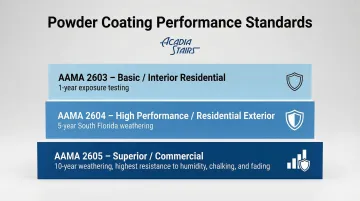
Durability standards: AAMA specifications define powder coating performance:
- AAMA 2603: Basic durability for interior/residential use (1-year exposure testing)
- AAMA 2604: High-performance for residential exteriors (5-year South Florida weathering)
- AAMA 2605: Superior performance for commercial applications (10-year weathering, highest resistance to humidity, chalking, and fading)
Finish options: Powder coating is available in matte, satin, gloss, textured, and metallic finishes. Popular colors include matte black, satin white, bronze, and custom color-matched options. When selecting a finish, pull from your room's existing palette — flooring, trim, and wall tones — so the staircase reads as part of the space rather than a standalone element. Acadia Stairs offers custom powder coating that can be matched to specific colors if you need an exact fit.
Thoughtful Material Mixing
Combining materials creates visual depth and design sophistication:
- Steel stringer + white oak treads + cable railing = clean contemporary aesthetic
- Painted wood balustrade + carpet treads = traditional elegance
- Raw steel stringer + reclaimed wood treads + wrought iron railing = industrial-rustic
- Stainless steel stringer + glass railing + stone treads = luxury modern
Consider the full material palette of the room—flooring, wall finishes, trim details—before finalizing staircase finishes to ensure cohesive design.
Working with a Professional to Design Your U-Shaped Staircase
Why Professional Design Matters
U-shaped stair design is not a typical DIY project. Structural calculations for landing support, code compliance across riser/tread ratios and headroom clearances, and precise component fabrication all require professional expertise. A measurement error or miscalculated load at the landing can compromise safety — and the corrections are rarely cheap.
The intermediate landing is a primary structural transfer point. Support systems often require steel beams integrated into the stair assembly or specific connections to adjacent floor framing. Professional fabricators understand these load paths and design accordingly.
Code compliance adds another layer. IRC and IBC standards set strict requirements for stair width, rise, run, headroom, and handrail height — and those requirements vary by jurisdiction. Working with a professional ensures your staircase meets every applicable regulation before fabrication begins.
The Collaborative Design Process
Knowing why professional help matters is one thing — understanding what the process actually looks like is another. Working with an experienced stair fabricator typically follows these steps:
- Initial consultation — Share floor plans, measurements, photos of the space, and design ideas. Discuss aesthetic goals, material preferences, and budget.
- Concept development — The fabricator creates initial design concepts, often with 3D renderings so you can visualize the staircase in your actual space.
- Shop drawings — Once the concept is approved, detailed shop drawings specify exact dimensions, materials, connections, and fabrication requirements.
- Approval and fabrication — Fabrication starts only after you sign off on the shop drawings, ensuring nothing gets cut or welded until every detail is confirmed.
- Shipping and installation — Fully fabricated components ship with detailed installation instructions, and your fabricator stays available to answer questions throughout.

Acadia Stairs follows this exact process for every custom U-shaped staircase. With over 40 years of combined experience and nationwide shipping from their Fishkill, NY facility, expert-built staircases are accessible regardless of where you're located.
Questions to Ask Prospective Stair Companies
- Do you have specific experience with U-shaped configurations?
- Are you familiar with local building code requirements for my area?
- Can you provide references or photos of similar completed projects?
- Do you provide 3D renderings before fabrication begins?
- What level of installation guidance or post-delivery support do you offer?
- What is your typical lead time from approved drawings to delivery?
- Do you offer powder coating services for custom colors?
Frequently Asked Questions
What are U-shaped stairs called?
U-shaped stairs are also commonly referred to as switchback stairs or half-turn stairs, because the staircase switches back 180 degrees via a landing platform.
How much space is needed for U-shaped stairs?
A typical U-shaped staircase requires a minimum floor opening of approximately 9-10 feet in one dimension and 7-8 feet in the other. Exact space needs vary based on floor-to-floor height, tread depth, and local code requirements. Consult a professional stair fabricator for site-specific calculations.
What is the difference between U-shaped and L-shaped staircases?
An L-shaped (quarter-turn) staircase makes a 90-degree turn at the landing, while a U-shaped (half-turn) staircase turns a full 180 degrees. This makes the U-shape more compact in its linear run while requiring slightly more width.
What are the disadvantages of U-shaped stairs?
Main drawbacks include more complex design and construction than straight stairs, potential need for additional structural support at the landing, and greater difficulty moving large furniture between floors due to the 180-degree turn at the landing.
What materials work best for modern U-shaped stair designs?
Popular modern combinations include steel stringers with hardwood treads, glass or cable railings to keep the design feeling light and open, and powder-coated metal components in matte black or custom colors. Open risers add a clean, modern look while still meeting code requirements.
Can U-shaped stairs work in commercial spaces?
Yes. U-shaped stairs handle high traffic well, provide a natural rest point for accessibility, and work as architectural focal points in lobbies or open-plan offices. Commercial installations must meet IBC requirements, including wider minimum widths and specific handrail extensions.