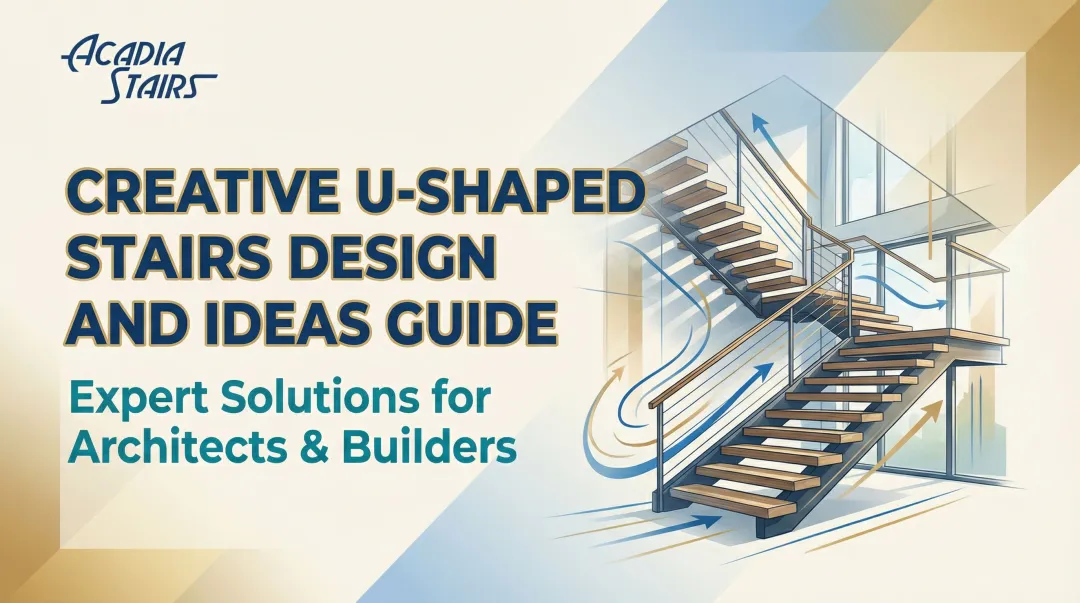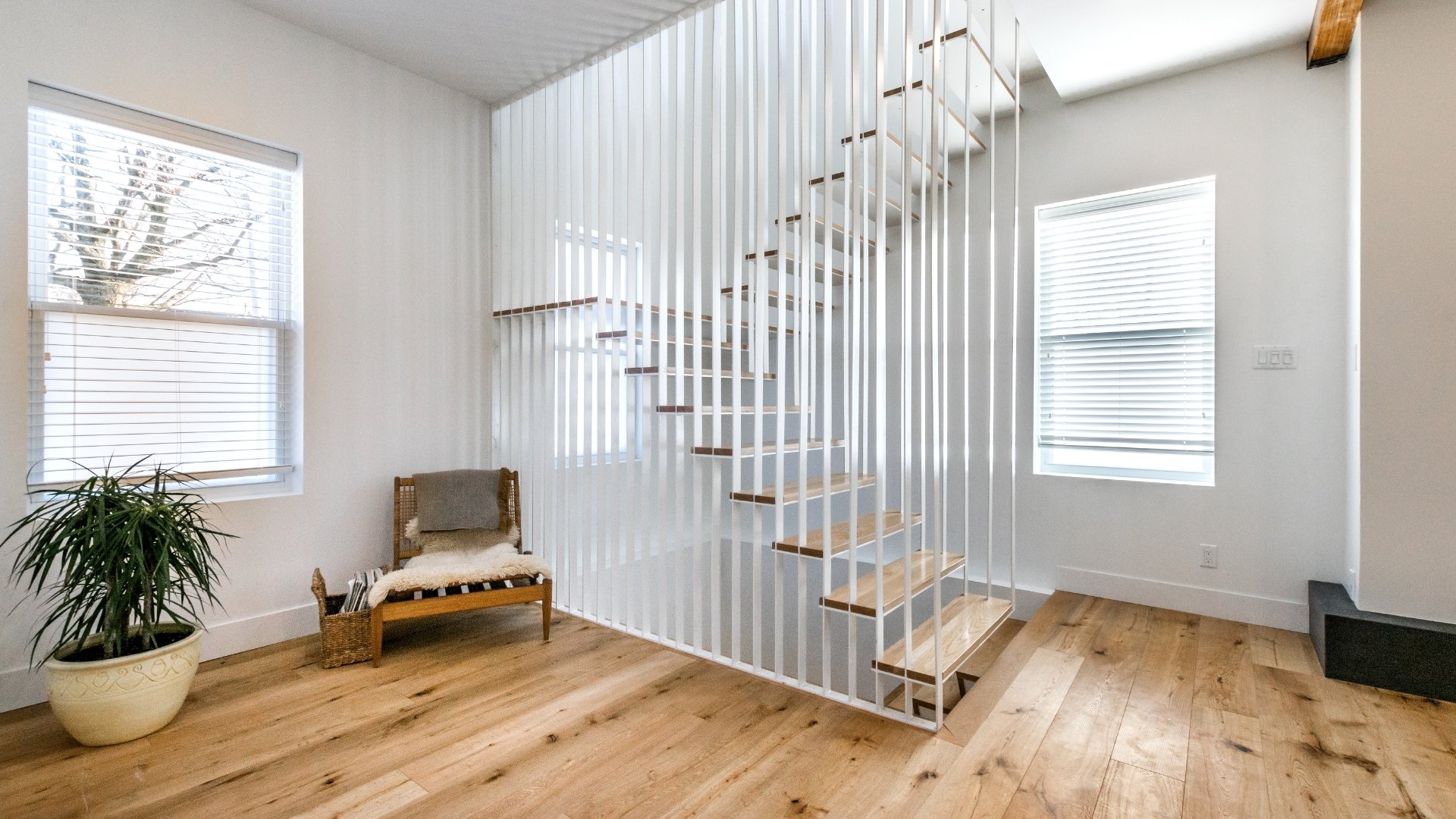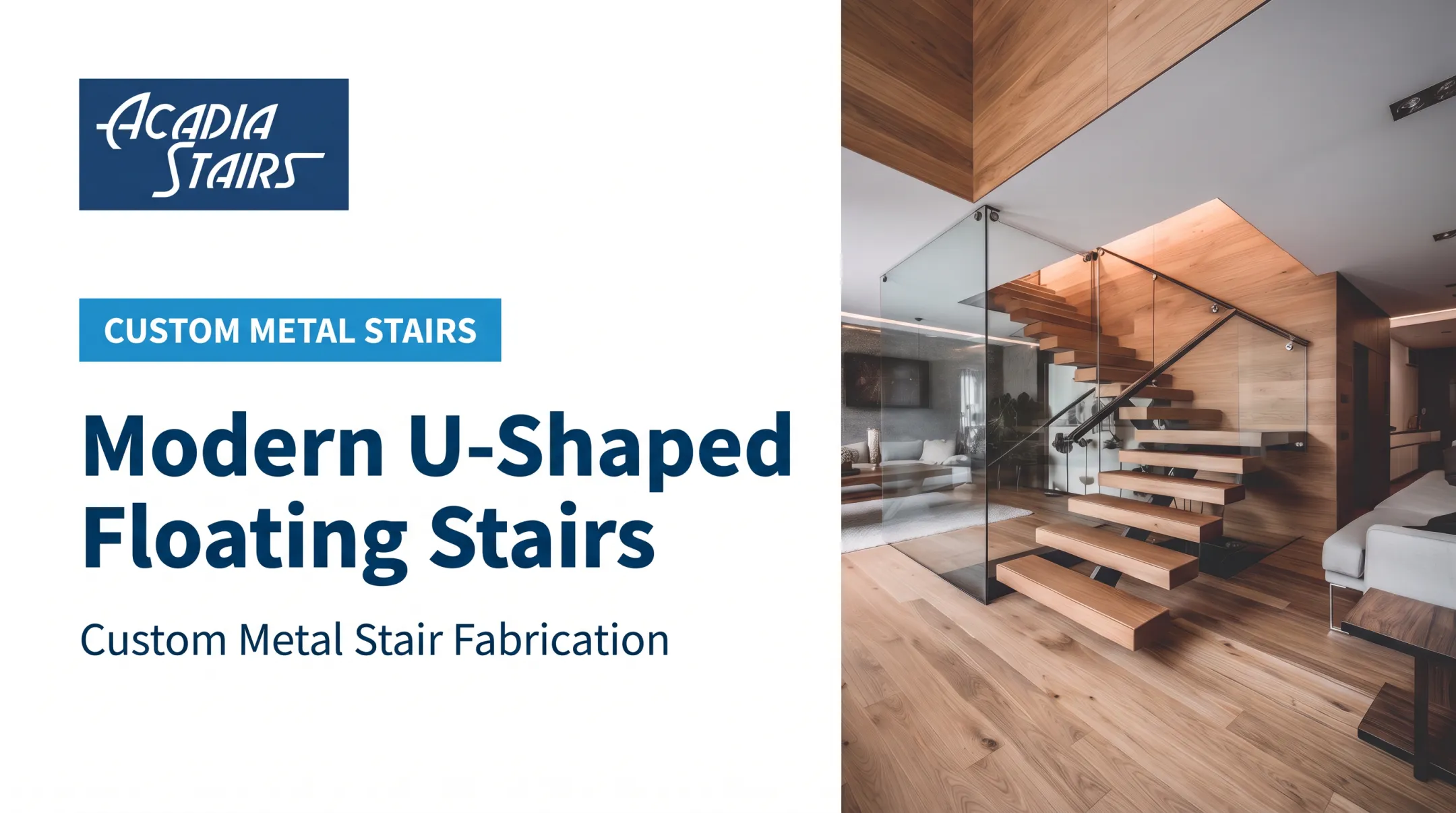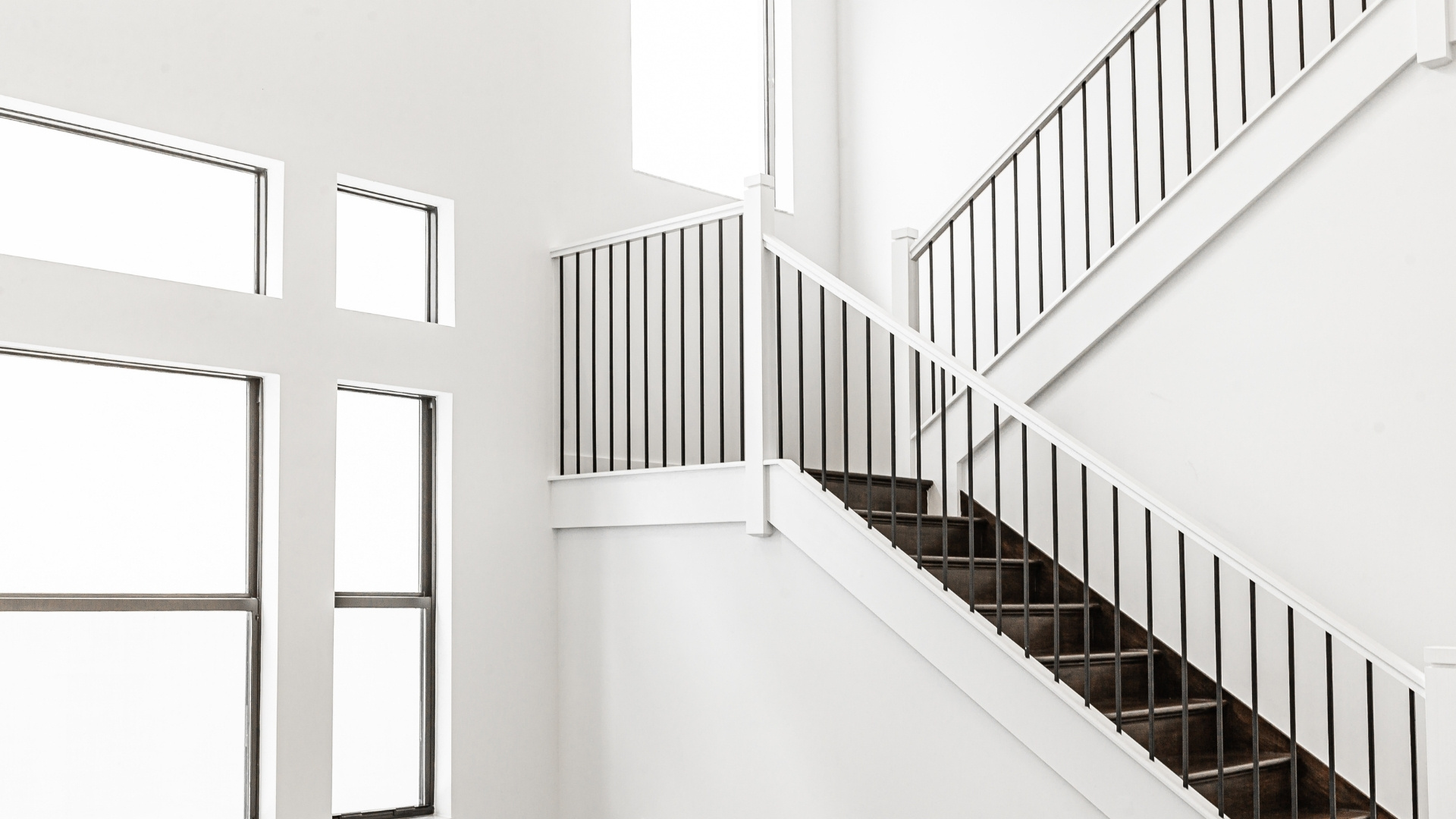
A U-shaped stair is commonly used when a project requires vertical circulation within a compact floor footprint while maintaining predictable geometry and code compliance. Architects and builders often specify this configuration for multi-story homes, townhouses, and commercial interiors where straight stair runs exceed available length.
However, U-shaped stairs introduce additional planning complexity. Landing size, headroom clearance, structural support at the direction change, and coordination with floor openings must all be resolved early. When these elements are miscalculated, projects frequently face inspection failures, fabrication revisions, or on-site rework.
This guide is meant to help stair builders, metal fabricators, and construction partners involved in designing, fabricating, or coordinating U-shaped stair systems for residential and commercial projects.
Key Takeaways
U-shaped stairs use two straight flights and an intermediate landing to achieve vertical circulation within a compact footprint.
Proper planning of landing depth, headroom clearance, and floor opening size is critical to avoid code violations and redesigns.
Structural support methods, including stringer configuration and landing load transfer, directly affect stair performance and installability.
Material selection, like steel, wood, or hybrid systems, should be based on span, finish requirements, budget, and installation tolerances.
Early coordination with an experienced stair fabrication partner helps reduce construction risk and ensures accurate shop drawings and code-compliant execution.
What Is a U-Shaped Stair? Everything You Need to Know
A U-shaped stair is a staircase configuration made up of two straight flights arranged in opposite directions. The stair changes direction by 180 degrees at a central landing, allowing the total vertical rise to be achieved within a compact footprint.
Instead of using triangular winders, a U-shaped stair incorporates an intermediate landing between the two flights. This creates consistent tread dimensions, predictable walking lines, and easier compliance with building code requirements.
Common alternative names include:
Half-turn stair
Switchback stair
Simple layout explanation:
The first straight flight rises from the lower floor to a mid-level landing.
At the landing, the stair reverses direction by 180 degrees.
The second straight flight continues upward to the upper floor.
This layout is commonly specified in projects where controlled geometry, structural clarity, and safe direction changes are required. For fabrication partners and stair contractors, predictable geometry also simplifies material takeoffs, shop drawings, and installation sequencing.
When Are U-Shaped Stairs Preferred in 2026?
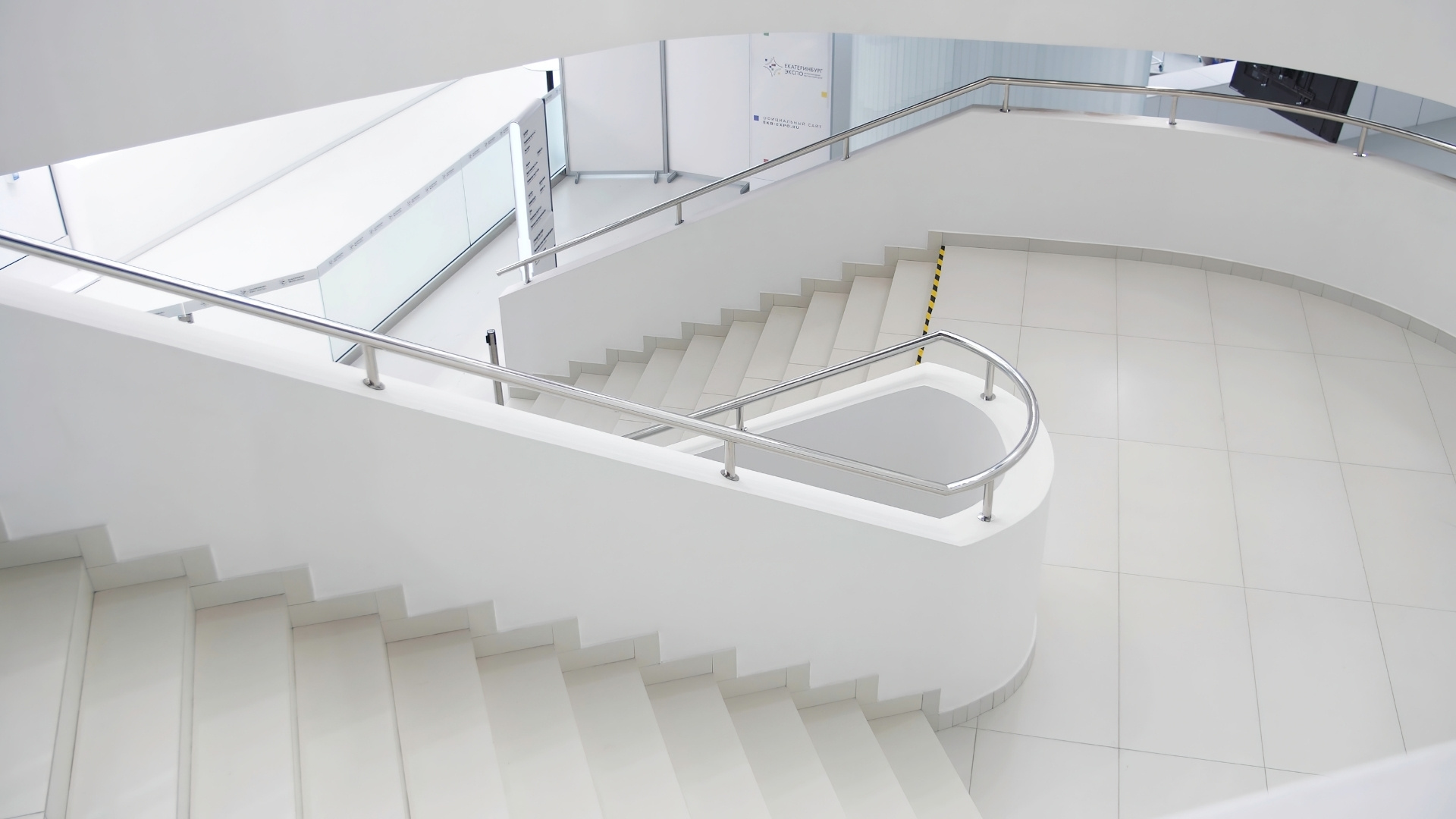
U-shaped stairs are widely specified for commercial and residential designs because they address core planning, safety, and coordination challenges found in multi-level buildings.
Rather than being selected for appearance, they are chosen for how efficiently they manage vertical movement while remaining predictable to design, fabricate, and inspect.
From a layout perspective, the 180-degree turn allows vertical circulation to be accommodated within a compact floor opening. This makes U-shaped stairs particularly effective in homes, townhouses, and commercial interiors where long straight stair runs are not feasible.
Key functional reasons u-shaped stairs are commonly used include:
Efficient vertical circulation: The two-flight configuration shortens horizontal run length while maintaining a comfortable stair slope.
Predictable geometry: Straight flights allow consistent riser heights and tread depths, simplifying structural calculations and shop drawing coordination.
Easier code compliance compared to winders: Flat landings eliminate irregular tread shapes, reducing inspection issues related to walking line depth and handrail continuity.
Improved safety compared to spiral stairs: Wider treads, gentler pitch, and full-size landings improve daily usability and emergency egress performance.
Better movement of furniture and materials: The landing provides a resting and turning point, making it easier to transport furniture, appliances, and equipment between levels.
Because of these functional advantages, U-shaped stairs remain one of the most reliable and widely approved staircase configurations in both residential and commercial construction.
U-Shaped Stair Layout Configurations in 2026
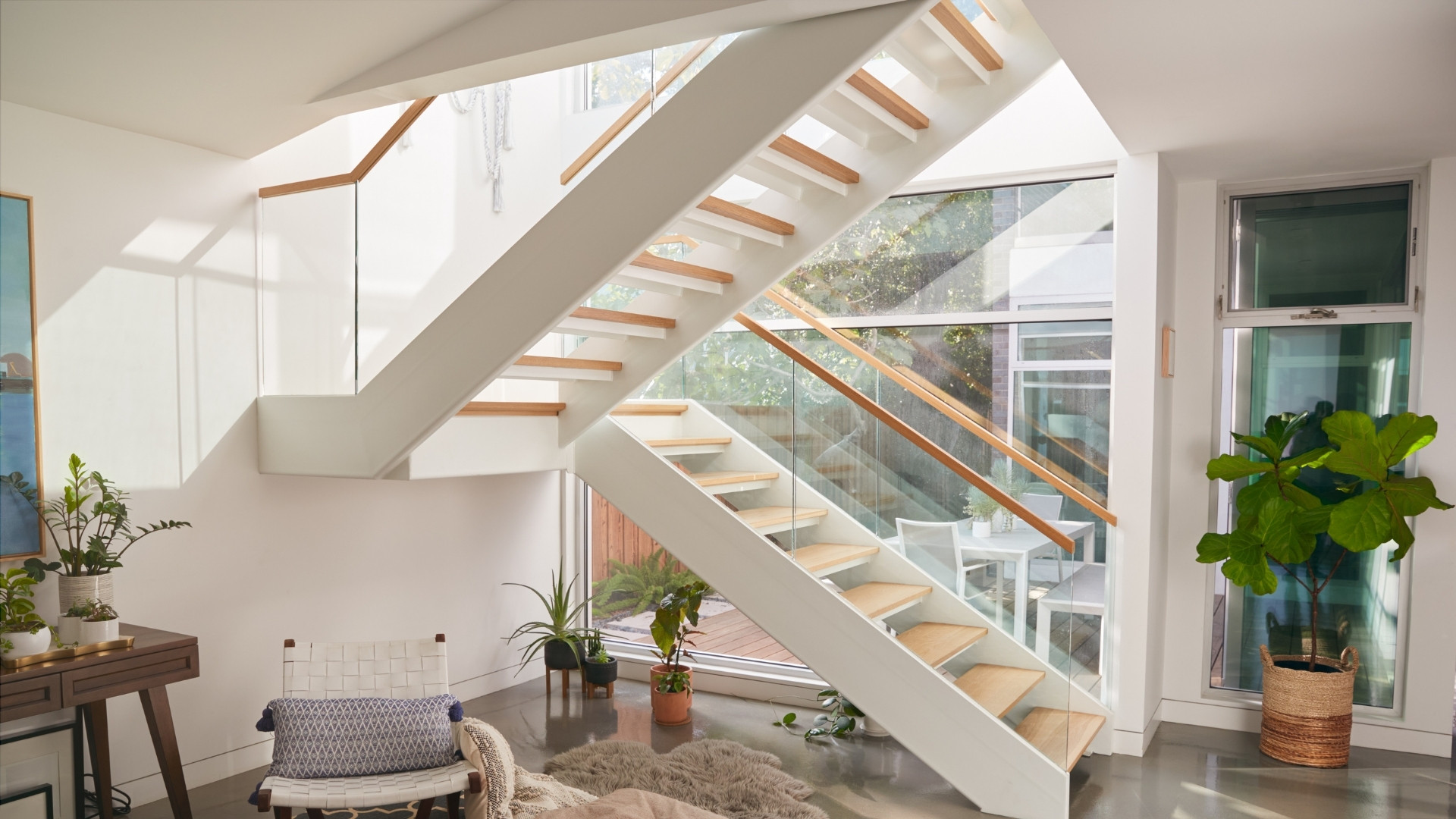
U-shaped stairs can be arranged in several layout configurations depending on available floor area, structural constraints, and architectural intent. While all versions maintain a 180-degree direction change with an intermediate landing, the relationship between the two flights can vary significantly.
Understanding these layouts early helps prevent headroom conflicts and framing revisions later in the project.
Parallel U-Shaped Stair
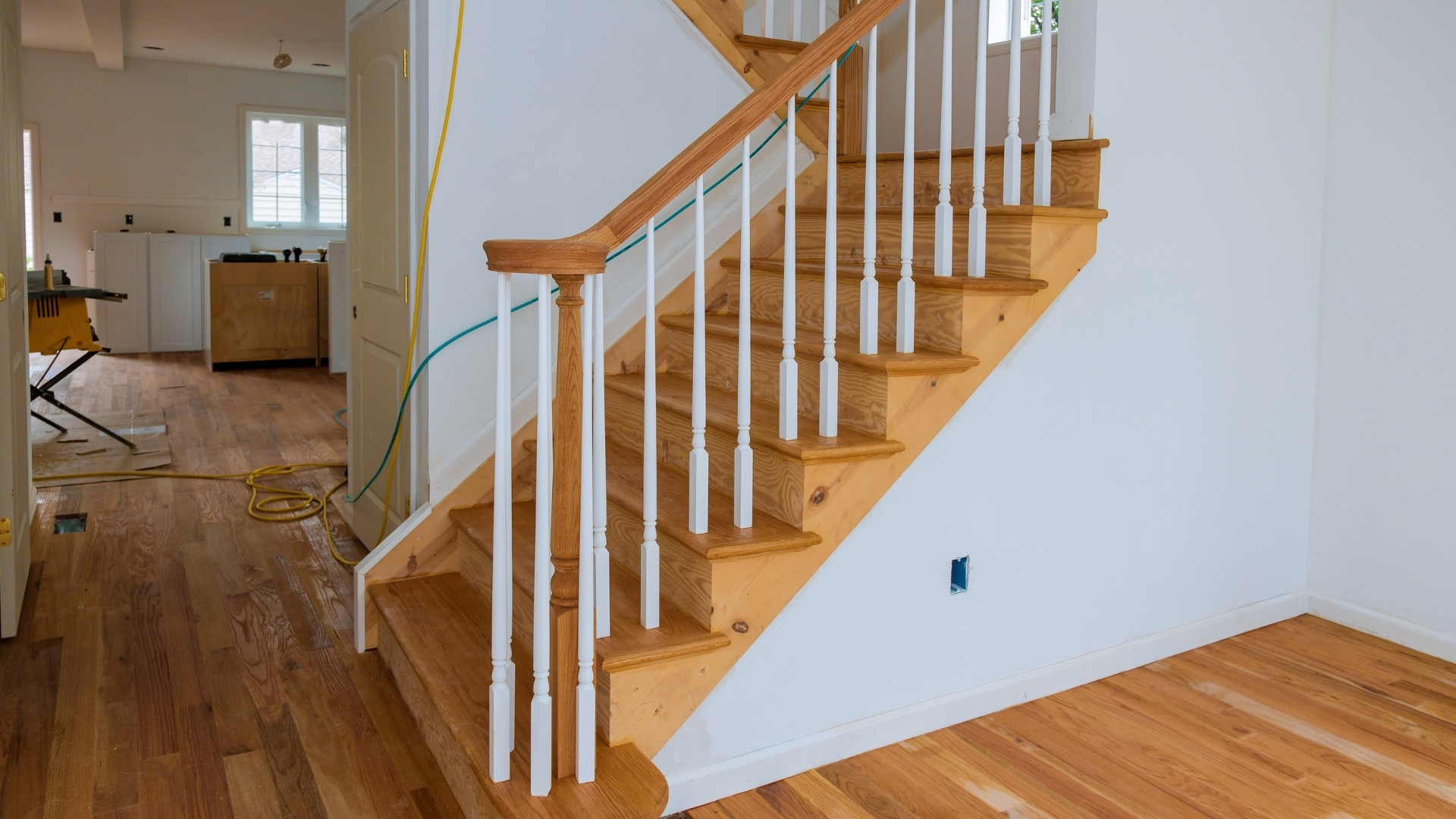
In a parallel configuration, the upper and lower stair flights are positioned directly above one another, sharing the same width and alignment.
Key characteristics include:
Flights stacked vertically in a straight line
Most space-efficient U-shaped layout
Commonly used in townhomes and multi-level residential buildings
Simplifies structural framing and load transfer
Because the flights align closely, this layout allows straightforward stringer fabrication and predictable landing support. However, careful attention must be paid to headroom clearance at the point where the upper flight passes over the lower run.
Offset U-Shaped Stair
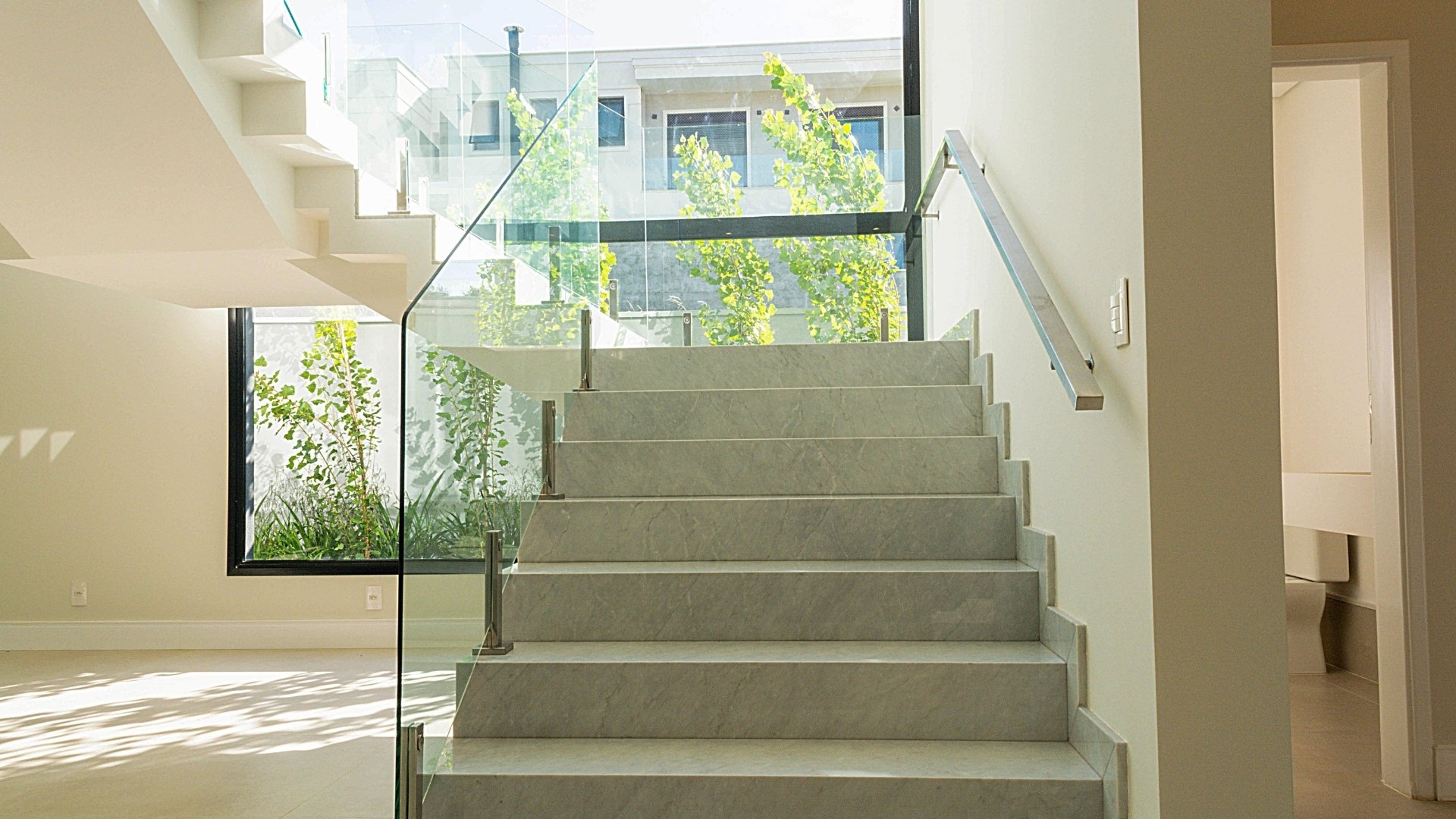
An offset U-shaped stair shifts one flight laterally relative to the other rather than stacking them directly.
Typical features include:
Upper and lower flights are not vertically aligned
Increased headroom above the lower run
Greater flexibility in floor opening design
Frequently used in contemporary and custom homes
This configuration reduces vertical overlap, making it easier to achieve required headroom clearances. Offset layouts are often preferred when architectural ceiling heights vary or when visual openness is desired without increasing overall stair length.
Open-Well U-Shaped Stair
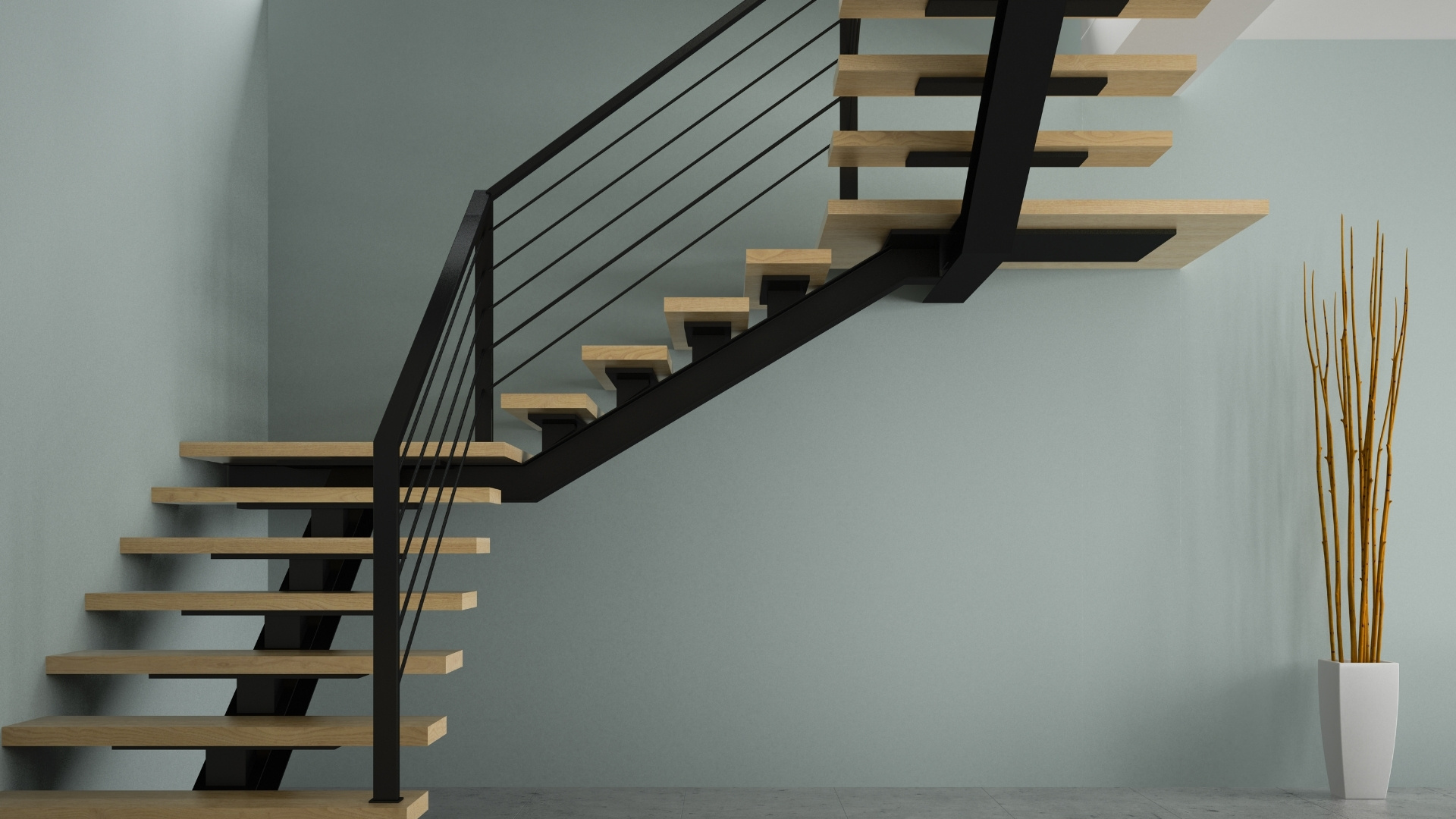
An open-well configuration introduces a central void between the two stair flights, creating visual separation and openness.
Common characteristics include:
Open space between flights instead of solid framing
Often paired with glass or cable railing systems
Increased light penetration between floors
Higher structural and fabrication complexity
While visually lighter, open-well stairs require additional engineering to manage landing support, railing attachment, and lateral stability. Precise coordination between structure, railing design, and fabrication tolerances is essential for successful installation.
Each configuration offers different advantages, and selection typically depends on space constraints, structural layout, and the level of architectural openness required for the project.
From a fabrication standpoint, layout selection directly affects stringer complexity, weld detailing, railing attachment points, and transportation logistics. Early identification of the stair configuration allows fabricators to optimize material usage and minimize field modifications.
Structural Support Methods Used for U-Shaped Stairs
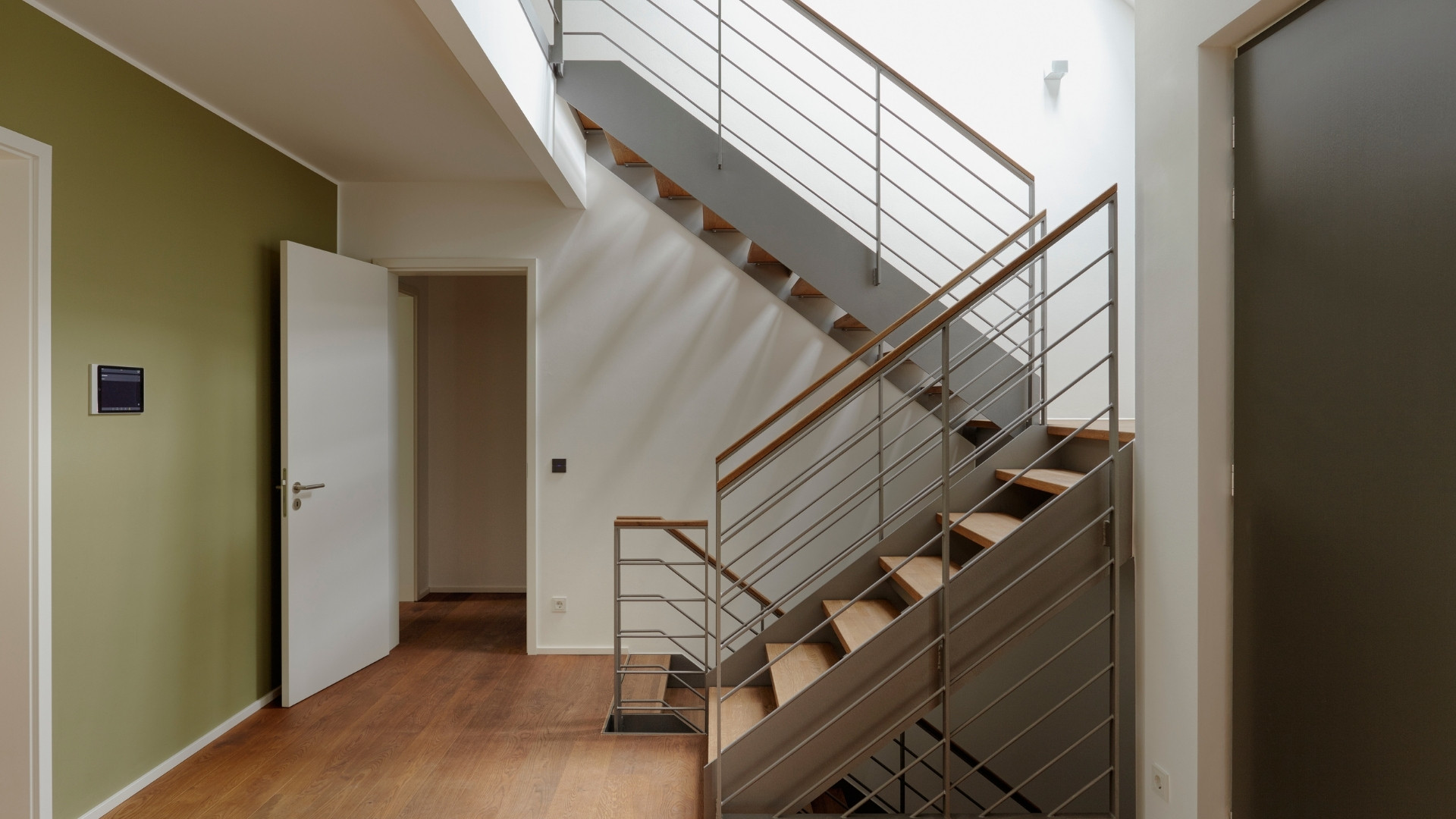
Structural support is one of the most critical aspects of a U-shaped stair, and it is also where many projects encounter coordination issues.
Because the stair changes direction at a landing, loads are transferred through multiple components rather than a single continuous run. Understanding how these loads move through the system is essential for safe design and successful fabrication.
For metal fabricators and stair builders, these structural choices directly influence steel sizing, weld sequencing, and connection detailing.
Dual Stringer Systems
Dual stringer stairs use two side-mounted stringers to support each flight and the landing.
Key characteristics include:
Load distributed evenly along both sides
Common in wood-framed and steel stair construction
Straightforward attachment to landings and floor framing
Easier integration with finished wall conditions
This system provides predictable load paths and is often preferred for residential construction due to its simplicity and compatibility with standard framing methods.
Mono-Stringer Configurations
Mono-stringer stairs rely on a single central steel stringer that supports treads from below or from the side.
Typical features include:
Concentrated structural loads along one beam
Requires engineered steel fabrication
Common in modern architectural designs
Demands precise shop drawings and installation tolerances
Because loads are carried through a single structural element, mono-stringer systems require careful analysis of deflection, vibration, and landing connection forces.
Landing Beam Support
The intermediate landing acts as a primary structural transfer point.
Landing support may include:
Steel beams integrated into the stair assembly
Connection to adjacent floor framing
Column-supported landings in open layouts
Without adequate landing support, stair loads cannot be transferred safely to the building structure. Undersized or improperly coordinated landing beams are one of the most common causes of mid-project redesign.
Wall-Supported vs Freestanding Designs
U-shaped stairs may be supported partially or entirely by surrounding walls, or designed as freestanding structures.
Wall-supported stairs rely on load-bearing walls to assist with vertical and lateral support.
Freestanding stairs must resist all loads internally through stringers, landings, and concealed connections.
Freestanding designs typically require heavier structural members and tighter fabrication tolerances.
Connection to Upper Floor Framing
The upper flight must transfer loads directly into the floor system above. This connection is often overlooked and can lead to deflection or noise issues if not properly detailed.
Common coordination requirements include:
Verified floor thickness and finish buildup
Alignment with joists or structural beams
Allowance for differential movement between materials
Understanding Load Paths and Coordination Challenges
In a U-shaped stair, loads travel from the treads into the stringers, through the landing, and finally into the surrounding structure. If any part of this path is incomplete or misaligned, structural performance is compromised.
Common coordination mistakes between trades include:
Landing beams not matching shop drawings
Floor openings are framed smaller than required
Structural steel is installed before the stair dimensions are finalized
Railing loads not accounted for in landing design
Early coordination between architectural drawings, structural engineering, and stair fabrication is essential to avoid costly field modifications and installation delays.
Standard U-Shaped Stair Dimensions Used in 2026
Accurate dimensional planning is essential when designing a U-shaped stair. Because the stair reverses direction at a central landing, errors in sizing can quickly affect headroom, tread consistency, and floor opening coordination. Most inspection failures related to staircases occur due to incorrect dimensions rather than material or workmanship issues.
The following ranges reflect commonly accepted US residential and light commercial standards. Local code amendments may apply and should always be verified during design.
Component | Typical range (US) |
Stair width | 36"–48" |
Riser height | ≤ 7 ¾" |
Tread depth | ≥ 10" |
Landing depth | ≥ stair width |
Headroom | ≥ 6'8" |
Maximum rise per flight | Typically 12–14 risers |
Why landing depth matters: The intermediate landing serves as both a direction-change point and a structural transition.
Codes typically require the landing depth to be at least equal to the stair width, ensuring safe movement and proper walking clearance. Undersized landings often lead to failed inspections or force redesigns late in the project.
How the 180-degree turn affects floor opening size: Because the stair reverses direction, the floor opening must accommodate two overlapping stair runs plus the landing.
Inadequate opening length or width can reduce headroom clearance above the lower flight, especially where the upper flight passes directly overhead.
Why Stacked Flights Require Alignment?
In most U-shaped configurations, the upper and lower flights are vertically aligned. Misalignment can create uneven riser heights, landing elevation conflicts, or structural connection issues. Proper alignment ensures consistent geometry, simplifies framing, and allows accurate fabrication of stringers and landing supports.
Careful coordination of these dimensions early in design significantly reduces permitting issues, fabrication delays, and on-site modifications.
Materials Commonly Used for U-Shaped Stairs
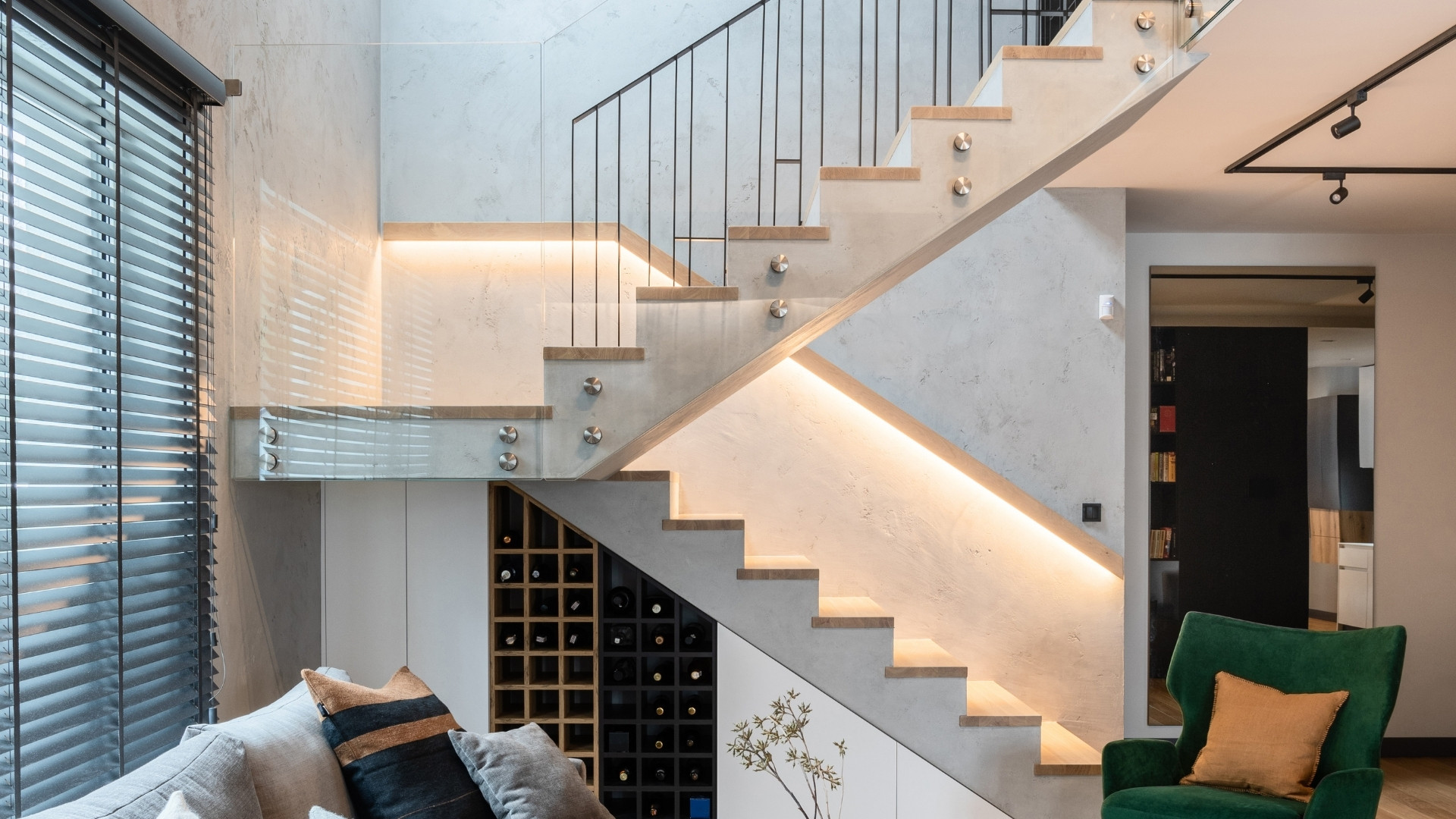
Material selection plays a major role in how a U-shaped stair performs structurally, how it is fabricated, and how it integrates with surrounding finishes.
Because the stair includes two flights and an intermediate landing, material behaviour directly affects span capability, deflection control, and installation tolerances.
1. Steel
Steel is widely used for custom U-shaped stair construction, particularly in projects requiring precision and long-term stability.
Key characteristics include:
Slim structural profiles with high load capacity
Ability to span longer distances with minimal deflection
Consistent performance across temperature and humidity changes
Suitable for modern and contemporary architectural designs
Steel allows cleaner geometry at landings and tighter tolerances during fabrication, making it ideal for mono-stringer systems, open-well layouts, and glass or cable railing integration.
From a fabrication perspective, steel systems allow tighter dimensional tolerances and improved repeatability across multi-unit projects.
2. Wood: Wood-framed U-shaped stairs are common in traditional residential construction and are typically built using dimensional lumber.
Characteristics include:
Thicker stringers to achieve required strength
Greater sensitivity to deflection and movement
Higher reliance on wall framing for support
Limited span capability compared to steel
Because wood responds to moisture and loading changes, careful attention must be paid to riser consistency, landing alignment, and long-term movement.
3. Hybrid systems: Hybrid stair systems combine a steel structural framework with wood treads and finish components.
Common features include:
Steel stringers or landing frames for strength
Wood treads for warmth and visual finish
Improved dimensional stability compared to full wood stairs
Greater flexibility in finish selection
This approach is the most common choice for custom-fabricated U-shaped stairs, as it balances structural reliability with architectural appearance.
How Material Choice Affects Performance
Selecting the appropriate stair material depends on several interrelated factors:
Span: Longer or unsupported spans typically require steel framing.
Finish requirements: Exposed modern designs favor steel; traditional interiors often use wood finishes.
Budget: Wood systems generally have lower upfront costs, while steel offers long-term dimensional stability.
Installation tolerances: Steel fabrication allows tighter tolerances, which is critical for open railings and modern detailing.
Aligning material selection with these constraints early in the design process reduces fabrication challenges and helps ensure consistent performance throughout the life of the staircase.
For metal fabricators and stair builders requiring precision-built components, Acadia Stairs provides custom metal fabrication support for U-shaped stair projects, including structural steel stringers, landing frames, custom railings, gates, and coordinated metal elements.
Fabrication is completed to approved shop drawings with tight tolerances to support accurate installation, consistent finishes, and repeatable production across residential and commercial applications. Components can be shipped nationwide, allowing trade partners to integrate Acadia Stairs’s fabricated stair and metalwork systems seamlessly into their project workflows.
Building Code Considerations for U-Shaped Stairs (US)
Building code compliance is a primary driver in the design of U-shaped stairs. While specific requirements vary by jurisdiction, most projects in the United States fall under either the International Residential Code (IRC) or the International Building Code (IBC).
Understanding which code applies early helps prevent redesigns during permitting or inspection. In general terms, IRC requirements apply to one- and two-family residences, while IBC standards govern commercial buildings and multi-family structures. Although dimensional criteria are similar, the IBC typically includes stricter provisions related to egress width, handrails, and guard loading as defined under the International Building Code Chapter 10 – Means of Egress.
Key practical code considerations include:
Landing requirements: A flat landing is required at the 180-degree direction change. Under the IBC stairway requirements, landings must be provided at changes in direction and are generally required to be at least equal to the stair width to support safe circulation and egress planning.
Handrail continuity: Handrails must run continuously from the top riser to the bottom riser, including through the landing turn. The IBC handrail provisions require uninterrupted handrail graspability along the full stair run to maintain occupant safety.
Guard height at the landing: Open sides of stairways and landings require guards meeting minimum height and loading criteria established under the IBC guard requirements, particularly in open-well stair configurations.
Consistent riser height rules: Stair risers and tread depths must remain uniform throughout the flight. The IBC riser and tread uniformity standards limit allowable variation, as inconsistent risers are a common cause of failed stair inspections.
Lighting requirements: Stairways must be adequately illuminated to ensure safe use during normal occupancy and emergency egress, consistent with the IBC means of egress illumination requirements.
It is important to note that local jurisdictions may adopt amendments that modify stair geometry, landing dimensions, handrail termination, or guard configuration beyond base IRC and IBC provisions.
Confirming applicable code editions and municipal amendments during early design coordination helps avoid inspection delays, fabrication revisions, and compliance issues during final approval.
Common Design and Installation Mistakes
Many issues associated with U-shaped stairs are not caused by fabrication quality, but by design and coordination gaps that occur earlier in the project.
Because the stair includes multiple structural transitions, small planning errors can quickly lead to inspection failures, fabrication delays, or costly field modifications.
The most common mistakes include:
Undersized landing depth: Landings that do not meet minimum depth requirements restrict walking clearance and frequently fail inspection. This often occurs when floor openings are sized before stair geometry is fully resolved.
Inconsistent riser height at the landing: Minor elevation differences between the last riser and the landing surface can exceed allowable tolerances, creating both safety concerns and code violations.
Headroom conflict at the direction change: When the upper flight passes over the lower run, insufficient vertical clearance is a frequent problem, especially in parallel layouts with tight floor-to-floor heights.
Misaligned upper floor openings: Incorrect opening placement can force changes to tread count, landing position, or stringer geometry late in the design process.
Structural steel conflicts discovered too late: Beams, joists, or ductwork installed without stair coordination often interfere with landing supports or handrail placement.
Railing posts interfering with the walking line: Improper post placement can reduce effective tread depth or obstruct handrail continuity, requiring redesign during installation.
These issues typically surface during fabrication review or final inspection, when changes are most expensive. Early coordination with an experienced stair design and fabrication partner helps identify these risks before construction begins.
When a U-Shaped Stair Is the Best Option
A U-shaped stair is often selected when a project requires reliable geometry, predictable code compliance, and efficient use of floor space.
Its two-flight configuration with a full landing makes it suitable for a wide range of building types where safety and coordination take priority over complex forms.
U-shaped stairs are commonly the best choice for:
Multi-story residential homes: They provide comfortable daily circulation with consistent tread geometry and adequate landing space.
Townhouses and narrow footprints: The 180-degree turn allows vertical rise to be achieved without extending the stairs across the full building length.
Commercial interiors: Offices, retail spaces, and mixed-use buildings benefit from their clear egress path and straightforward code approval.
Renovations with limited footprint: U-shaped layouts can often fit within existing openings where straight stairs would exceed available run length.
Projects requiring code-friendly geometry: Full landings and uniform treads simplify inspection compared to winders or curved configurations.
From a functional standpoint, U-shaped stairs are often:
More efficient than L-shaped stairs when adequate width is available
Safer and more compliant than spiral stairs for primary egress routes
More forgiving than curved stairs, which require tighter tolerances and advanced fabrication
From a contractor and fabrication standpoint, U-shaped stairs are often preferred because they reduce geometric uncertainty and simplify coordination between trades.
When a Different Stair Type May Be Better
While U-shaped stairs are highly versatile, they are not ideal for every project. Alternative stair types may be more appropriate depending on spatial, structural, or architectural requirements.
Straight stairs: Best suited for long, open floor plans where sufficient horizontal run is available, and simplicity is preferred.
Curved stairs: Often selected for feature staircases where architectural impact is the primary goal, though they require more complex engineering and fabrication.
Spiral stairs: Useful in extremely tight spaces, roof access, or secondary circulation where egress requirements are limited.
Ship ladders: Appropriate for lofts, mechanical access, or occasional use areas where steep pitch is acceptable.
Evaluating these alternatives alongside space constraints, code requirements, and usage patterns helps ensure the selected stair system aligns with both functional and regulatory needs.
Projects requiring custom fabrication typically benefit from working with stair manufacturers like Acadia Stairs, capable of producing engineered shop drawings and coordinating structural requirements before fabrication begins.
How Can Acadia Stairs Support Your U-Shaped Stair Projects
Acadia Stairs is a custom staircase manufacturing and metal fabrication company based in Fishkill, New York, working as a fabrication and coordination partner for metal workers, iron workers, and stair builders involved in complex U-shaped stair systems.
Specializing in modern and contemporary staircase designs, the company supports trade professionals who require accurate geometry, fabrication-ready components, and consistent finishes for residential, commercial, and industrial projects delivered across the United States.
It offers:
1. Custom metal fabrication for stair builders and fabricators: Acadia Stairs fabricates structural steel stair components, including stringers, landing frames, connection plates, and custom metal elements required for U-shaped stair construction. Fabrication is completed to approved shop drawings with tight tolerances to support predictable installation and repeatable production.
2. Coordinated metal and wood finish options: Through its range of metal and wood finishes, Acadia Stairs supports project-specific requirements for powder coating, painted steel, raw steel, and coordinated wood tread finishes. This allows fabrication partners to maintain visual consistency across stair structures, railings, and adjacent architectural metalwork.
3. Shop drawings and fabrication detailing: Project-specific shop drawings define flight alignment, landing elevations, stringer geometry, weld locations, and structural connection points. These drawings allow stair builders and metal shops to confirm constructability prior to fabrication, reducing field rework and change orders.
4. Integrated railing and guard systems: Acadia Stairs provides fabricated railing solutions, including glass panels, cable systems, and custom metal guards designed to integrate directly with stair geometry. Coordinating railing and stair fabrication under one scope supports proper load transfer, code compliance, and cleaner installation sequencing.
5. Design and engineering coordination: During early project stages, Acadia Stairs reviews floor-to-floor heights, opening dimensions, landing geometry, and headroom constraints to identify conflicts before fabrication begins. This coordination helps trade partners avoid dimensional discrepancies that commonly lead to delays.
6. Project coordination and delivery support: Through dimensional verification and installation planning, Acadia Stairs aligns fabricated stair components with structural framing and finishing trades. Fabricated systems can be shipped nationwide, supporting stair builders and metal contractors working across multiple job sites.
By combining fabrication-ready detailing, coordinated finishes, and trade-focused support, Acadia Stairs enables metal workers and stair builders to deliver accurate, code-compliant U-shaped stair systems with reduced fabrication risk and improved installation efficiency.
Conclusion
U-shaped stairs should be treated as permanent structural systems rather than isolated architectural elements. When geometry, landing support, or dimensional coordination is overlooked, issues such as failed inspections, fabrication revisions, and on-site modifications become likely. Over time, these problems increase construction costs, extend project timelines, and introduce avoidable safety risks.
Careful evaluation of space constraints, structural load paths, and code requirements early in the design process significantly improves long-term performance and constructability. Equally important is coordinating stair layout, materials, and railing systems before fabrication begins.
Working with a stair manufacturer experienced in custom fabrication and multi-flight stair systems helps ensure U-shaped stairs are properly engineered, code-compliant, and installable as designed, reducing long-term construction risk across the lifecycle of the project. Contact Acadia Stairs Today!
Frequently Asked Questions (FAQs)
1. Can a u-shaped stair be prefabricated off-site?
Yes. U-shaped stairs are commonly prefabricated in sections, including individual flights and landing assemblies. Off-site fabrication improves dimensional accuracy, shortens on-site installation time, and reduces coordination issues when site measurements are verified before manufacturing.
2. How long does it typically take to fabricate a custom u-shaped stair?
Fabrication timelines vary based on material, railing type, and complexity, but most custom u-shaped stair systems require several weeks from approved shop drawings to completion. Early design coordination helps prevent schedule delays.
3. Can a u-shaped stair be installed before drywall and finishes?
In many projects, structural stair components are installed prior to drywall, while treads and railings are added later. This phased approach protects finished materials and allows accurate alignment with final floor elevations.
4. Are u-shaped stairs suitable for exterior applications?
Yes, u-shaped stairs can be designed for exterior use when appropriate materials and finishes are specified. Steel fabrication, corrosion-resistant coatings, and drainage planning are essential for long-term outdoor performance.
5. What information helps stair manufacturers provide accurate pricing?
Accurate pricing depends on confirmed floor-to-floor height, opening dimensions, material selection, railing type, and installation conditions. Providing complete project information early allows manufacturers to quote reliably and avoid change orders later.