Introduction
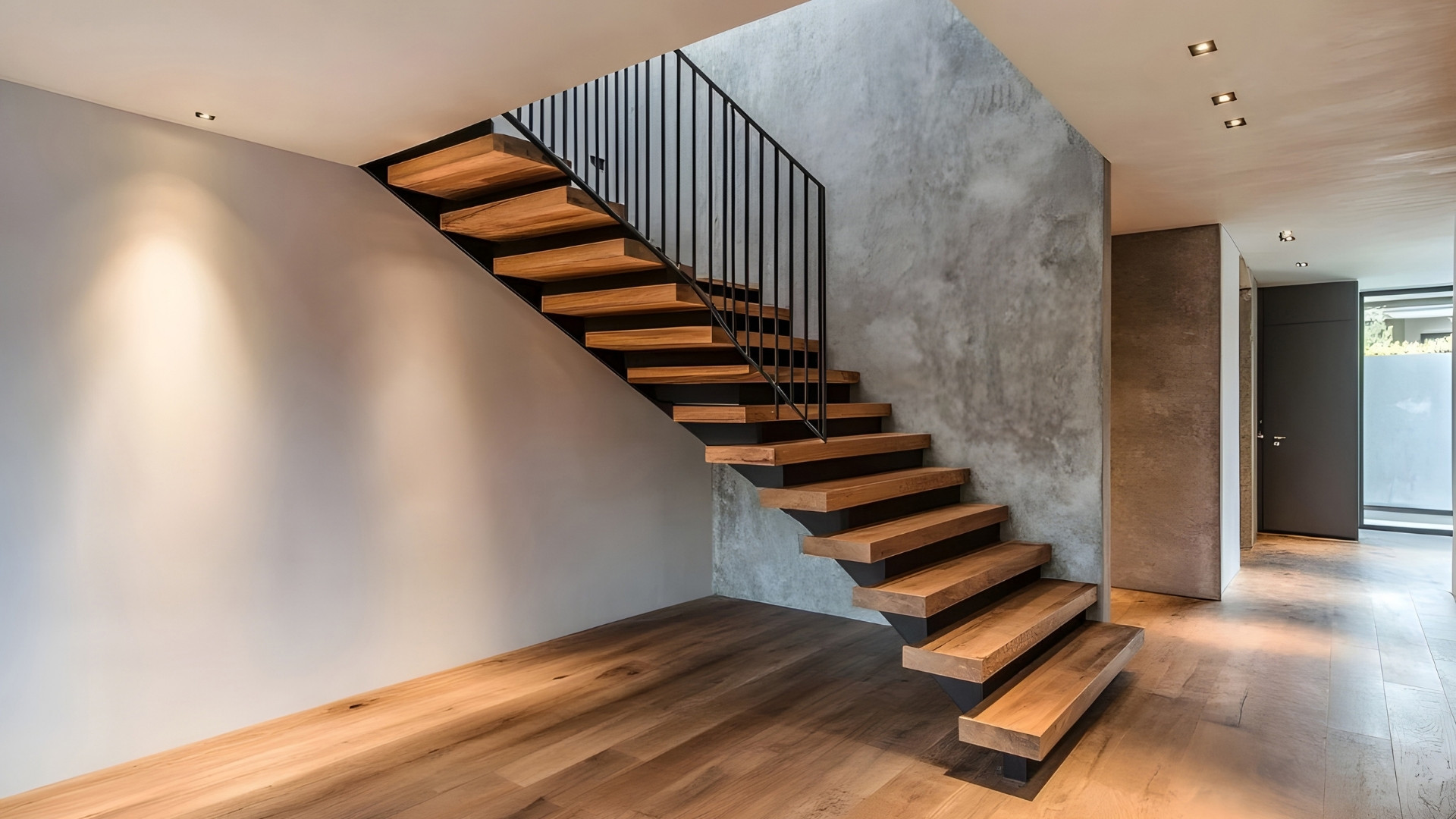
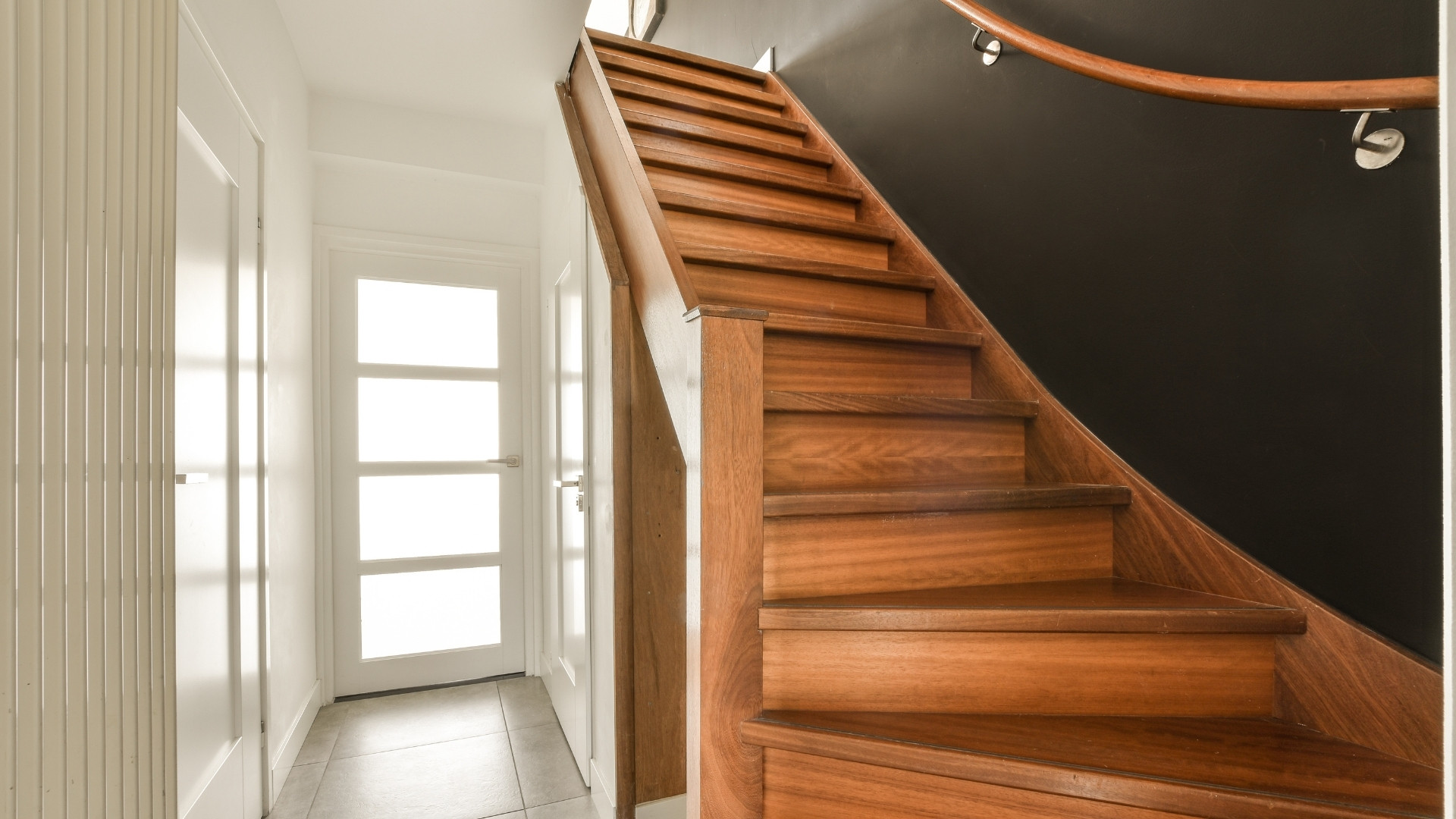
Picture this: your dog hesitates at the top of your hardwood stairs, paws scrambling for grip as their nails click uselessly against the smooth surface. This scenario plays out in countless homes every day, yet slick stair surfaces remain one of the most overlooked hazards in pet-friendly households.
The consequences are serious. A 2017-2022 veterinary study of 61 dogs presenting to emergency centers for stair falls found that 28% suffered mild lameness while 13% sustained severe bony fractures. These aren't minor mishaps—they're preventable injuries that affect dogs of all ages and sizes.
This guide walks you through selecting the right stair treads for your dog. You'll find guidance on assessing your dog's specific needs, the tread types available, and the key factors—material, grip, size, durability, and maintenance—that determine the best fit for your home.
Key Takeaways
- Hardwood, tile, and metal stairs create serious slip hazards that can cause falls and long-term joint strain in dogs
- Look for non-slip grip, low pile height, paw-safe materials, and secure backing
- Carpet treads add cushioning and warmth — rubber treads handle heavy use and clean up fast
- Measure your stairs carefully and consider your dog's age, breed, and mobility limitations
- Keep treads effective with weekly vacuuming, monthly adhesion checks, and prompt replacement when worn
Why Dogs Struggle on Slick Stairs
The Biomechanics of Traction Loss
Dogs cannot compensate for slippery surfaces the way humans can. They rely entirely on paw pad friction for grip, and smooth hardwood, polished tile, or bare metal stairs offer almost no traction for their nails and pads.
Research shows that on hard surfaces, dogs reflexively flex their digits to engage their nails. This actually reduces contact area of their digital pads—the primary source of friction—replacing it with the smooth, hard nail surface, which makes slipping worse.
The result is a "slip-and-scramble" gait that increases joint strain and fall risk with every trip up or down.
Real Consequences of Stair Slips
The injuries from stair falls range from mild to severe:
- 28% of dogs experience mild lameness
- 7% suffer moderate injuries like tendon or ligament disruption
- 13% sustain severe bony fractures
- 8% experience traumatic brain injury
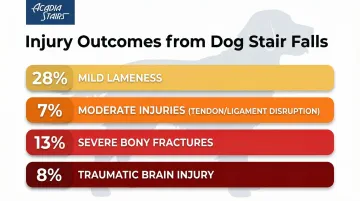
Physical injury is only part of the problem. Dogs that slip repeatedly develop stair anxiety—whining at the bottom, refusing to climb, or avoiding stairs altogether. That limits their access to parts of the home and chips away at their quality of life.
Which Dogs Are Most Vulnerable
Some dogs face greater risk than others. The highest-risk groups include:
- Senior dogs with arthritis or hip dysplasia — decreased proprioception makes balance on slick surfaces nearly impossible
- Short-legged breeds (Dachshunds, Corgis, Bulldogs) — low center of gravity and spinal vulnerability raise the stakes on every step
- Large breeds prone to joint issues (Labs, German Shepherds) — greater body weight means more impact force when they slip
- Puppies — those allowed on stairs from birth to 3 months show increased hip dysplasia risk, so secure traction matters early
- Post-surgical dogs — any slip can compromise healing and cause reinjury

Types of Stair Treads for Dogs
Carpet Stair Treads
Carpet is the top choice for most dog owners. It grips through texture, cushions joints on impact, and absorbs the noise of paws and nails — all without sacrificing style.
Key considerations:
- Low-pile synthetic carpet (nylon or polyester) is preferred over high-pile or shag
- High-pile loops can snag claws, creating trip hazards and pulled nails
- Synthetic materials resist staining better than natural fibers
- Provides warmth in colder climates, which senior dogs appreciate
Rubber and Polypropylene Treads
Rubber treads excel in high-traffic or outdoor scenarios. They resist moisture, wipe clean easily, don't trap pet hair, and offer extreme durability.
Best applications:
- Outdoor stairs exposed to rain and snow
- Utility stairs in mudrooms or basements
- Bare metal stairs (contemporary staircases) where moisture and claw damage are concerns
- Households with multiple large dogs
Quality rubber treads often exceed commercial slip-resistance standards, with Static Coefficient of Friction (SCOF) ratings of 0.6 or higher.
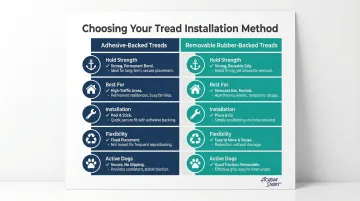
Adhesive vs. Non-Adhesive Installation
Once you've chosen a tread material, how you attach it matters just as much — especially for active dogs that push hard off each step.
| Adhesive-Backed | Removable Rubber-Backed | |
|---|---|---|
| Hold strength | Permanent, shift-free | May shift under heavy use |
| Best for | High-traffic homes, long-term installs | Renters, easy cleaning |
| Installation | Requires surface prep and curing time | No prep needed |
| Flexibility | Hard to remove without residue | Easy to rotate or replace |
| Active dogs | Stays secure under directional force | May need extra double-sided tape |
What to Consider When Choosing the Best Stair Treads for Dogs
The right stair tread depends on your dog's size, your stair surface, and how much mess your household can tolerate. Matching these three variables to the right product makes the difference between a tread that lasts years and one that shifts, snags, or wears out in months.
Material and Surface Texture
Synthetic vs. natural fibers:
- Nylon: Most durable synthetic, highly resilient against claw wear, maintains appearance longer
- Polyester: Good stain resistance, less resilient than nylon, better for lower-traffic areas
- Wool: Soft and naturally resilient but prone to staining and fiber degradation from pet traffic
Nylon outperforms polyester and wool for pet homes due to superior durability and abrasion resistance. Surface texture is equally important for traction and safety:
- Slightly textured surfaces create friction for paw pads
- Avoid overly looped or high-pile options where nails catch
- Cut pile carpets (friezé or saxony) allow claws to release easily
- Loop pile poses safety risks — loops can snag nails, causing injury or tread damage
Non-Slip Grip and Backing
The backing is as important as the top surface. A tread that slides defeats its entire purpose.
Backing types:
- Rubber/non-slip pad: Provides inherent grip, works on most surfaces, may need extra grip tape for very active dogs
- Adhesive: Creates permanent bond, handles repeated directional force, essential for bare wood, tile, or metal stairs
For residential safety, treads should meet minimum Dynamic Coefficient of Friction (DCOF) of 0.42 or Static Coefficient of Friction (SCOF) of 0.6.
Adhesive safety: Use pet-safe, residue-free adhesives to protect your stair surface finish. Pressure-sensitive acrylic adhesives are safest for hardwood. Avoid epoxy or urethane adhesives — they form bonds that can damage wood when removed.
Size and Fit
Proper measurement prevents hazards:
- Measure tread width (side to side)
- Measure step depth (front to back)
- Determine if tread should cover full step or just walking zone
Critical fit rules:
- Overhanging treads create trip edges
- Undersized treads leave slippery exposed areas at sides
- IRC code requires minimum tread depth of 10 inches with nosing of 0.75–1.25 inches
Some manufacturers offer custom-cut or wide-format treads for non-standard step widths, which is worth checking if you have a wide or custom-built staircase.
Durability and Cleanability
Pet homes require treads that withstand daily claw impact without pilling, snagging, or fiber loss.
Durability markers:
- Rated for high-traffic use
- Reviews specifically mention pet household performance
- Resistance to claw wear and fiber matting
- Maintains texture over time
Cleaning frequency matters as much as initial durability. Here's what to expect by tread type:
- Machine-washable carpet treads handle frequent messes well — most tolerate warm water (90–105°F) and low tumble drying
- Rubber treads wipe clean with a damp cloth and resist moisture and staining
- For pet accidents on any tread, use an enzyme cleaner and blot (don't rub) to avoid fiber damage
- Vacuum carpet treads weekly at minimum; steam clean quarterly for deeper maintenance
Pile Height and Profile
High-pile risks:
- Dog nails catch in loops, causing trips or pulled claws
- Reduces stability for senior dogs with balance issues
- Creates resistance that makes climbing harder
Recommended profile:
- Low-pile under 0.5 inches (ideally ≤0.25 inches) is safest
- ADA standards recommend maximum pile height of 0.5 inches for ease of movement
- Some cushion benefits older dogs with arthritis
- Moderate low-pile with slight give balances safety and joint comfort
Installation, Maintenance, and Long-Term Care
Proper Installation Steps
Surface preparation (critical for adhesion):
- Clean stairs thoroughly—remove dust, wax, oil, and old adhesive
- Dry completely (concrete/basement stairs may need moisture testing)
- Acclimate treads and adhesives to room temperature (65-75°F) for 48 hours
Installation process:
- Dry fit treads to ensure proper size (trim if needed)
- For adhesive-backed: Remove backing, position carefully, press firmly from center outward
- For tape application: Apply double-sided tape, leaving space at edges, roll with hand roller
- Allow 12-24 hours curing time before allowing pet traffic
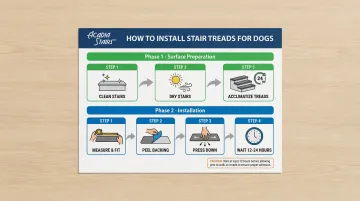
For non-adhesive treads: Ensure rubber backing lies completely flat with no curled edges that create trip hazards.
Basic Maintenance Routine
Weekly tasks:
- Vacuum carpet treads to remove embedded pet hair and prevent fiber matting
- Check for visible wear or damage
Monthly tasks:
- Inspect adhesion—press any lifting edges firmly
- Spot-clean stains as they appear
- Trim dog nails to extend tread life
Quarterly tasks:
- Deep clean carpet treads (machine wash or steam clean)
- Rotate treads if one side wears faster due to directional traffic
- Assess overall condition and plan replacements if needed
When to Replace Treads
Even with consistent maintenance, treads wear down over time. Replace them when you notice:
- Significant pilling or fiber loss
- Loss of texture or grip
- Adhesive failure (edges lifting repeatedly)
- Visible tread thinning
- Any reduction in your dog's confidence on the stairs
Replacing individual treads costs far less than swapping out a full set—so act at the first sign of reduced grip, not after a slip.
How Acadia Stairs Can Help You Plan Pet-Friendly Staircases
For homeowners building new staircases or renovating existing ones, the stair surface material and construction play a foundational role in pet safety. A tread is only as effective as the stair it sits on.
Bare metal, glass, or polished stone stairs demand particularly robust tread solutions. Custom-designed stairs can incorporate surface texturing, appropriate step depth, and compatible tread mounting points from the start—giving pet safety a place in the design, not a patch-up after.
Pet-friendly design considerations:
- Choose diamond plate, perforated plate, or textured metal surfaces for better natural grip
- Integrate anti-skid treatments during fabrication for stronger, longer-lasting adhesion
- Size tread depth to match your dog's breed and gait—not just standard code minimums
- Include pre-drilled plates or recessed areas so aftermarket treads mount securely
Acadia Stairs, with over 40 years of combined design experience, partners with homeowners, architects, and interior designers to create custom modern and contemporary staircases built to exact specifications. When pet safety is a priority, those details get addressed at the design stage—not after fabrication is complete.
Whether you're planning a new staircase or modifying an existing one, contact Acadia Stairs at (845) 765-8600 or info@acadiastairs.com to discuss how custom fabrication can address your pet-friendly staircase needs.
Conclusion
The best stair tread for your dog matches your dog's specific size, age, and mobility needs with your stair type, household habits, and cleaning preferences. Prioritize grip and fit above aesthetics—a beautiful tread that shifts or snags claws creates more problems than it solves.
Stair tread selection isn't a one-time decision. A young, healthy dog may eventually need extra cushioning for arthritic joints, and treads wear over time — losing the texture and grip that made them safe.
Make tread maintenance a routine:
- Inspect treads annually for worn texture or fraying edges
- Watch for changes in your dog's gait or hesitation on stairs
- Replace treads before grip fails, not after a slip occurs
Proactive checks keep your stairs safe through every stage of your dog's life.
Frequently Asked Questions
What is the best material for stairs for dogs?
Low-pile synthetic carpet (nylon or polyester) is the strongest all-around choice — it provides traction, resists staining, and holds up against claw wear. Rubber is a strong alternative for outdoor or high-moisture stairs where durability and easy cleaning are priorities.
Are stair treads safe for dogs?
Yes — when properly installed, stair treads are safe and beneficial. Look for secure non-slip backing, low-pile height to prevent claw snagging, and a correct fit that doesn't create new trip hazards. Done right, they significantly reduce slip and fall risk.
How do I keep stair treads from sliding on wood stairs?
Adhesive-backed treads bond directly to the step; non-adhesive versions work well when paired with rubber grip backing and double-sided carpet tape. Either way, clean and dry the surface thoroughly first — adhesion fails on dusty or damp wood.
Do young, healthy dogs need stair treads?
Young dogs may handle slick stairs day-to-day, but treads reduce sudden slip risk during play, protect the stair surface from claw damage, and make stairs safer for everyone in the household — including children and older adults.
Can stair treads damage hardwood stairs?
Quality treads with residue-free adhesive or rubber backing won't damage hardwood when installed and removed correctly. Avoid cheap adhesives, test a small area first, and use pressure-sensitive adhesives on finished hardwood — they're the least likely to lift the finish.