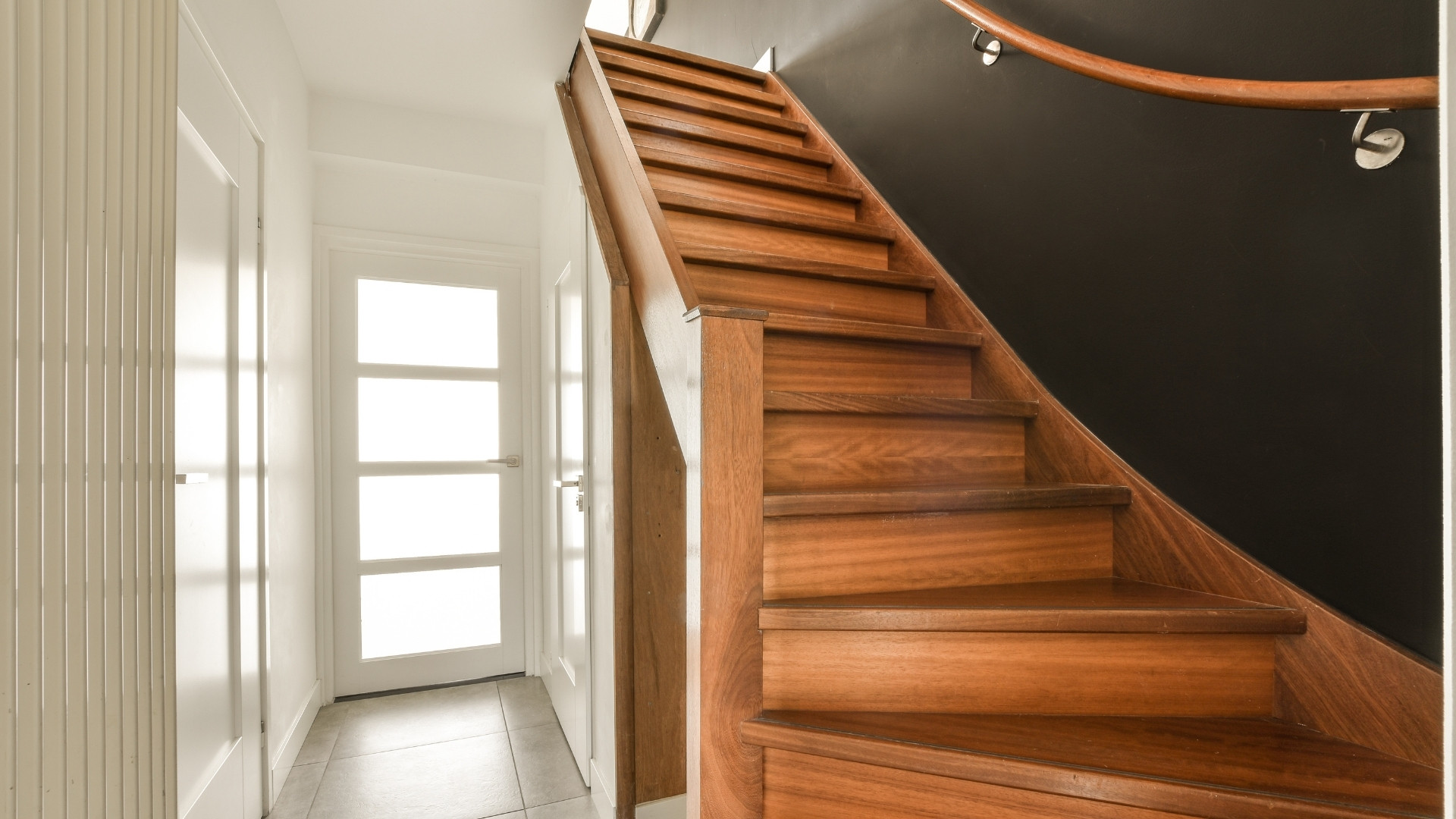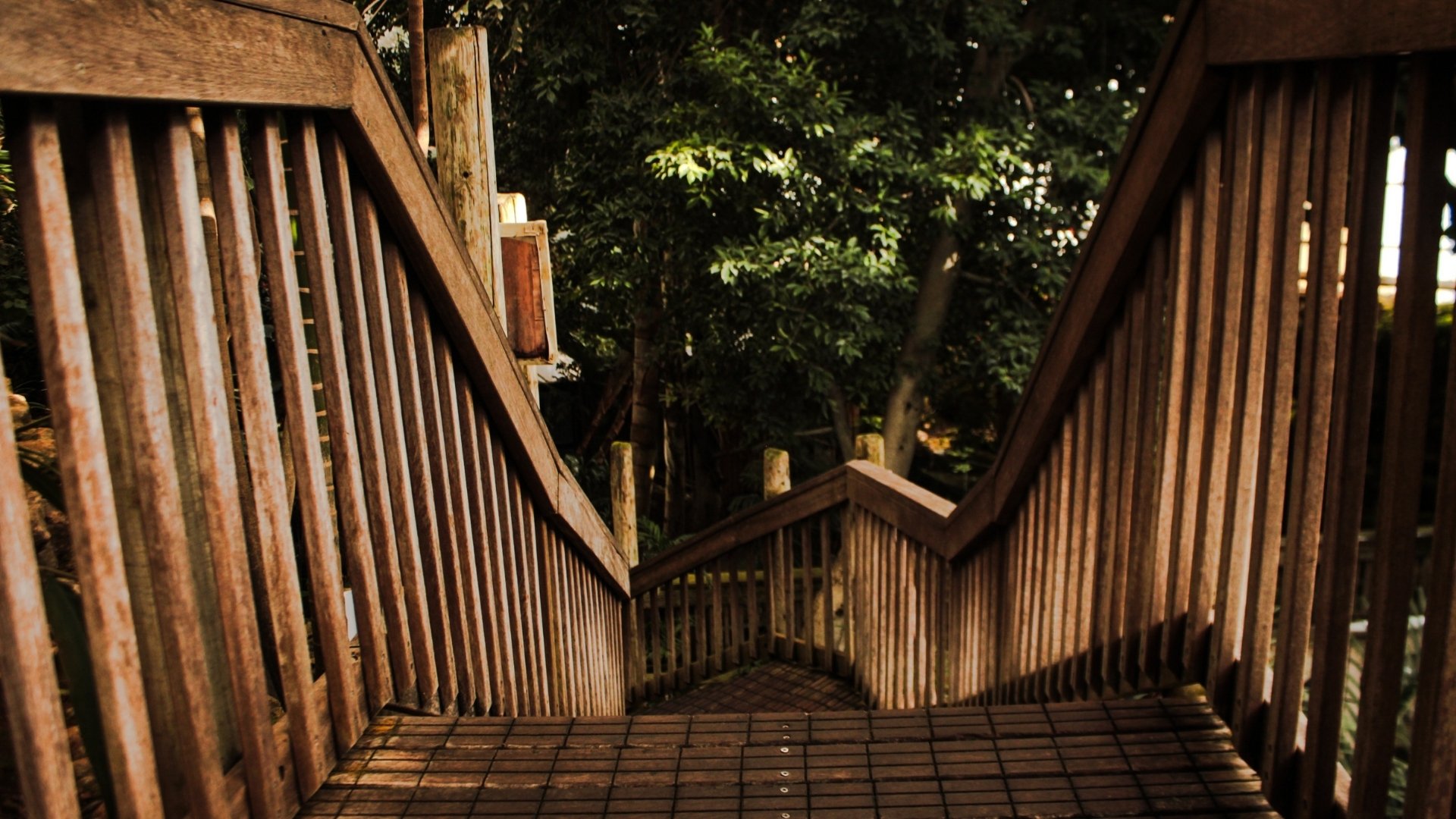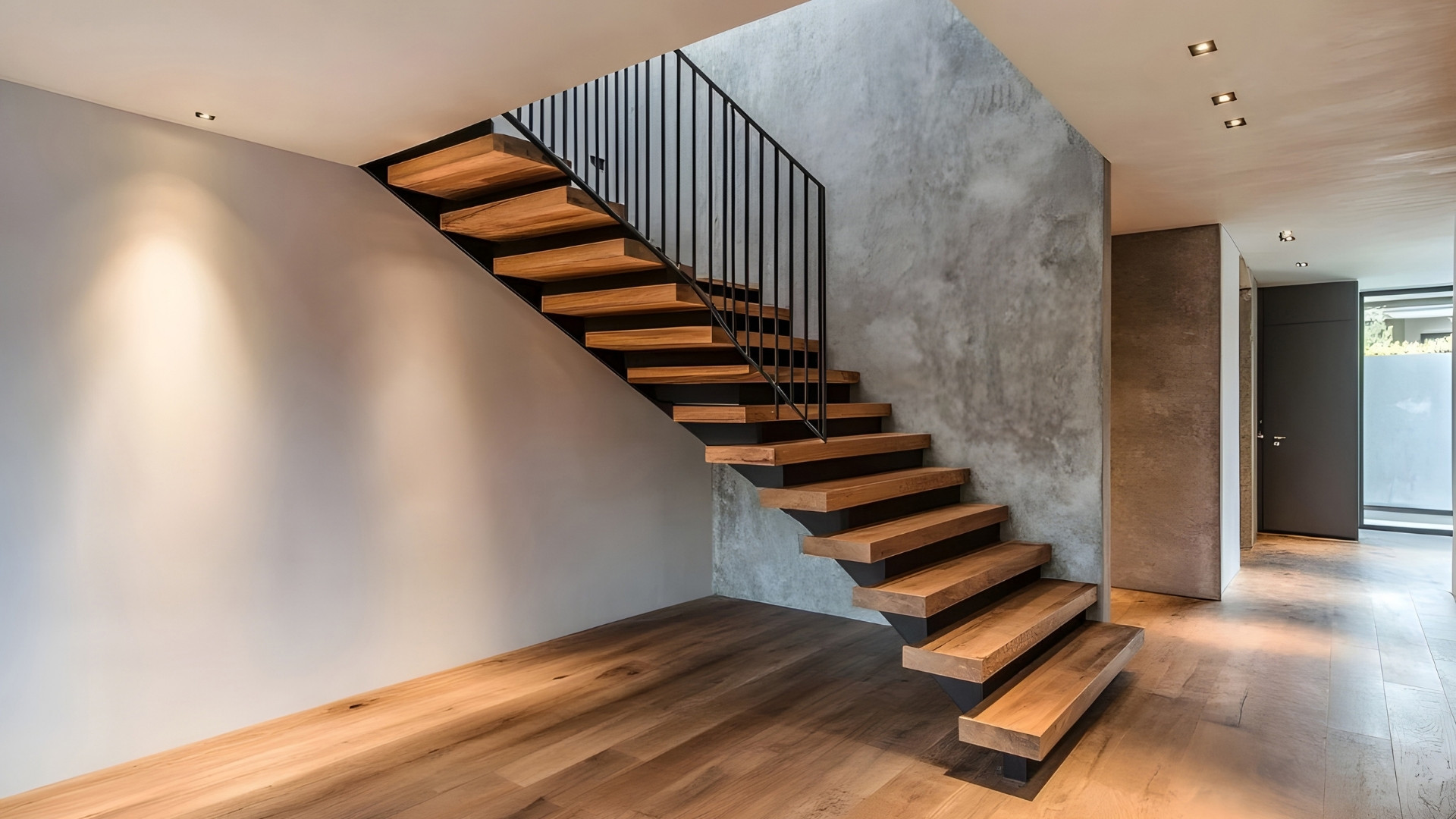
Wooden stair treads are often chosen to soften the look of a metal staircase, bringing warmth and contrast to an otherwise industrial structure. When they’re done well, the result feels solid, quiet, and comfortable underfoot.
When they’re not, problems show up quickly. Wood moves. Gaps appear. Treads begin to squeak. Deflection becomes noticeable with everyday use. These issues usually surface during installation or after the space is occupied, when fixes are disruptive, expensive, and hard to ignore.
This guide explains what actually affects how wooden stair treads perform on metal stair systems. It covers material behavior, attachment methods, structural limits, and code considerations, helping you understand what works, what fails, and what needs to be addressed early to avoid long-term issues.
Key Takeaways
Wooden stair tread performance is determined at the detailing stage, where span, thickness, attachment method, and railing loads are coordinated with the metal structure.
Species selection alone does not prevent failures; moisture control, movement allowance, and fastening strategy drive long-term stability and noise-free performance.
Most inspection and callback issues originate from geometry and load transfer, not from the use of wood as a tread material.
Hybrid metal-and-wood stair systems require early cross-trade coordination, as tread decisions directly affect stringer layout, bracket placement, and railing connections.
Wooden stair treads perform best in controlled interior environments, while high moisture, extreme traffic, or wide spans often justify alternative tread materials.
What Is a Wooden Stair Tread?
A wooden stair tread is the horizontal walking surface of a stair system, fabricated from solid wood, engineered wood products, or laminated wood assemblies. In custom stair construction, wooden stair treads typically serve as finish components attached to a separate structural frame that provides primary load-bearing support.
The tread transfers foot traffic loads into the underlying stair structure, making its thickness, span, and attachment method critical to overall stair performance. Because stair treads interact directly with users and structural elements, their design influences safety, code compliance, and long-term durability.
Unlike steel or concrete treads, wooden stair treads respond to changes in ambient humidity, which affects dimensional stability, fastening performance, and service life.
Where Wooden Stair Treads Are Commonly Used?
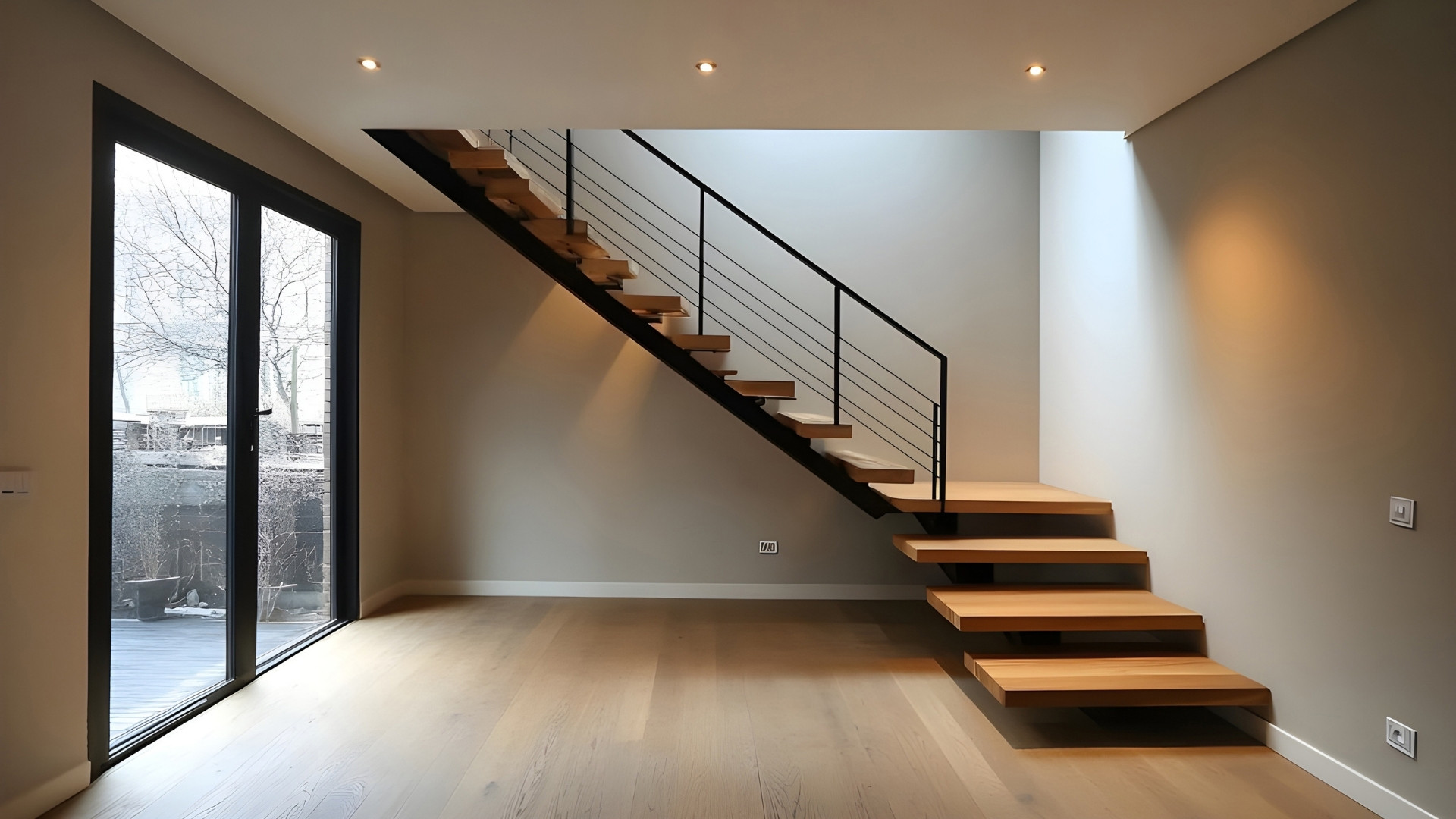
Wooden stair treads are typically specified where finish quality needs to align with predictable structure and installation. In these projects, wood is treated as a coordinated finish element that integrates with steel stair frames, connections, and railing systems.
They are most commonly used in the following situations:
Interior metal stair systems: Steel stringers or frames carry the structure, while wood provides the finished walking surface. This keeps load paths controlled while meeting design expectations.
Residential projects with finish coordination needs: Used where appearance, tread consistency, and attachment reliability matter. Poor coordination often leads to squeaks, misalignment, or callbacks.
Modern stairs with exposed metal: Common in open, contemporary designs where exposed steel requires tight tolerances. Tread thickness, attachment method, and finish buildup must be defined early.
Low-to-moderate traffic commercial interiors: Applied where wear expectations and maintenance responsibilities are clearly defined. Fabrication accuracy is key to maintaining spacing and railing alignment over time.
Climate-controlled interior environments: Best suited for interiors with stable humidity, where wood movement can be managed predictably. Uncontrolled environments often require alternative materials.
Types of Wood Species Commonly Used for Stair Treads
Wood species selection directly affects tread performance, cost, and long-term maintenance requirements. Different species offer varying combinations of hardness, dimensional stability, and grain characteristics that influence suitability for stair applications.
The following species represent the most common choices for custom stair tread fabrication:
Red Oak
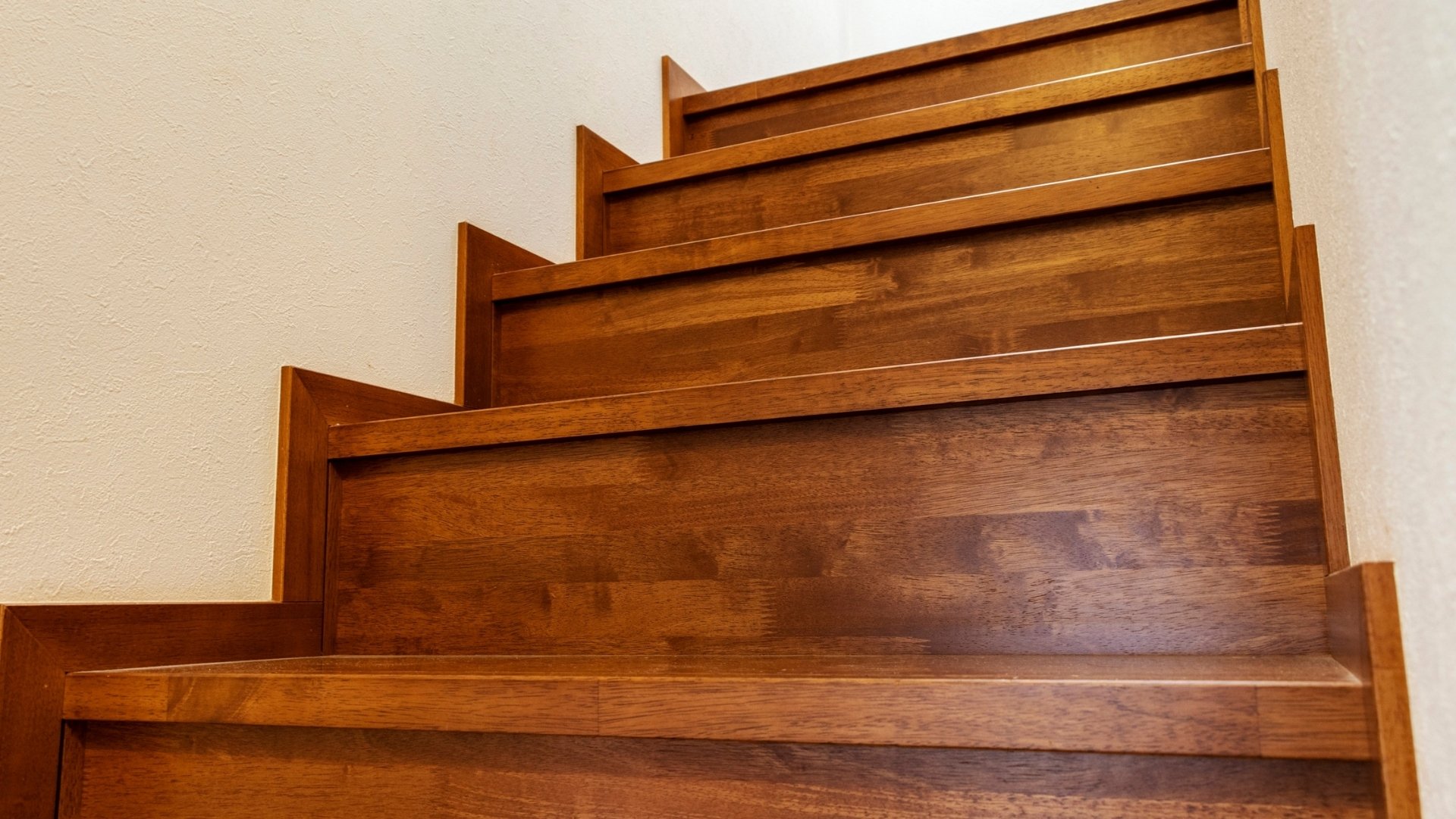
Red oak is frequently specified for stair treads due to broad availability, predictable machining, and balanced performance in residential and light commercial stair systems.
Fabrication and performance considerations:
Janka hardness of approximately 1,290 lbf supports typical residential loading conditions.
Moderate density works well with common mechanical fastening methods.
Open grain accepts stains easily but often requires grain-filling to achieve smooth finishes.
Kiln-dried stock is widely available, helping reduce fabrication lead times.
Mid-range pricing makes it suitable for budget-sensitive projects.
Red oak performs reliably in interior, climate-controlled environments, but its moderate dimensional movement requires proper acclimation and allowance during installation.
White Oak
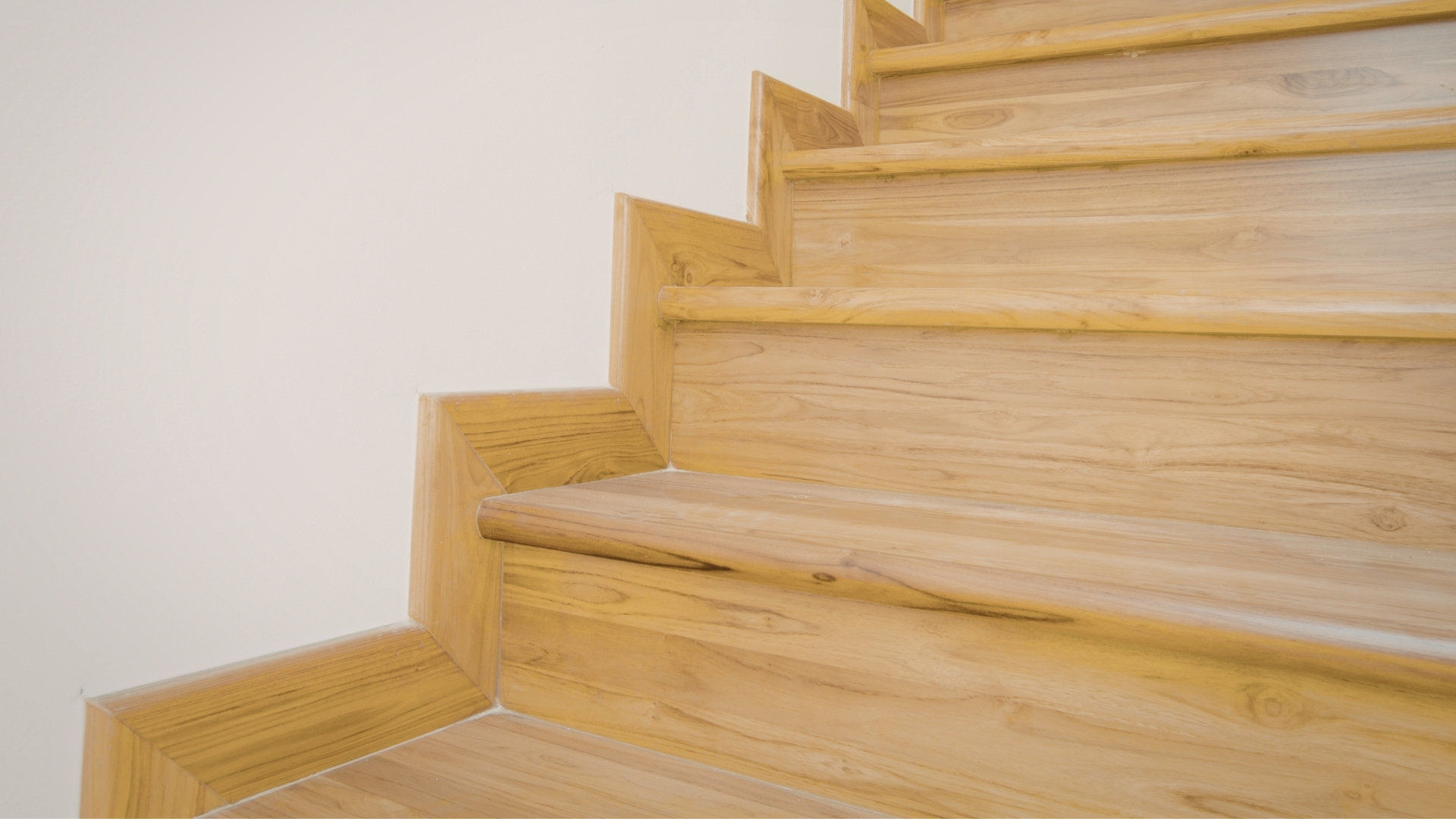
White oak is often selected when stair builders require improved moisture resistance and greater dimensional stability than red oak provides.
Material performance considerations:
Janka hardness near 1,360 lbf provides improved wear resistance.
Tighter grain structure reduces moisture absorption.
Better suited for transitional interior spaces with occasional humidity variation.
Longer lead times may affect project scheduling.
Higher material cost compared to red oak.
White oak is commonly specified in projects where moisture exposure risk must be mitigated without sacrificing appearance or structural reliability.
Hard Maple
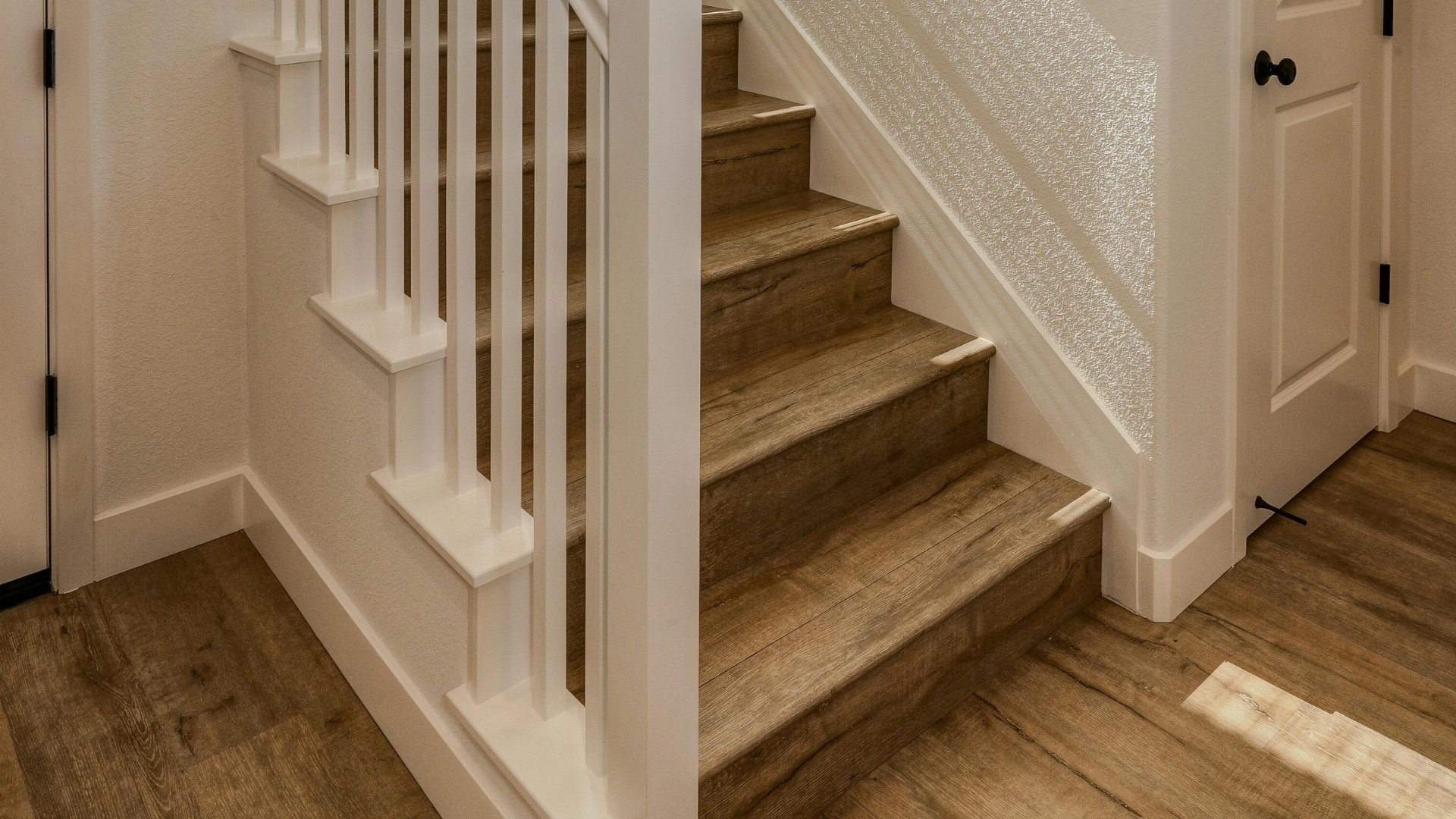
Hard maple is chosen for stair treads when durability and a clean, contemporary finish are primary project requirements.
Fabrication and performance factors:
Janka hardness around 1,450 lbf offers strong resistance to surface wear.
Fine, uniform grain produces smooth finished surfaces.
Light coloration highlights scratches and wear more readily.
Requires careful acclimation to minimize movement-related issues.
Maple performs best in climate-controlled interiors and modern stair designs where finish consistency and wear resistance are closely monitored.
Hickory
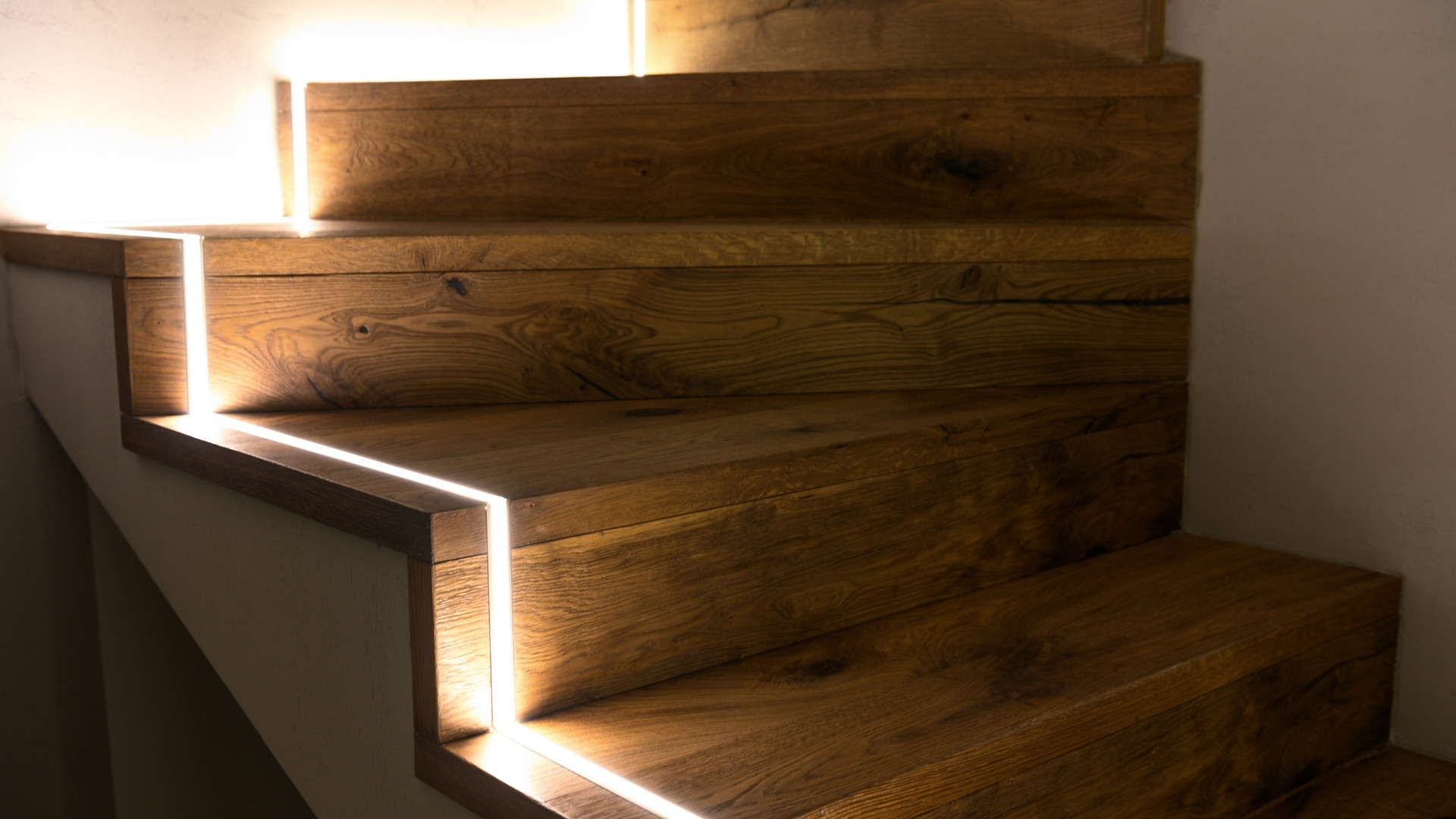
Hickory is specified in stair systems where maximum wear resistance is required, and visual uniformity is a secondary concern.
Fabrication and performance considerations:
Janka hardness, approximately 1,820 lbf, supports high-traffic applications.
Pronounced grain and color variation may limit design compatibility.
Exceptional durability reduces long-term surface wear.
Increased hardness can complicate machining and fastening.
Hickory is typically reserved for heavy-use residential or commercial stairs where durability outweighs aesthetic consistency.
Walnut
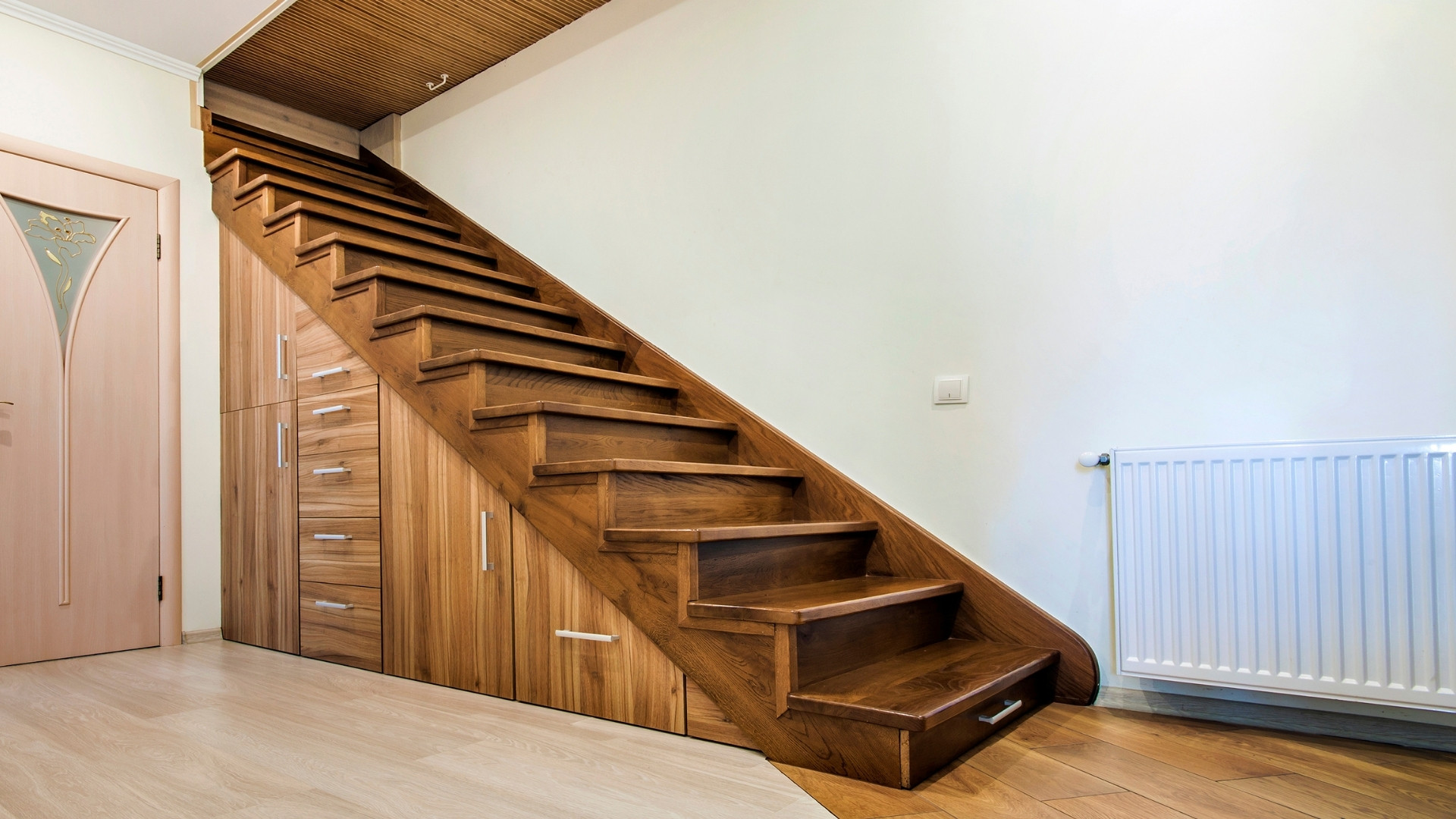
Walnut is selected primarily for its appearance in high-end residential and commercial stair projects with controlled usage conditions.
Fabrication and durability considerations:
Janka hardness around 1,010 lbf makes it softer than most common tread species.
Rich coloration and natural variation support premium design goals.
Higher material costs and limited availability affect budgeting and lead times.
Requires careful handling to avoid surface damage during installation.
Walnut is most appropriate where traffic levels are moderate and aesthetic priorities justify increased cost and maintenance considerations.
Performance Factors That Determine the Best Wood for Stair Treads
Selecting the appropriate wood species requires evaluating several interrelated performance factors that affect both initial installation and long-term behavior.
Hardness and wear resistance: Janka hardness indicates resistance to surface wear from foot traffic. Species above approximately 1,200 lbf are generally preferred for commercial and high-use stairs.
Dimensional stability: Wood movement varies by species and moisture exposure. Stable species reduce gaps, fastener loosening, and finish cracking when installed on metal stair systems.
Grain structure and finish behavior: Open-grain woods stain easily but require additional finishing steps. Fine-grain woods produce smoother surfaces with less preparation and a more consistent appearance.
Moisture resistance: Species with tighter cellular structures resist moisture penetration more effectively. This is critical in high-humidity interiors and transitional spaces near exterior openings.
Availability and lead time: Species availability affects fabrication schedules. Common domestic species typically offer shorter lead times than premium or specialty woods.
Cost considerations: Material cost varies widely by species and grade. Red oak often provides the best balance of durability and cost, while premium species are driven by design requirements.
In practice, species selection often depends on how the tread will integrate with the overall stair system. Manufacturers like Acadia Stairs work with builders and fabricators to align wood species, tread thickness, and attachment detailing with the metal structure early in the process, helping avoid rework once steel fabrication begins.
Structural Considerations When Using Wooden Stair Treads
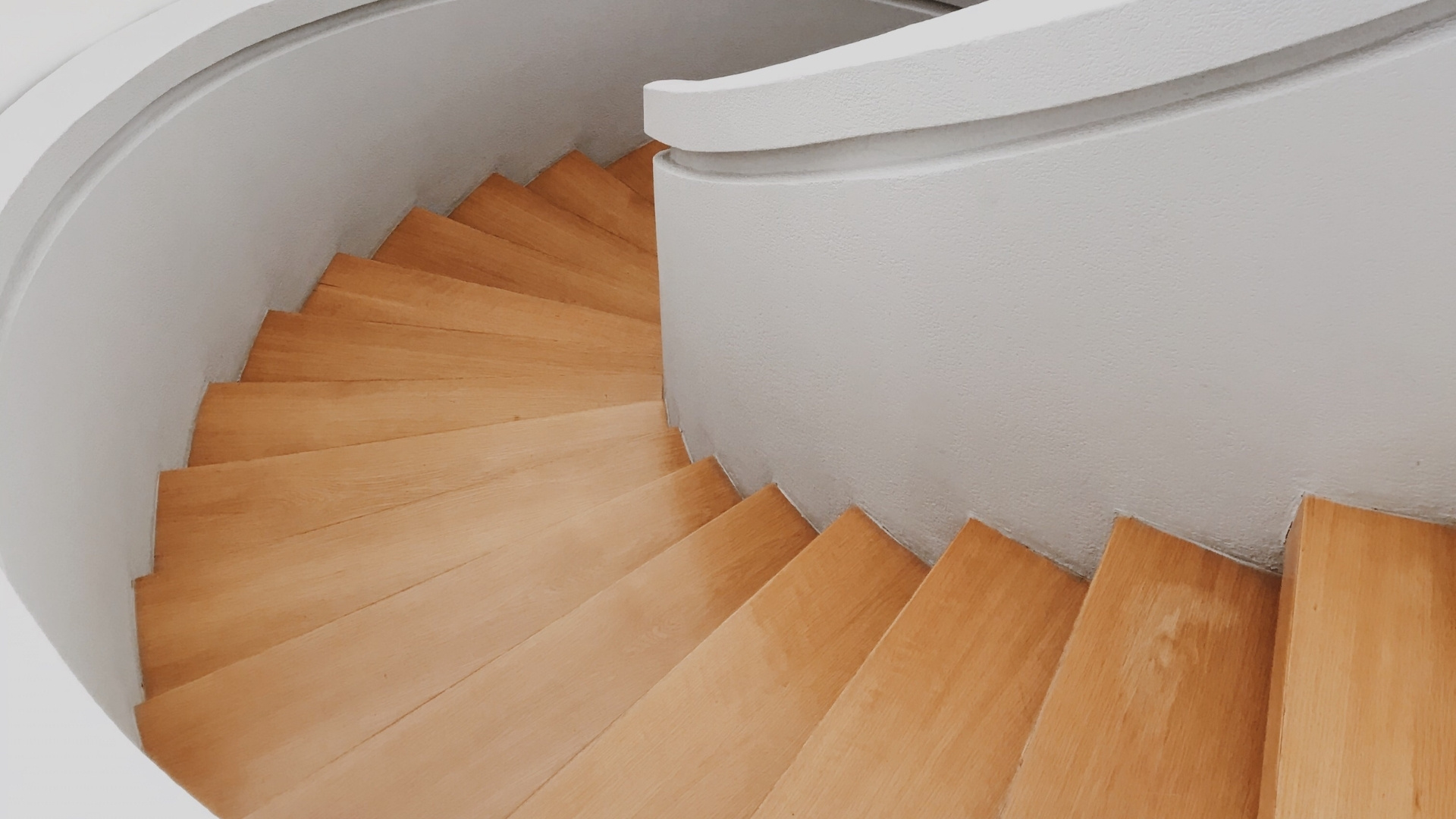
The structural performance of a wooden stair tread is determined by span, loading, support configuration, and connection detailing. When any of these are undersized or poorly coordinated, the result is excessive deflection, noise, fastener loosening, and premature failure.
Key structural factors to evaluate during design include:
Span and tread thickness
Most residential stairs are 36–48 inches wide. A 1-inch nominal tread (¾-inch actual) performs reliably up to about a 30-inch clear span. Wider spans require thicker material or intermediate support.
For 48-inch-wide stairs, 1½-inch nominal treads (1¼-inch actual) provide better stiffness. Spans beyond ~42 inches or higher-load conditions often require 2-inch nominal material (1½-inch actual).
Load requirements
Per IBC, residential stair treads must support a 40 psf live load or a 300-lb concentrated load. Commercial stairs typically require a 100 psf live load.
While codes do not specify tread deflection limits, L/360 (live load) and L/240 (total load) are commonly used. Exceeding these limits results in noticeable movement and connection wear.
Support configuration
Edge-supported treads perform better than single-point or cantilevered supports. Mono-stringer cantilevers of 12–18 inches are common and usually require thicker or engineered treads.
Bracket and cleat details should spread the load into the stringer to avoid perpendicular-to-grain crushing.
Railing load interaction
When guard or handrail posts pass through the tread, the tread must also resist 50 plf and a 200-lb concentrated load. Insufficient thickness can lead to splitting or pull-through.
Blocking, backing plates, or concealed steel reinforcement may be required at post locations.
Accounting for these factors early in design helps avoid undersized wooden stair treads, inadequate support spacing, and connection failures that surface during installation or after occupancy.
Building Code Considerations for Wooden Stair Treads (US)
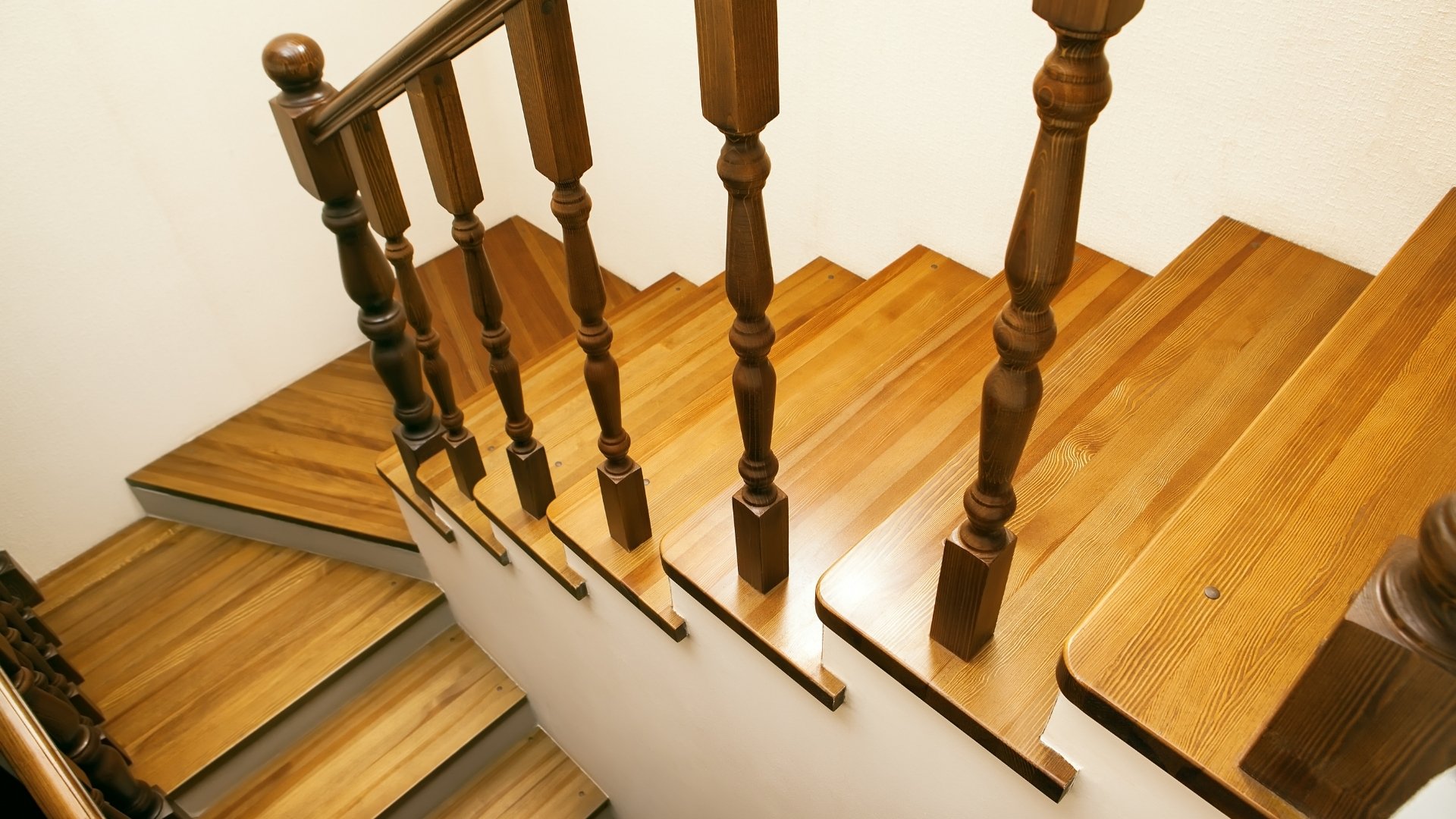
For wooden stair treads used in U.S. projects, building code compliance is governed primarily by the International Building Code (IBC) for commercial work and the International Residential Code (IRC) for homes.
While local amendments vary, the following requirements are consistently reviewed during inspection and should be addressed during design and fabrication.
Tread dimensions and uniformity
IBC requires a minimum tread depth of 11 inches, while IRC allows a reduced depth (typically 9–10 inches) depending on the nosing. In all cases, tread depth must be uniform within 3/8 inch across the stair run. Variations beyond this are a common cause of failed inspections.
Riser height limits
Maximum riser height is 7 inches under IBC and 7-3/4 inches under IRC, with the same 3/8-inch maximum variation within a flight. Tread and riser coordination is evaluated together, not independently.
Nosing requirements
When nosings are used, projection and profile must be consistent across all treads. Nosings are not required if the minimum tread depth is met without them, but when present, inconsistency is frequently flagged.
Structural loading expectations
Stair treads must support 40 psf or a 300-lb concentrated load in residential applications and 100 psf in commercial settings. While codes do not prescribe tread-specific deflection limits, excessive movement is often cited as a performance failure, especially on open or mono-stringer stairs.
Open riser limitations
Open risers are permitted only where the opening does not allow passage of a 4-inch sphere. This affects tread thickness, spacing, and edge detailing.
Guards, handrails, and attachment loads
When railing posts connect through or near wooden stair treads, the assembly must resist 50 plf plus a 200-lb concentrated load. Inspectors expect these loads to transfer into the stair structure rather than rely solely on the tread, often requiring steel backing, blocking, or welded attachment points.
Material use and fire considerations
Wooden stair treads are permitted where combustible materials are allowed by construction type. In rated egress stairs or high-rise applications, additional fire-resistance requirements may apply to the overall stair assembly, even if the treads themselves are wood.
Common Design and Installation Mistakes to Avoid
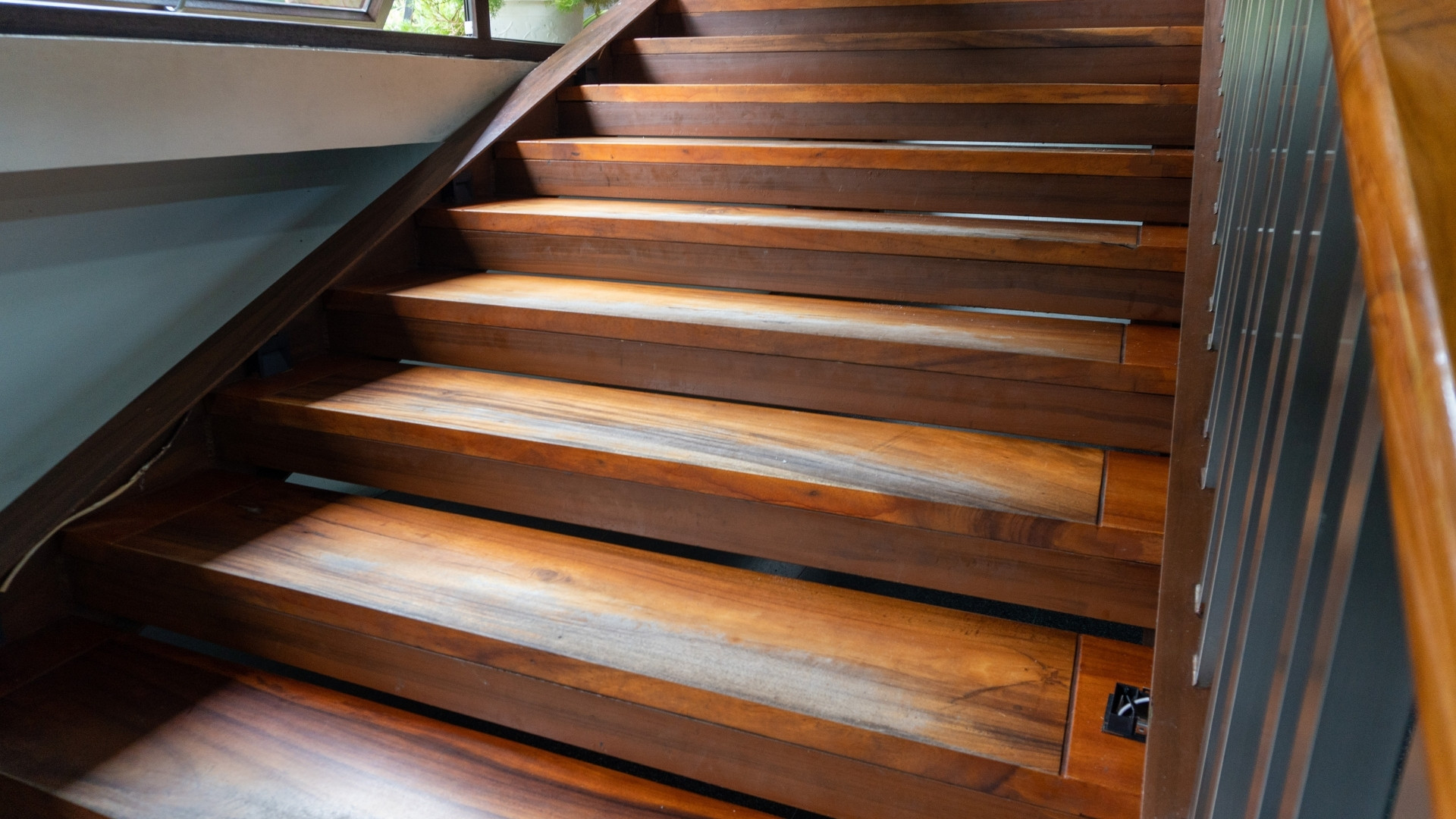
Most wooden stair tread issues stem from coordination gaps and incorrect assumptions, not material defects. Below are a few of the most common causes of callbacks, inspection issues, and long-term performance problems.
Installing Treads Before Moisture Acclimation
Treads installed before reaching site moisture equilibrium will move after installation, creating gaps, noise, or splitting. Always allow acclimation in the installation environment before final fastening.
Restricting Natural Wood Movement
Rigidly fastening treads to steel prevents cross-grain movement and concentrates stress at fasteners. Use slotted holes, oversized penetrations, or controlled fastening to allow seasonal movement.
Inconsistent Tread Thickness
Varying tread thickness within a stair flight affects riser uniformity and complicates railing alignment. Maintain consistent thickness throughout a run; locate material transitions at landings.
Inadequate Support for Tread Span
Undersized treads or excessive support spacing cause deflection and springiness. Confirm that tread thickness and support spacing meet load and deflection expectations before fabrication.
Finishing Only Visible Surfaces
Leaving bottom faces or edges unfinished leads to uneven moisture absorption and cupping. Finish all tread surfaces to improve dimensional stability.
Poor Railing and Tread Coordination
Railing posts passing through treads require adequate thickness and backing. Failing to coordinate this early results in weak connections and failed load tests.
Ignoring Exterior Movement Conditions
Covered exterior stairs experience greater temperature and humidity swings than interior spaces. Attachment details must allow increased movement and provide durable finish protection.
Avoiding these issues requires early coordination among design, fabrication, and installation, before materials are ordered or details are locked in.
When Wooden Stair Treads Are a Good Choice?
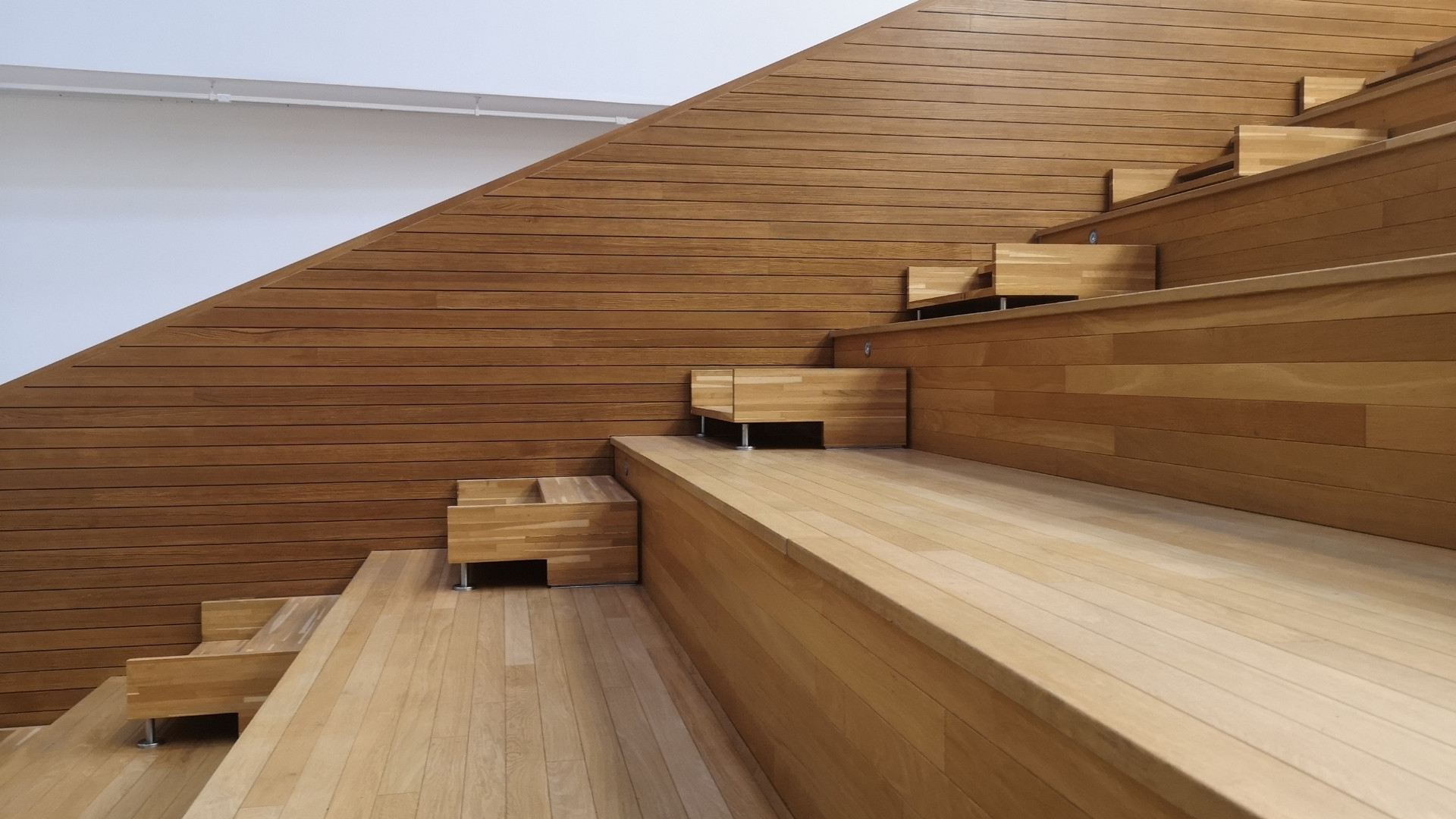
Wooden treads are suitable for specific applications where their characteristics align with project requirements and constraints. Understanding these conditions helps determine when wood represents the appropriate tread material.
Wooden treads work well when:
Residential aesthetic is desired with a modern structure: Hybrid systems combine steel's structural efficiency with wood's warmth and traditional appeal. This suits contemporary homes where exposed structure creates architectural interest while wood softens the overall appearance.
Budget favors hybrid construction: Steel stringers paired with wood treads typically cost less than all-steel fabrication with custom finishes. The wood provides finished walking surfaces without specialized metalworking or coating processes.
Acoustic performance matters: Wood dampens footfall noise compared to steel or concrete treads. This becomes important in occupied residential spaces where sound transmission affects livability.
Coordination with adjacent wood flooring: When stairs connect wood floor levels, matching wood treads to the flooring creates visual continuity. This requires careful species and finish matching but eliminates jarring material transitions.
Future modification flexibility is valued: Wooden treads can be refinished or replaced more easily than integral steel or stone components. This suits applications where changing finishes or repairing localized damage without replacing entire stair sections provides value.
Climate-controlled interior environment: Stable temperature and humidity reduce wood movement concerns and improve long-term performance. Interior applications in mechanically conditioned spaces present fewer challenges than exterior or unconditioned locations.
Installation by experienced trades: Proper wood tread installation requires an understanding of material behavior and appropriate attachment methods. Projects with skilled installers achieve better outcomes than those where trades lack experience with wood-metal hybrid systems.
When these conditions are met, wooden stair treads function as a predictable finish component rather than a risk variable, integrating effectively with metal stair systems.
How Acadia Stairs Supports Projects Using Wooden Stair Treads?
When integrating wooden stair treads into metal stair systems, coordination failures, movement issues, and fabrication assumptions are common pain points for metal workers, stair builders, and contractors. Acadia Stairs is a U.S.-based custom stair manufacturer with decades of experience designing and fabricating metal and mixed-material stair systems that address these challenges head-on.
Acadia works directly with contractors, architects, engineers, and builders to provide solutions that ensure structural performance, code compliance, and long-term reliability. The brand’s custom approach is focused on solving real installation and fabrication issues.
Here is how Acadia Stairs supports stair projects that use wooden stair treads.
Custom Shop Drawings & Coordination: Acadia provides detailed shop drawings at no extra charge, including one revision set. These drawings help clarify how wooden stair treads will attach to metal stringers, supports, and rail systems before fabrication begins, reducing field issues and rework.
Wide Selection of Tread Materials & Options: Acadia offers a broad range of tread choices, including wood species like Red Oak, White Oak, Maple, Cherry, Mahogany, and Walnut, with options for thickness and anti-skid properties.
Metal & Wood Finish Integration: The metal fabrication services include customized wood and metal finishes that accommodate mixed-material systems. Proper finishing and surface preparation, such as clear-coat polyurethane for wood, enhances durability and helps manage wood movement and moisture exposure.
Customized Staircase Configurations: Whether you need straight, single- or double-stringer, curved, or spiral stair systems, Acadia’s team adapts tread selection and attachment details to work with the chosen metal structure for optimal performance and code compliance.
National Fabrication & Shipping Capability: Fabricated in New York and shipped nationwide, Acadia supports projects across the U.S., offering logistical solutions that help builders coordinate onsite installation with precise component fit and timing.
Field-Ready Coordination Resources: Acadia’s team is available to assist with planning, detailing, and technical questions throughout the project lifecycle, helping installers avoid common issues such as improper fastening, inadequate support spacing, and wood movement conflicts.
By addressing wood movement, attachment strategy, and coordination details upfront, Acadia Stairs helps reduce installation risk and supports stair systems that remain stable, quiet, and visually consistent over time.
Conclusion
Wooden stair treads can work extremely well in custom metal stair systems when coordination is handled early and correctly. Most problems are not material failures but planning gaps that surface during installation or inspection.
Acadia Stairs supports stair builders and metal fabricators by addressing those gaps before fabrication begins. Through coordinated design, clear detailing, and experience with mixed-material stair systems, Acadia Stairs helps projects move from drawings to installation with fewer surprises.
If your project includes wooden stair treads on a metal stair structure, reach out to Acadia Stairs to discuss design coordination and fabrication support early in the process.
FAQs
1. Can wooden stair treads be replaced later without modifying the metal stair structure?
Yes, if the attachment system is designed for serviceability. Proper detailing allows individual tread removal without cutting, welding, or damaging the metal structure.
2. Do wooden stair treads increase inspection risk on commercial projects?
Not inherently. Inspection issues usually come from inconsistent dimensions or poor load transfer, not from using wood when details and coordination are handled correctly.
3. How early should tread specifications be finalized in a metal stair project?
Before steel fabrication begins, tread thickness and attachment strategy affect stringer layout, bracket placement, railing coordination, and overall stair geometry.
4. Are engineered wood treads a better option than solid wood?
Engineered treads can improve dimensional stability, but connection detailing and support conditions still control performance. They do not eliminate the need for proper coordination.
5. Who should be responsible for coordinating wood treads with metal stairs?
Coordination should happen during stair design, involving the stair manufacturer, fabricator, and installer to prevent assumptions that lead to field issues.