Wooden stairs in a house remain one of the most common staircase choices in residential construction due to their compatibility with wood-framed structures, material flexibility, and ease of integration with interior finishes. However, performance issues often arise when stair design and construction are not properly planned.
Builders frequently encounter problems such as squeaking noise, cracked treads, structural movement, and inspection failures caused by inconsistent riser heights or inadequate support. These issues are typically linked to material selection, structural detailing, or installation sequencing rather than the wood itself.
This article explains the different types of wooden stairs used in houses, structural components, wood species options, building code considerations, common failure causes, and the key factors to evaluate before construction or fabrication begins.
Key Takeaways
Wooden stairs remain a common residential choice due to structural compatibility with wood-framed homes and long-term serviceability.
Stair performance depends on proper stringer design, load transfer, moisture control, and landing support, not just wood species or finish.
Different stair layouts and wood types offer varying levels of durability, movement resistance, and maintenance requirements.
Hybrid wood–steel stair systems provide improved stiffness, reduced deflection, and slimmer profiles for modern house designs.
Early coordination with an experienced stair manufacturer helps prevent noise, movement, and inspection issues while improving long-term reliability.
What Are Wooden Stairs in a House?
Wooden stairs in a house refer to staircase systems where wood is used as the primary structural or finish material for residential vertical circulation.
These stairs are designed to connect different floor levels while meeting structural, safety, and building code requirements.
In residential construction, wooden stairs generally fall into two categories:
Structural wooden stairs: The load-bearing components, such as stringers, treads, risers, and landings, are constructed from wood. These systems rely on proper framing and fastening to transfer loads into the building structure.
Decorative or wood-finished stairs: The underlying structure may be steel or engineered framing, while wood is applied as a finish material for treads, risers, and handrails. This approach improves dimensional stability while maintaining a wood appearance.
Wooden stairs can also be classified by construction method:
Site-built stairs are assembled on location using field measurements and traditional framing techniques.
Prefabricated stairs are manufactured off-site based on approved drawings and installed as coordinated components.
Understanding these distinctions helps determine performance, durability, and construction requirements early in the design process. Especially from a fabrication standpoint, distinguishing between structural and finish-only wood stairs is essential for defining load paths, connection details, and material tolerances.
Why Wooden Stairs Are Common in Residential Homes
Wooden stairs continue to be widely used in houses because they integrate naturally with typical residential construction methods and offer predictable long-term performance when properly built.
One of the primary reasons is compatibility with wood-framed houses. Most residential structures in the US use timber floor systems, allowing wooden stairs to connect directly to joists, beams, and load-bearing walls without complex structural transitions.
Additional functional advantages include:
Comfort underfoot: Wood provides a warmer, less rigid walking surface compared to metal or concrete, improving everyday usability.
Cost flexibility: Wooden stair systems can be built across a wide budget range depending on wood species, construction method, and level of finish.
Repairability: Individual treads, risers, or handrails can often be repaired or replaced without removing the entire staircase.
Thermal and acoustic benefits: Wood naturally dampens sound and does not transmit cold as readily as metal, helping reduce noise and improve interior comfort.
These practical benefits make wooden stairs a reliable choice for long-term residential use when structural design and installation are properly coordinated.
For stair builders and fabrication partners, wood stairs also integrate efficiently with residential framing systems, reducing structural transition points and simplifying installation sequencing.
Five Practical Ideas for Wooden Stairs in a House for 2026
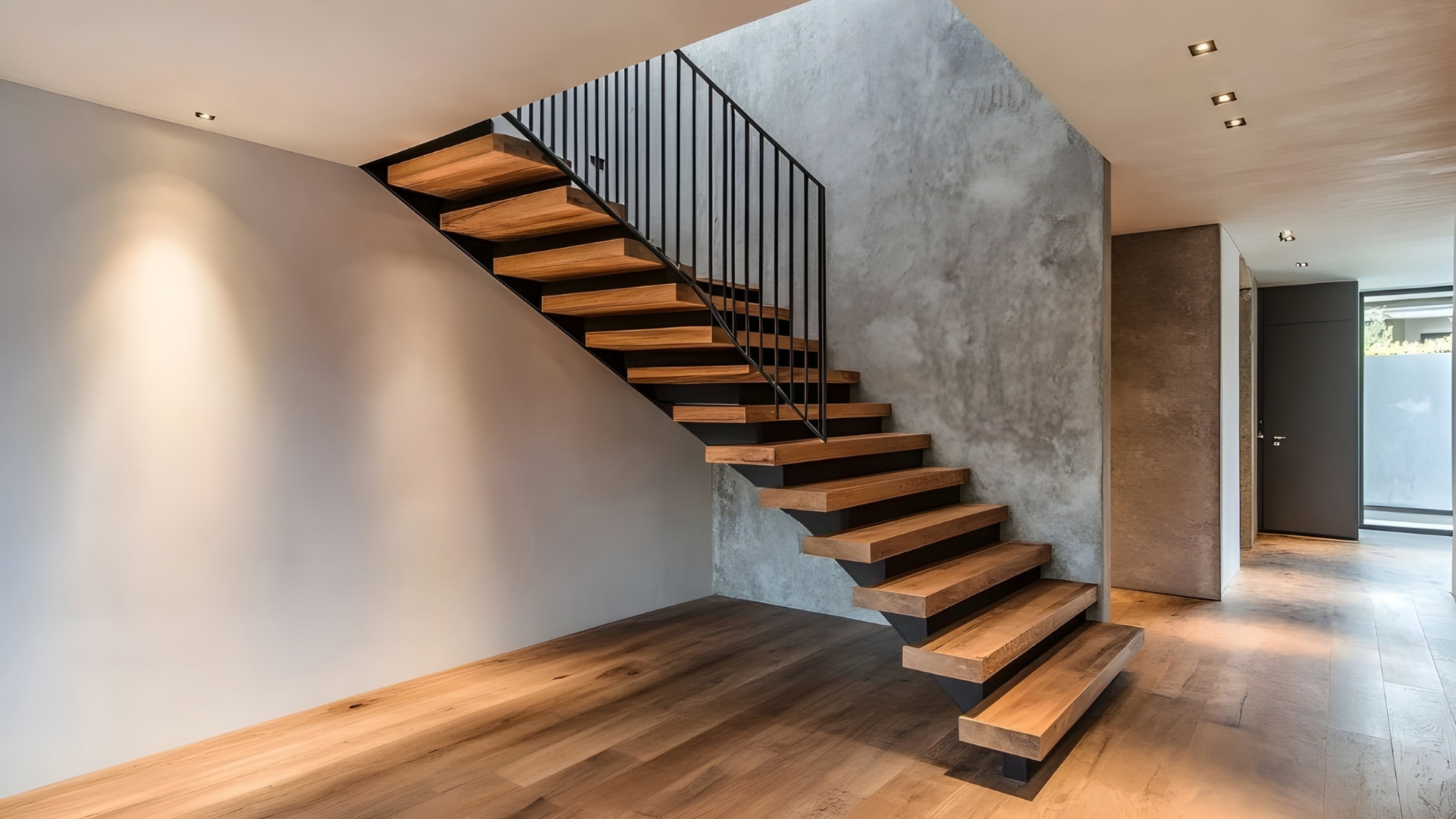
When designing wooden stairs in a house, the most effective solutions balance appearance with structural reliability, comfort, and long-term durability.
The following ideas are commonly used in residential projects because they perform well under daily use and integrate cleanly with modern and traditional interiors.
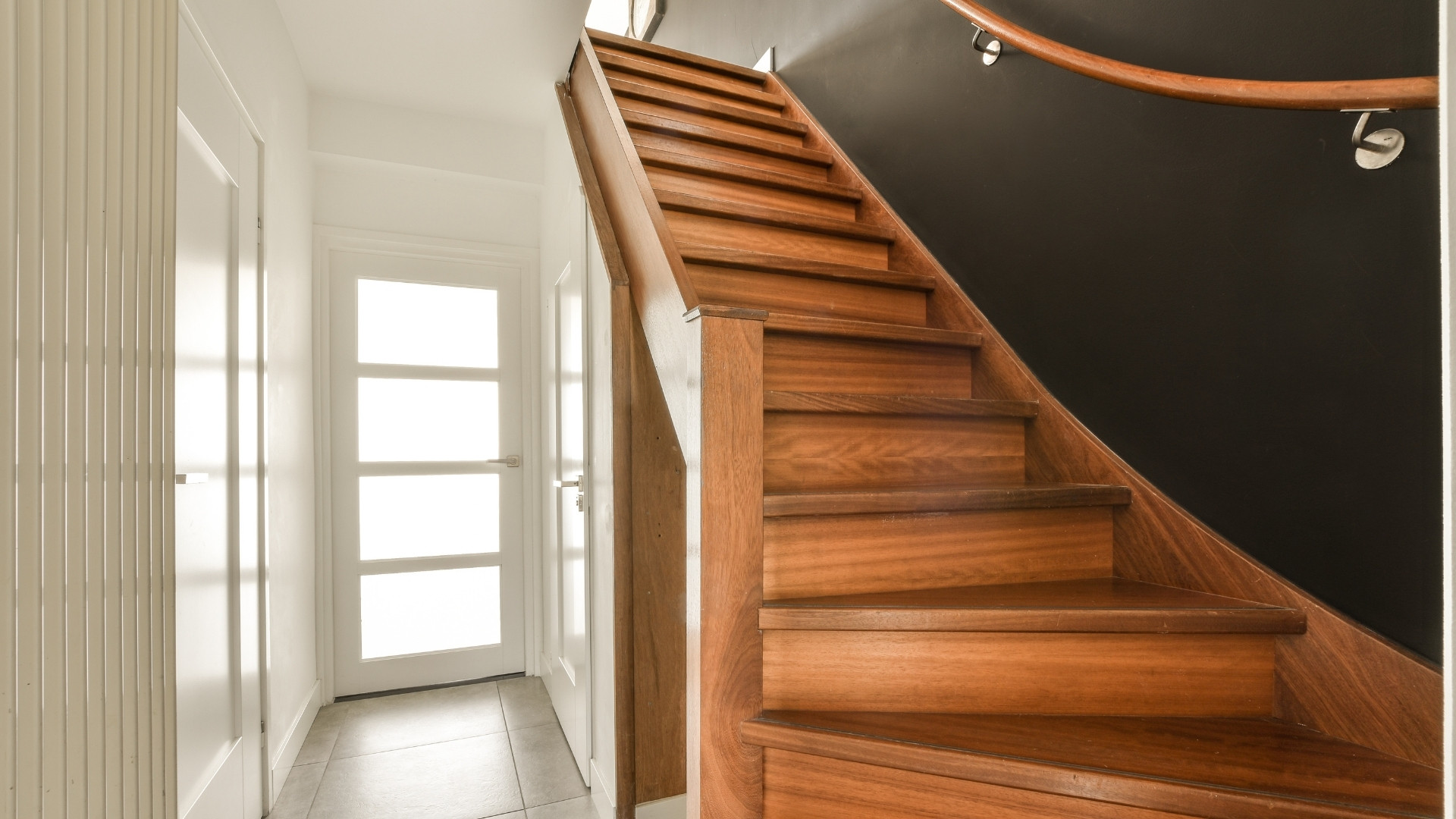
Closed-riser wooden stairs with solid stringers: This is the most traditional and durable configuration. Closed risers improve stiffness, reduce squeaking, and help limit vertical movement over time. Solid stringers also simplify code compliance and provide consistent support for finished treads.
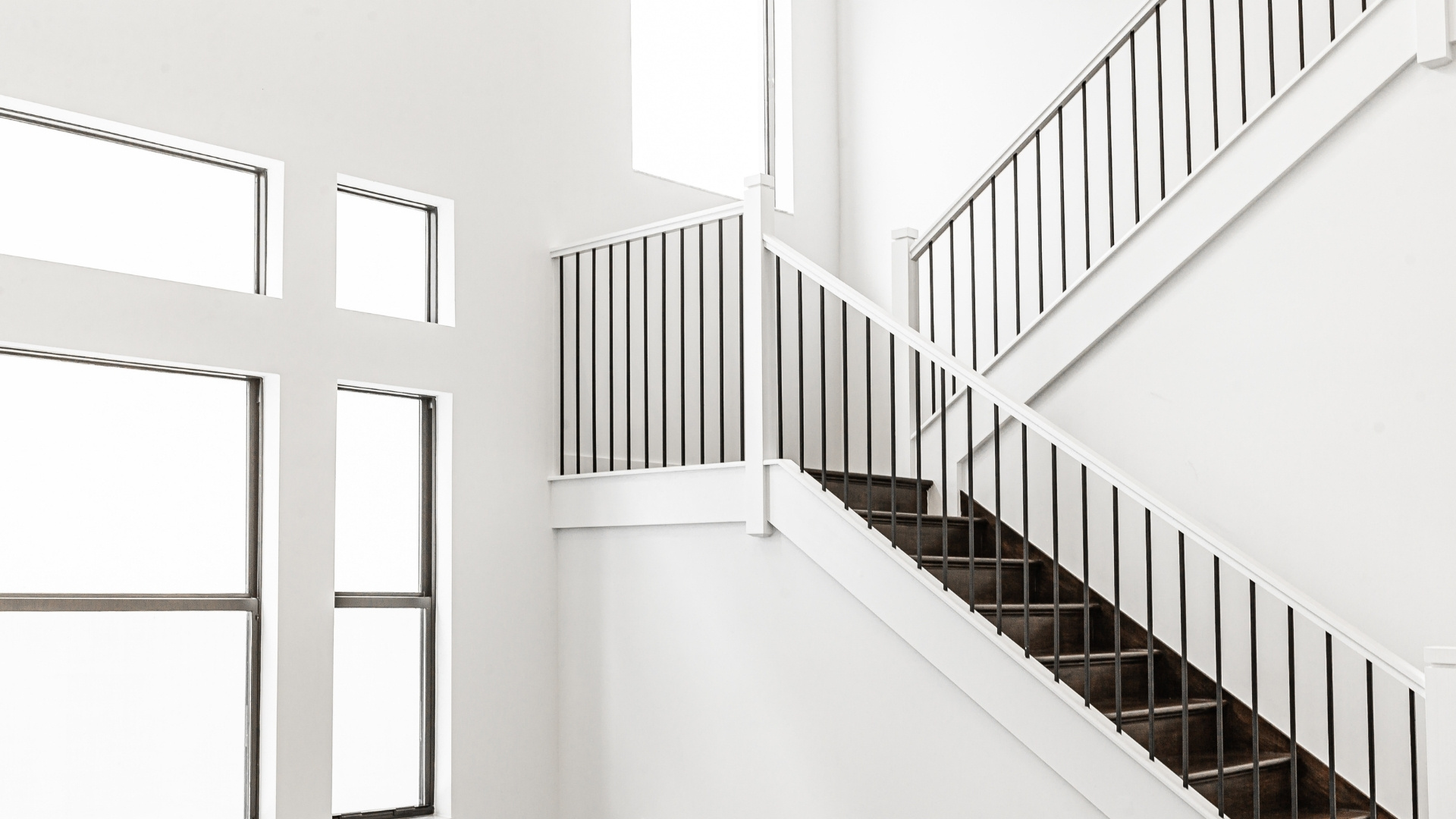
Wood treads with painted or contrasting risers: Using stained wood treads combined with painted risers allows visual contrast without affecting structural performance. This approach is cost-effective and works well in both transitional and contemporary homes.
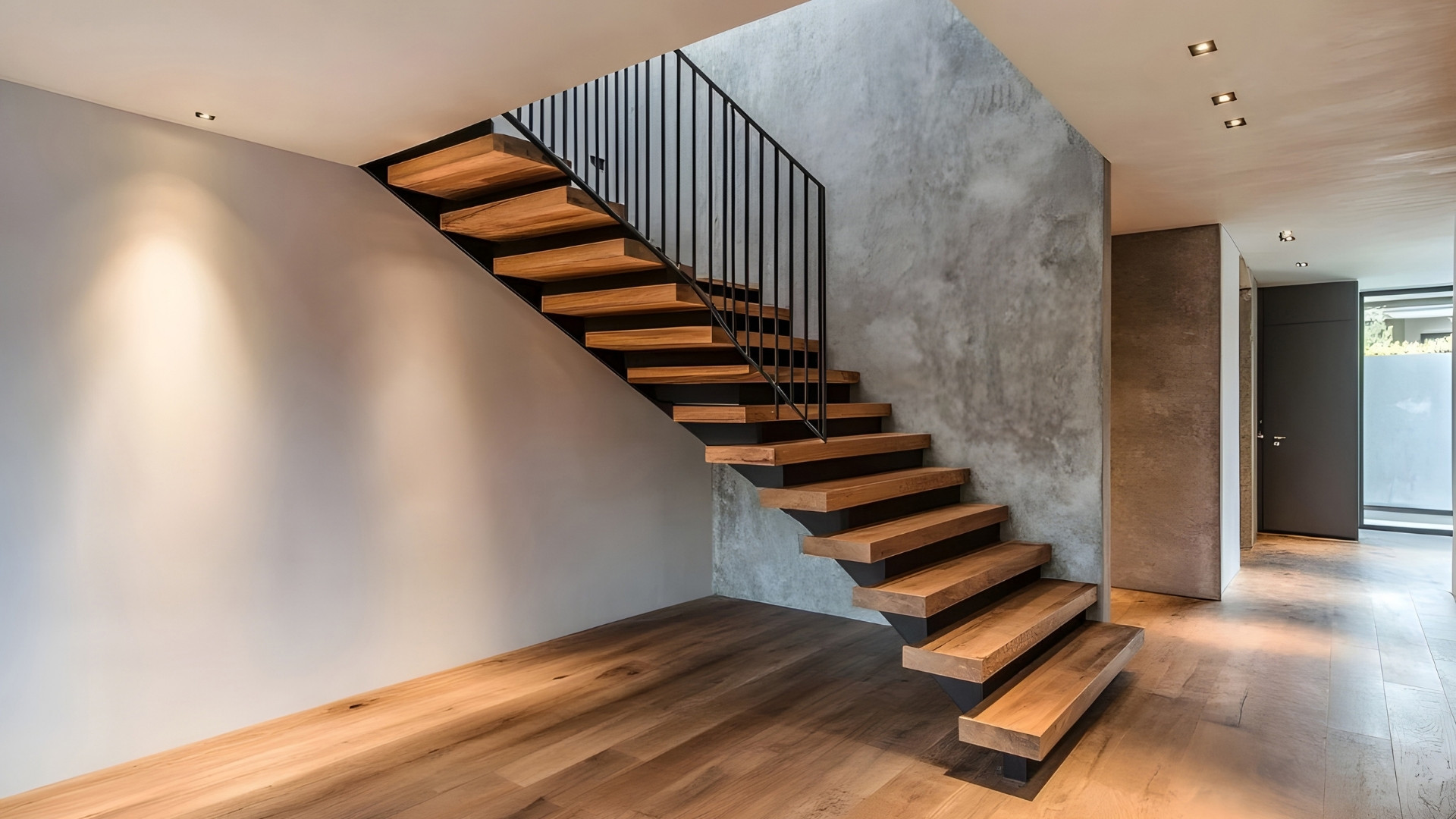
Open-riser wooden stairs with concealed structure: Open risers create visual openness and allow light to pass between floors. These designs typically require tighter construction tolerances and are often paired with concealed steel or reinforced wood framing to control deflection.
Hybrid wood-and-steel stair systems: A steel substructure combined with wood treads offers improved rigidity while maintaining a wood finish. This design is ideal for modern homes where slimmer profiles and reduced vibration are desired.
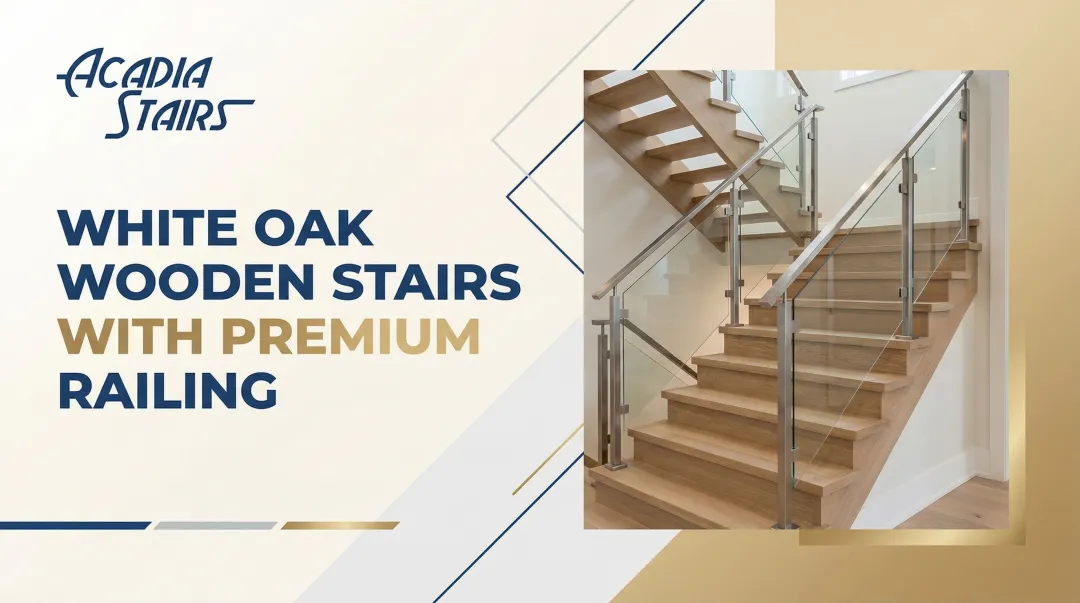
Wooden stairs with integrated railing systems: Pairing wood treads with glass, cable, or minimalist wood railings creates clean sightlines while maintaining safety. Proper coordination between stair and railing design is essential to meet loading and code requirements.
Each of these approaches can be adapted to different layouts, budgets, and architectural styles, provided structural planning and material selection are addressed early in the design process.
Types of Wooden Stairs Used in Houses
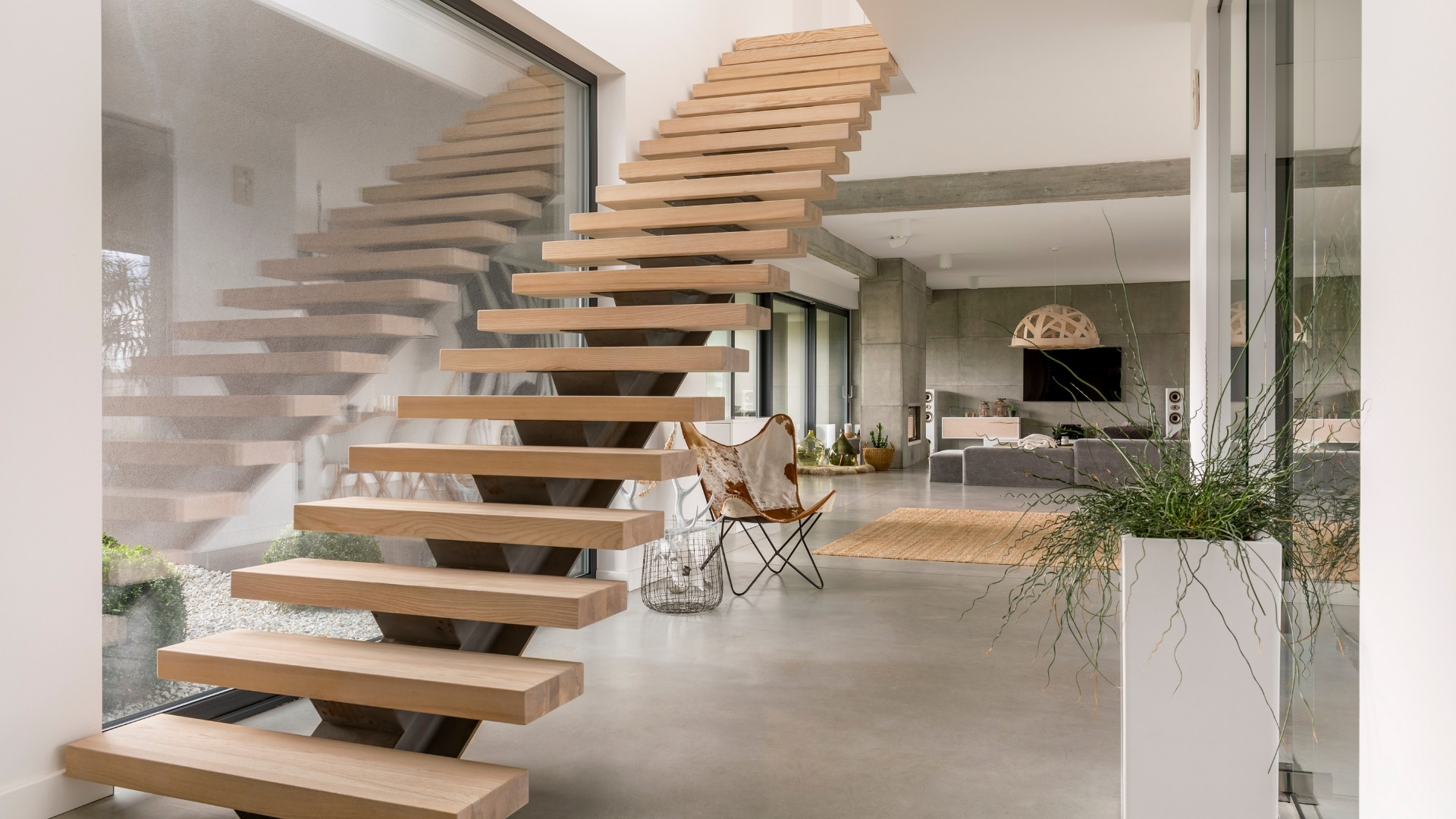
Wooden stairs in residential construction are available in several layout configurations. Each type serves different space conditions, structural requirements, and usage needs.
Selecting the correct stair layout early helps ensure code compliance, comfortable movement, and efficient integration with the home’s floor plan.
1. Straight wooden stairs: Straight stairs consist of a single continuous flight with no change in direction. They are the simplest to design and construct, require minimal structural coordination, and are commonly used where sufficient horizontal run is available.
2. L-shaped wooden stairs: L-shaped stairs change direction by 90 degrees using either a landing or winders. This layout reduces the visual length of the stair and is often used where floor plans require a compact turn without increasing overall stair width.
3. U-shaped wooden stairs: U-shaped stairs feature two parallel flights connected by an intermediate landing, creating a 180-degree direction change. They are frequently used in multi-story homes where vertical circulation must fit within a controlled footprint while maintaining consistent tread geometry.
4. Curved wooden stairs: Curved stairs follow a continuous arc without landings. They are typically used as architectural feature elements and require advanced layout planning, precise fabrication, and tighter construction tolerances.
5. Spiral wooden stairs: Spiral stairs rotate around a central column and occupy minimal floor space. While suitable for secondary access or loft areas, they are generally not preferred for primary circulation due to limited tread depth and code restrictions.
6. Open-riser wooden stairs: Open-riser stairs omit vertical riser boards between treads, creating a lighter visual appearance. These systems require careful structural detailing to manage deflection and must comply with spacing limitations to meet residential safety codes.
Each stair type offers different advantages depending on available space, structural layout, and intended use, making layout selection a critical step in residential stair planning.
Material selection also affects machining tolerances, fastening methods, and long-term movement, all of which must be accounted for during stair fabrication.
Wood Types Commonly Used for Residential Staircases in 2026
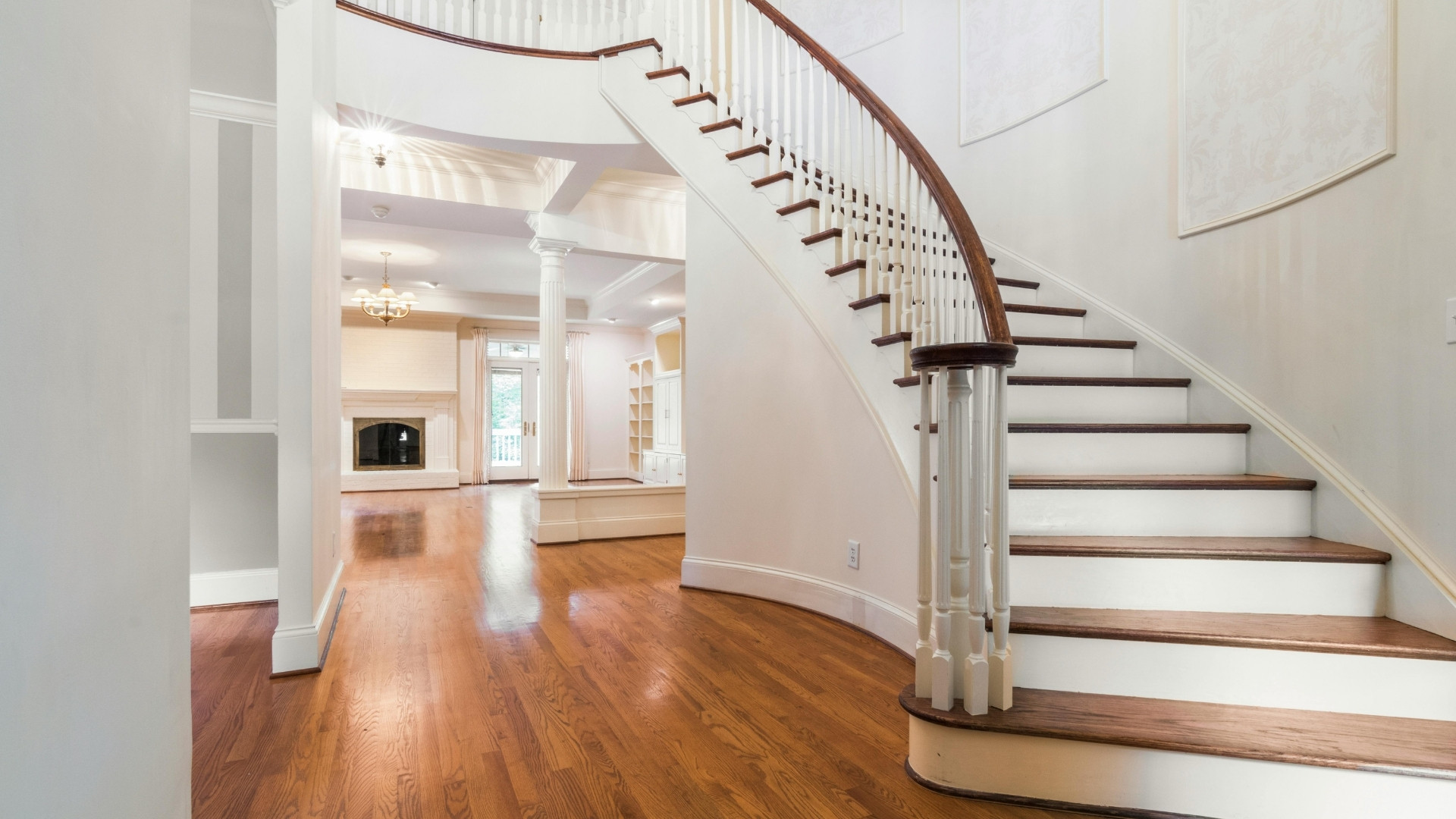
The performance and longevity of wooden stairs in a house depend heavily on the wood species selected. Different woods vary in strength, surface hardness, dimensional stability, and long-term wear behavior.
Choosing the right material is especially important for staircases, which experience concentrated foot traffic and repeated impact.
Hardwood Stairs
Hardwoods are commonly used for finished residential staircases due to their durability and resistance to surface damage.
Oak: One of the most widely used stair materials. Oak offers strong wear resistance, consistent grain structure, and good dimensional stability, making it suitable for high-traffic households.
Maple: Known for its high surface hardness and smooth grain. Maple resists denting well but can show finish wear more easily if not properly sealed.
Walnut: Often selected for premium interiors. Walnut provides moderate hardness with rich color variation, though it is more sensitive to surface denting than oak or hickory.
Hickory: Among the hardest domestic hardwoods. Hickory performs exceptionally well under heavy use but requires careful fabrication due to its dense and irregular grain.
Softwood Stairs
Softwoods are typically used in structural stair framing or in budget-conscious residential applications.
Pine: Easy to work with and cost-effective, but more prone to denting and surface wear under regular foot traffic.
Fir: Commonly used for structural stringers and rough framing due to its strength-to-weight ratio, though it is less suitable as an exposed tread material.
Technical Performance Considerations
When selecting wood for residential stairs, several performance factors should be evaluated:
Wear resistance: Hardwoods withstand repeated foot traffic better and maintain surface integrity longer.
Denting: Softer species compress more easily, leading to visible damage over time.
Grain movement: All wood expands and contracts with humidity; species with stable grain patterns perform better in long-term stair applications.
Matching wood species to traffic levels, finish requirements, and structural design helps ensure consistent appearance and performance throughout the life of the staircase.
Structural Design Considerations for Wooden Stairs
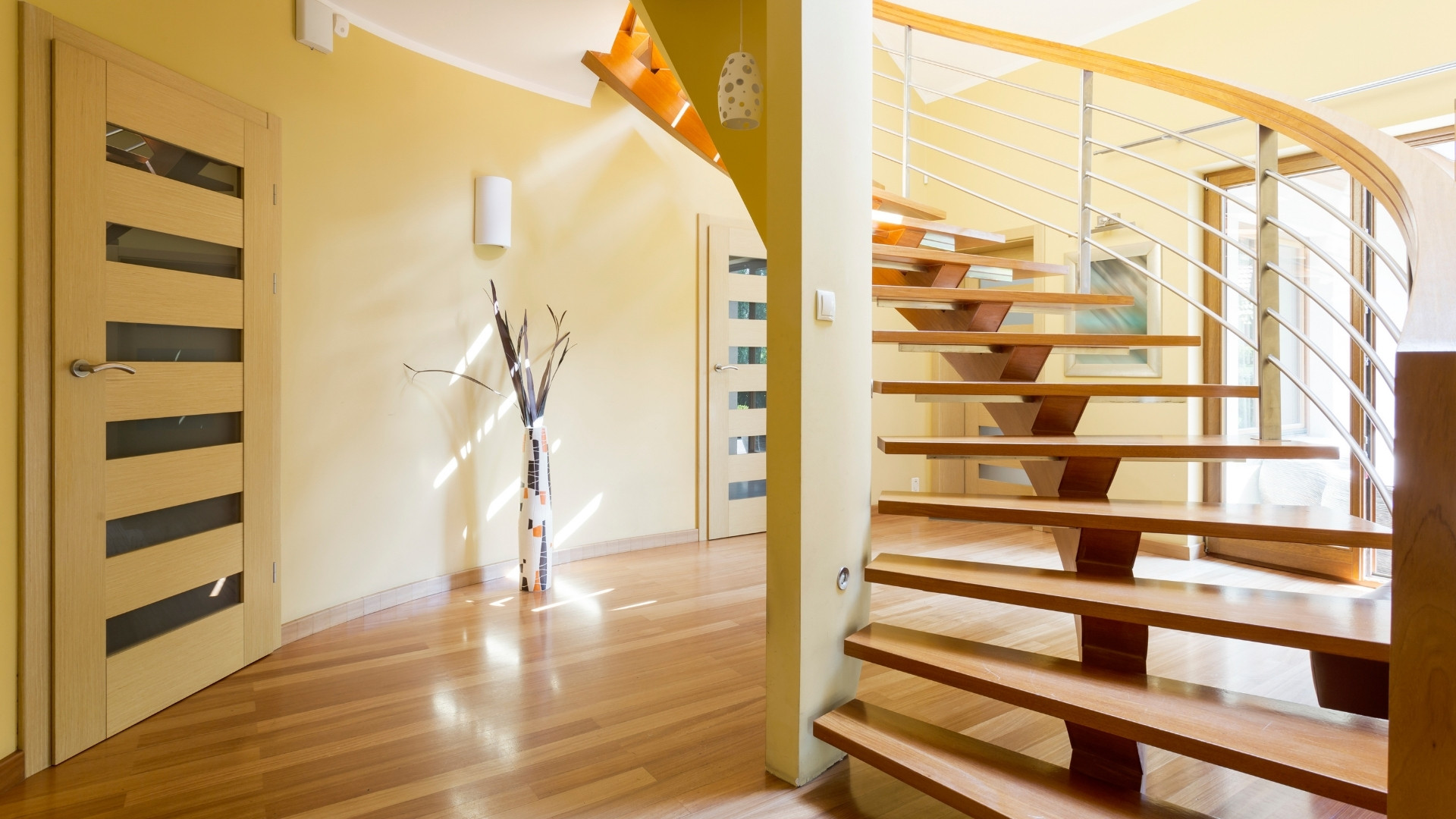
Structural performance is one of the most overlooked aspects of wooden stairs in a house. While appearance often influences early design decisions, long-term safety and durability depend on how loads are transferred, movement is controlled, and the stair integrates with the surrounding structure.
1. Stringer types: Wooden stairs typically use either cut stringers or housed stringers.
Cut stringers are notched to support treads and risers and are commonly used in site-built residential stairs.
Housed stringers contain routed pockets that improve stiffness and provide more consistent alignment.
Stringer depth, spacing, and attachment method directly affect overall stair rigidity.
2. Load paths: Foot traffic loads transfer from the treads into the stringers, through the landing, and into supporting walls or floor framing. Any break in this load path can introduce localized movement or long-term structural fatigue.
3. Deflection control: Excessive deflection leads to squeaking, cracking at joints, and discomfort during use. Deflection is influenced by span length, stringer thickness, tread fastening method, and landing support conditions.
4. Vibration behavior: Wooden stairs are particularly sensitive to vibration, especially in open-riser or long-span configurations. Insufficient stiffness can result in noticeable bounce even when the minimum code requirements are met.
5. Moisture Movement: Wood naturally expands and contracts with changes in humidity. Without proper allowances, seasonal movement can cause tread gaps, uneven riser heights, and joint separation.
6. Landing Support: Landings serve as structural transition points between stair flights. Inadequate support beneath the landing can lead to sagging, misalignment, and increased stress on stringers and connections.
Proper attention to these structural factors is essential for producing wooden stair systems that remain stable, quiet, and compliant throughout their service life.
For metal and stair fabrication teams, understanding load transfer is critical when integrating steel stringers, brackets, or concealed supports.
Building Code Requirements for Wooden Stairs
Building code compliance plays a central role in the design of wooden stairs in residential construction. In the United States, most single-family and two-family homes fall under the International Residential Code (IRC), which establishes minimum safety and dimensional standards for stairways.
While exact requirements should always be verified with the local authority having jurisdiction, the following principles commonly apply:
IRC applicability: The IRC governs stair geometry, handrails, guards, and headroom for residential buildings up to three stories in height.
Riser height: Individual risers are limited to a maximum height, and all risers within a stair flight must remain consistent within tight tolerances to prevent tripping hazards.
Tread depth: Minimum tread depth is measured at the walking line and must remain uniform throughout the stair run.
Nosing rules: Where nosings are used, they must project within a defined range and remain consistent from tread to tread.
Handrails: Handrails are required on at least one side of the stair and must be continuous, graspable, and properly returned at ends.
Guards: Open sides of stairs and landings require guards meeting minimum height and load-resistance standards.
Headroom: Minimum vertical clearance must be maintained across the full walking path, including at direction changes and landings.
It is important to note that local jurisdictions may introduce amendments affecting stair dimensions, handrail termination, or guard configuration. Confirming these requirements early helps avoid inspection failures and redesign during construction.
Common Problems With Wooden Stairs in Houses

Many issues associated with wooden stairs are not caused by the material itself, but by structural movement, moisture changes, or incomplete coordination during construction. These problems often develop gradually and become noticeable only after the home is occupied.
Common issues include:
Squeaking: Typically caused by friction between treads, risers, and stringers as wood expands and contracts. Inadequate fastening or lack of adhesive during installation increases this risk.
Loose treads: Occur when fasteners loosen over time or when stringer support is insufficient for the stair span.
Uneven risers: Often result from inaccurate floor-to-floor measurements, finish thickness changes, or settlement after framing.
Finish wear: High-traffic areas experience abrasion that can dull or remove protective coatings if finish systems are not properly selected.
Shrinkage gaps: Seasonal humidity changes cause wood to contract, leading to visible gaps at joints and nosings.
Railing movement: Insufficient anchoring or attachment to finish materials instead of structural framing can cause looseness over time.
Addressing these risks during design and fabrication significantly improves long-term stair performance. From a construction perspective, these issues often result in fabrication revisions, failed inspections, or costly field modifications when stair geometry is not finalized early.
Maintenance and Longevity of Wooden Stairs
Proper maintenance plays a major role in extending the service life of wooden stairs in a house. High-traffic components experience constant wear and require periodic attention to maintain appearance and safety.
Key considerations include:
Refinishing cycles: Depending on wood species and finish type, treads may require refinishing every several years to restore surface protection.
Cleaning practices: Mild, non-abrasive cleaners help prevent premature finish breakdown and surface scratching.
Wear zones: Leading tread edges and walking lines experience the highest abrasion and should be monitored for early wear.
Expected lifespan: Well-constructed wooden stairs can perform reliably for decades when structural movement is controlled, and finishes are properly maintained.
With appropriate material selection, detailing, and upkeep, wooden stairs remain a durable long-term solution for residential use. Long-term performance is closely tied to initial fabrication accuracy and structural stiffness.
When Hybrid Wood–Steel Stairs Are a Better Choice
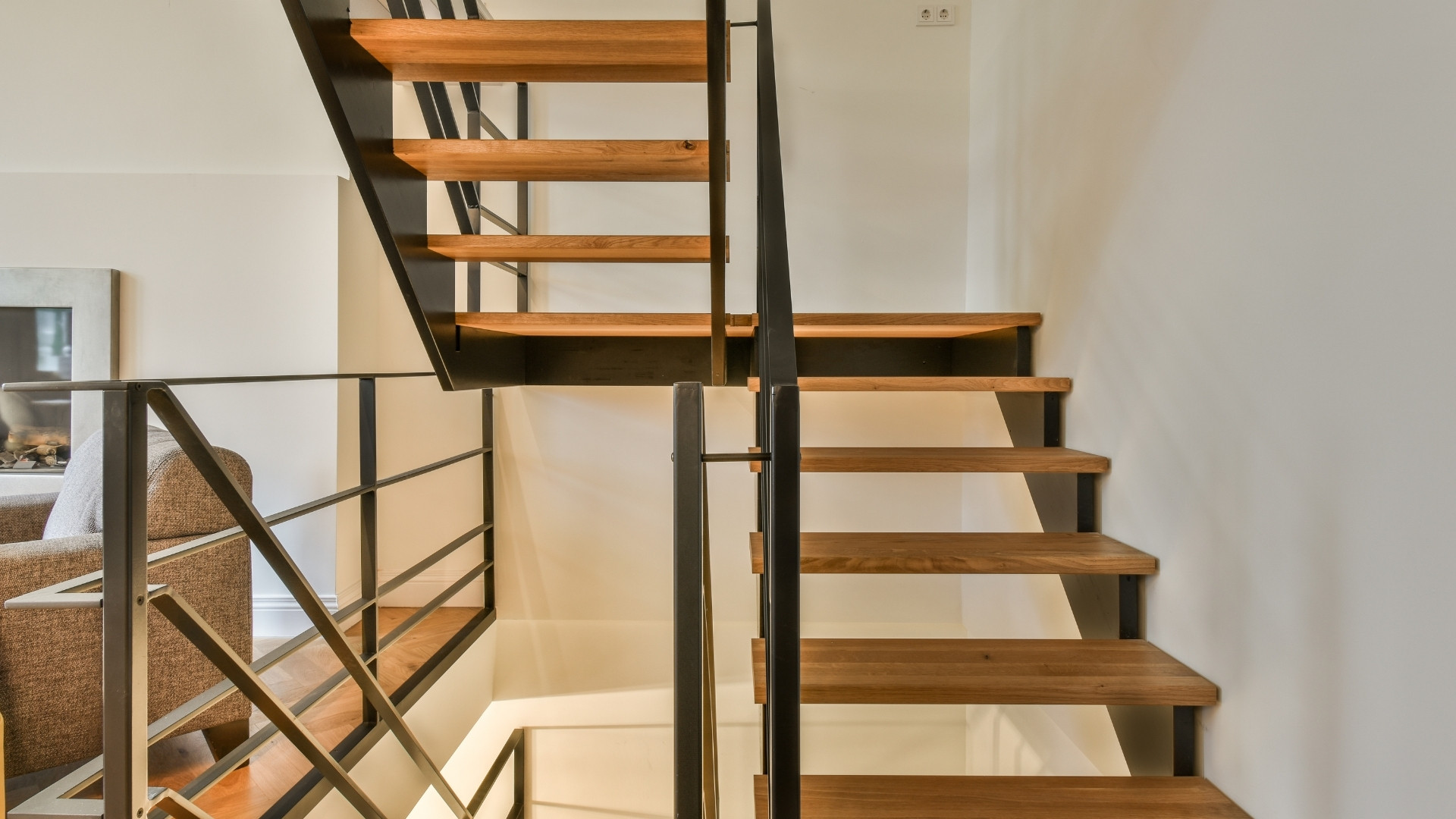
In some residential projects, a fully wood-framed stair system may not provide the structural performance or design flexibility required. In these cases, hybrid wood–steel stairs offer a practical alternative by combining a steel structural frame with finished wood treads and risers.
This approach allows the stair to retain the warmth of wood while benefiting from the strength and dimensional stability of steel.
Key advantages include:
Steel frame with wood treads: The primary load-bearing structure is fabricated from steel, while wood is used as the visible walking surface and finish material.
Reduced deflection: Steel stringers provide significantly higher stiffness than wood, minimizing bounce, vibration, and long-term movement.
Slimmer structural profiles: Steel allows thinner stringers and cleaner edges, which is difficult to achieve with traditional wood framing.
Better integration with modern architecture: Hybrid systems support open risers, floating designs, glass railings, and minimal detailing without compromising structural performance.
Hybrid wood–steel stairs are commonly used in contemporary homes where tighter tolerances, longer spans, or visually lighter stair designs are required, while still maintaining the natural appearance of wood underfoot.
For residential projects requiring tighter tolerances or longer unsupported spans, Acadia Stairs commonly fabricates hybrid wood–steel systems that combine engineered steel stringers with custom wood treads, allowing improved structural performance while maintaining a finished wood appearance
How Acadia Stairs Help Design Reliable Wooden Stair Projects
Acadia Stairs is a custom staircase manufacturing and metal fabrication company based in Fishkill, New York, working as a fabrication and coordination partner for stair builders, metal workers, and iron workers involved in residential wooden stair systems.
The company supports trade professionals who require accurate geometry, fabrication-ready components, and consistent finishes across projects delivered throughout the United States.
It offers:
1. Custom stair and metal fabrication support: Acadia Stairs fabricates wooden stair components, steel stringers, landing frames, and hybrid steel–wood assemblies to meet project-specific span, tolerance, and finish requirements. Fabrication is completed to approved shop drawings to support predictable installation and long-term structural stability.
2. Coordinated metal and wood finish options: Through its range of metal and wood finishes, Acadia Stairs supports consistent visual integration between stair structures, treads, railings, and adjacent architectural metalwork. Finish coordination helps stair builders and fabricators maintain a uniform appearance across multi-component systems.
3. Shop drawings and fabrication detailing: Project-specific shop drawings define tread and riser geometry, stringer profiles, landing elevations, weld locations, and structural connection points. These drawings allow fabrication partners to verify constructability prior to manufacturing, reducing rework and on-site modifications.
4. Integrated railing and guard systems: Acadia Stairs provides fabricated railing solutions, including glass panels, cable systems, wood railings, and custom metal guards. Coordinating stair and railing fabrication under one scope supports proper load transfer, code compliance, and streamlined installation sequencing.
5. Design and engineering coordination: During early planning stages, Acadia Stairs reviews floor-to-floor heights, stair openings, layout configuration, and code-related constraints. This coordination helps identify clearance conflicts and dimensional discrepancies before fabrication begins.
6. Project coordination and delivery support: Through dimensional verification and installation sequencing guidance, Acadia Stairs aligns stair fabrication with structural framing and finish trades. Fabricated components can be shipped nationwide, supporting stair builders and metal contractors operating across multiple job sites.
By combining fabrication-ready detailing, coordinated finishes, and trade-focused technical support, Acadia Stairs enables stair builders and metal fabrication partners to deliver durable, code-compliant wooden stair systems with reduced construction risk and improved installation efficiency.
Conclusion
Wooden stairs in a house are often treated as finish elements rather than structural systems. When layout geometry, material selection, moisture movement, and load transfer are not properly addressed, issues such as squeaking, deflection, cracking, and inspection failures can develop over time.
These problems frequently stem from incomplete coordination between design, framing, and fabrication, leading to costly adjustments during construction or reduced long-term durability.
Acadia Stairs helps mitigate these risks through early design coordination, detailed shop drawings, and precision fabrication of wood and hybrid stair systems. By aligning stair geometry, structural support, and railing integration before installation, Acadia Stairs supports consistent performance and code-compliant execution throughout the project lifecycle.
To discuss project requirements or request technical drawings, speak with a stair design specialist.
Frequently Asked Questions (FAQs)
1. Are wooden stairs strong enough for daily residential use?
Yes. When properly designed and supported, wooden stairs are fully capable of handling daily residential loads. Structural performance depends on stringer sizing, span length, and correct attachment to the surrounding framing.
2. Do wooden stairs always squeak over time?
No. Squeaking typically results from movement between components caused by inadequate fastening, deflection, or moisture-related shrinkage. Proper detailing and material selection significantly reduce this issue.
3. Can wooden stairs be prefabricated instead of site-built?
Yes. Many residential wooden stair systems can be prefabricated based on verified site dimensions. Prefabrication improves accuracy, consistency, and installation efficiency.
4. Are wooden stairs suitable for modern house designs?
Yes. Wooden stairs can be used in modern homes through clean detailing, open-riser layouts, and hybrid wood–steel construction that allows slimmer profiles and contemporary railing systems.
5. How long do wooden stairs typically last in a house?
With proper construction and maintenance, wooden stairs can last several decades. Longevity depends on wood species, finish durability, environmental conditions, and traffic levels.