Introduction
Your railing choice does more work than you might think. It sets the tone for your entire staircase—and by extension, the whole entryway—before guests take a single step.
Wood is the go-to material for a reason. It adapts to any interior style, from traditional to contemporary to rustic, while adding warmth that metal and glass alone can't replicate. According to industry research, 50% of homeowners specifically prefer natural wood grain balusters, with wood railing products accounting for $9.55 billion in market revenue.
Whether you're renovating an older home or building from scratch, these 35 wooden railing designs span everything from classic turned balusters to mixed-material modern statements—so you can find the look that fits your space.
Key Takeaways
- Wooden stair railings come in dozens of styles, from classic turned balusters to minimalist floating handrails and mixed-material combinations
- Four broad design families: Classic & Traditional, Modern & Contemporary, Rustic & Farmhouse, and Mixed-Material & Statement
- Wood species, finish, baluster style, and handrail profile are the four decisions that shape your final look
- Match your railing to your home's architecture, interior palette, and household needs (kids, pets, traffic level)
- For durability, choose oak, maple, or walnut; painted finishes work well with poplar or pine
Classic & Traditional Wooden Stair Railing Designs
Classic wooden railings are defined by turned balusters, ornate newel posts, rich wood stains, and timeless silhouettes — making them the go-to starting point for renovations in period-style and transitional homes.
Stained Oak Railing with Turned Balusters
This is the quintessential American stair railing—warm oak tones, classically turned balusters, and a rounded handrail. Oak's prominence in residential railings stems from its durability (Janka hardness of 1,350 lbf) and distinct grain pattern that accepts stain beautifully. This design pairs seamlessly with traditional flooring and crown molding.
Typical finish options:
- Honey oak for lighter, warmer spaces
- Espresso for dramatic contrast
- Natural clear coat to showcase grain
White-Painted Wood Railing with Classic Spindles
Painting the railing bright white while keeping treads stained creates high-contrast, clean lines — one of the most cost-effective ways to freshen an older staircase. White reflects light, making stairwells feel larger, while stained treads and handrails keep the space grounded and warm.
Colonial-Style Carved Handrail
Colonial-era inspired railings feature carved profile details along the handrail itself—egg-and-dart, rope twist, or beaded edge motifs. Cherry, mahogany, and hard maple (Janka 1,450 lbf) hold carving detail best due to their tight grain and hardness. This style works especially well in formal entryways and homes with existing period millwork.
Elegant Newel Post and Baluster Railing
An oversized, decorative newel post anchors the entire staircase design and draws the eye upward, creating visual hierarchy.
Two primary styles:
- Box newel — square, paneled posts common in Georgian and Colonial Revival homes
- Turned newel — rounded posts with decorative turnings, often topped with ball or acorn finials
As a rule of thumb, size the newel post at least 1.5x the baluster width — it should feel substantial, not like an afterthought.
Victorian Scroll-Carved Wood Railing
Victorian-era balustrades (1870–1910) feature ornate scroll and floral motifs carved into newel posts and sometimes balusters themselves. Oak dominated this era, prized for its workability and bold grain. Today, pre-made carved millwork components replicate the effect at a fraction of the cost, making this historically rich style accessible for most renovation budgets.
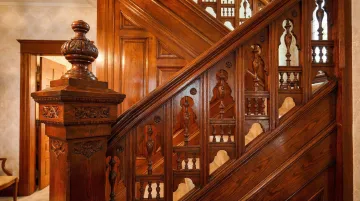
Traditional Mahogany Handrail
Mahogany's deep reddish-brown tones and tight grain make it a premium traditional choice. It excels under hand contact—resistant to dents, smooth to the touch, and developing a rich patina over time. While more expensive than oak, mahogany signals quality and craftsmanship in high-end traditional interiors.
Craftsman-Style Square Balusters
The Craftsman hallmark: square-profile balusters instead of turned ones, paired with thick flat-topped newel posts. This style bridges traditional and contemporary, fitting Arts & Crafts or bungalow-style homes. The clean, unornamented lines emphasize visible joinery and structural honesty—decoration appears functional rather than applied.
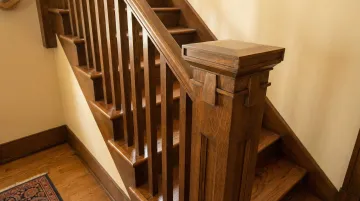
Georgian Box Newel Post Design
Georgian-style staircases (1700–1780) feature distinctive square, paneled box newel posts that create architectural formality. These posts are often substantial—4×4 or larger—with raised panel details on each face.
Finish considerations:
- High-gloss paint creates formal elegance
- Satin finishes feel more approachable
- Dark stains emphasize the paneling depth
Modern & Contemporary Wooden Stair Railing Designs
Modern wooden railings strip away ornament and focus on geometry, proportion, and the natural beauty of wood itself. In open-plan homes, where the staircase sits exposed from multiple angles, the railing design carries as much visual weight as the treads themselves — so the details matter.
Horizontal Wood Slat Railing
Horizontal wood slats replace vertical balusters to create a bold, screen-like effect that feels architectural rather than utilitarian. This design emphasizes the staircase's horizontal lines and creates visual width.
Code compliance note: Slat spacing must meet the 4-inch sphere rule—no gap can allow a 4-inch sphere to pass through for safety.
Open-Tread Staircase with Floating Wood Rail
A wall-mounted floating wood handrail paired with open treads creates maximum visual lightness in contemporary spaces. The handrail appears to float along the wall with minimal hardware visible. The continuous, grippable handrail profile is essential—the 2021 IRC requires handrails between 34–38 inches high with specific grip dimensions (1.25–2 inches diameter for circular profiles).
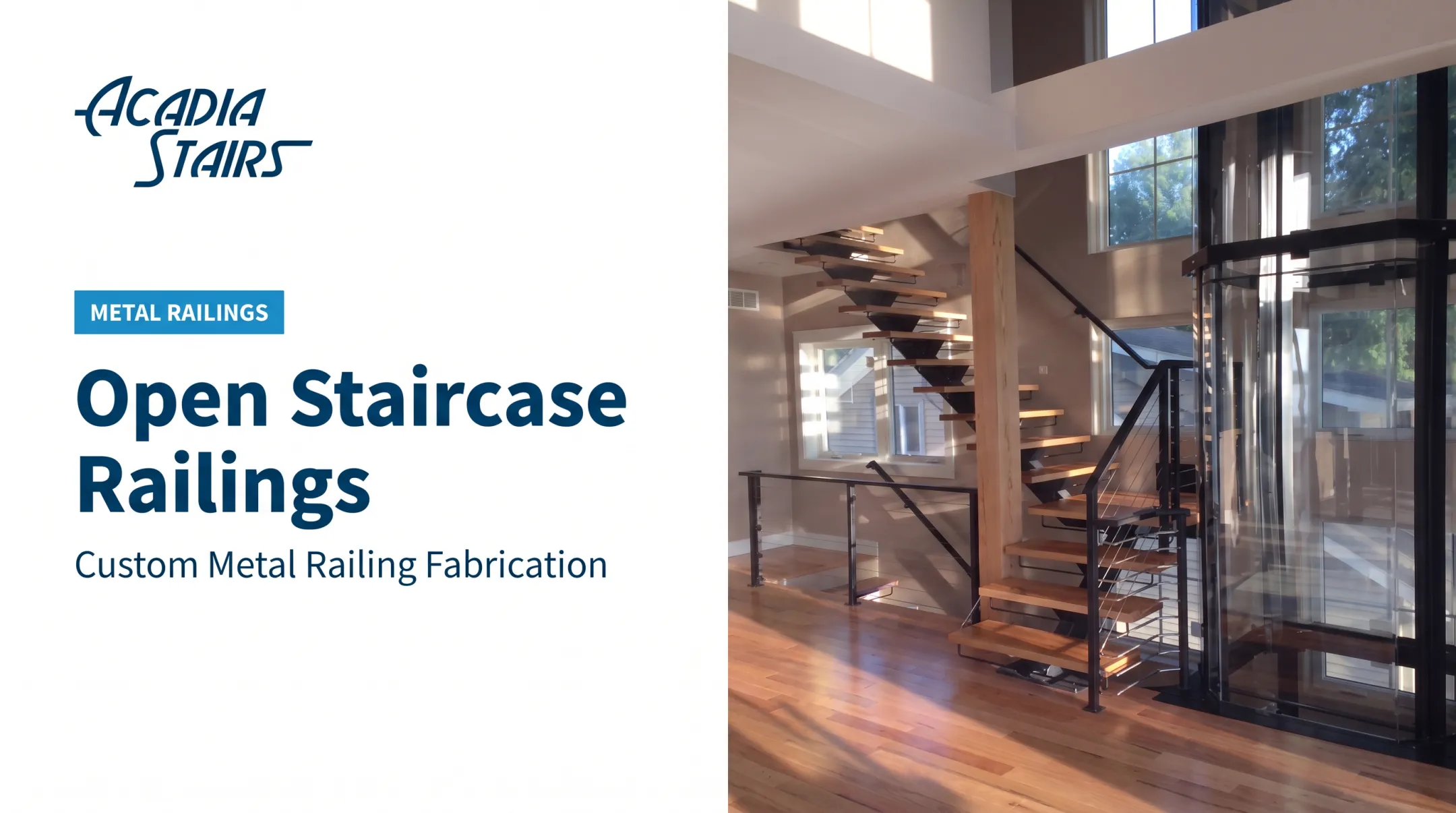
Minimalist Wood Handrail with Cable Infill
Pairing a warm wood top rail with stainless steel cable wires as infill preserves sightlines while keeping the handrail tactile and warm. It's a natural fit for coastal and West Coast contemporary homes, where framing an exterior view matters as much as the railing itself. The horizontal cables add subtle linear rhythm without closing off the space visually.
Sleek Flush Wood Panel Railing
Solid or engineered wood panels form a flush, wall-like barrier along the staircase. The visual impact comes from contrasting wood grain direction:
- Vertical panels feel formal and elongating
- Horizontal grain emphasizes width and openness
This design reads as modern sculpture, transforming the railing into an architectural statement.
Floating Wooden Handrail (Wall-Mounted)
The minimalist wall-mounted handrail—just a single sculpted wood rail anchored directly to the wall with no balusters—works for enclosed staircases, secondary stairs, and modern interiors. Common gripping profiles include oval, rounded rectangular, and ergonomic contoured shapes. In narrow stairwells, this approach is often the only option that keeps the passage clear while still meeting code.
Linear Wood and Black Metal Railing
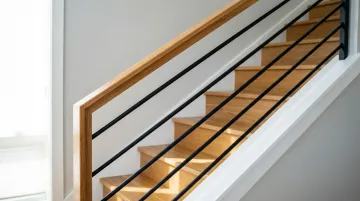
Pairing a natural wood handrail atop thin black powder-coated metal balusters creates high-contrast, modern-industrial appeal. It's a go-to pairing for new construction and gut renovations alike — the matte black metal recedes into the background while the wood handrail becomes the surface you actually touch and notice.
Geometric Wood Cutout Baluster
CNC-cut geometric patterns—diamonds, chevrons, lattice—machined into wood baluster panels create distinctive alternatives to standard infill. The cutouts maintain code-compliant spacing while casting shadow patterns that shift through the day as light angles change — a detail that's impossible to replicate with off-the-shelf components.
Blonde Maple Modern Railing
Light, blonde maple delivers an airy, Scandinavian-influenced look when used as a thin, smooth handrail over simple steel or glass infill. Finish choice shapes the entire effect:
- Matte or satin finishes read as understated and contemporary
- Gloss finishes push the look toward traditional
Maple's pale tone also reflects more ambient light, which matters in stairwells without a direct window.
Dark Walnut Open Balustrade
American black walnut's deep, chocolatey tones (Janka 1,010 lbf) paired with open cable or glass balustrade create a striking tonal contrast. Walnut is a premium material choice, and it reads that way — the grain density and color depth are visible across a room. With UV exposure over time, the wood shifts toward warmer amber-brown tones rather than fading.
Scandinavian-Style Thin Wood Rail
Scandinavian railing design prioritizes thin, unornamented handrail profiles, natural wood tones, and strict restraint in every detail. White oak and maple are the natural fits here — pale, consistent grain that doesn't compete with the architecture. In small or narrow stairwells, this restraint isn't just aesthetic preference; it's the difference between a space that feels open and one that feels cramped.
Rustic, Farmhouse & Craftsman Wooden Stair Railing Designs
These designs celebrate wood's natural imperfections—knots, live edges, reclaimed character marks—lending a sense of age and place that factory-finished materials simply don't carry. Mountain retreats, farmhouses, and homes with exposed beam ceilings are where these styles consistently land.
Live Edge Wood Handrail
A live edge slab used as a handrail preserves the natural, irregular outer edge of the tree. Black walnut is the most popular choice for its rich grain and durability; maple and oak are close seconds. Because each slab follows the tree's original contour, no two handrails look the same. That irregular silhouette reads as a deliberate contrast against the staircase's straight structural lines beneath it.
Reclaimed Barn Wood Railing
Weathered, reclaimed wood brings authenticity and story to a staircase. Each piece carries visible history—nail holes, weathering patterns, color variations. Important considerations: proper sealing prevents splinters and protects the wood, and structural reinforcement ensures reclaimed material meets load-bearing requirements for handrails. The USDA Wood Handbook notes that reclaimed lumber requires careful evaluation for structural applications.
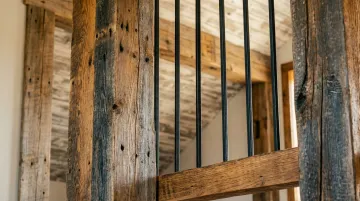
Farmhouse Black-and-Wood Combo
Matte black metal baluster spindles paired with a thick, stained wood handrail and matching treads have become the defining look of new farmhouse-style builds. The contrast of dark metal against warm wood has become the dominant aesthetic in new farmhouse-style builds. This combination feels current while maintaining rustic warmth.
Knotty Pine Log-Style Railing
Knotty pine or rustic log-style rails and posts suit cabin and mountain home staircases well. Natural knot patterns add character and texture. This style pairs with exposed log walls and stone fireplaces, tying the railing visually into the room's heavier structural elements. Cedar is another excellent choice for this aesthetic, particularly in exterior applications.
Shaker-Style Wood Rail
Shaker-style railings rely on square profiles, quality joinery, and a deliberate absence of ornament. That restraint is the point. The style sits comfortably in both rustic and contemporary interiors, which is why it has remained a standard choice for decades rather than cycling in and out with trends. Proportion matters here — the rail height and baluster spacing need to feel balanced, not just functional.
Chunky Timber Handrail
An oversized, thick-profile timber handrail—often 4×4 or 6×6 stock—creates visual impact in rustic or industrial settings. The substantial scale conveys solidity and permanence. The timber's scale must balance with the staircase's overall proportions; in smaller spaces, this approach can overwhelm, but in high-ceilinged great rooms, it anchors the design.
Distressed Wood with Iron Balusters
Hand-distressed or wire-brushed wood handrails and treads paired with ornamental wrought iron balusters blend Old World charm with American country style. This combination works well in Spanish Colonial or Mediterranean-influenced homes. The textured wood finish complements the iron's decorative scrollwork.
Cedar Wood Outdoor Stair Railing
Cedar is the premier wood choice for exterior stair railings. Western Red Cedar's natural oils resist rot and insects, it weathers beautifully to silvery gray, and it accepts stain or paint readily. Code considerations for exterior railings: minimum 36-inch height for guards, and proper post anchoring to resist lateral loads from wind and use.
Woven Branch or Twig Accent Railing
Artisan-crafted railings incorporating natural branches or bent twig infill appear in high-end rustic lodges and organic modern interiors. This is always a fully custom commission — expect extended lead times and close collaboration with a skilled craftsperson to source and shape the material. The organic forms pair well with handmade tile and natural stone, producing interiors where the railing functions more like an installation than a building component.
Mixed-Material & Statement Wooden Stair Railing Designs
The most visually striking railings combine wood's warmth with glass transparency, steel's strength, or bold finishes. These designs are particularly relevant for 2025-2026 trends, where mixed-material, custom railings are emerging as architectural focal points.
Wood and Stainless Steel Cable Railing
A wood top rail with horizontal stainless steel cables as infill preserves views while keeping wood's warmth. Tensioning hardware finish—brushed versus polished—shapes the overall aesthetic. Brushed finishes read as understated and contemporary; polished hardware adds more visual sparkle.
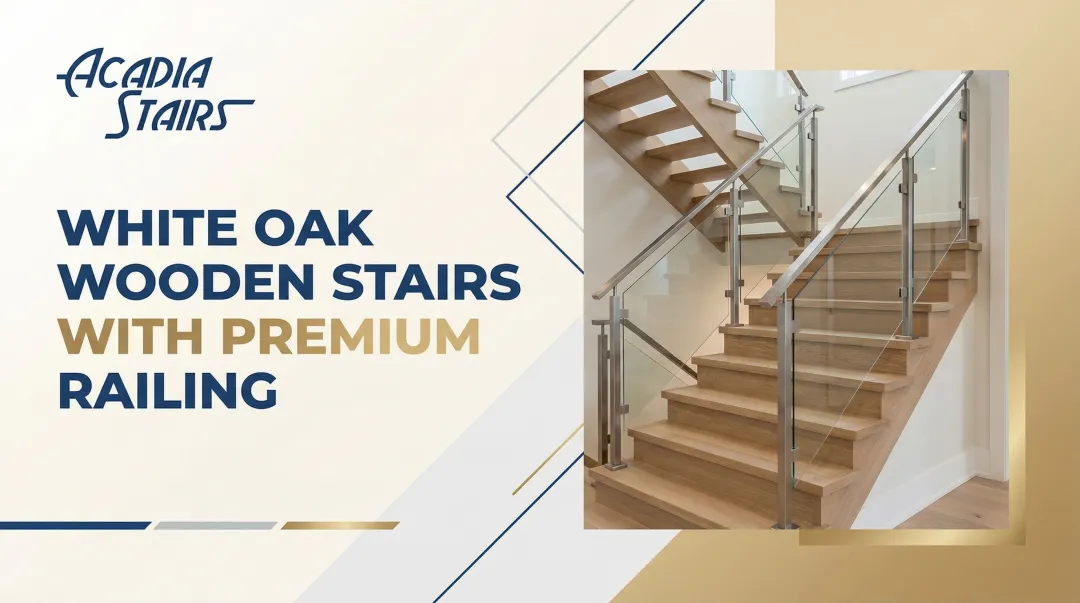
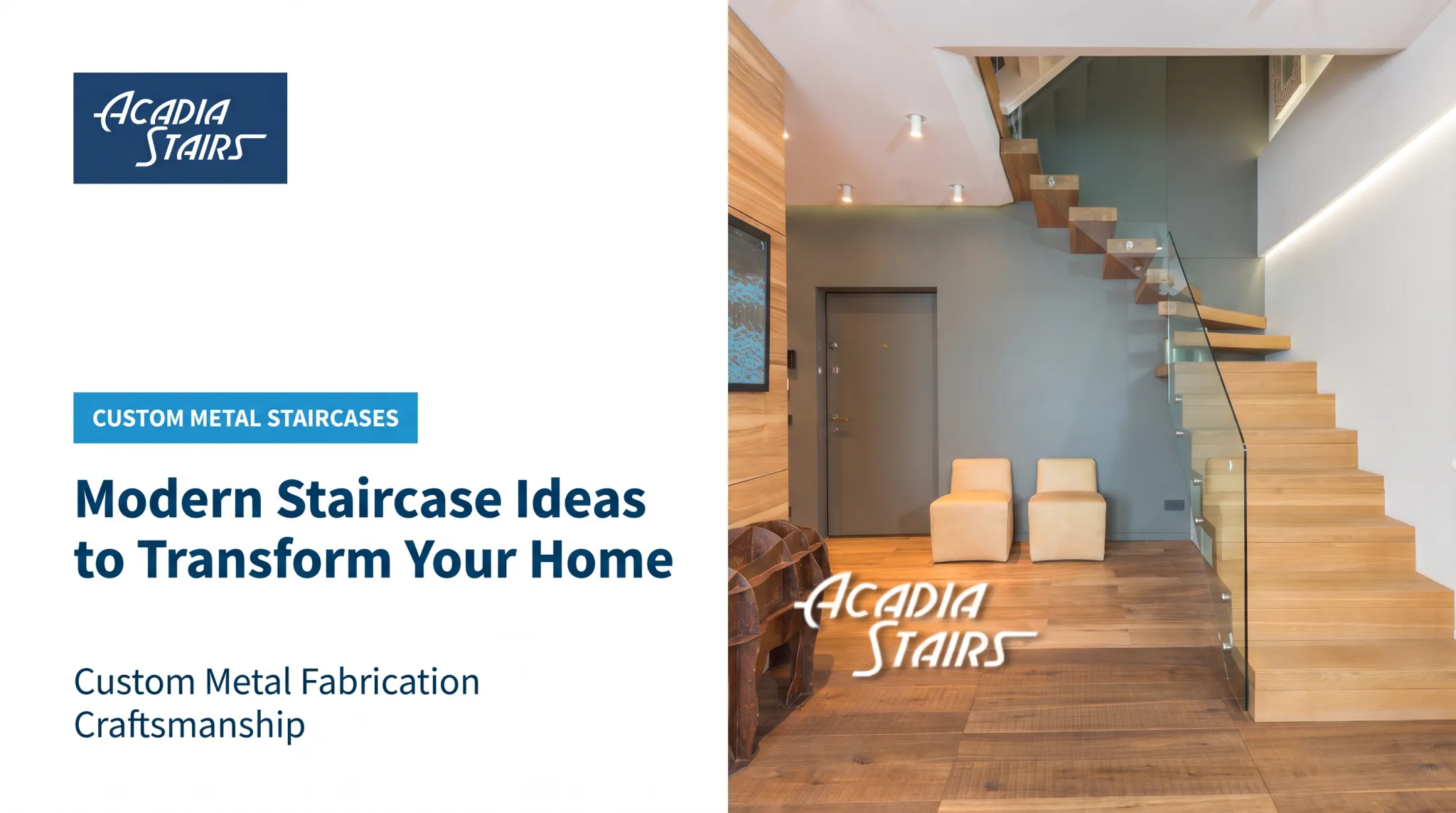
Wood Handrail with Glass Panel Infill
Frameless or semi-frameless glass panels set beneath a wood handrail create a nearly invisible safety barrier, keeping the stairwell open and light-filled. It's one of the pricier combinations: glass runs $100–$600 per linear foot compared to $10–$60 for wood alone. The trade-off is maximum light transmission and a clean, modern-luxury result.
Wood with Wrought Iron Ornamental Railing
Pairing a traditional wood handrail with custom wrought iron baluster panels (scrollwork, geometric, or nature-inspired motifs) produces a distinctive, tailored look. This is popular for grand entry foyers and Mediterranean or Tuscan-influenced interiors. The iron can be powder-coated in custom colors to coordinate with the interior palette.
Wood and Rope Baluster Railing
Nautical-grade rope threaded through wood posts as baluster infill creates a coastal, beach-house aesthetic. Installation requires proper tensioning to prevent sagging. Rope material matters: manila offers authentic nautical character but needs more upkeep, while synthetic ropes hold up better against moisture and UV exposure in humid climates.
Painted Ombre Wood Railing
Painting balusters or the handrail itself in a gradient of two or three tones (white at the base to charcoal at the top, for instance, or blush to deep blue) turns the railing into a statement piece. This works in eclectic or maximalist interiors where the staircase becomes an art installation. The gradient should transition smoothly across 8–12 balusters for visual coherence.
Wood Railing with Integrated LED Strip Lighting
LED strip lighting routed into the underside of a wood handrail or along stair treads adds ambient illumination and improves safety in low-light conditions. Motion-activated LED integration is trending in 2025-2026 design forecasts. Aluminum channels act as heat sinks and protect the LEDs; diffusers prevent hot spots and soften the light output.
Two-Tone Stained Wood Railing
Applying two contrasting stain colors—such as a light natural handrail over darker espresso balusters, or vice versa—adds visual depth without introducing different materials. This is a budget-friendly way to achieve a custom, designer look. The contrast draws attention to the railing's architectural details and creates layered visual interest.
Wood with Leather-Wrapped Handrail
Wrapping a wood handrail core in hand-stitched leather creates an ultra-luxury, tactile, one-of-a-kind finish. It appears in high-end residential projects and boutique hotels alike. Leather does require periodic conditioning to prevent drying and cracking, but the grip and warmth it provides are difficult to replicate with any other material. Choose leather colors that complement the wood tone beneath.
How to Choose the Right Wooden Stair Railing for Your Home
Railing design should be driven by three core factors: your home's architectural style, your existing interior palette and material finishes, and practical household needs.
Aesthetics alone can lead you astray. A delicate carved railing won't hold up to young children or pets, and an ultra-modern cable system will look out of place in a Victorian home.
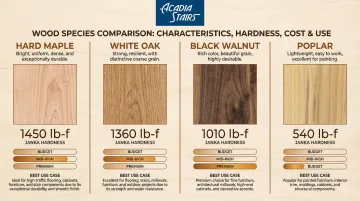
Wood Species Selection: Function Meets Form
Wood species selection is a practical decision, not just cosmetic. Hardwoods like oak, maple, and walnut are best for handrails and treads due to wear resistance. Softer woods like pine work for painted balusters but dent more easily under impact.
Comparative Wood Species:
| Wood Species | Janka Hardness | Cost | Best Use |
|---|---|---|---|
| Hard Maple | 1,450 lbf | Mid-High | Handrails, treads in high-traffic areas |
| White Oak | 1,350 lbf | Mid-High | Handrails, treads; standard for durability |
| Black Walnut | 1,010 lbf | Premium | Handrails, accents; luxurious dark aesthetic |
| Poplar | 540 lbf | Budget | Painted balusters; too soft for handrails |
Building Codes and Safety
The 2021 International Residential Code (IRC) sets minimum requirements for railing safety:
- Guard height: Minimum 36 inches (34 inches on stair sides)
- Baluster spacing: No more than 4-inch gap (4-inch sphere rule)
- Handrail grippability: Circular profiles must be 1.25-2 inches diameter
- Handrail height: Between 34-38 inches from stair nosing
A custom staircase specialist can confirm your design meets local code requirements before fabrication begins. Acadia Stairs works directly with homeowners, architects, and contractors to translate design ideas into compliant, built-to-spec staircases.
Frequently Asked Questions
What are some modern staircase railing ideas?
Modern railing styles include horizontal wood slats, floating wall-mounted handrails, wood-and-cable combinations, and wood paired with glass panels or thin black metal balusters. Each style prioritizes open sightlines and minimal ornamentation.
What is the trend for stair railings?
Current 2025-2026 trends emphasize bespoke and sculptural railings treated as permanent architecture rather than utility. Mixed materials—wood combined with glass or metal—dominate, along with LED-integrated railings for safety and ambiance. Handcrafted detail is preferred over mass-produced spindles.
What is the alternative to stair railing?
Alternatives include solid knee walls (drywall or plaster), full-panel wood enclosures, or rope-and-post systems. Any alternative must comply with local building codes for fall protection, including minimum height requirements and the 4-inch sphere rule for openings.
What wood is best for stair railings?
Oak, hard maple, and walnut are top choices for durability and appearance. Oak is the most widely available and affordable, walnut is the premium option with rich dark tones, and poplar or pine are suitable for painted applications where the wood grain won't be visible.
How much does a custom wooden stair railing cost?
Basic prefabricated wood railing kits range $50-$750, while installed custom wood railings typically run $50-$200 per linear foot. Premium projects with intricate designs or exotic species can exceed $650 per linear foot, with total costs ranging from $900 to $10,000+.
How do you maintain and clean wooden stair railings?
Dust regularly and clean with a mild wood-safe cleaner to preserve finish integrity. Both oil finishes (like Rubio Monocoat) and film finishes (polyurethane) typically need refinishing every 3-5 years. Joint loosening or visible wear are signs it's time to call a professional.