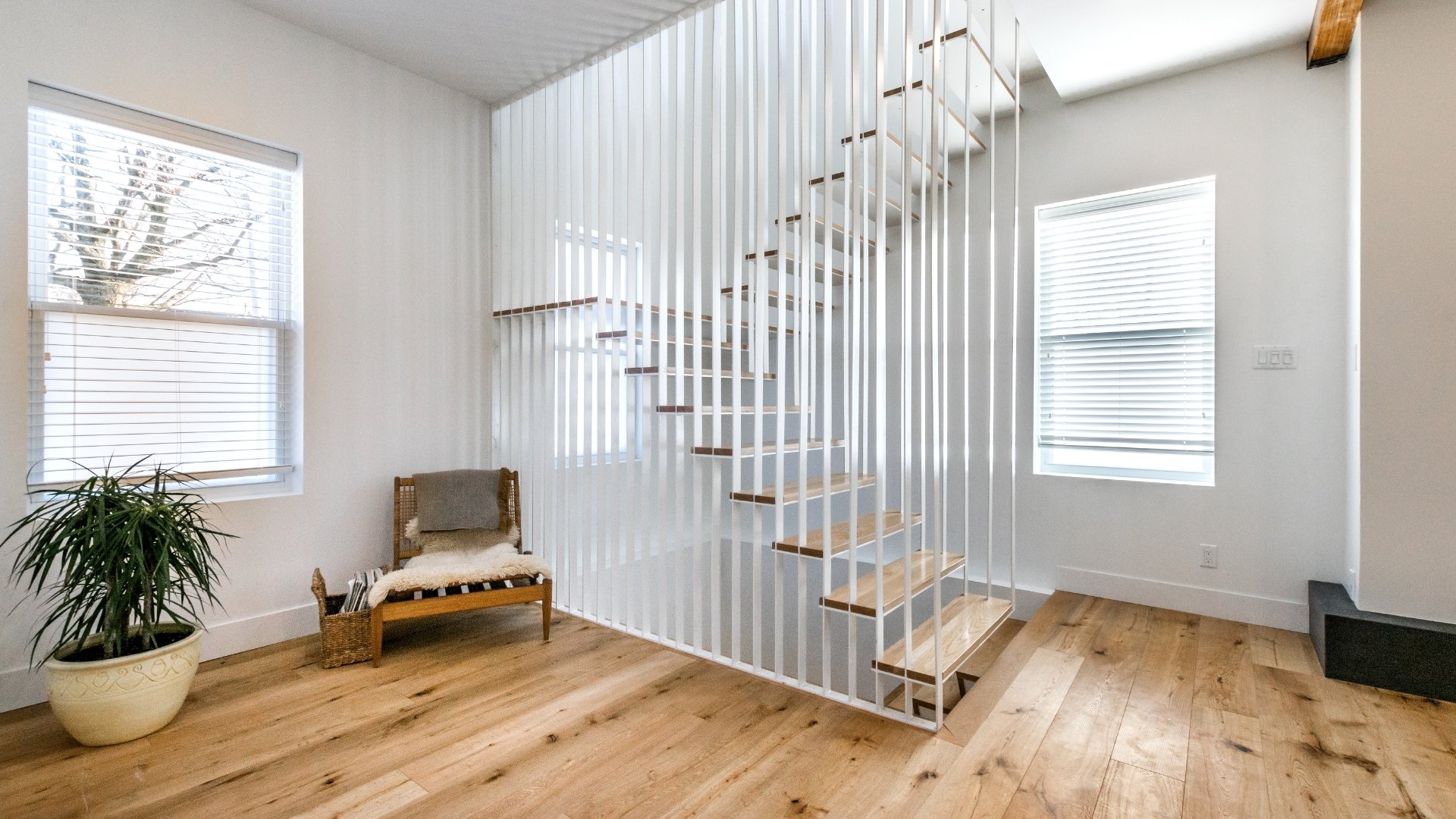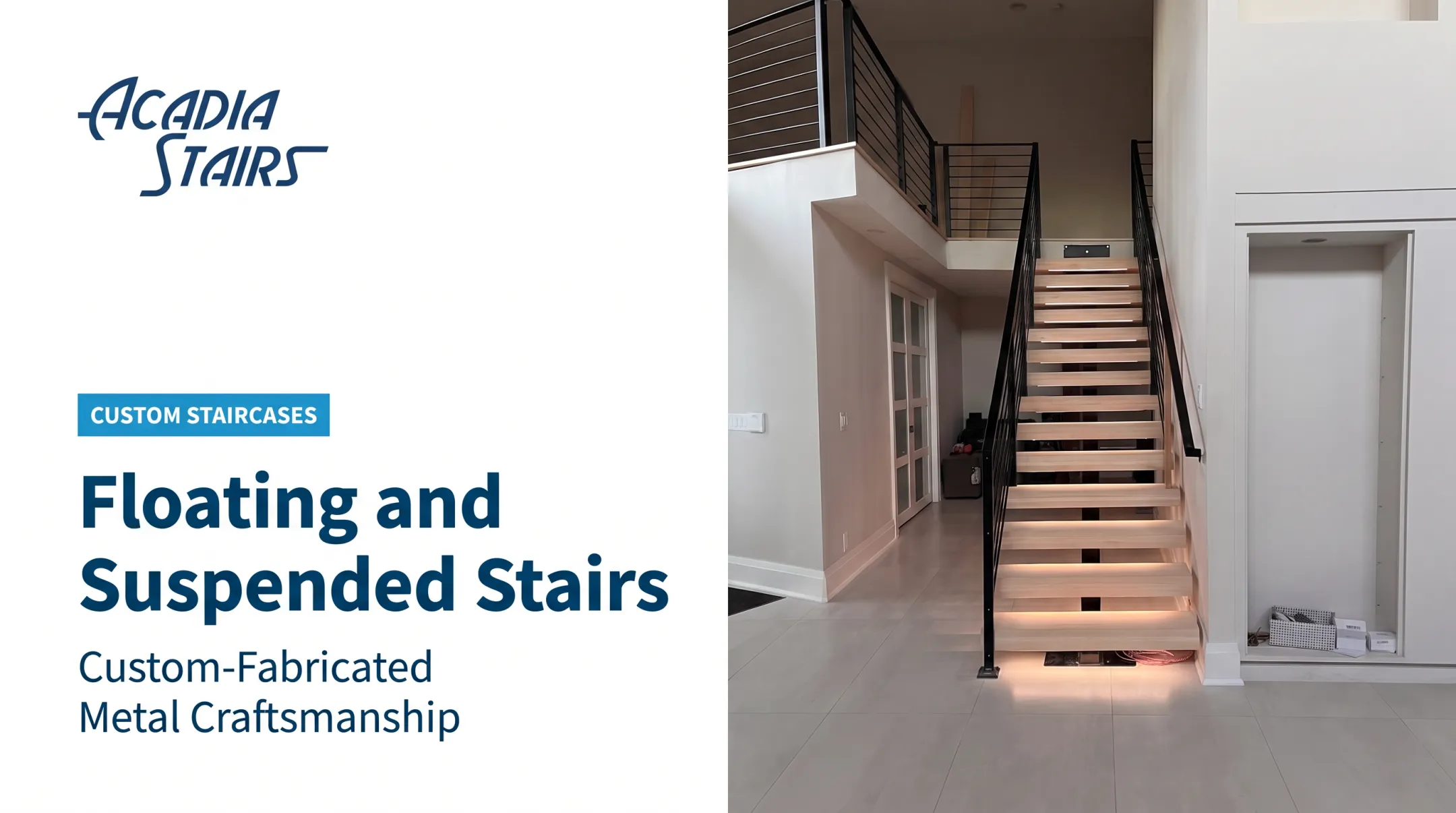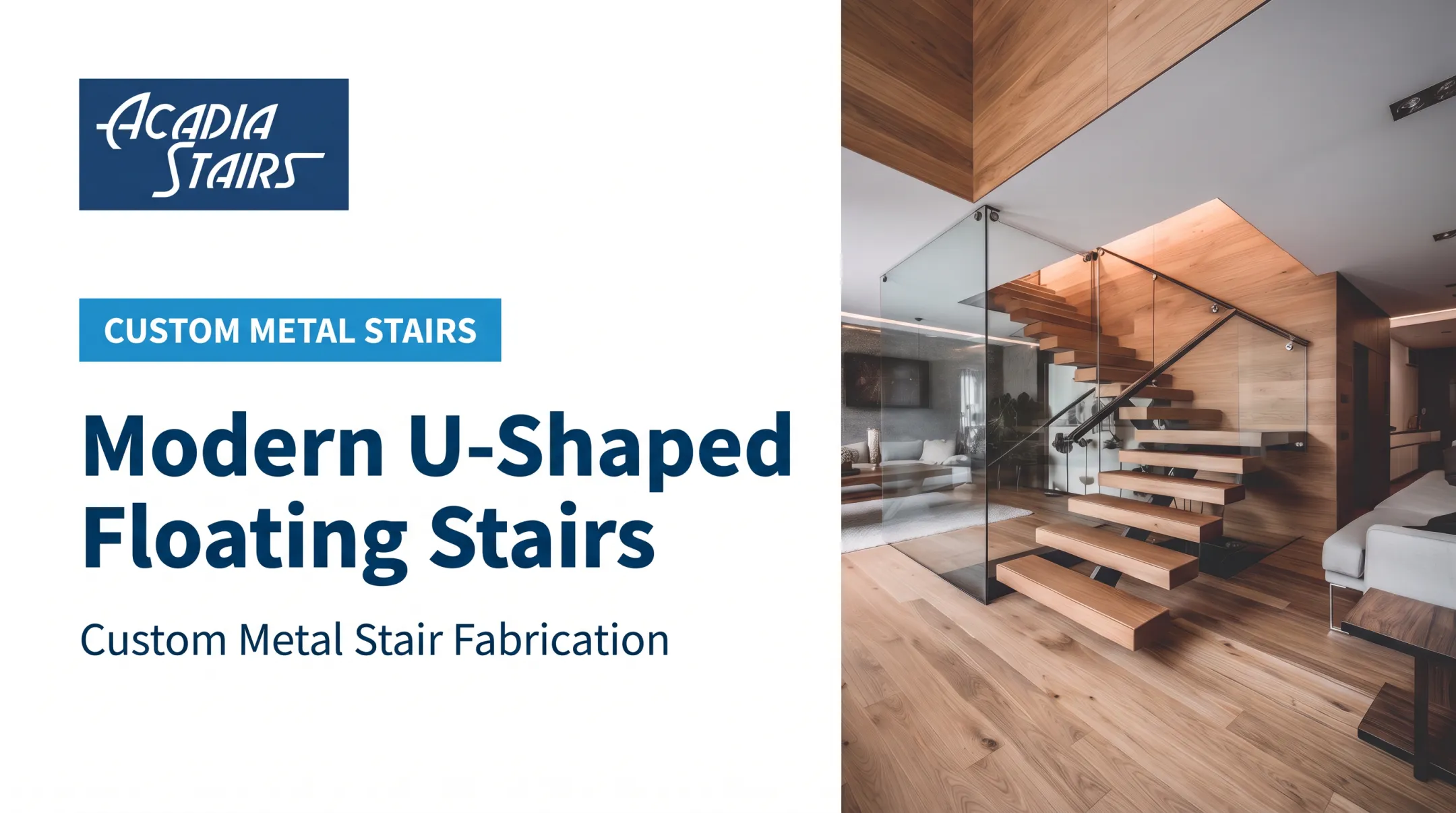
Cantilever staircases are often chosen for one reason: they look simple. Floating treads, no visible support, and a clean architectural finish make them a popular feature in modern homes and commercial spaces.
That simplicity is deceptive.
Behind every cantilever staircase is a set of structural conditions that determine whether it will work at all. Wall capacity, load transfer, connection detailing, and code compliance all play a critical role. When these factors are misunderstood or evaluated too late, projects often face redesigns, additional reinforcement, increased costs, or installation delays.
This guide explains how cantilever staircases actually work, the structural limits that define where they are feasible, and the risks that commonly derail projects.
Key Takeaways
Cantilever staircases rely on concealed steel structures and load-bearing walls, making early structural verification essential before design finalization.
Wall capacity, continuous load paths, and foundation support are the most common factors that determine whether a cantilever staircase is feasible.
Cantilever staircases are structurally different from floating staircases, and confusing the two often leads to cost overruns and redesigns.
Budget constraints, code restrictions, tread span limits, and renovation constraints often make alternative stair systems more practical.
The successful execution of a cantilever stair depends on early coordination among design, engineering, and fabrication teams to meet structural and inspection requirements.
What Is a Cantilever Staircase and How Does It Work?
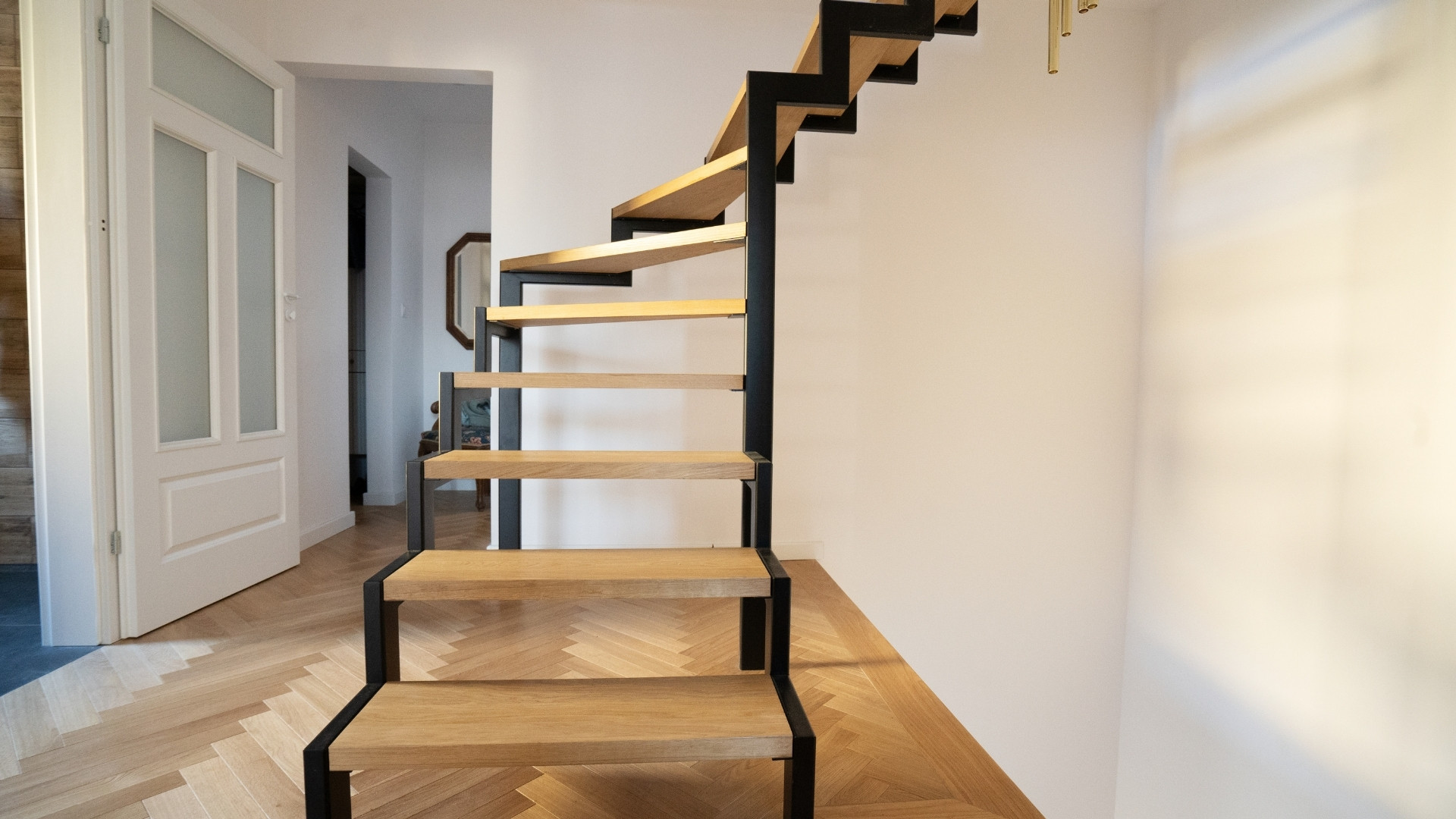
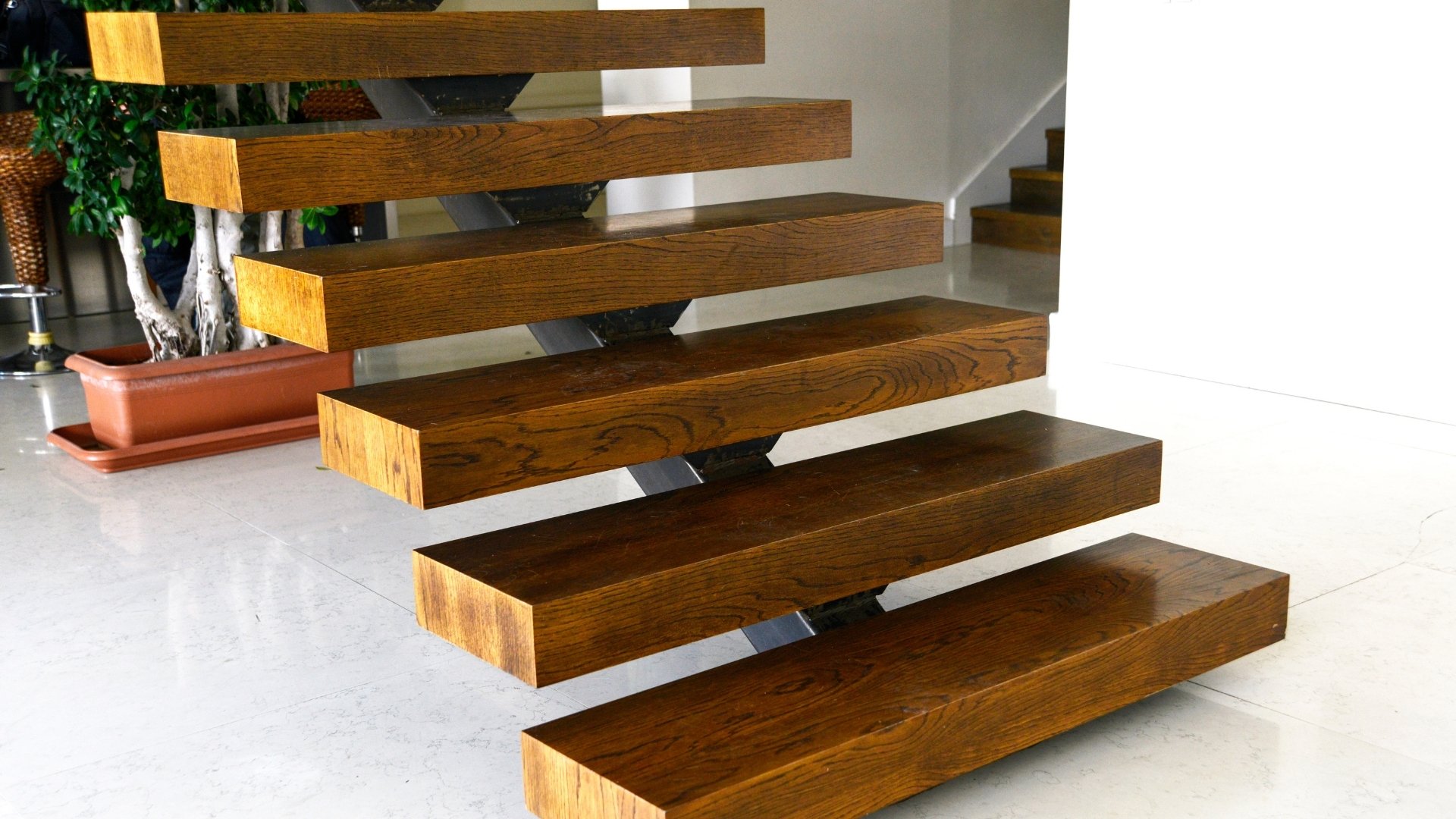
A cantilever staircase is a stair system in which each tread projects from a structural support on one side, giving the appearance of floating steps. Unlike conventional stairs, the treads are not supported from below. Instead, loads are transferred back into the building structure.
In most projects, each tread is anchored to a concealed structural element within a wall or frame. While the visible tread may be wood, stone, or concrete, the primary load is carried by hidden steel reinforcement integrated into the building.
Key elements required for a cantilever staircase to function include:
A structural support capable of resisting bending and deflection.
Reinforced wall or frame conditions to carry concentrated loads.
Precise alignment between stair geometry and the supporting structure.
Early coordination between design, engineering, and fabrication.
Because each tread is supported from only one side, the supporting structure must resist both vertical loads and rotational forces. This makes cantilever staircases more structurally demanding than other visually open stair systems and highly dependent on building construction methods.
What Is the Difference Between a Cantilever Staircase and a Floating Staircase?
The terms cantilever staircase and floating staircase are often used interchangeably, but they describe different structural approaches. While both create a floating appearance, a cantilever staircase relies on one-sided structural anchoring, whereas floating staircases may use various concealed support systems. These differences directly affect feasibility, cost, and coordination.
The comparison below reflects how these systems differ when applied on-site.
Aspect | Cantilever Staircase | Floating Staircase |
Primary support | Each step is anchored into one side, typically a wall or structural frame. | Concealed stringer, central spine, or wall anchoring. |
Visible support | None visible. | None visible. |
Load transfer | Loads transfer directly into the wall or structure through bending. | Loads transfer through a stringer, spine, or wall embedment. |
Structural dependency | High, requires reinforced walls or frames. | Varies by support method. |
Design flexibility | Limited by wall conditions. | Higher due to multiple support options. |
Common usage | Often called "floating cantilever" stairs. | A broad term for stairs with concealed support. |
Typical use case | New construction or projects with planned structural support. | Both new builds and renovations. |
All cantilever staircases create a floating appearance, but floating staircases may rely on cantilever anchoring or other concealed support systems.
How Are Cantilevered Steps Structurally Supported?
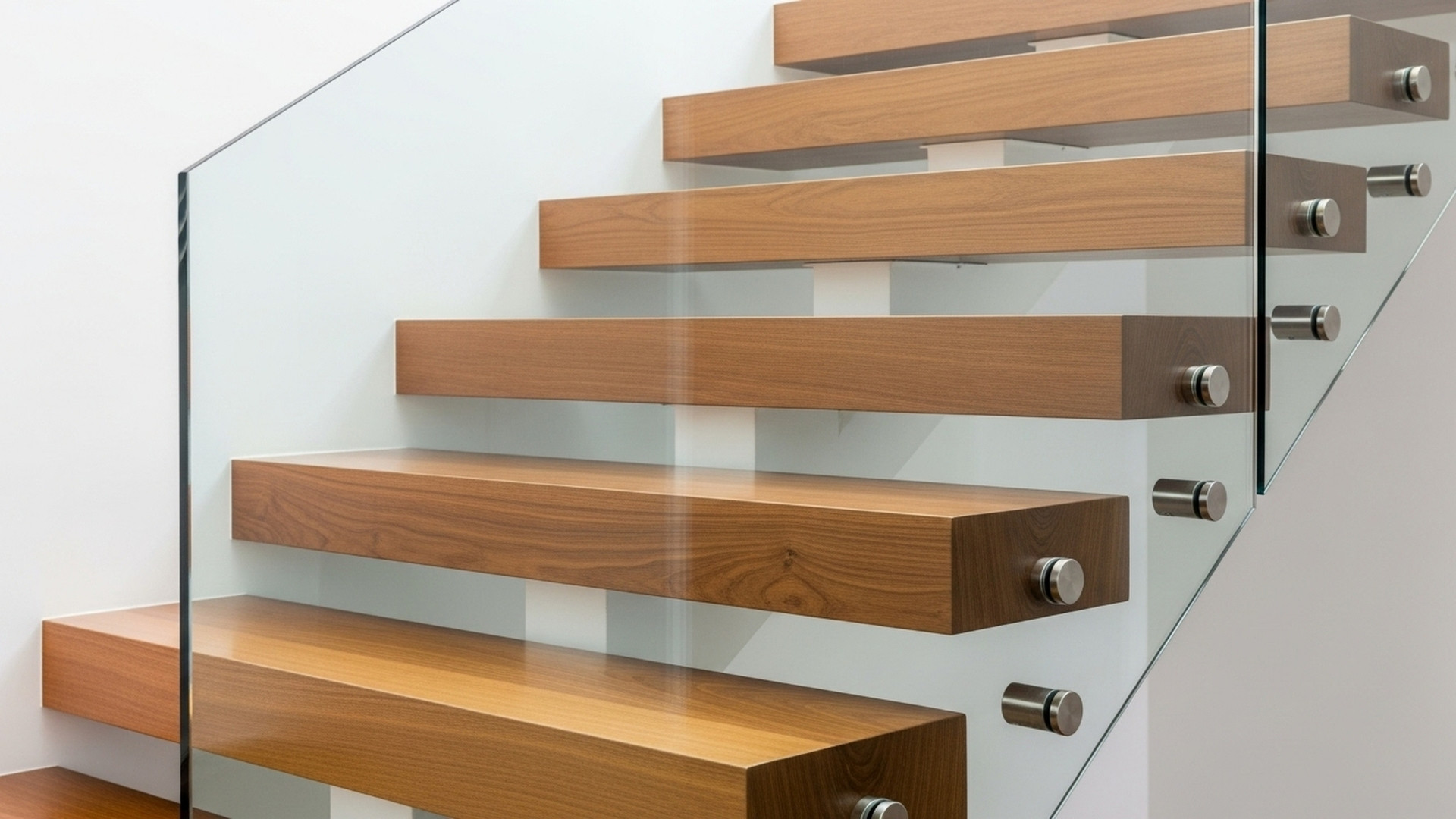
Cantilevered steps are supported by engineered steel frameworks that transfer loads back into the building structure instead of down to the floor. Although the stairs appear unsupported, the system relies on concealed structural elements designed to resist bending, torsion, and deflection.
Let’s look at the support system they have:
Wall-Mounted Cantilever Support
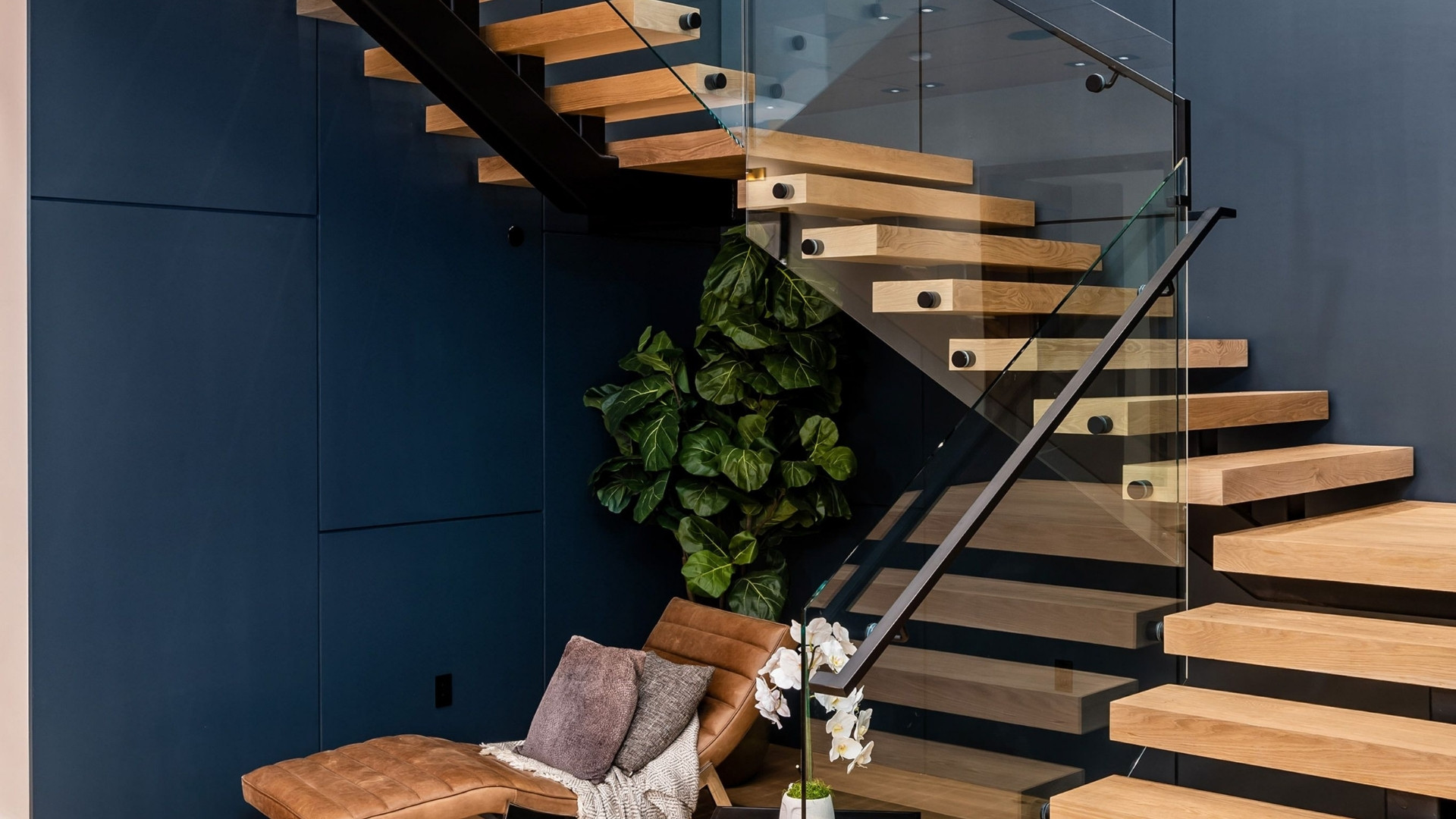
In wall-mounted systems, each tread connects to a concealed steel support that is anchored to a load-bearing wall. This support is hidden behind the finish materials but carries the full structural load of the stair.
Common wall-mounted support approaches include:
Hidden steel stringers, where a continuous steel beam is embedded within the wall and connected to each tread at precise intervals.
Individual steel brackets with separate steel arms extending from the wall to support each step.
Anchor size and spacing are determined through structural calculations based on expected loads and wall capacity.
Central Spine Cantilever Support (Floating Stair Alternative)
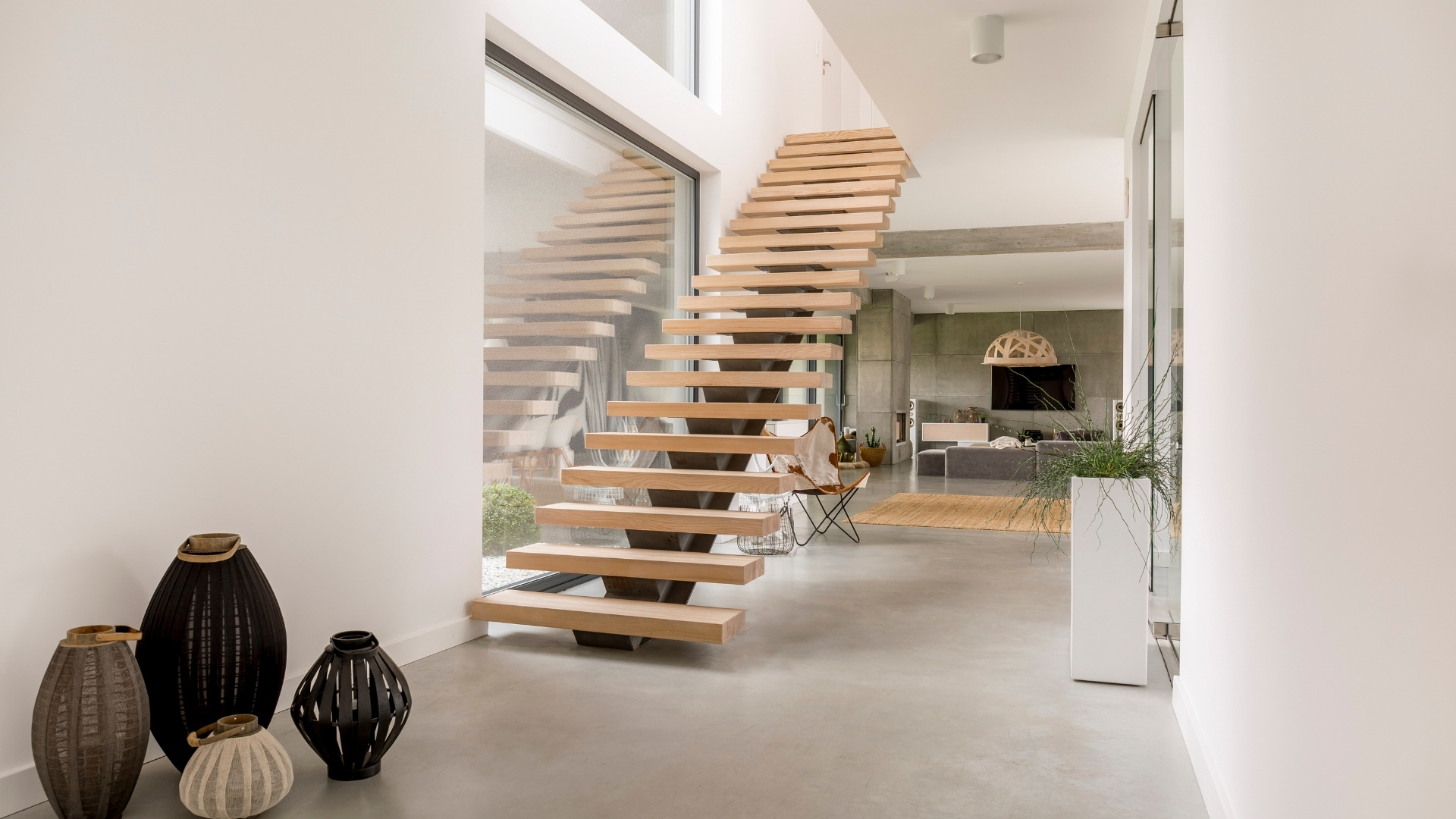
Central spine systems use a single vertical steel beam positioned along the stair centerline, with treads projecting from both sides. While creating a similar floating appearance, this is not a true cantilever system; the structural support comes from the central spine rather than wall anchoring.
Key characteristics include:
The spine beam carries vertical, lateral, and torsional loads along its length.
Welded or bolted steel tread connections prevent rotation.
Reinforced foundation connection resists overturning forces.
This approach works well when wall-mounted cantilever support isn't feasible.
What Wall and Structural Conditions Are Required for a Cantilever Staircase?
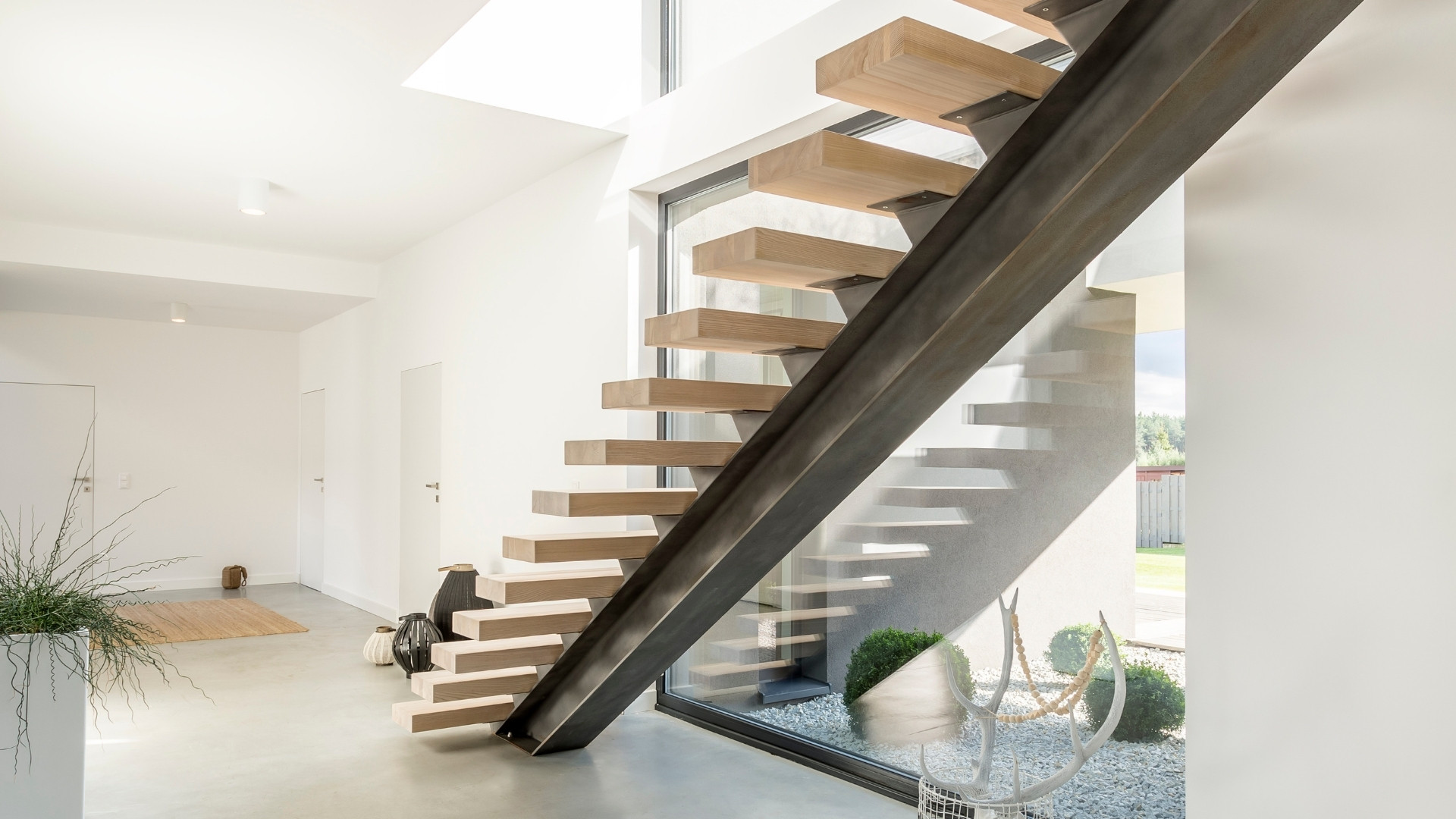
Wall-mounted cantilever staircases place concentrated loads and overturning forces on the supporting structure. These forces are significantly higher than those produced by conventional stair systems and exceed the capacity of standard residential wall framing.
Before finalizing any cantilever stair design, the structural capacity of the supporting wall and foundation must be verified. This step is critical, as wall limitations are one of the most common reasons cantilever stair concepts fail during construction.
Load-Bearing Wall Requirements
The supporting wall must be a true load-bearing structure capable of resisting:
Vertical loads from foot traffic.
Lateral forces and overturning moments created by cantilevered treads.
Wall types commonly used to support cantilever stair systems include:
Reinforced concrete walls: Concrete walls provide the most reliable support for cantilever stairs. For residential applications, a minimum wall thickness of approximately 11 inches is often recommended, though final requirements depend on wall height, tread span, and loading conditions.
Solid masonry walls: Brick or concrete block walls can support cantilever stair loads when properly reinforced and engineered. These walls must be evaluated for lateral load capacity, not just compressive strength.
Structural steel frameworks: In some projects, a dedicated steel frame is introduced to receive cantilever stair loads. This framework must securely connect to the building structure and safely transfer loads to the foundation.
Wall Conditions That Are Not Suitable
Certain wall types cannot support cantilever stair loads without significant structural modification. These include:
Wood or light-gauge metal stud walls lack the stiffness and strength required to resist concentrated loads and overturning moments.
Non-load-bearing partition walls are designed only to divide interior spaces.
Thin masonry veneers, such as brick or stone, are applied over wood framing.
Finished walls without structural backing, including drywall or plaster over non-structural substrates.
In these conditions, additional reinforcement is required before a cantilever stair system can be considered.
Foundation and Structural Continuity
The supporting wall must be backed by a foundation capable of handling the additional loads introduced by a cantilever staircase. In some cases, foundation reinforcement or underpinning may be required to prevent settlement or movement.
Equally important is maintaining a continuous load path from the cantilevered steps through the wall and into the foundation. Large openings, such as doors or windows located near stair attachment points, can interrupt this load path and compromise structural performance.
Wall Reinforcement Options
When existing walls do not meet cantilever stair requirements, reinforcement strategies may include:
Adding reinforced concrete backing walls.
Installing structural steel frames within or adjacent to existing walls.
Increasing wall thickness in concrete or masonry construction.
Introducing vertical reinforcement through the full wall height.
Each option must be evaluated through structural engineering analysis to confirm that the modified wall can safely support cantilever stair loads.
When Is a Cantilever Staircase Not Structurally Feasible?
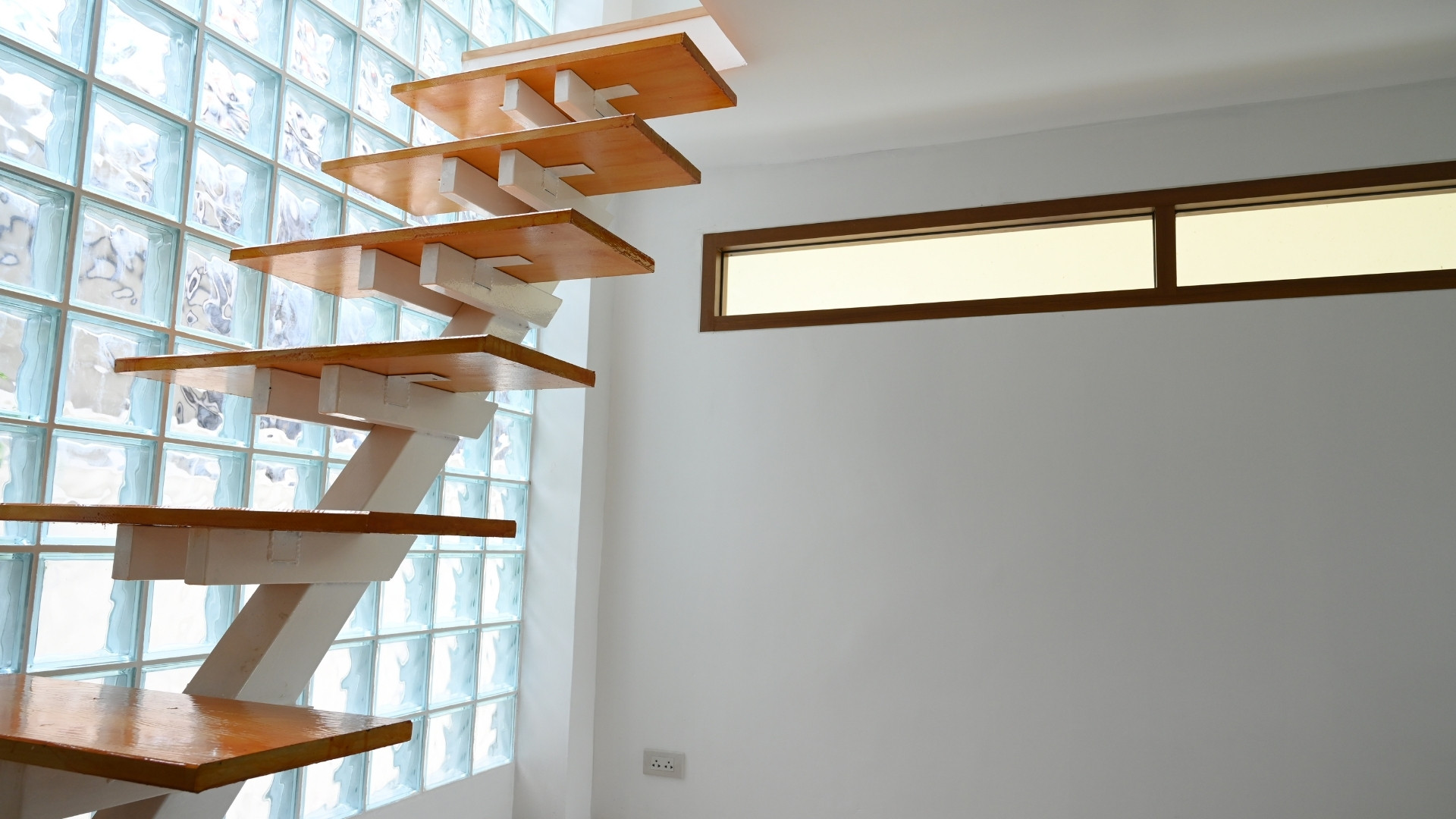
Cantilever staircases are visually striking but not suitable for every project. Here are the limitations that need to be identified early to avoid redesigns, budget overruns, and permitting issues later in the project.
No Suitable Load-Bearing Wall
A cantilever staircase relies heavily on a nearby load-bearing structure. When no suitable wall exists at the stair location, the design becomes significantly more complex.
Building a new reinforced wall solely to support the stairs adds cost and construction time.
Structural steel frames may be required, which would reduce the design's simplicity.
In many cases, mono-stringer or double-stringer stairs achieve a similar visual effect with fewer structural demands.
If stair systems introduce greater structural complexity, you should explore coordination support from specialists, such as Acadia Stairs, during early planning.
Excessive Tread Span
The farther a tread extends from the wall, the greater the structural demand on both the step and the supporting wall.
Residential cantilever stairs are typically limited to a maximum projection of about 48 inches from the wall.
Wider spans increase bending, torsion, and deflection.
Larger steel supports and thicker treads are required, which can compromise the “floating” look.
Commercial projects can sometimes accommodate wider spans, but this usually comes at the cost of heavier construction and reduced visual lightness.
Budget Constraints
Cantilever staircases are typically more expensive than conventional stair systems due to:
Custom steel fabrication.
Wall reinforcement or new structural construction.
Structural engineering and stamped calculations.
Specialized installation and tighter tolerances.
When budgets are tight, alternative stair systems often provide better value without sacrificing openness or modern appeal.
Renovation and Retrofit Limitations
Installing a cantilever staircase in an existing building presents additional challenges.
Existing walls may need extensive reinforcement or replacement.
Floor and ceiling structures may require modification.
Limited site access can increase installation complexity and cost.
In many renovation scenarios, stair systems that require less structural intervention are more practical and predictable.
What Are the Common Structural Approaches Used in Cantilever Staircases?
Several proven structural systems support cantilever stair configurations, each offering different installation characteristics and visual results.
Let's look at them in detail:
Concealed Wall-Mounted Stringer
A steel stringer is embedded within or fixed to the wall before finishes are applied. Treads support the stringer at riser spacing, leaving only the treads visible after completion.
Typically used when:
New construction or major renovations.
Adequate wall depth is available.
A fully floating appearance is required.
Key considerations:
Wall depth must accommodate steel and finishes.
Installation must align with the wall construction.
Exposed Wall-Mounted Supports
Steel supports run along or through the wall surface and remain visible as part of the stair design. This reduces wall-depth requirements but changes the visual character.
Typically used when:
Wall depth is limited.
An industrial or contemporary look is acceptable.
Key considerations:
The stair will not appear fully floating.
Exposed steel requires careful detailing and finishing.
Individual Bracket Systems
Each tread is supported by a separate steel bracket anchored into reinforced concrete or masonry. This allows adjustment of individual treads during installation.
Typically used when:
Retrofit conditions limit wall reconstruction.
Precise tread positioning is required.
Key considerations:
Loads concentrate at each anchor point.
Wall material must handle localized forces.
Hybrid Tension-Supported Systems
Cantilever supports are combined with secondary elements such as rods, cables, or discrete posts to reduce deflection while maintaining openness.
Typically used when:
Tread spans are longer.
Wall capacity is limited.
Key considerations:
Additional coordination with floors or ceilings.
Increased detailing and installation complexity.
Code, Safety, and Inspection Factors for Cantilever Staircases
Cantilever staircases are treated as structural stair systems under U.S. building codes, meaning they must meet the same life-safety requirements as conventional stairs.
The following sections highlight the code areas that most commonly affect cantilever stair approval and inspection.
Dimensional Requirements
Cantilever stairs must comply with standard tread depth, riser height, and width requirements.
Riser height: Maximum riser height is typically 7.75 inches under IBC and IRC provisions. Variation between risers in a flight cannot exceed 3/8 inch.
Tread depth: Minimum tread depth is 10 inches for residential stairs under IRC and 11 inches for commercial stairs under IBC. Measurement is taken at the walking line, 12 inches from the narrower end for tapered treads.
Stair width: Minimum width between handrails is 36 inches for residential and 44 inches for commercial applications, though occupant load calculations may require greater width.
Headroom: Minimum 80-inch vertical clearance measured from tread nosings is required throughout the stair run.
Structural and Deflection Limits
Building codes establish maximum allowable deflection limits to ensure structural stiffness and user comfort.
While specific deflection limits vary by jurisdiction and application, common limits include:
Live load deflection not exceeding L/360 of the span.
Maximum 1/4 inch deflection under concentrated loads.
These limits prevent excessive bounce or movement that can create user discomfort or safety concerns.
Handrail and Guard Requirements
Handrails must be provided on both sides of stairs with four or more risers.
Handrail height: Must be installed between 34 and 38 inches above tread nosings, measured vertically.
Handrail continuity: Handrails must be continuous along the full length of the stair, including any landings, and must extend at least 12 inches beyond the top riser and one tread depth beyond the bottom riser per IBC requirements.
Guards: Open sides of stairs require guards at least 42 inches high for commercial applications. Guard infill must prevent the passage of a 4-inch sphere.
Graspability: Handrails must have a graspable profile, typically circular sections between 1.25 and 2 inches in diameter, or non-circular sections that meet specific perimeter and dimension requirements.
Structural calculations must verify that all components, including treads, supports, anchors, and supporting walls, can safely resist these loads with appropriate safety factors.
Early coordination with the local building department helps clarify specific inspection requirements and approval processes; however, for projects where inspections and shop-drawing accuracy matter, early coordination with a stair fabricator, such as Acadia Stairs, can reduce downstream revisions.
What Should Be Considered Before Choosing a Cantilever Staircase?
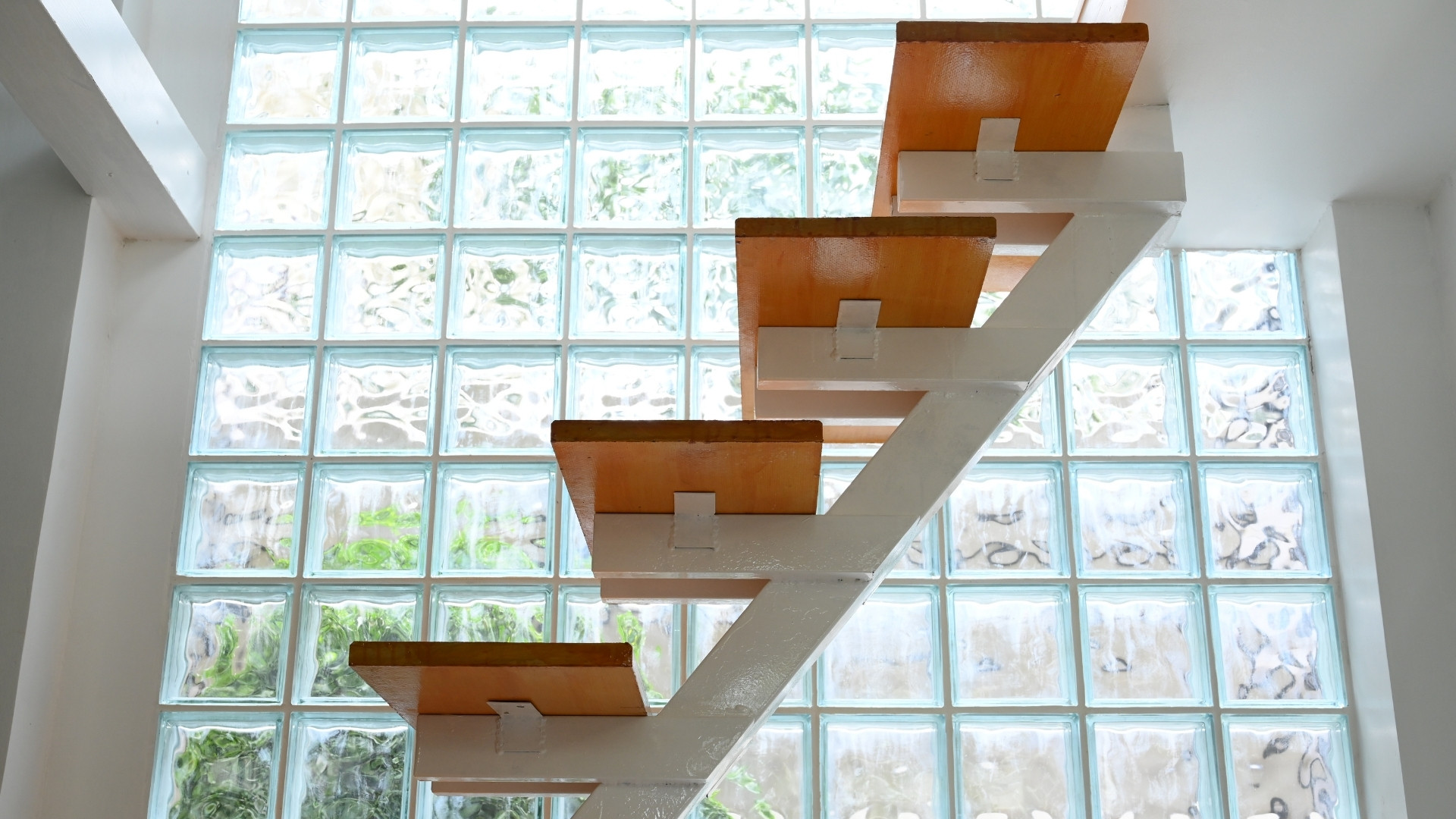
Several factors help determine whether a cantilever staircase is the appropriate solution for a specific project. Let’s look at some of them in detail.
Structural Compatibility
Verify that a suitable load-bearing wall exists or can be constructed within project budget constraints.
Evaluate the foundation's capacity to resist additional loads and overturning moments from the cantilever system.
Confirm that no code restrictions prohibit cantilever configurations for the intended stair use.
Budget Alignment
Establish realistic budget expectations that account for engineered steel fabrication, structural engineering, wall reinforcement, and specialized installation requirements.
Compare cantilever stair costs with alternative configurations that may achieve similar visual results while imposing lower structural demands.
Design Intent
Clarify whether the project requires true cantilever structural performance or whether a visually open stair system using alternative support methods satisfies design goals.
Consider how tread material, railing type, and finish selections affect the intended architectural character.
Long-Term Performance
Evaluate deflection characteristics and user comfort expectations. Cantilever stairs naturally exhibit more movement than conventionally supported systems.
Consider maintenance requirements for exposed steel components, tread finishes, and railing systems.
When these factors align favorably with project requirements and constraints, cantilever staircases provide reliable structural performance and distinctive architectural character.
How Acadia Stairs Supports the Evaluation of Structurally Complex Stair Designs?
Acadia Stairs is a custom staircase manufacturing and metal fabrication company based in Fishkill, New York, providing fabrication and coordination support for metal workers, stair builders, and project teams working on cantilever stair systems and other structurally complex stair configurations.
The company supports trade professionals who require accurate geometry, fabrication-ready components, and coordinated metalwork for residential, commercial, and industrial projects.
Custom metal fabrication for complex stair systems: Acadia Stairs fabricates structural steel components, including stringers, tread supports, connection plates, and custom steel elements required for cantilever and floating stair construction.
Engineering coordination support: During project planning, Acadia Stairs reviews floor-to-floor heights, wall conditions, tread specifications, and railing requirements to identify structural issues before fabrication begins.
Material and finish integration: Through coordinated metal and wood finish capabilities, Acadia Stairs supports project-specific requirements for powder coating, painted steel finishes, and wood tread integration. This allows fabrication partners to maintain consistent finishes across stair structures, railings, and adjacent architectural metalwork.
Shop drawing development: Project-specific shop drawings define stringer geometry, tread support locations, connection details, weld specifications, and structural coordination points. These drawings allow contractors to verify constructability and identify conflicts before steel fabrication.
Railing system integration: Acadia Stairs provides fabricated railing solutions, including glass panel systems, cable assemblies, and custom metal guards designed to integrate with stair geometry.
By combining fabrication expertise with early project coordination, Acadia Stairs enables metal workers and stair builders to deliver engineered cantilever and floating stair systems with reduced fabrication risk and improved installation efficiency.
Conclusion
Cantilever staircases require careful evaluation of structural conditions, engineering requirements, and project constraints before specification. When wall capacity, foundation support, and budget parameters align with cantilever stair demands, these systems provide distinctive visual results and reliable long-term performance.
However, when site conditions do not support true cantilever configurations, alternative stair systems using mono-stringers, double stringers, or hybrid support methods can achieve visually open results.
Working with fabrication partners like Acadia Stairs, who are experienced in structurally complex stair systems, helps ensure cantilever stairs are properly engineered, reducing construction risk and supporting successful project delivery. Contact Acadia Stairs Today!
FAQs
1. Do cantilever staircases feel stable under foot traffic?
Yes, when properly engineered and fabricated. Excessive movement usually indicates inadequate steel sizing, wall reinforcement, or poor connection detailing.
2. At what project stage should cantilever stair engineering begin?
During schematic or early design. Delaying engineering until construction documents often leads to redesigns, wall modifications, and permit delays.
3. Who is typically responsible for cantilever stair structural engineering?
A licensed structural engineer coordinated with the stair fabricator and design team to ensure wall capacity, load paths, and code compliance.
4. Are cantilever staircases harder to inspect and approve?
Yes. Inspectors often require engineered drawings and inspection of concealed steel supports before wall finishes are installed.
5. Do cantilever staircases require more long-term maintenance?
Not structurally. Maintenance depends mainly on tread materials, finishes, and railing systems rather than the cantilever support itself.