When floor space is limited and layout options are narrow, spiral staircases often come into consideration. They are frequently explored as a way to work around footprint constraints that straight or curved stair systems cannot accommodate. At the same time, understanding the design requirements and safety considerations of spiral staircases can feel complex, especially when space limits, daily use, and code compliance all intersect.
Their compact geometry brings both opportunity and risk. Spiral staircases compress structure, movement, and code requirements into a tight circular layout, where small miscalculations in diameter, headroom, tread depth, or support alignment can quickly lead to usability issues or inspection challenges.
Whether you are coordinating a project as a builder or reviewing stair options as a homeowner, the same risks apply. Spiral staircases demand early planning because compact geometry leaves little room for correction once construction begins.
This guide breaks down spiral staircase design and dimensions for residential and light commercial settings in 2026, helping you understand what matters, what to plan early, and how to avoid costly mistakes.
Key Takeaways
Spiral staircases demand early dimensional and structural planning to avoid inspection failures and rework.
Diameter, tread depth, riser consistency, and headroom directly affect safety and usability.
Spiral stairs are often restricted to secondary circulation under US building codes.
Structural support and material choice influence long-term stability and installation accuracy.
Early coordination with a metal fabrication partner reduces construction risk.
What Is a Spiral Staircase?
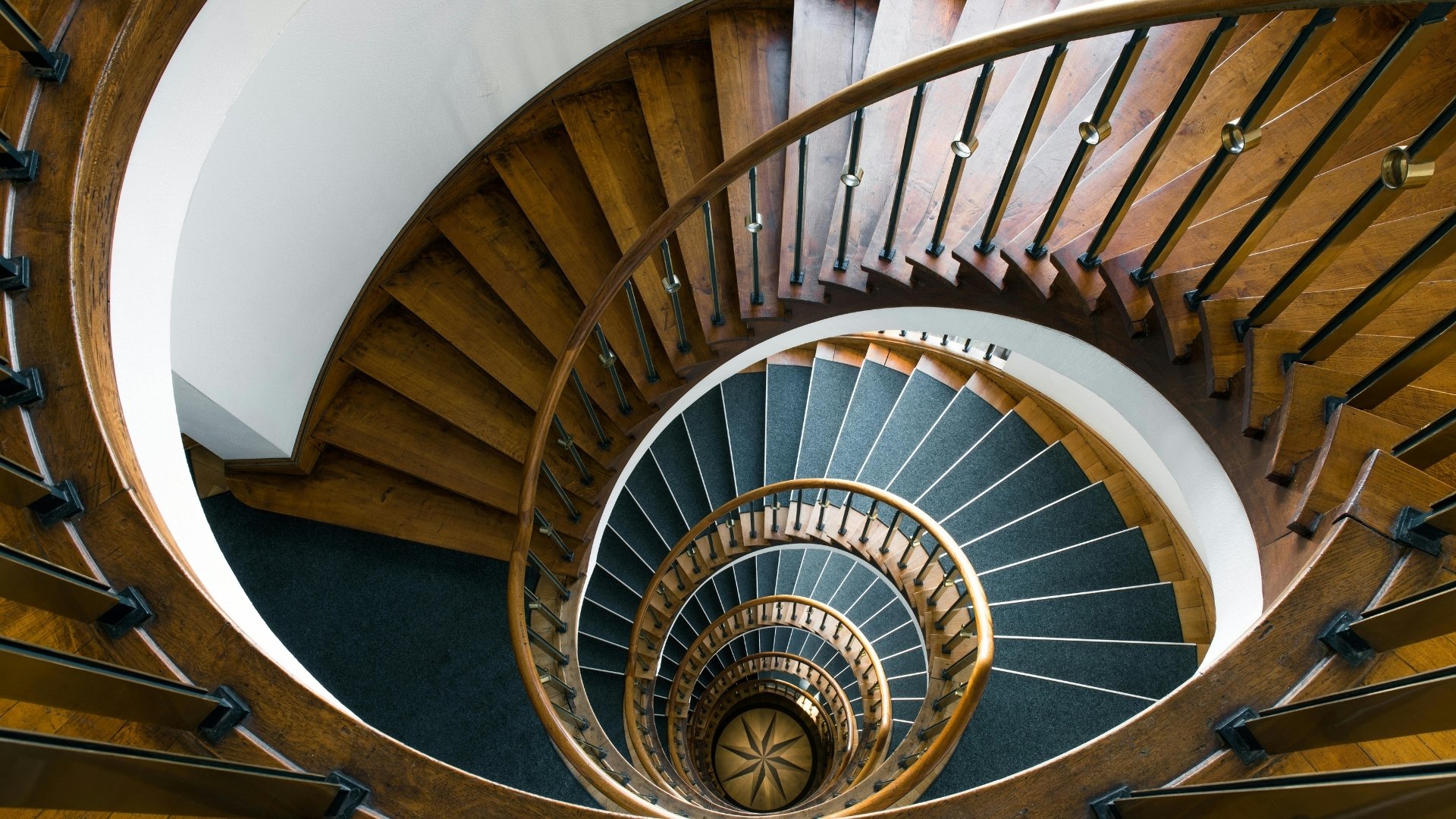
A spiral staircase is a circular stair system that rotates around a central axis. Each tread radiates outward from a center column or structural core, creating a continuous vertical path without intermediate landings. Unlike straight stairs, you do not have flat landings to reset geometry or adjust elevation mid-run.
When you compare spiral staircases to curved stairs, the difference lies in scale and geometry. Curved stairs typically provide wider treads and larger walking lines. Spiral stairs tighten the radius, which limits usable tread depth near the center and affects foot placement.
This tighter geometry concentrates loads into fewer structural elements and restricts movement patterns. You need to understand these characteristics before committing to a spiral stair layout, because they directly affect safety, usability, and coordination. For homeowners, this is why spiral stairs often feel steeper and less forgiving than straight stairs during daily use.
What Makes Spiral Staircase Design Different
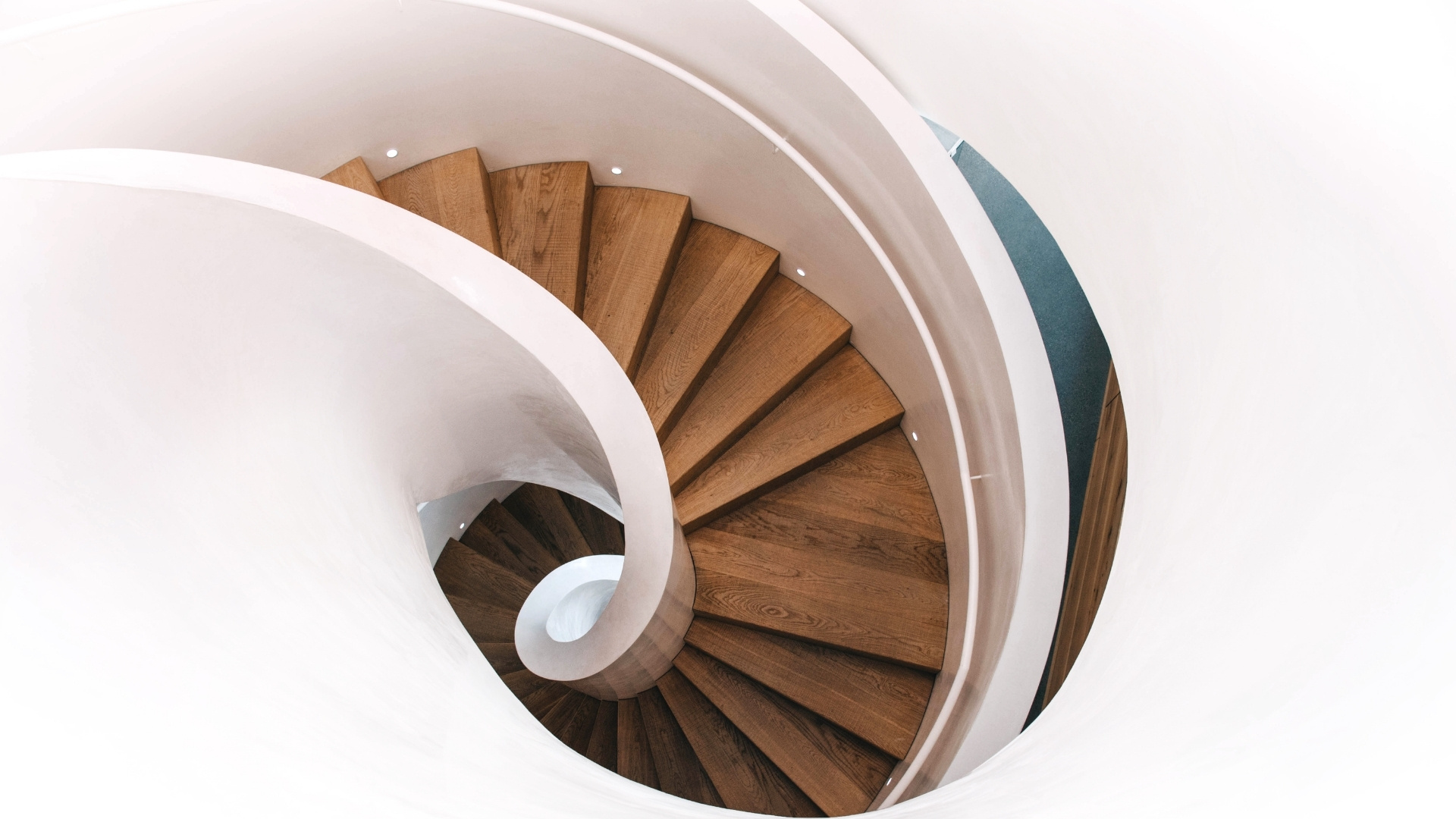
Spiral staircases behave differently because every step rotates around a fixed center point. This affects how you move through the stairs, how loads transfer, and how code requirements apply.
Key design differences you must account for include:
Walking line limitations: Usable tread depth is measured along a defined walking line, not across the full tread width.
Concentrated structural loads: Loads typically transfer through a central column, increasing demand on anchorage points.
Cumulative tolerance risk: Small rotational errors can compound across multiple treads, affecting alignment and safety.
Because of these factors, spiral staircases are less forgiving than straight stairs. You need to confirm geometry early to avoid downstream coordination conflicts.
Core Spiral Staircase Dimensions That You Must Plan Early
Dimensional decisions drive safety, compliance, and long-term usability. You should finalize these values before structural framing begins.
1. Stair Diameter and Usable Floor Space
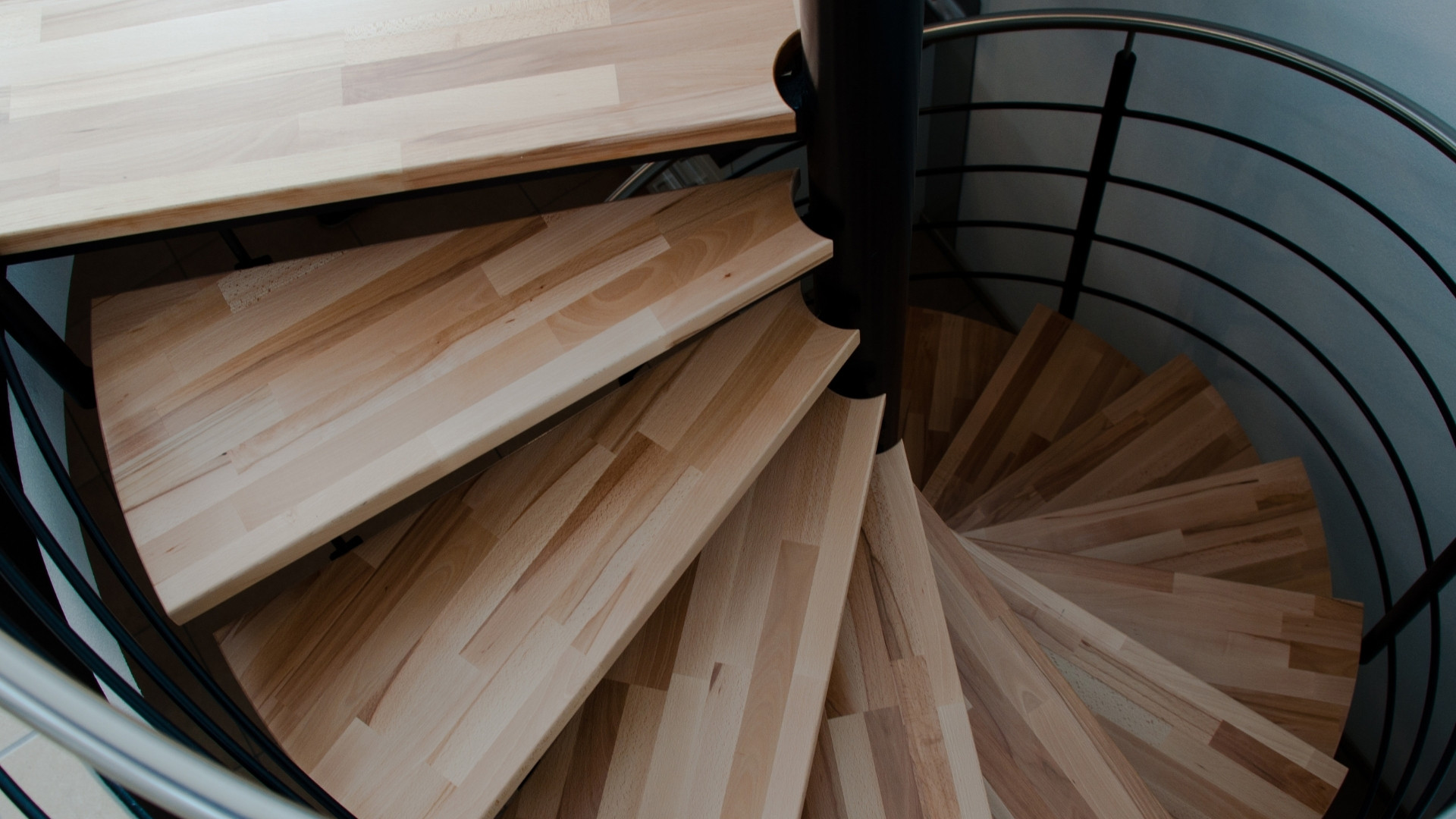
Diameter determines how comfortable and safe the spiral staircase will feel. Smaller diameters save floor space but reduce usable tread depth and increase fall risk.
You should evaluate the diameter based on:
Expected daily traffic.
User demographics.
Furniture or equipment movement needs.
Emergency use considerations.
Smaller diameters are better suited for occasional access. For daily use, larger diameters provide more stable foot placement. For homeowners, smaller diameters are usually noticed first during descent, when the footing feels tighter.
2. Tread Depth and Walking Line Safety
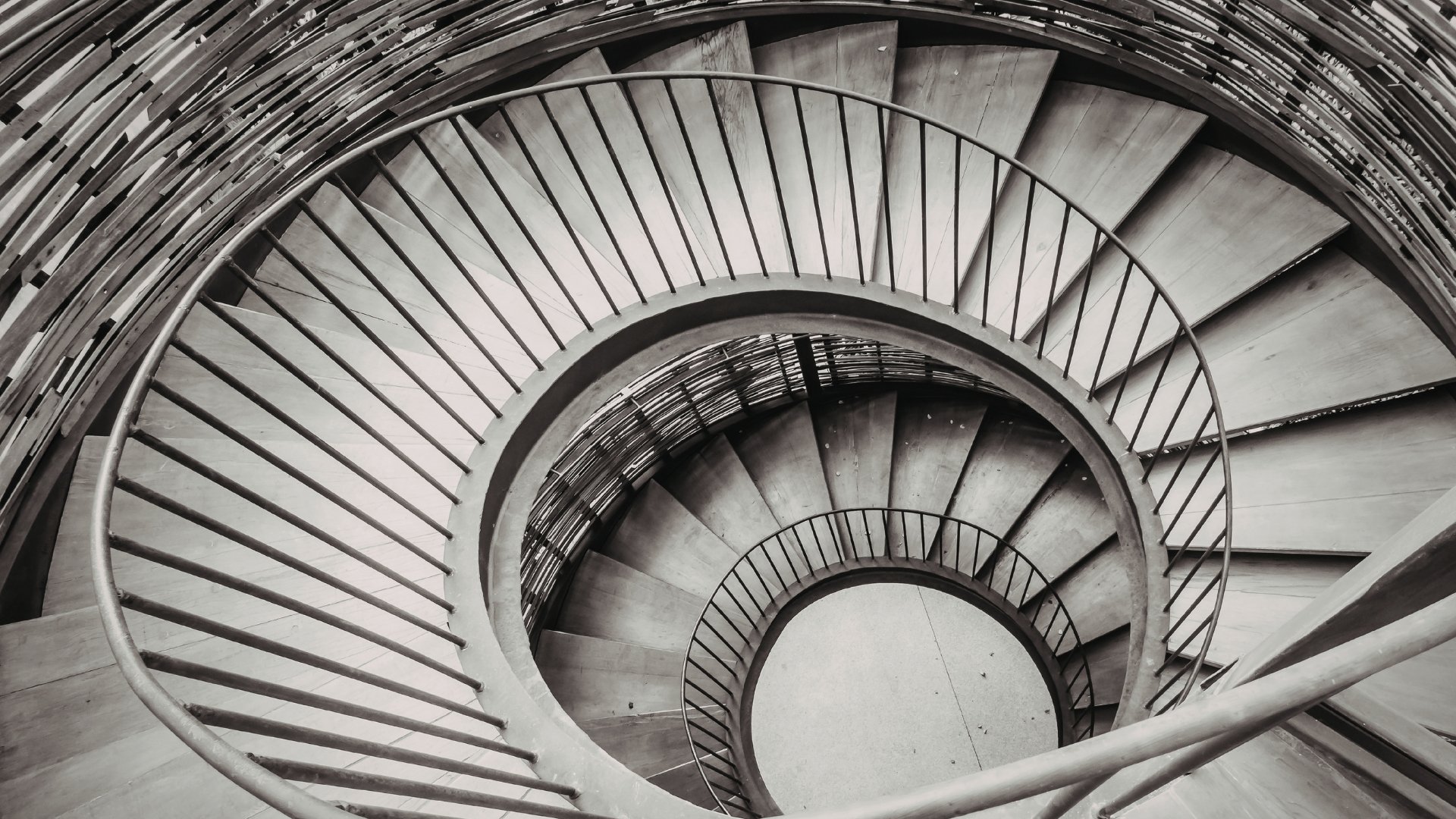
Tread depth on spiral stairs is not uniform. Usable depth is measured along a defined walking line rather than across the entire tread.
Key risks you must manage include:
Narrow inner treads that limit secure foot placement.
Inconsistent walking rhythm caused by poor layout.
Increased slip risk when tread depth is underestimated.
An accurate layout prevents safety complaints and inspection issues later.
3. Riser Height Consistency
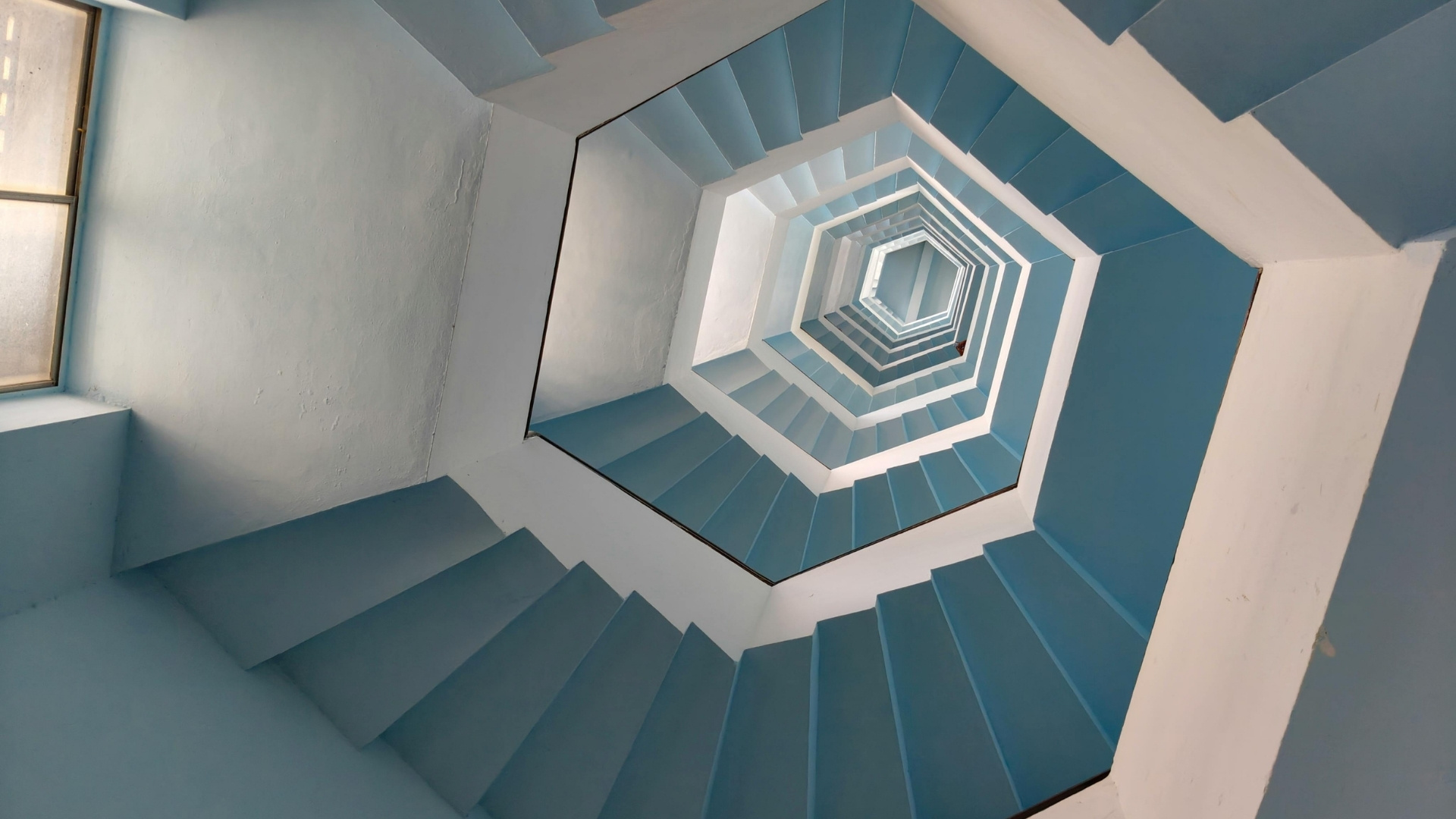
Riser height must remain uniform across the entire stair. Spiral geometry makes inconsistencies more likely near the top or bottom.
Common causes of riser errors include:
Incorrect total rise calculations.
Ignoring the finish thickness.
Late elevation changes at floor connections.
Even small variations can fail inspection and increase trip risk.
4. Headroom Clearance and Vertical Coordination
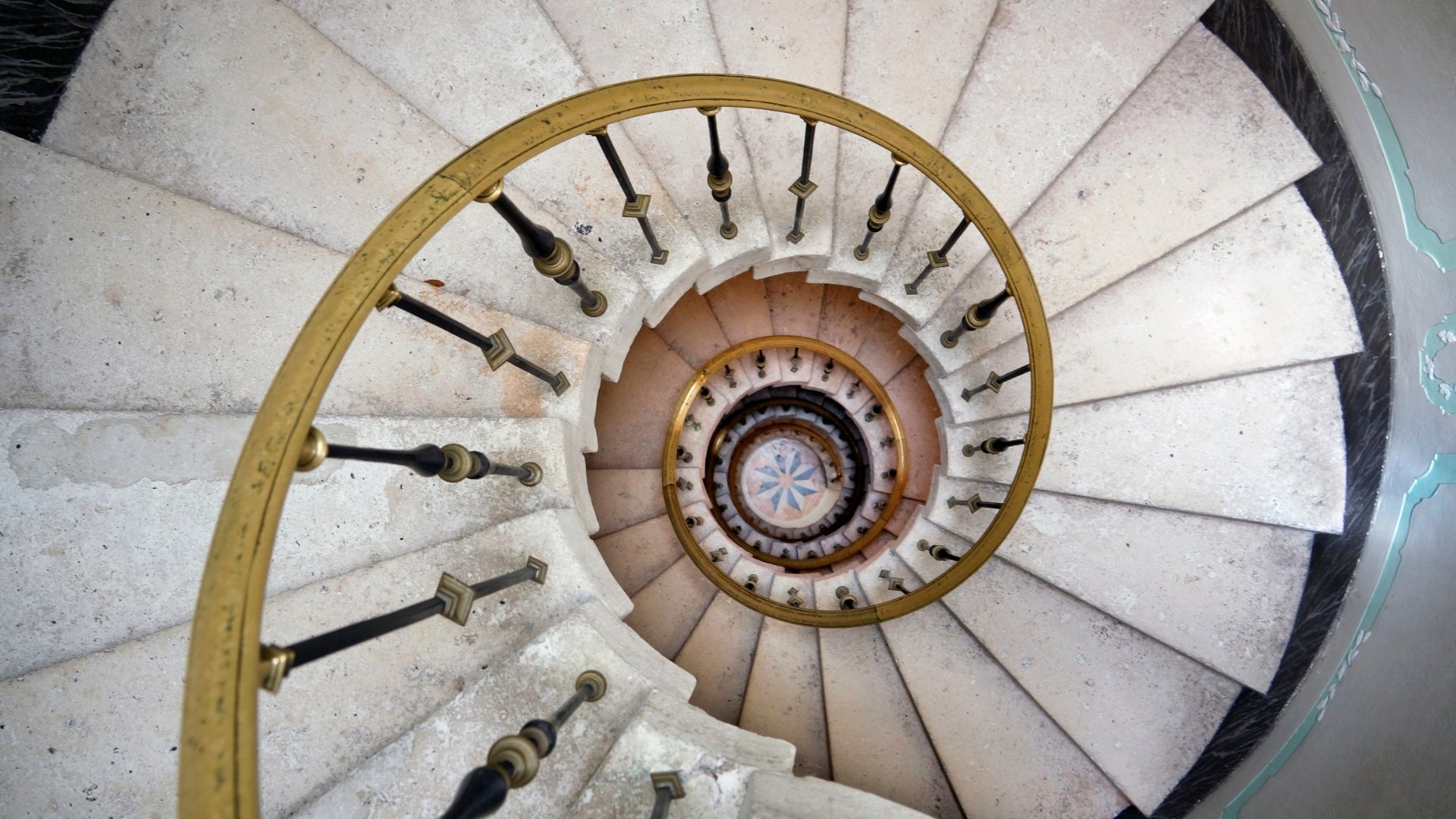
Headroom is one of the most common failure points in spiral stairs. Upper treads pass directly over lower ones, reducing vertical clearance.
You must coordinate:
Floor-to-floor height.
Tread thickness.
Rotation angle (the degree each step turns around the central column, influencing tread overlap and headroom clearance).
Structural depth above the stairs.
Late discovery of headroom conflicts often forces framing changes or stair redesign.
Spiral Staircase Dimension Planning
Spiral staircase dimensions determine whether the stairs will remain usable, compliant, and safe over time. Because circular geometry concentrates tolerances, small dimensional errors can quickly affect headroom, tread comfort, and inspection outcomes. You should resolve key dimensions early, before framing or fabrication begins.
Dimension Area | Why It Matters | Safety and Project Risk |
Stair diameter | Controls tread usability | Increased fall risk |
Tread depth | Affects foot placement | Unsafe walking line |
Riser height | Maintains step rhythm | Trip hazards |
Headroom | Prevents head strikes | Inspection failure |
Rotation angle | Controls overlap | Structural rework |
Once spiral staircase dimensions are resolved, the next constraint you must address is code compliance.
Spiral Staircase Code Considerations in the United States
Spiral staircases are regulated differently from conventional stairs. Codes often restrict their use to secondary circulation.
Key considerations you must review include:
Residential use: Spiral stairs are commonly allowed as secondary stairs under the International Residential Code (IRC).
Commercial use: Spiral stairs are often prohibited as primary egress under the International Building Code (IBC).
Uniform geometry: Riser height and tread depth must remain consistent.
Handrail continuity: Handrails must remain continuous along the stair path.
You should confirm local amendments early, as spiral stair approvals vary by jurisdiction.
Safety Considerations You Must Address
Safety is a core concern in spiral staircase design. Compact geometry increases the consequences of dimensional errors. Many of these safety risks are first noticed during everyday use, not during design review.
Key safety risks you must know include:
Reduced tread depth: Narrow inner treads limit stable foot placement.
Headroom strikes: Poor vertical coordination increases injury risk.
Emergency movement limitations: Spiral stairs restrict rapid descent during emergencies.
Furniture and equipment transport: Tight curves make carrying objects difficult.
Safety improves when spiral stairs are limited to controlled use cases. You should clearly define expected usage before selection.
Before finalizing structural detailing, you should confirm which spiral stair configuration best fits the project's framing and usage constraints.
Center-column supported: Most common option. Requires verified base anchorage, upper floor alignment, and vibration control.
Perimeter-supported: Shares load with surrounding walls. Requires confirmed load-bearing walls and early attachment coordination.
Freestanding: Carries all loads internally. Requires heavier members and tighter fabrication and installation tolerances.
Interior vs exterior use: Interior stairs prioritize dimensional accuracy and vibration control. Exterior stairs require corrosion resistance, drainage planning, and slip mitigation.
Selecting the wrong configuration increases coordination risk and long-term maintenance issues. With the configuration understood, you can now evaluate structural support and load paths.
Structural Support and Load Path Planning
Structural support determines long-term performance. Most spiral stairs rely on a central steel column to transfer loads.
You must coordinate:
Base anchorage capacity.
Upper floor attachment.
Lateral stability.
Vibration control.
Freestanding spiral stairs require tighter tolerances than wall-supported systems. Movement can affect alignment and safety. Clear load paths reduce deflection and noise over time.
Note: Lateral stability makes sure that the staircase resists side-to-side movement, while vibration control minimizes shaking during use, both critical for safety and comfort.
Material Selection and Fabrication Implications
Material choice affects durability and dimensional accuracy. Steel is often selected for its structural reliability and dimensional stability.
Key benefits of steel fabrication include:
Slim structural profiles.
Consistent geometry.
Better tolerance control.
Long-term dimensional stability.
Hybrid systems often combine a steel structure with wood treads. You must account for the finish thickness early.
Acadia Stairs, based in Fishkill, New York, supports spiral stair projects through custom metal fabrication and shop drawing coordination. This approach helps you reduce installation risk across projects in the United States.
Common Spiral Staircase Design and Coordination Mistakes
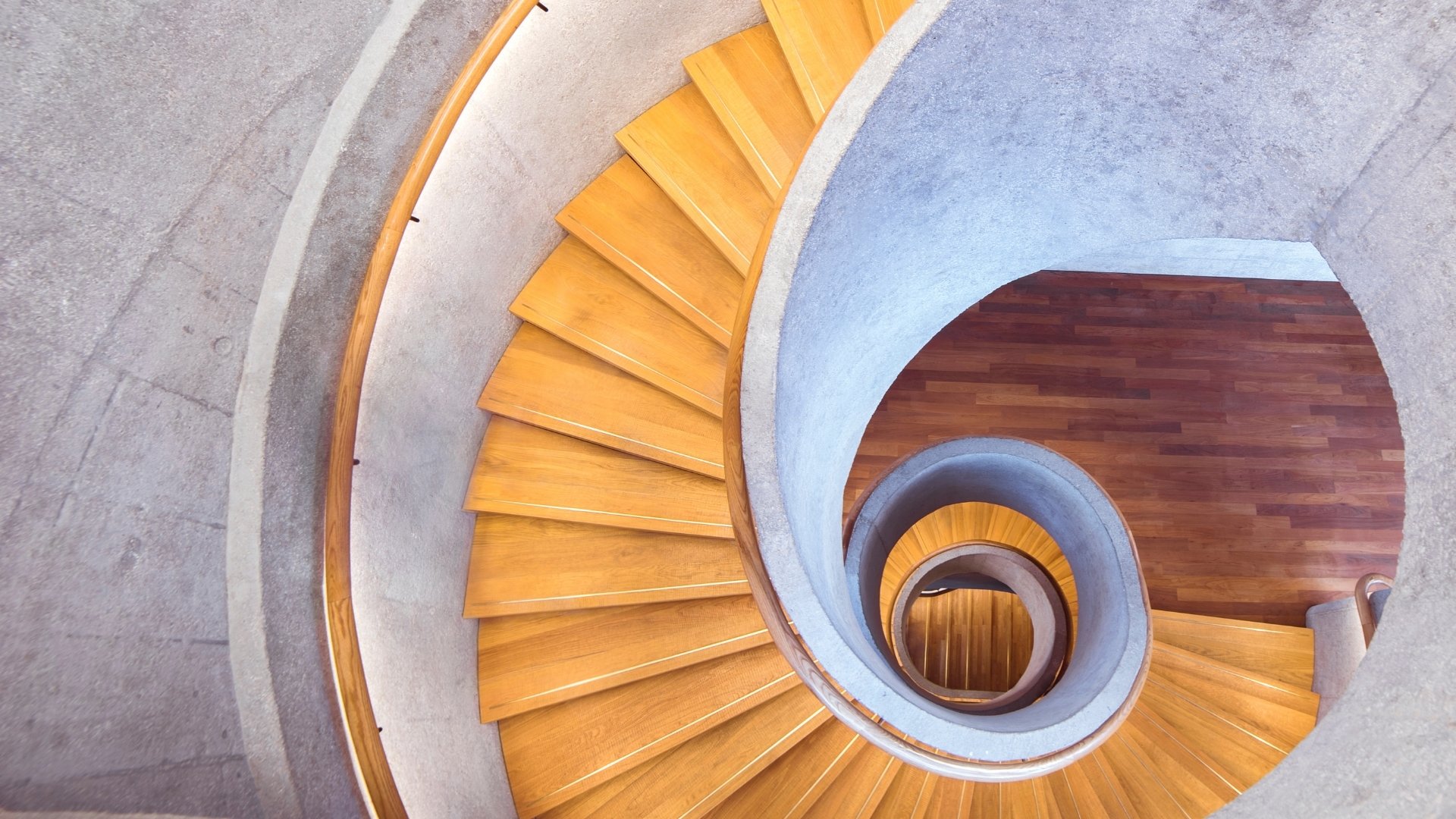
Most spiral staircase problems do not originate from fabrication quality. They arise earlier, when geometry, structure, and finishes are planned in isolation. Because spiral stairs concentrate multiple constraints into a compact footprint, small coordination gaps escalate quickly.
1. Framing Floor Openings Before Stair Geometry Is Finalized
Framing often begins before the spiral stair diameter, rotation, and walking line are fully resolved. This leads to floor openings that are either undersized or poorly positioned.
When this happens:
Headroom clearance is reduced where upper treads overlap lower runs.
The stair diameter must be reduced later, compromising usability and safety.
Structural framing requires modification after inspection review.
Finalizing stair geometry before framing prevents rework and inspection delays.
2. Underestimating Headroom Clearance
Headroom conflicts are frequent in spiral stair projects because the stair wraps vertically within a tight radius. You may assume clearance will resolve during installation. In practice:
Upper treads pass directly above lower ones.
Structural depth above the stairs reduces available clearance.
Finish thickness further lowers headroom if not accounted for.
Headroom must be verified using final tread thickness, rotation angle, and floor-to-floor height before fabrication.
3. Ignoring Finish Thickness During Layout
Finish materials are often treated as cosmetic decisions, but in spiral staircases, they affect critical dimensions. Wood treads, metal nosings, and floor finishes all change riser heights and headroom.
Common consequences include:
Inconsistent riser heights at the top or bottom.
Reduced headroom below code thresholds.
Last-minute tread or finish substitutions.
Including finish buildup in early layout calculations avoids these downstream conflicts.
4. Discovering Structural Conflicts After Fabrication
Spiral stairs rely on precise anchorage at the base and upper floor. Structural conflicts are common when stair support requirements are not coordinated with framing or steel placement.
Typical issues include:
Center columns conflicting with joists or beams.
Inadequate anchorage capacity at the slab or floor system.
Late discovery of lateral bracing needs.
Resolving these conflicts after fabrication increases cost and installation risk.
Why These Mistakes Compound Risk
Each of these issues increases:
Inspection failure risk
Fabrication revision costs
On-site modification time
Long-term safety concerns
Because spiral stair systems allow little tolerance for adjustment, early coordination between stair design, structure, and finishes is essential.
These coordination issues show that spiral staircases are not inherently flawed, but they allow little margin for error. When their geometric and structural limits are addressed early, they perform reliably. When they are not, risk increases quickly.
Homeowners usually discover these issues only after installation, when changes are disruptive and expensive. This distinction makes it easier to identify when a spiral staircase is the right solution and when an alternative should be considered.
When a Spiral Staircase Is the Right Choice
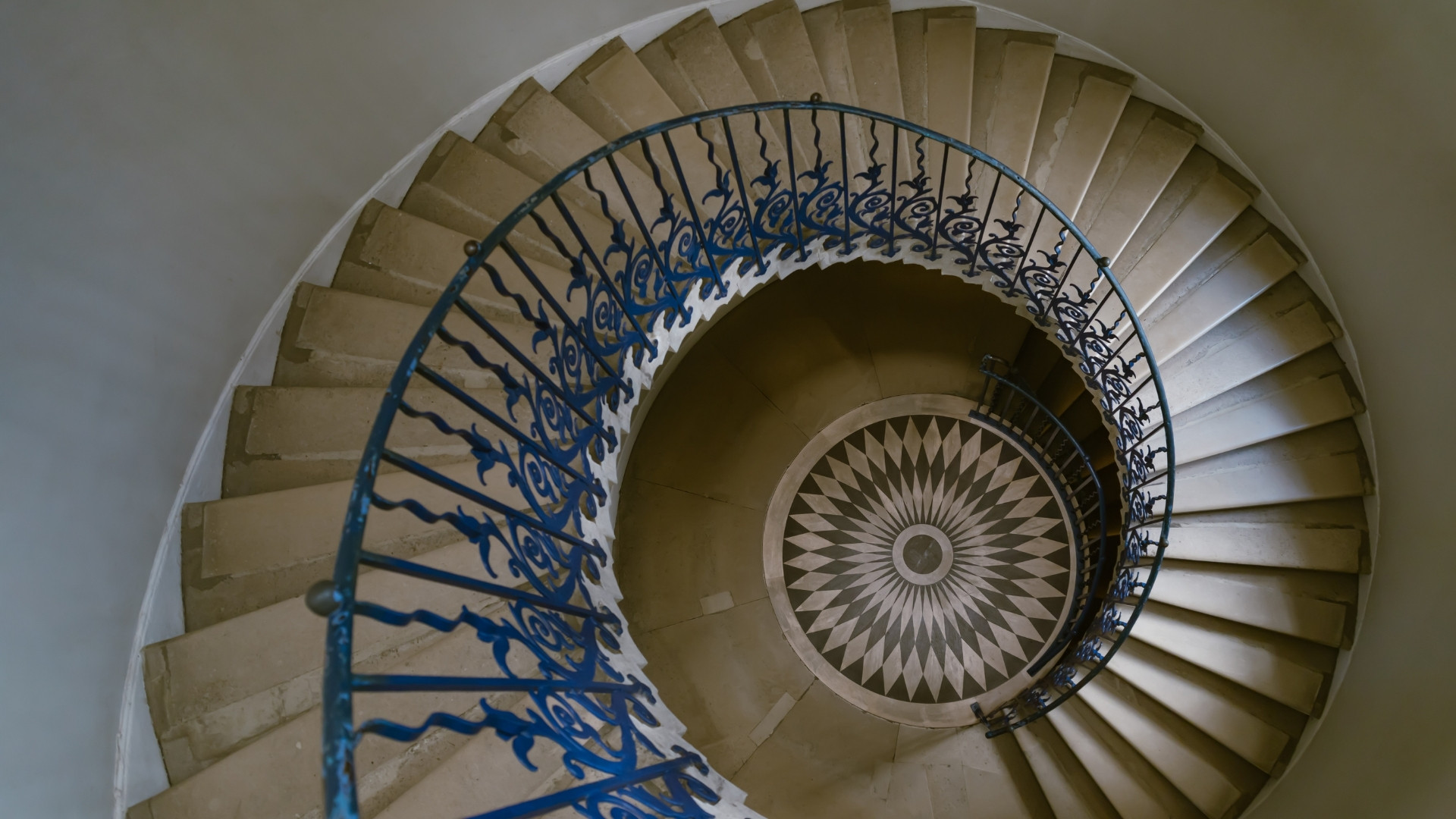
Spiral staircases work best when their geometric and safety limits align with functional needs. You should analyze suitability based on usage frequency, movement patterns, and coordination constraints.
Spiral stairs are appropriate when:
Secondary access stairs: These stairs are used occasionally rather than as primary circulation. Limited tread depth and tighter walking lines present a lower safety risk when daily traffic is minimal.
Loft or mezzanine access: Spiral stairs provide vertical access where floor openings are constrained. Builders should confirm that headroom clearance and landing conditions meet code and safety expectations.
Roof or equipment access: Spiral stairs are often suitable for maintenance access, where controlled use and trained users reduce movement and fall risk.
Projects with tight floor footprints: When straight or L-shaped stairs exceed available run length, spiral stairs can fit within compact openings. Builders must still verify that the diameter and tread depth remain usable.
Before confirming a spiral stair layout, you should validate:
Expected daily traffic volume.
User demographics and mobility needs.
Emergency egress requirements.
Structural anchorage capacity.
If these conditions cannot be met, alternative stair systems should be considered.
Spiral Staircases vs Other Stair Types
Choosing the right staircase design depends on function and constraints, not appearance alone. Spiral staircases differ from straight, floating, and curved alternatives in space use, structural demands, and installation complexity. Understanding these differences helps you select a stair system that fits both project limits and long-term use.
Stair Type | Where It Works Best | Key Limitations | Safety & Coordination Impact |
Tight footprints, secondary access, etc. | Limited tread depth, restricted movement. | Higher fall and headroom risk if poorly sized. | |
Long runs, primary circulation, etc. | Requires more floor length. | Safer daily use, easier code approval. | |
Feature stairs with space. | Complex fabrication | Requires advanced coordination. | |
Loft or mechanical access. | Steep pitch | Limited daily usability. |
Comparing spiral staircases with other stair types helps you see where they perform well and where alternatives may be more practical. Comparison alone, however, is not enough. Certain project conditions, usage requirements, and compliance factors can make spiral staircases a poor fit. Knowing when you should not use a spiral stair is just as important as understanding when it works.
When Spiral Stairs Should Be Avoided
Spiral staircases introduce geometric and movement constraints that make them unsuitable for specific project conditions. You should rule out spiral stairs early when safety, egress, or daily usability requirements outweigh space savings.
You should avoid spiral stairs in the following situations:
Primary egress routes: Spiral stairs limit movement speed and carrying capacity. Most US building codes restrict their use as the primary means of egress, especially in commercial settings.
High daily traffic conditions: Frequent use increases fall risk due to limited tread depth and tighter walking lines. Wear and user fatigue become concerns over time.
Projects requiring accessibility compliance: Spiral staircases do not meet accessibility requirements and cannot support mobility aids or assisted movement.
Regular movement of large items: Tight curvature restricts turning clearance, making furniture, appliances, and equipment transport unsafe and impractical.
When any of these conditions apply, you should consider straight, L-shaped, or curved stair systems. These alternatives provide wider treads, predictable geometry, and safer movement under demanding use conditions.
How Acadia Stairs Supports Spiral Stair Projects
Acadia Stairs is a custom staircase manufacturing and metal fabrication company based in Fishkill, New York. You can work with Acadia Stairs when you need fabrication support for geometry-sensitive stair systems.
For spiral stair projects, Acadia Stairs supports you with:
Custom steel fabrication.
Fabrication-ready shop drawings.
Coordinated stair and railing systems.
Nationwide delivery support.
This collaboration helps you manage geometry, safety, and installation accuracy more effectively. Moreover, this level of coordination helps homeowners receive stairs that feel stable, safe, and consistent long after installation.
Conclusion
Spiral staircase design should be approached as a permanent structural system rather than a compact architectural solution. When diameter, headroom, or structural support is underestimated during design planning, you often face inspection failures, fabrication revisions, and on-site corrections. Over time, these issues increase construction costs and introduce avoidable safety risks.
Careful evaluation of geometry, load paths, and applicable code requirements early in the spiral staircase design process improves long-term performance and usability. Equally important is coordinating stair layout, materials, and finish tolerances before fabrication begins.
Working with a stair manufacturer experienced in custom metal fabrication and spiral stair coordination helps you to make sure that spiral staircases are engineered accurately, code-aware, and installable as planned. This approach reduces construction risk across residential and light commercial projects in the United States. Contact Acadia Stairs Today!
FAQs
1. How much space does a spiral staircase need?
Space depends on diameter, tread depth, and headroom requirements. Larger diameters improve comfort and safety, while smaller layouts increase clearance and usability risks.
2. Are spiral staircases allowed by the building code?
Spiral staircases are usually allowed as secondary stairs under US codes. Their use as primary egress is often restricted, especially in commercial buildings.
3. What is the minimum diameter for a spiral staircase?
Minimum diameter varies by jurisdiction and use. Builders should confirm local code requirements and consider larger diameters for frequent use.
4. Are spiral staircases safe for daily use?
Spiral stairs can be safe if properly sized and built. Small diameters and shallow treads increase fall risk during daily use.
5. Can spiral staircases be prefabricated?
Yes. Spiral staircases are often prefabricated in sections. Accurate site measurements and approved shop drawings are essential for successful installation.