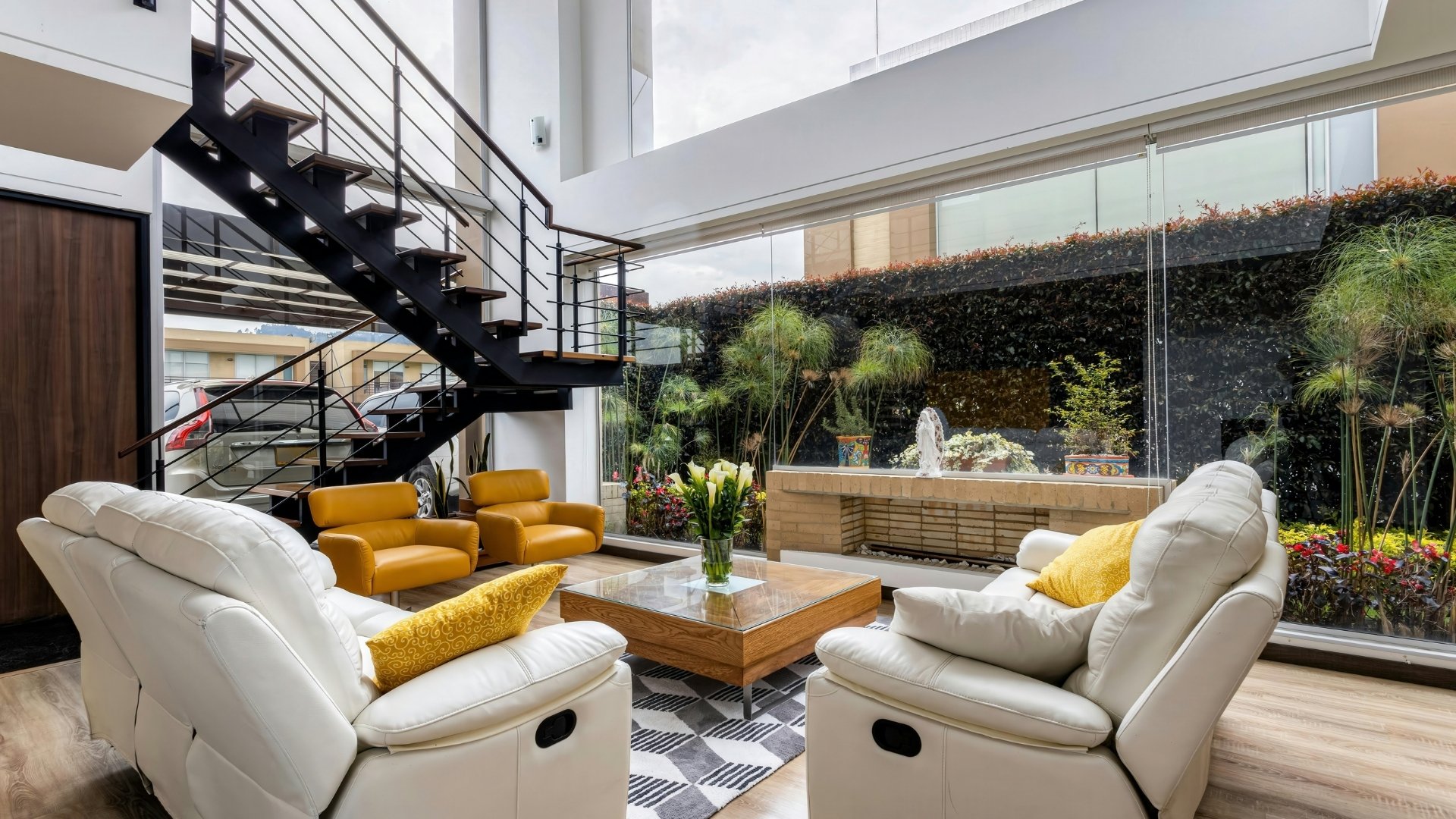
Designing a living room with stairs presents a unique challenge. The staircase is more than a functional element; it defines how space is used, how furniture is arranged, and even how light moves through the room. A poorly planned staircase can make a living room feel cramped, disrupt traffic flow, or clash with the décor.
When incorporated thoughtfully, stairs can improve the flow, create visual interest, and even provide additional usable space in areas like under-stair storage or seating. Notably, 37% of buyer’s agents say the living room is the single most important room to stage when selling a home, making layout and staircase placement crucial for comfort, usability, and long-term value.
In this blog, we will explore practical design strategies, layout ideas, and décor approaches to help you make the most of a living room with stairs.
In a nutshell:
Stairs influence movement, usable space, light, and visual balance, so careful planning is key for a living room that works well.
Choosing the right staircase style, spiral, straight, curved, floating, or ship ladder, changes the room’s look, traffic flow, and how space feels.
Layout strategies, including peripheral placement, central features, or using under-stair areas, help you get the most space while keeping movement easy.
Design elements like open risers, glass balustrades, light-colored materials, and integrated lighting make the space feel airy, safe, and visually appealing.
Safety considerations, practical materials, and thoughtful detailing make sure your staircase looks great and works for daily living.
Why Stairs Matter in Living Room Design?
Stairs are not just a structural requirement. In a living room, they affect how you use the space, how people move, and the overall feel of the room.
Control movement patterns: Stair placement decides how everyone moves through the living room. This prevents foot traffic from cutting through seating or activity areas.
Influence usable floor space.: Bulky or poorly positioned staircases take up space you could use for seating, storage, or walking around. Compact or open designs let you keep more of the room usable.
Shape visual balance: Stair design, materials, and structure often catch the eye. A refined profile helps the room feel cleaner and more balanced.
Affect light distribution: Solid stair structures can block natural light. Open risers, slim stringers, or glass railings let sunlight travel more freely through the room.
Create opportunities for added function: You can use areas around and beneath stairs for storage, shelving, or seating. Planning early helps you cut down on clutter in the main living area.
Impact long-term practicality: The width of your stairs, the materials you pick, and your railing design all help make daily use safer and simpler, especially in high-traffic living rooms.
In a living room with stairs, thoughtful design gives you better control of layouts, keeps the space visually clear, and makes daily living easier.
Choosing the Right Staircase Style for Your Living Room
Selecting the right staircase is key to keeping your living room both stylish and functional. The design should complement your living room’s architecture, match your interior style, and fit within the available footprint.
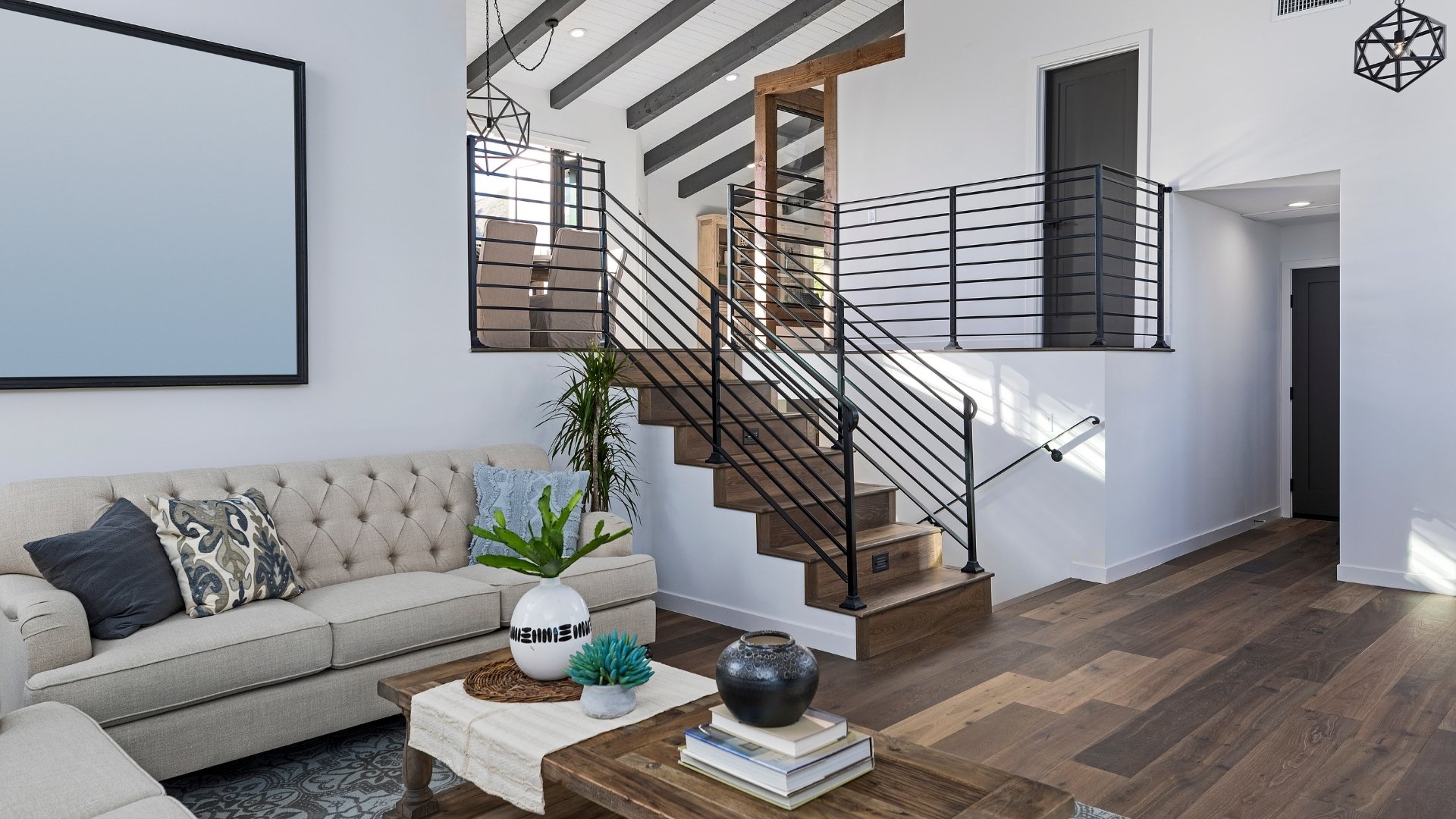
Spiral staircases are perfect for smaller living rooms where space is tight. They take up little room while adding a sculptural touch. They work particularly well in contemporary homes and can also become a statement piece.
Pros: Space-saving, visually striking, adaptable to different materials.
Considerations: Best for light foot traffic; may require safety railings for children or elderly residents.
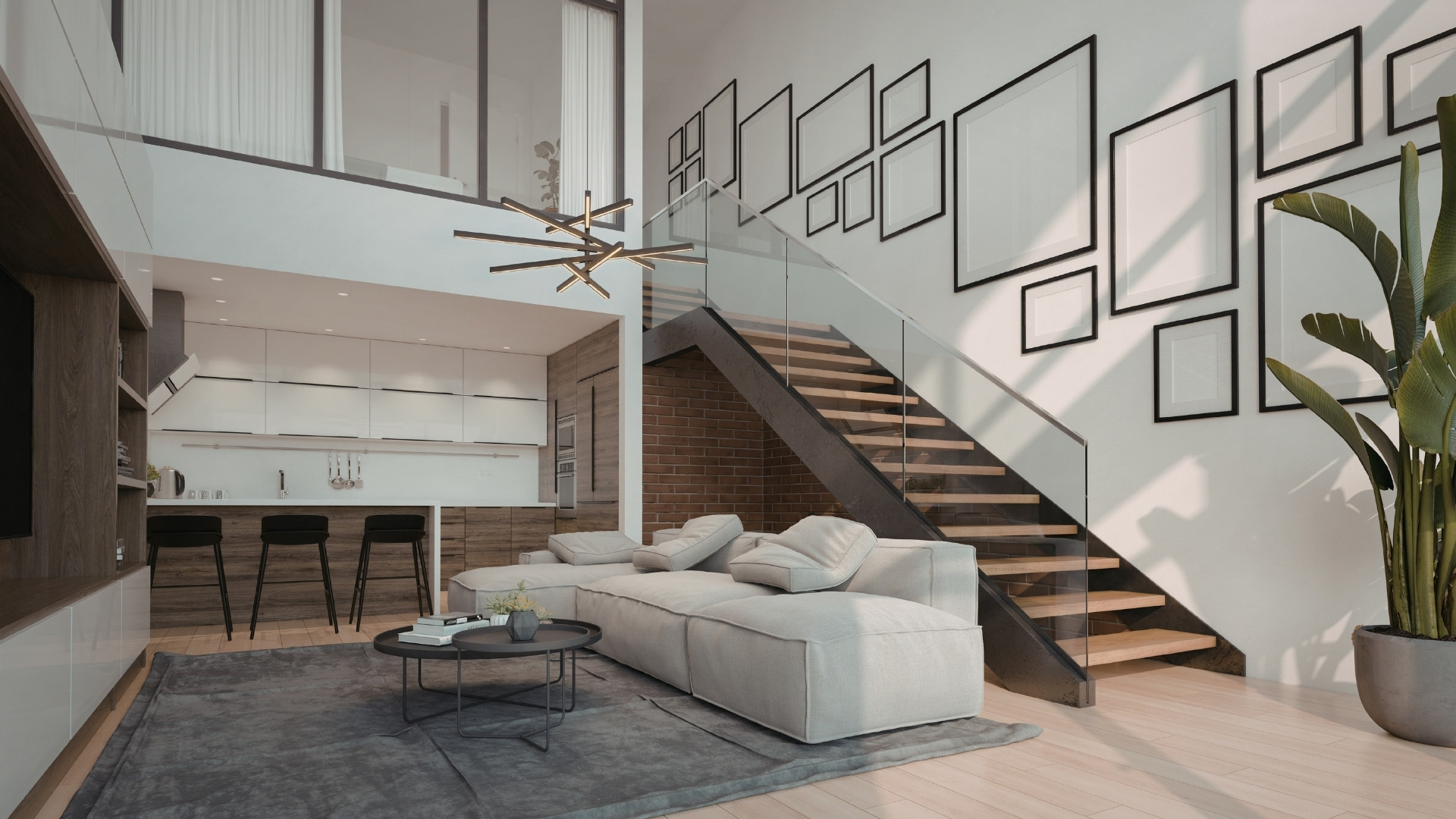
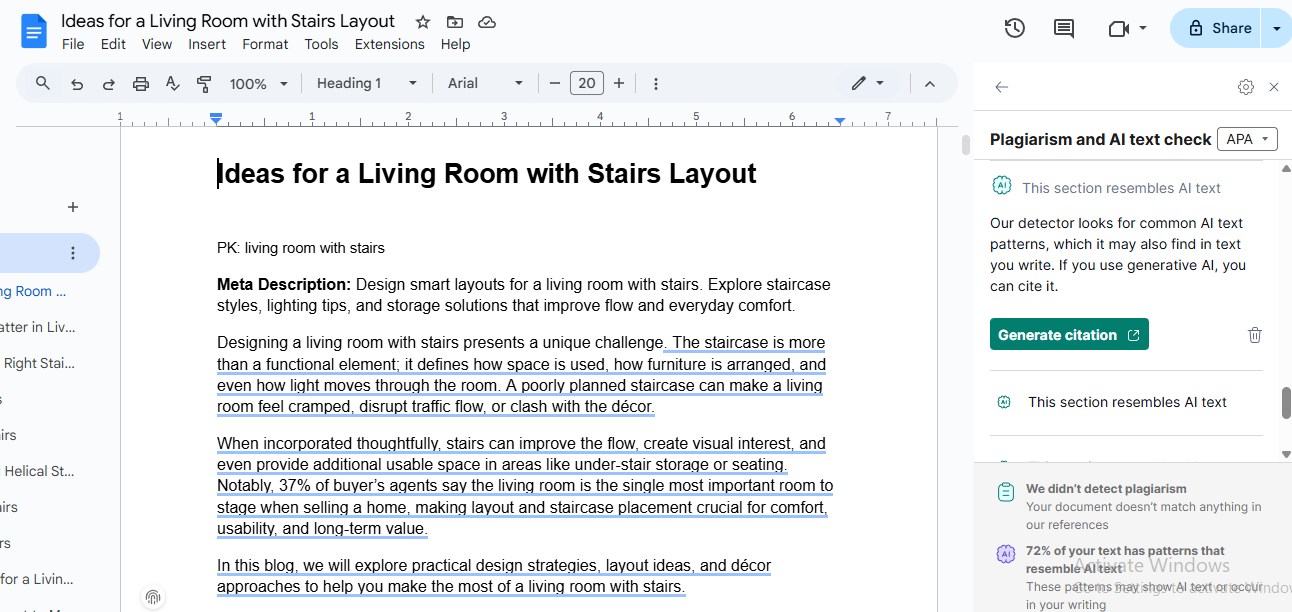
Straight staircases provide a clean, minimalist look that suits modern and traditional interiors alike. Single-stringer or double-stringer designs look neat and fit nicely with your furniture.
Pros: Simple to install, allows under-stair storage, and is easy to navigate.
Considerations: Requires sufficient length along a wall or open space; can be bulky in small rooms.
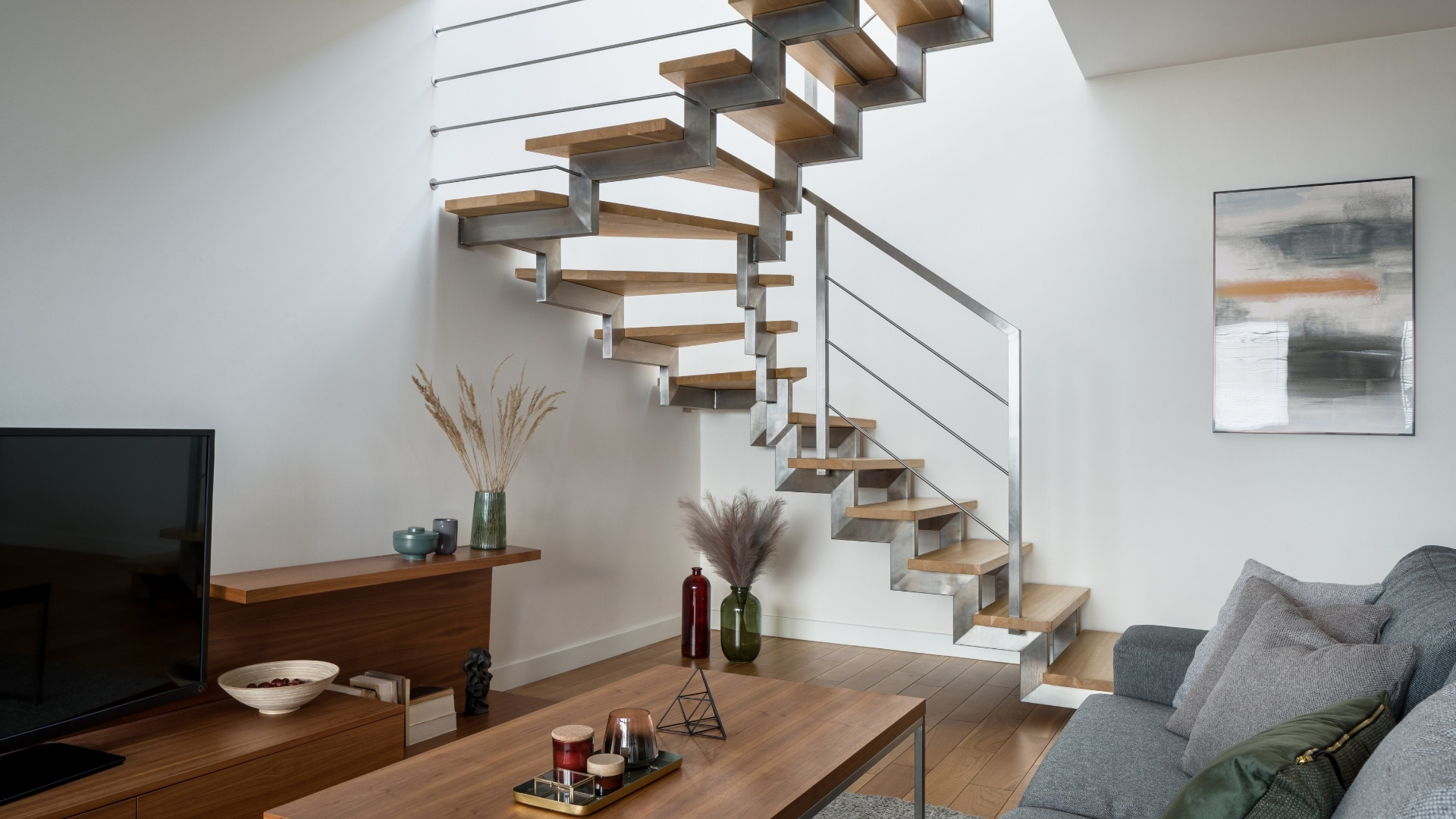
Curved or helical staircases add elegance and flow to a living room, creating a striking visual focal point. They work especially well in open-plan spaces, helping people move smoothly between areas.
Pros: Elegant, creates a sense of luxury, can be customized with lighting or railing designs.
Considerations: Requires professional planning and may have a larger footprint than other designs.
Floating Stairs
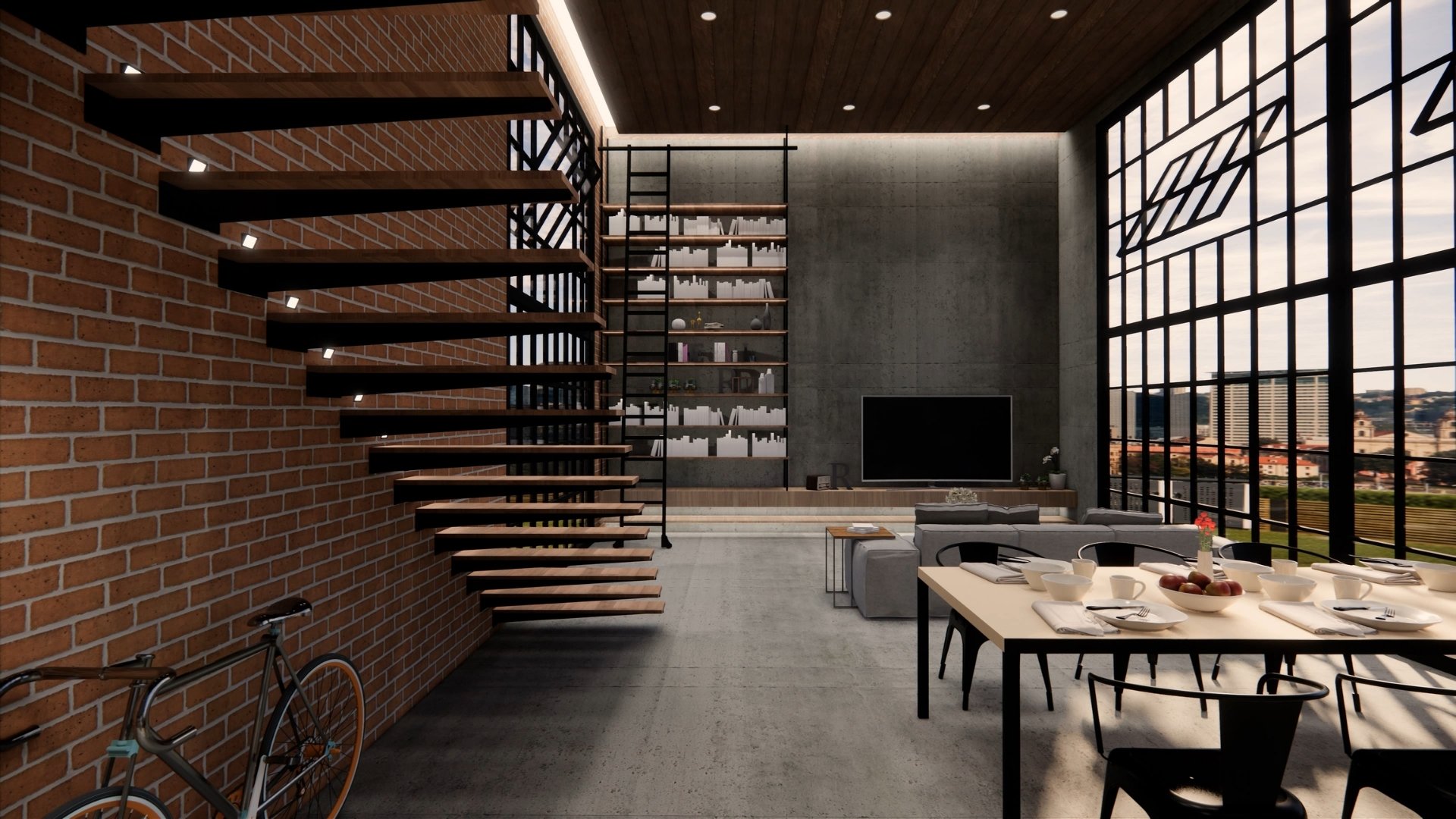
Floating or open-riser stairs provide a sense of airiness and modern style. They let light through, which can make small living rooms feel more spacious.
Pros: Visually light, modern aesthetic, can integrate LED lighting.
Considerations: Requires sturdy materials and precise installation; may need additional safety features.
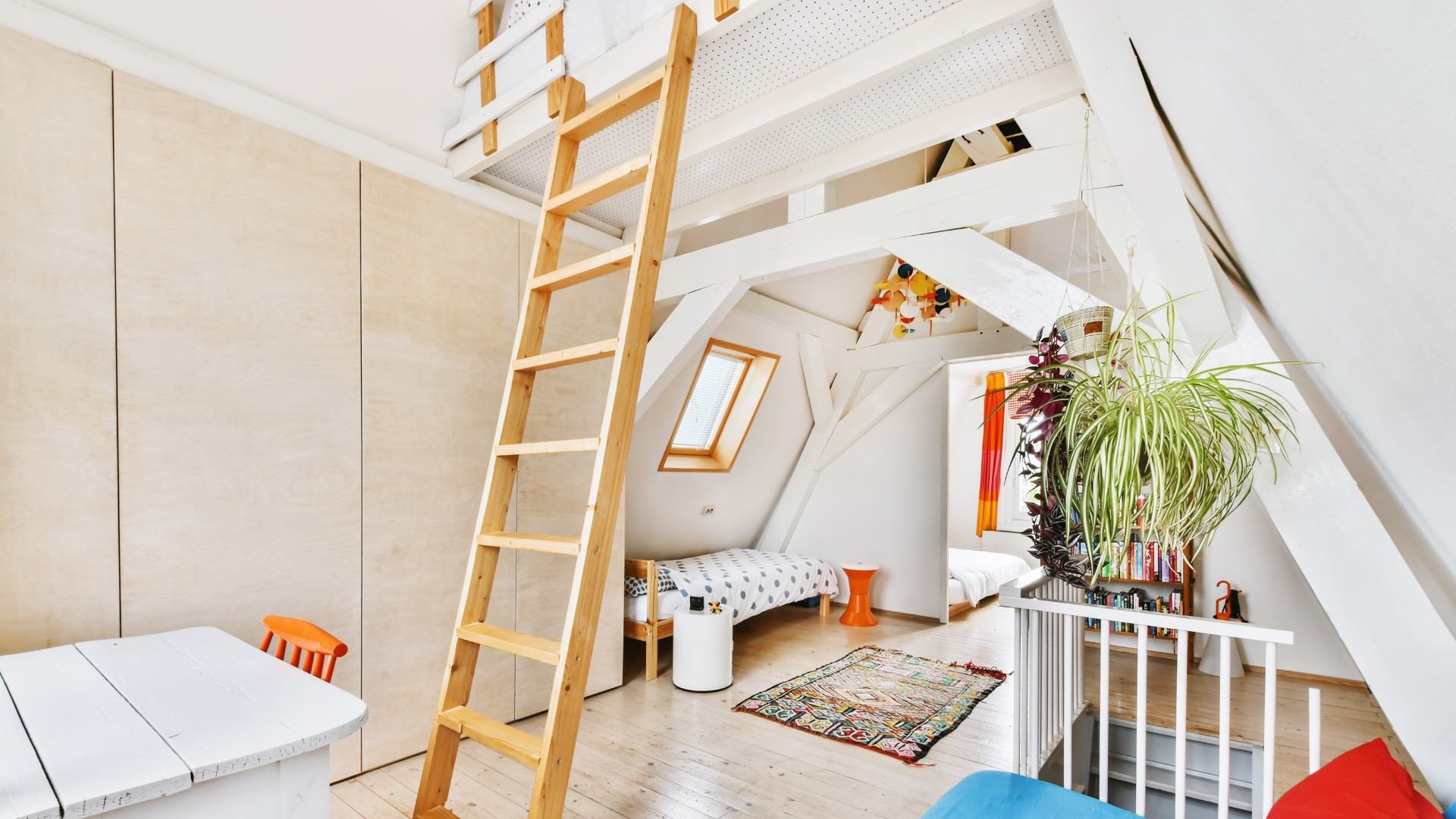
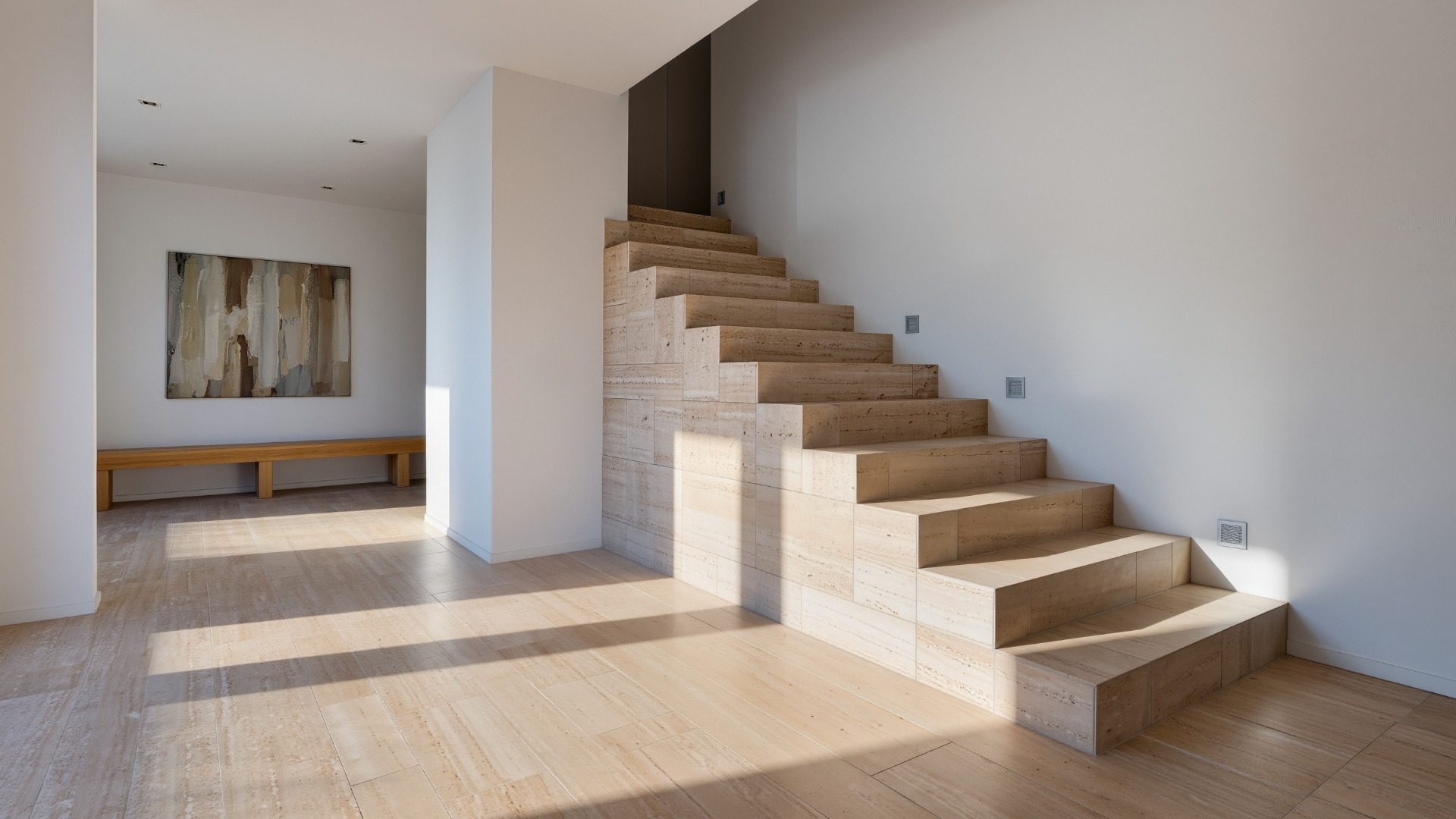
Ship ladders are steep, compact staircases that save space while providing access to lofts or mezzanines. They are great when a full staircase won’t fit.
Pros: Maximizes vertical space, compact footprint.
Considerations: Steeper incline requires careful planning for safety and usability.
Choosing a staircase style should also consider traffic flow, ceiling height, and integration with furniture and décor. A well-chosen staircase helps align design decisions with broader operational and lifestyle goals.
Layout Ideas for a Living Room with Stairs
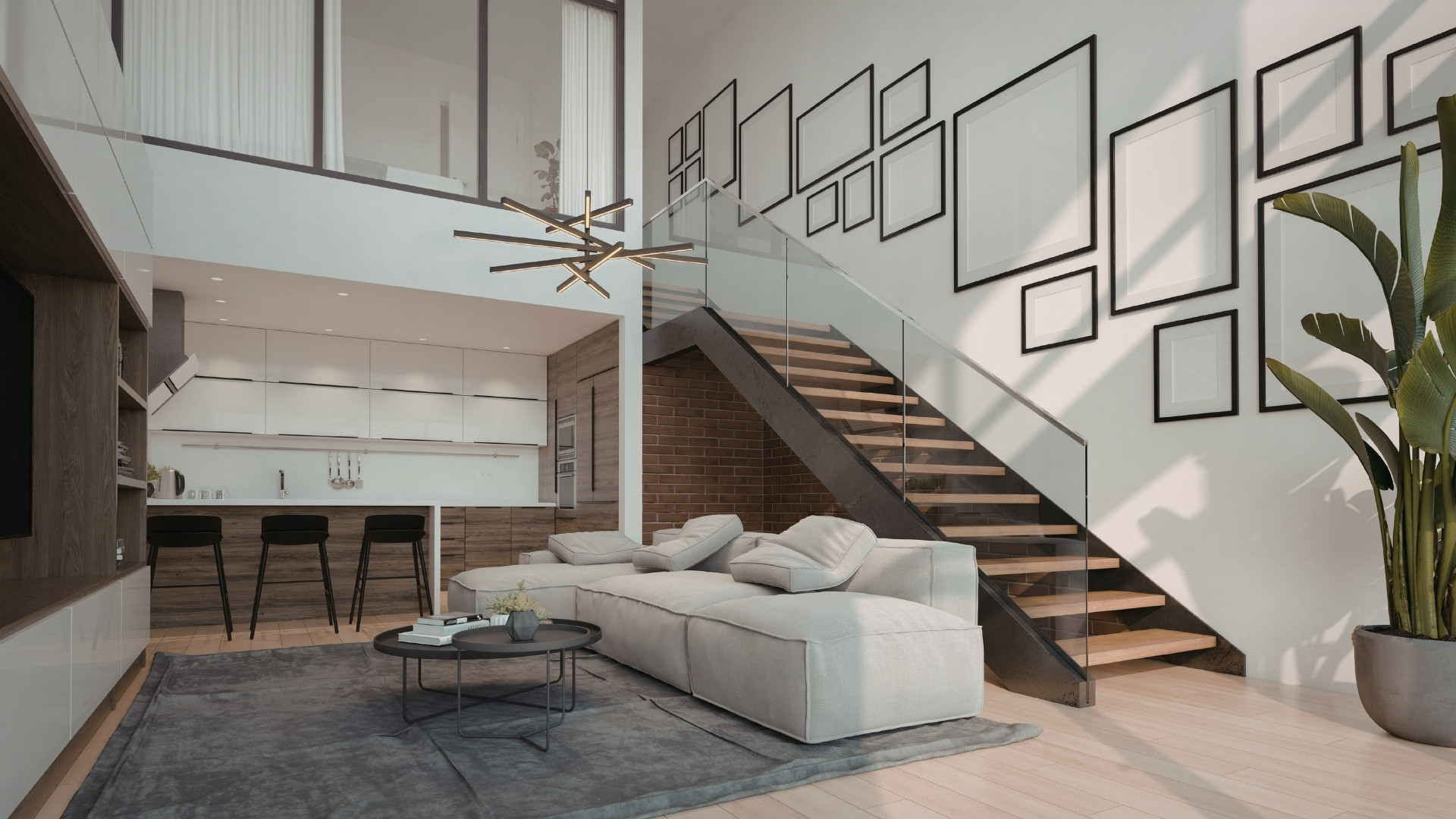
Adding a staircase to your living room doesn’t have to make things tricky. Here are some layout ideas to keep traffic flowing, make the space usable, and get the most out of your room.
1. Stair Adjacent to Main Seating Zone
If you place the staircase along one edge, it stays out of the way of your main seating. This setup helps you:
Clarifies the main circulation route.
Preserves uninterrupted seating and conversational zones.
Creates a backbone along which furniture, rugs, and activity zones can align.
Key considerations when implementing this layout:
Leave at least 36 inches of clear circulation space in front of the staircase to avoid pinch points near seating.
Position sofas and chairs so you can see across the room and focus on key elements like a fireplace or media wall.
This layout keeps movement predictable and makes arranging furniture easier.
2. Staircase as a Divider Between Zones
When space planning for multi‑use living rooms (e.g., seating + workspace), a staircase can serve as a natural partition without erecting walls. This works for:
Open plan living + dining combinations.
Creating visual differentiation between casual and formal areas.
Accommodating children’s play zones or reading nooks adjacent but distinct from lounging areas.
One great trick is to anchor one side with low seating or storage, letting the stairs naturally separate the space.
3. Central Feature Staircase with Floating Seating Areas
In larger living rooms, a centrally placed staircase can anchor the space and support symmetry in layout. Floating seating areas around the staircase help:
Maintain flexible pathways.
Enable multiple conversational clusters.
Encourage natural flow between entry, lounging, and adjacent rooms.
You’ll need to plan carefully so seating doesn’t block secondary pathways, like routes to exterior doors or hallways.
4. U‑Shape or Switchback Staircase in Corner
For deeper rooms, a U‑shape or switchback staircase tucked into a corner can reduce the experiential footprint while preserving central open space. This arrangement:
Keeps the majority of the room open for flexible uses.
Reduces potential clash points near high‑traffic zones.
Strictly defines the routing between floors.
Check the headroom and make sure the landing doesn’t crowd your main furniture areas.
5. Under‑Stair Space as Functional Nook
Regardless of staircase placement, the space underneath can be transformed into functional areas. Some options include:
Storage units or cabinets for extra organization
Built-in seating or reading nooks
Shelving for décor or books
Mini-bar or entertainment console
This improves usable area per square foot, particularly valuable in layouts where every inch matters.
A customized staircase from Acadia Stairs can be designed to optimize both style and under-stair utility, creating a solution tailored to your living room layout.
Design Ideas for Stairs in Living Rooms
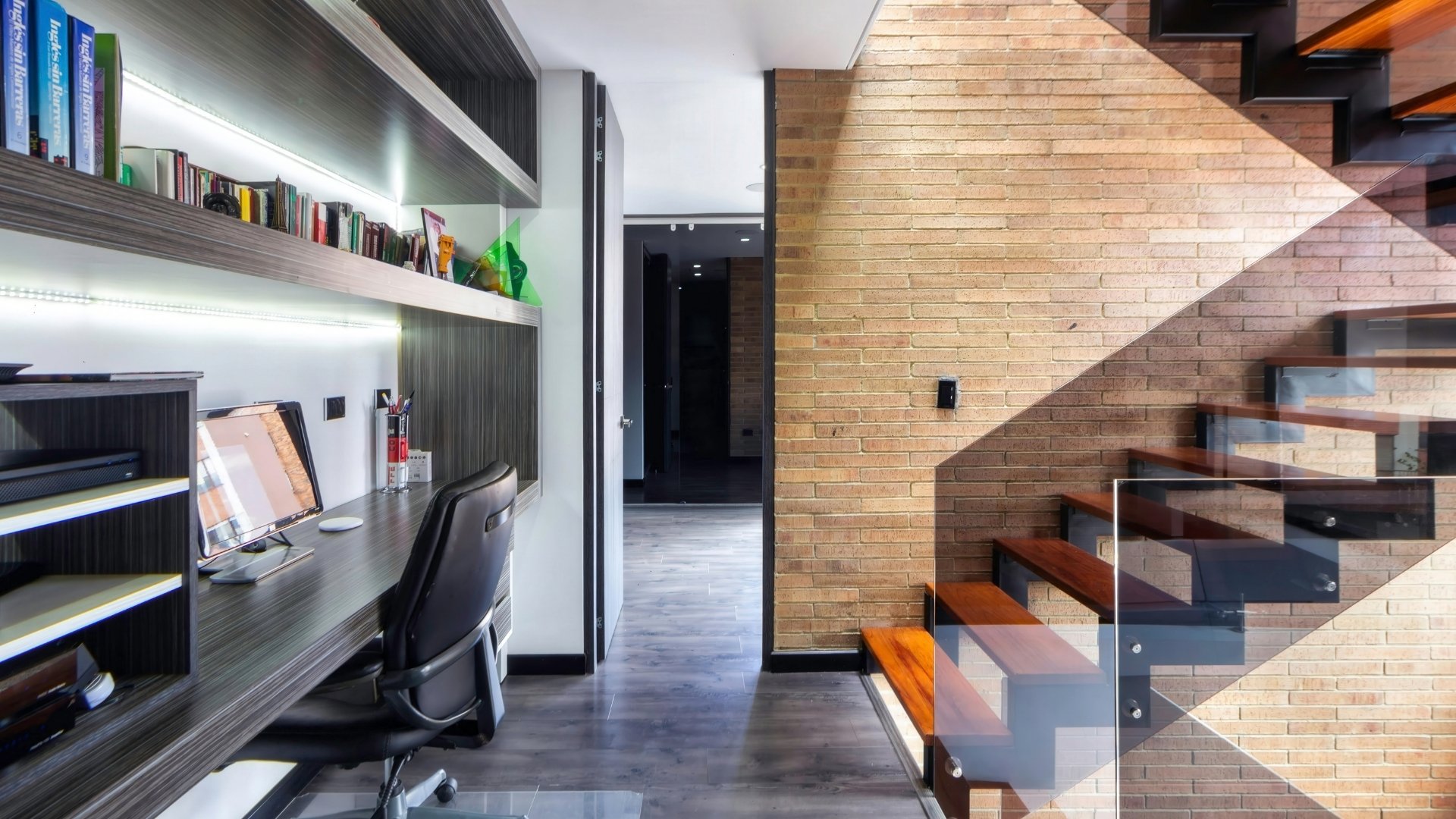
Designing stairs for a living room is not just about choosing a structure. It is about how the staircase interacts with light, furniture, movement, and daily use.
Here are practical ideas to help you get the most from your living room.
Opt for Open Riser Designs for Airiness
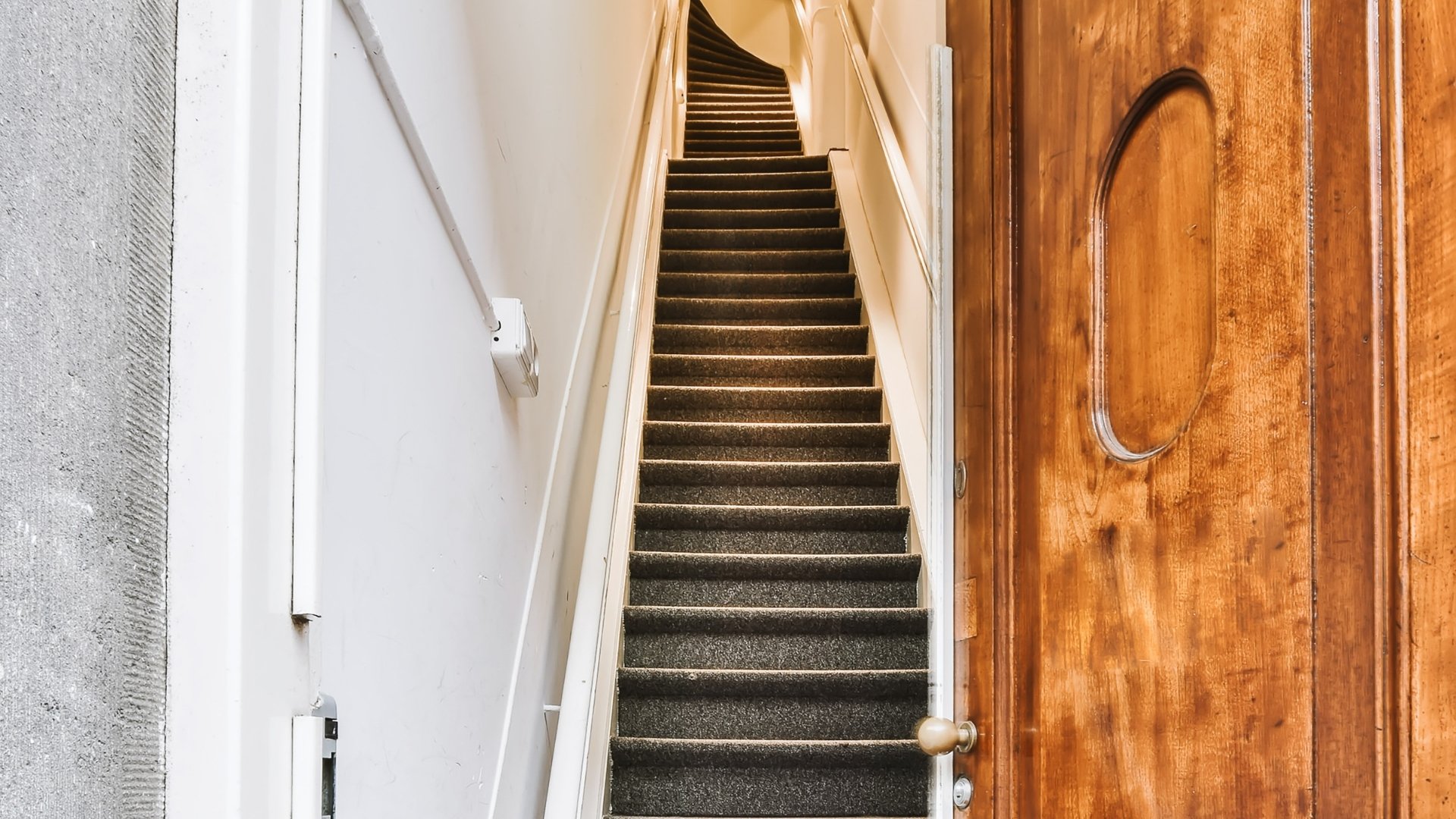
Open riser stairs reduce visual bulk and allow light to move freely through the living room. This makes them suitable for both compact and open layouts where maintaining sightlines matters.
Improves visual flow: Open gaps between treads prevent the staircase from blocking views across the room.
Supports natural lighting: Light passes through the structure instead of stopping at a solid wall of steps.
Works well with metal frames: Steel or metal stringers provide strength without adding heaviness.
Use Glass Balustrades for Transparency and Safety
Glass balustrades provide safety while keeping the staircase visually light. They work best in living rooms where openness and clean lines matter.
Maintains visibility: Clear panels avoid breaking up the living room visually.
Supports safety needs: Provides a secure barrier without bulky rail systems.
Fits modern interiors: Pairs well with metal, wood, and floating stair designs.
Integrate L-Shaped Stairs with Built-In Seating
L-shaped stairs can do more than change direction. When planned carefully, they can support seating or resting areas that add everyday value to the living room.
Adds usable seating: Built-in benches or low seating near the landing serve guests and daily use.
Improves traffic flow: Directional change reduces straight-line congestion near entry zones.
Makes stairs multifunctional: Combines circulation with seating without adding furniture clutter.
Use Light-Colored Materials and Reflective Surfaces
Material choice plays a big role in how open or cozy a living room feels. Lighter finishes help stairs blend in rather than dominate.
Reduces visual weight: Light finishes prevent stairs from feeling heavy or boxed in.
Improves brightness: Reflective surfaces bounce light across the room.
Supports modern layouts: Works well with open plans and minimal décor.
Warm It Up with Wood Accents and Matching Fixtures
Metal stairs can feel cold if not balanced. Wood accents add warmth and connect the staircase to the living room.
Balances metal structures: Wood treads or handrails soften industrial elements.
Creates visual continuity: Matching wood tones with furniture improves cohesion.
Supports long-term durability: Hardwood treads handle daily foot traffic well.
Multi-Functional Under-Stair Space
Under-stair areas often go unused. Thoughtful design can turn this into storage, seating, or display areas.
Improves storage access: Cabinets or drawers keep essentials close but out of sight.
Reduces room clutter: Uses vertical space instead of adding standalone units.
Supports daily routines: Storage near stairs helps manage high-traffic living areas.
Integrate Lighting Thoughtfully
Lighting improves safety and highlights your design. When placed thoughtfully, it makes the staircase feel like part of the living room.
Improves step visibility: Reduces risk during low-light conditions.
Defines circulation paths: Helps users navigate the space naturally.
Supports design intent: Subtle lighting highlights structure without overpowering décor.
Make It a Statement with Runners, Curves, or Plants
Stairs don’t always need to fade into the background. Some layouts benefit from making them a controlled focal point.
Adds visual interest: Runners or curved designs draw attention without clutter.
Softens hard materials: Plants or textiles reduce the starkness of metal or stone.
Allows seasonal flexibility: Décor elements can change without structural updates.
Safety and Practical Tips for Living Rooms With Stairs
Safety should be a top consideration when incorporating stairs into a living room, particularly in households with children, pets, or elderly members.
Here are key considerations:
Proper Railing and Handrails: Install sturdy handrails at appropriate heights. Consider materials that are durable and comfortable to grip. Wrought iron or stainless steel options provide strength without compromising aesthetics.
Non-Slip Treads and Materials: Pick tread materials that reduce slip risks, like textured metal, treated wood, or carpet runners. Proper tread depth and riser height make stairs safe and comfortable.
Adequate Lighting: Adding LED lights along stairs or under treads makes stairs easier to see and adds a stylish touch.
Regular Maintenance: Metal staircases should be checked regularly for rust and stability. Routine inspections keep your stairs safe and looking good.
Open Floor Planning: Make sure stairs don’t block pathways or furniture. Enough clearance helps everyone move freely in the room.
By following these tips, your living room stairs can be both safe and stylish for everyday use.
How Acadia Stairs Can Elevate Your Living Room Design?
Acadia Stairs specializes in tailor‑made staircases suited for modern living areas. Their design process begins with precise planning and shop drawings that factor in headroom, traffic flow, sightlines, and material performance.
Here’s how we can help you:
Custom Designs: Acadia Stairs provides a 3D rendering before entering the shop drawing phase, allowing you to see how the staircase fits in its environment. Our team can also produce sketches of railings, treads, intermediate landings, and other structural details.
Material Variety: From steel and stainless steel to wrought iron, Acadia Stairs provides durable, aesthetically pleasing materials. Handrails, treads, and balusters can be customized to match your décor, supporting both style and safety.
Innovative Features: LED-integrated stairs, floating designs, and under-stair storage solutions enhance functionality and space utilization. These features support better use of your living room footprint while maintaining a modern, clean look.
Nationwide Expertise: With installations across nearly every U.S. state, Acadia Stairs brings experience in diverse layouts and home styles. They work with both B2B partners, like metalworkers and stair builders, and homeowners seeking tailored solutions.
Utilizing Acadia Stairs’ expertise can help you design a living room staircase that not only fits your space but also improves your overall home experience.
Conclusion
Designing a living room with stairs requires careful attention to style, layout, and functionality. Selecting the right staircase type, whether spiral, straight, floating, or curved, can optimize circulation, enhance visual appeal, and even provide valuable storage space.
Thoughtful placement, multi-functional under-stair areas, and safety-conscious materials and lighting further improve usability without compromising style. Professional solutions, such as those offered by Acadia Stairs, provide custom designs tailored to your living room’s dimensions, style, and functionality.
If you’re planning a remodel or new build with a living room that includes stairs, discuss your project with Acadia Stairs to explore solutions aligned with your space and functional requirements.
FAQs
What furniture arrangements work well around a staircase in the living room?
Place larger furniture like sofas or cabinets away from the staircase to keep the flow open. Use compact seating, side tables, or benches near the stairs. Leave clear pathways to avoid congestion while maintaining a balanced, visually appealing layout.
Should I use an L-shaped or a U-shaped sofa in a living room with stairs?
An L-shaped sofa works best as it defines seating areas without overwhelming space near stairs. U-shaped sofas can feel cramped unless the room is very large. Prioritize open pathways and ensure the sofa placement doesn’t block stair access or sightlines.
How to decorate the wall behind the stairs in a living room?
Use gallery walls, floating shelves, or vertical artwork to add personality without cluttering. Mirrors or accent paint can make the space feel larger. Keep décor proportional to the wall’s size and maintain clear sightlines for a stylish, functional look.
How do I ensure safety in a living room layout with open stairs?
Maintain clear walkways, avoid placing furniture too close to stair edges, and use handrails or balustrades. Add non-slip stair treads or rugs and adequate lighting. Ensure children and pets have safe access by minimizing obstacles near the stairs.
What rug placements work in a living room featuring stairs?
Place rugs under the main seating area, leaving space between the rug and the staircase to prevent tripping. Use runners on stairs if desired, but ensure they are secured. Keep patterns and textures complementary but unobtrusive to maintain safety and flow.