
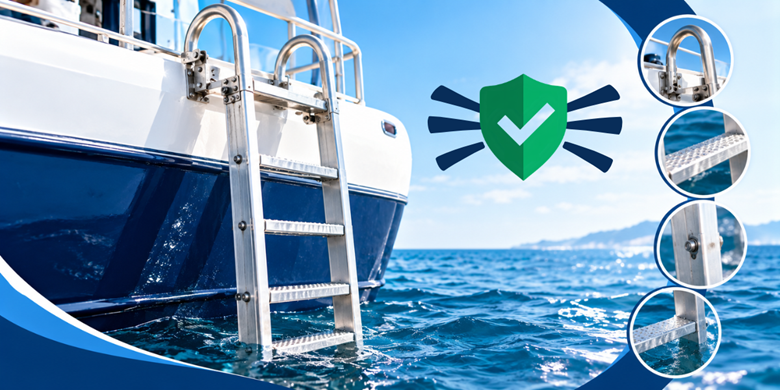
Salt spray eats cheap deck hardware alive. You already know this if you run a working boat on the coast. Upgrading vessel access points means making hard choices about daily crew safety and operational uptime.
Deckhands need footing that holds up to heavy boots, driving rain, and constant salt exposure. Replacing cheap gear every two years simply drains your maintenance budget. A well-built aluminum ships ladder fixes the exact structural failures that plague commercial boats right now.
Is an Aluminum Ships Ladder Safe for Marine Use?
Yes, a custom aluminum ships ladder is exceptionally safe and naturally fights off saltwater corrosion. These lightweight units feature high-traction treads and welded, heavy-duty handrails, providing your crew with complete physical stability even when the deck pitches in rough offshore weather.
What Makes an Aluminum Ships Ladder Better Than Steel?
Captains fight over deck materials all the time. Plenty of old-timers still demand heavy carbon steel.
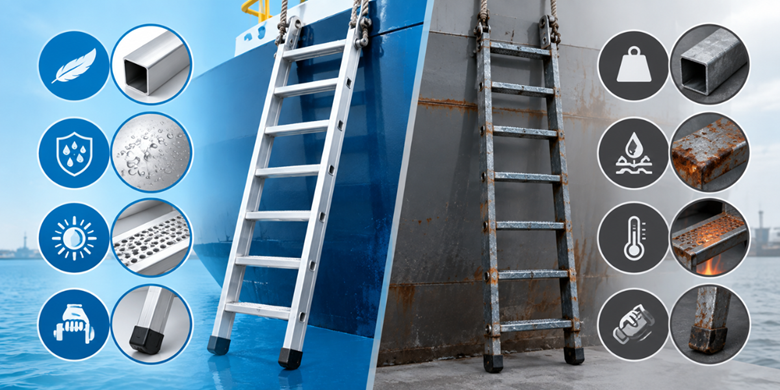
But steel starts rotting the second a dropped wrench chips the paint. You burn serious cash paying deckhands to grind, prime, and repaint those rails every single season. An aluminum ships ladder skips that whole expensive cycle.
Marine-grade alloys form a natural oxide skin that resists salt damage and corrosion. You get massive structural strength without dragging around a thousand pounds of dead weight. Shedding deck weight improves your fuel burn and keeps the boat from feeling top-heavy in tight turns.
Think about carrying a cast-iron skillet versus a titanium pan. Both cook food fine. But nobody wants to haul the iron one on a ten-mile hike. Heavy gear just slows the operation down. A lighter boat handles better in rough chop and burns less fuel pushing through heavy swells.
Here is exactly how the two metals stack up on the water:
| Feature | Marine Aluminum | Carbon Steel |
| Corrosion Defense | Very high natural resistance | Low (rots rapidly) |
| Deck Load Weight | Extremely light | Needlessly heavy |
| Upkeep Costs | Basic freshwater rinse | Endless grinding and paint |
| Service Life | Decades of active use | Short without intense labor |
How Much Weight Can an Aluminum Ships Ladder Hold?
Workboats hand out brutal physical punishment. A crew member carrying fifty pounds of engine parts puts intense stress on every step. Add a pitching deck into the mix, and the dynamic load doubles instantly.
Standard builds handle pounds per tread. But custom access points easily blow past those baseline numbers. Smart engineering stops metal fatigue before a heavy load causes a dangerous structural collapse.
Real holding power comes from the alloy grade and the welding shop’s skill. Thick metal extrusions keep the treads from flexing under a heavy deckhand.
Look for solid TIG welds running down the side stringers. Cheap spot welds snap under pressure. When a spot weld pops offshore, somebody usually gets hurt.
Core Safety Features You Cannot Ignore
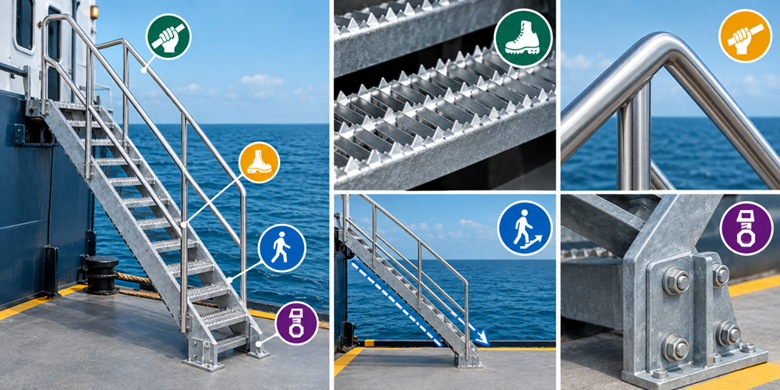
A safe marine step setup relies on specific design choices to stop accidents. Demand these features before bolting anything to your deck.
- Deep-cut serrated treads for aggressive boot grip.
- Thick handrails angled for a tight, continuous hold.
- A pitch angle set for walking down forward, not backward.
- Through-bolted brackets to stop lateral wobble.
Common Mistakes When Upgrading Marine Boarding Equipment
Buying factory-direct industrial steps causes massive headaches. Boat owners often buy land-based warehouse stairs hoping they survive the ocean.
Warehouse steps look sturdy on a showroom floor. But bolt them to a working trawler, and engine vibration tears them apart. The salt eats them fast. The joints get brittle, the rails loosen up, and the whole setup becomes a hazard before the year ends.
Another big mistake is ignoring deck architecture. Forcing a rigid, pre-built unit into a cramped space creates tight bottlenecks. You end up with crew members tripping over hatch covers just to get below deck.
Every inch of clearance matters on a working vessel. Custom dimensions ensure the steps match your exact bulkhead layout. You maintain clear walkways and eliminate manufactured trip hazards entirely.
Do These Ladders Meet Industry Safety Standards?
Regulators watch marine safety gear closely. You cannot bolt illegal hardware to a commercial deck and expect to pass a spot check. Marine surveyors do not accept excuses.
High-end marine steps pass strict OSHA and Coast Guard rules. Running compliant gear protects the crew from falls and shields your operation from crippling lawsuits.
Inspectors measure tread depth, rail gaps, and climb angles. A custom aluminum ships ladder nails every single requirement perfectly.
Purpose-built fabrication keeps you legal even in tight engine rooms or weird deck layouts. You never sacrifice safety just to fit a narrow footprint on an older hull.
Secure Your Vessel With Equipment Engineered to Outlast the Elements
Running with rusty deck gear is a bad bet. One slipped boot costs infinitely more than installing proper, weather-tough boarding steps. You need a permanent fix that cuts out daily maintenance and keeps the crew moving fast.
Protecting your crew requires action, not just temporary patches. Stop painting rotting metal every spring. Acadia Stairs designs and builds the exact custom aluminum ships ladder your boat needs to stay safe. Contact the team today to specify a high-traction access system tailored to your deck layout.
Frequently Asked Questions
How do you prevent marine corrosion on aluminum steps?
You only need to rinse them with fresh water after heavy salt spray. The metal forms a natural oxide skin that actively resists harsh offshore conditions.
What is the ideal pitch angle for a ship ladder?
The safest incline runs directly between fifty and seventy degrees. This specific angle lets the crew walk down comfortably facing forward, reducing the chance of dangerous slips.
Can you powder coat an aluminum ships ladder?
Yes, adding a powder-coat finish provides an additional layer of hard protection. It also lets you match the specific paint scheme of your commercial vessel perfectly.
How often should you inspect marine boarding equipment?
You need to run a visual check before every trip. Look aggressively for loose mounting bolts, cracked welds, or flattened treads that might cause a fall.
Are aluminum ladders safe around vessel electrical systems?
Aluminum conducts electricity very fast. You must use proper marine grounding straps and non-conductive mounting pads to isolate the metal frame from the boat’s active power grid.