Architectural Digest's 2025 roundup of standout staircases points to both hand-forged ironwork and minimalist glass as current favorites, proof that luxury doesn't mean one look.
This article covers what actually separates a luxurious railing from a generic one, design directions worth considering for different interior styles, material and finish tradeoffs, and how to plan a custom project, including the code requirements and cost factors behind every quote.
Key Takeaways
- Luxury comes from proportion, craftsmanship, and architectural fit—not price alone
- Leading looks right now: sculptural curves, minimalist metal, glass, warm wood, and integrated LED lighting
- Review stair geometry, codes, finishes, and install logistics before you order
What Makes a Stair Railing Look Luxurious?
A railing earns "luxury" status through fit and execution, not just expensive materials. The details that separate a bespoke railing from an off-the-shelf replacement:
- Built to your exact stair angle, rise, and run—not trimmed to approximate
- Solid steel, stainless, or hardwood instead of thin, generic stock
- Clean welds, tight tolerances, and hardware that disappears into the design
- Baluster spacing and rail thickness scaled to the space
- A handrail that feels intentional under your palm, whether brushed steel or oiled walnut
- Reads as part of the stair, not something bolted on afterward
Bespoke touches push a railing further: a curved handrail following a sweeping stair, an unusual baluster profile, concealed post connections, or a powder-coat color mixed to match existing hardware. These are the kinds of details Architectural Digest highlights when describing a hand-hammered iron railing by designer Blair Moore as a "sculptural centerpiece" with an "artisanal quality."
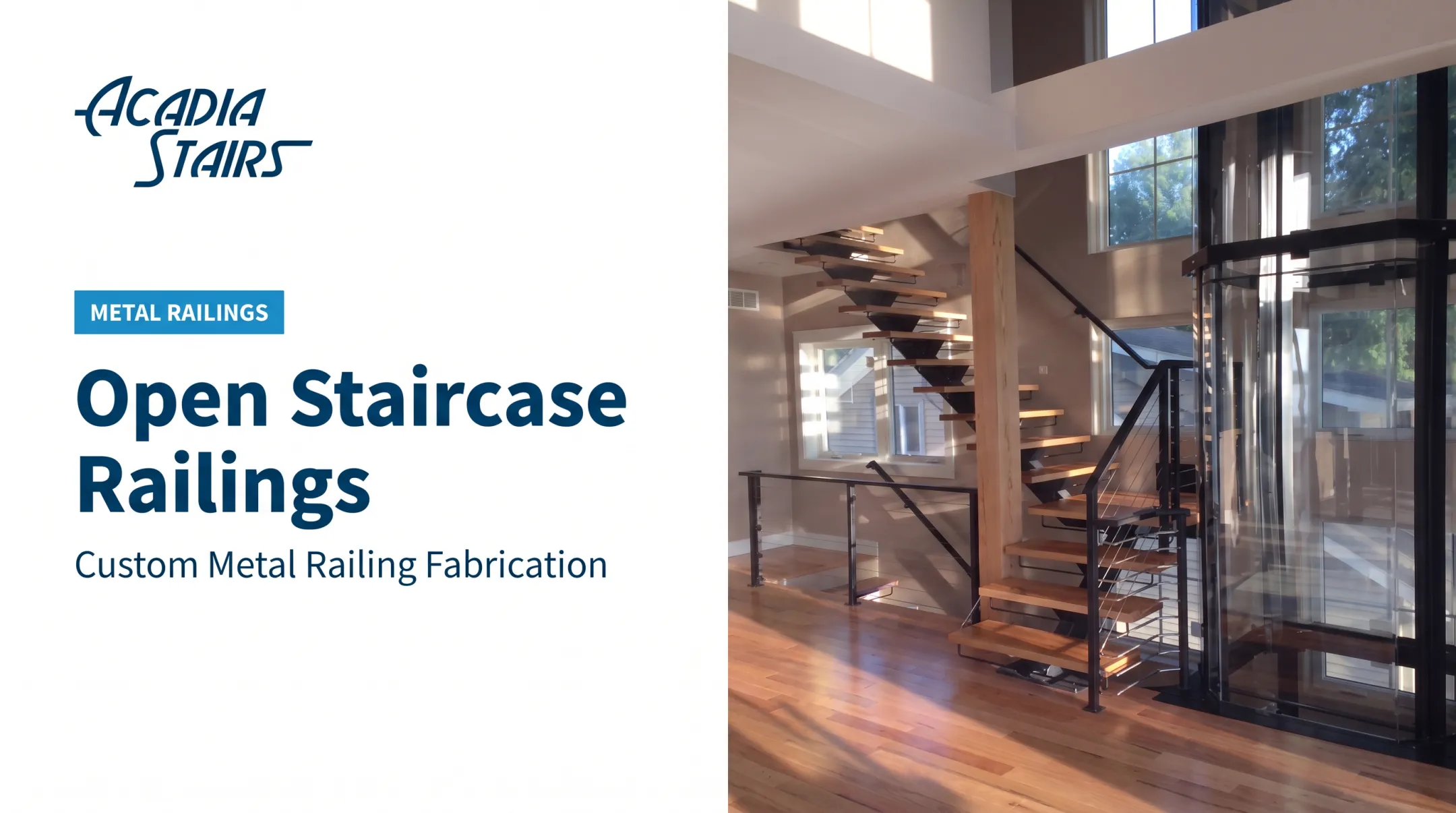
Acadia Stairs builds this level of specificity into its own projects. One recent stairwell install paired steel posts powder-coated in Porsche Silver with #316 stainless cables, custom-cut and swaged to length. A level rail was tailor-made with a return elbow matched exactly to the stair rail. Nothing about it came off a shelf.

Ornate Isn't the Same as Luxurious
Ornate and luxurious aren't synonyms. A railing loaded with scrollwork, multiple finishes, and competing textures can look busy rather than premium, especially next to a quiet interior.
Architectural Digest's same feature that praises hand-forged ironwork also calls out "clean, minimalist designs," describing slim-framed glass railings as an "understated and elegant statement." A restrained railing—built with care and sized correctly—often reads as more expensive than one trying to do too much.
Luxury Stair Railing Ideas for Different Interior Styles
Interior style and stair geometry both shape the right railing choice. Eight directions worth considering:
- Sculptural curved railings - a hand-formed or continuously curved rail softens a foyer and becomes a centerpiece around a sweeping staircase; best suited to open, two-story entries.
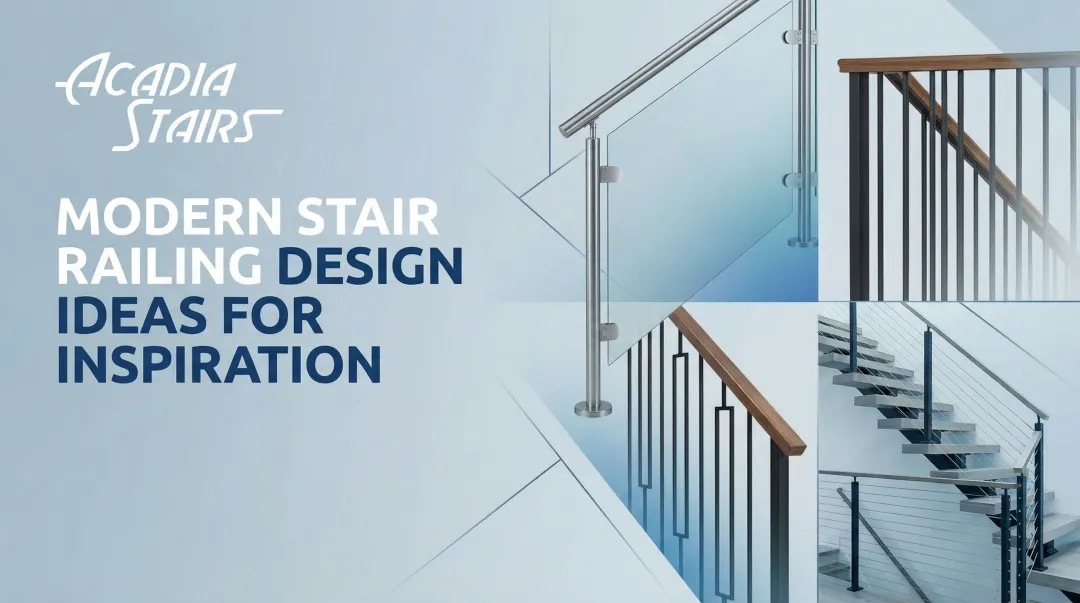
- Minimalist metal railings - slim posts and clean top rails with concealed brackets, ideal where the stair itself should draw the eye, not the guard.
- Glass railings - frameless or metal-framed glass preserves sightlines to statement treads, open risers, or artwork below.
- Black metal railings - powder-coated black against light walls, natural wood, or stone creates crisp, sharp contrast.
- Warm wood handrails or balusters - wood coordinated with existing flooring softens a metal or glass structure.
- Mixed-material railings - metal posts, a wood cap rail, and glass or cable infill combine durability, warmth, and openness.
- Vertical slats or closely spaced balusters - tight spacing adds rhythm and a tailored, architectural look while meeting code spacing rules.
- Integrated LED lighting - low-profile LEDs beneath the handrail or along balusters add drama and nighttime visibility; plan routing and glare control with a qualified installer.
Matching the Idea to Your Stair Type
None of these directions fit every stair. Match the railing to the geometry:
- Curved or sweeping stairs - Sculptural curved rails suit these best. Acadia Stairs builds curved stairs with inner radii as tight as a few inches, so the railing must follow actual geometry rather than an approximation.
- Floating or open-riser stairs - Slim metal or cable rails preserve the openness the design depends on.
- Spiral stairs - Continuous, closely radiused handrails work better than modular straight sections.
- Narrow stairwells - Visually light infill keeps the run from feeling closed in.
- Wide switchbacks or landings - Bolder mixed-material treatments have the room to land.
Materials, Finishes, and Custom Details That Elevate a Railing
Comparing the Core Materials
| Material | Strengths | Tradeoffs |
|---|---|---|
| Metal (steel, stainless, aluminum) | Slim profiles, structural versatility, wide finish range | Needs proper priming/coating outdoors |
| Wood | Warmth, grain, can be carved or shaped, matches flooring | Needs stain matching and upkeep in high-contact areas |
| Glass | Transparency, preserves sightlines, low visual weight | Ammonia-free cleaning, careful edge and hardware detailing |
| Cable | Open sightlines, contemporary look, slim posts | Requires correct tensioning and code-compliant spacing |
| Mixed materials | Balances durability, warmth, and openness | More coordination between fabricator and finish trades |
Acadia Stairs fabricates most railings in steel, with aluminum and stainless steel available for coastal or high-moisture settings. Custom panels run up to 20 feet per section.
Elbows, turn-outs, goosenecks, and splices are planned into fabrication rather than improvised on-site. Cable infill typically uses #316 marine-grade stainless steel, swaged and cut to length per panel.
Once the structure and infill are set, finish choice determines how the railing reads in the room.
Finish Selection
- Sheen: Matte reads quieter and hides fingerprints; gloss reflects more light
- Tone: Bronze or brass pairs with wood and stone; black or silver suits glass and concrete
- Contrast: A black rail against white walls defines the line; a matched rail recedes
- Lighting: View finish samples under the project's actual lighting—color shifts between incandescent and daylight LED
Acadia Stairs offers powder coating in flat black, white, and silver as stock options, plus nearly any single-process color through Prismatic Powders for matching existing hardware or a commercial brand palette. Pull samples early and confirm them on-site before locking the spec.
Finish and form still have to clear local code before fabrication starts.
Code Considerations to Verify
Verify handrail height, graspability, guard height, and baluster spacing against the code your city or state has adopted, plus ADA rules on accessible routes. The 2021 International Residential Code sets handrail height at 34 to 38 inches above the nosing line and generally limits guard openings to a 4-inch sphere. Confirm current requirements with your local building department—amendments vary by jurisdiction.

How to Choose the Right Luxury Railing for Your Space
Five factors shape the right decision:
- Stair geometry - straight, curved, spiral, switchback, and floating stairs each favor different profiles and infill.
- Architectural style - a farmhouse stair calls for different materials than a glass-and-concrete loft.
- Desired visibility - should the railing disappear (glass, cable) or make a statement (sculptural metal, bold color)?
- Maintenance tolerance - wood needs more upkeep in high-traffic spots than powder-coated steel.
- Budget - material, finish, and fabrication complexity all drive the total cost.
Narrow stairwells generally benefit from slim metal or cable infill that keeps the space feeling open. A large foyer can support heavier materials or bolder contrast without feeling cramped.
Before approving fabrication, ask to see:
- Full-size samples of the baluster or infill profile
- Finish boards under your project's actual lighting
- Connection and bracket details, not just a rendering
For structural alterations, floating stairs, curved components, commercial work, or unusual site conditions, bring in an architect, structural engineer, contractor, or interior designer early.
Acadia Stairs' design consultants regularly work alongside your architect or engineer and review shop drawings before fabrication begins.
Cost, Planning, and Installation Considerations
What Drives the Price
Railing costs swing widely because several variables stack on top of each other:
- Total linear footage and number of levels
- Stair shape (curves and spirals cost more to fabricate than straight runs)
- Material and infill type (cable, glass, and decorative metalwork add labor)
- Finish (powder coating, patina, hand-applied stain)
- Engineering, demolition, site access, and shipping logistics
According to Angi, stair railing installation typically runs $500 to $6,000 installed, averaging around $2,500, or roughly $50 to $650 per linear foot. Treat these as baseline figures. Complex multi-level builds or fully custom glass and sculptural metalwork often cost more.
Prefabricated systems cost less but limit sizing and finish options. Semi-custom systems let you adjust length and select details within an existing framework.
Fully custom systems, like those Acadia Stairs builds, match your exact stair angle and finish preferences. That larger investment is not automatically better quality than a well-made semi-custom option—it depends on fit and execution.
The Typical Project Sequence
- Consultation and measurements — Document finished floor-to-floor height, stair width, and configuration.
- Design development — Review sketches or renderings that place the railing in context.
- Code and structural review — Check shop drawings against local requirements before production starts.
- Material and finish selection — Approve physical samples and finish boards.
- Fabrication and quality checks — Weld, coat, and inspect panels before they leave the shop.
- Delivery and installation — Ship components, install on site, and complete local inspection. Acadia Stairs ships nationwide, including Hawaii.
Unusual layouts, such as landings that change width, curved walls, floating treads, or irregular existing conditions, add labor and coordination time on top of the base scope.

Questions to Ask Any Railing Provider
- What's the current lead time from order to delivery?
- Will I see shop drawings before fabrication begins?
- Can I get a physical finish sample, not just a photo?
- What's the warranty on the finish and structure?
- Who handles installation, and is it included in the quote?
- Who coordinates the local code and inspection sign-off?
Frequently Asked Questions
What is the average cost of luxury stair railings?
Cost varies by material, linear footage, stair shape, finish, and installation complexity. Angi reports typical costs of $500 to $6,000 installed, or roughly $50 to $650 per linear foot. Fully custom work often runs higher.
How do you modernize luxury stair railings?
Simplify the profile, switch to black or custom-powder-coated metal, or add glass or cable infill to open sightlines. Mixing materials or adding low-profile LED lighting can refresh an existing stair without a full rebuild.
What are the best luxury stair railings available?
There's no single best option—choose by stair geometry, architecture, maintenance tolerance, and code. Common luxury directions include custom metal with glass or cable infill, sculptural solid metal, and mixed-material designs.
What are the current trends in luxury stair railings?
Current projects favor sculptural or curved forms, minimalist metal, slim-framed glass, mixed materials, and integrated LED lighting. Railings are treated as permanent architectural features, not an afterthought.