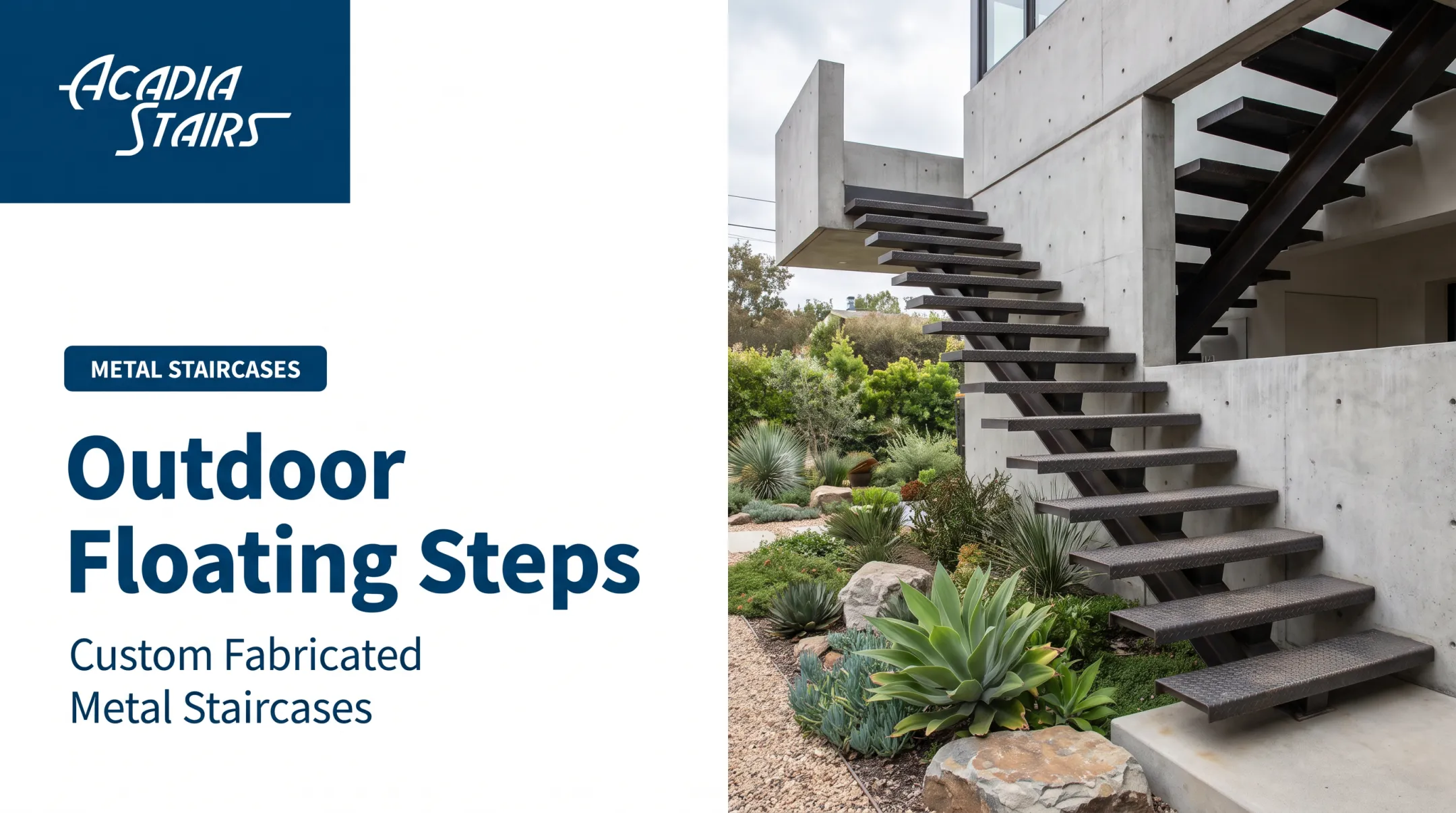
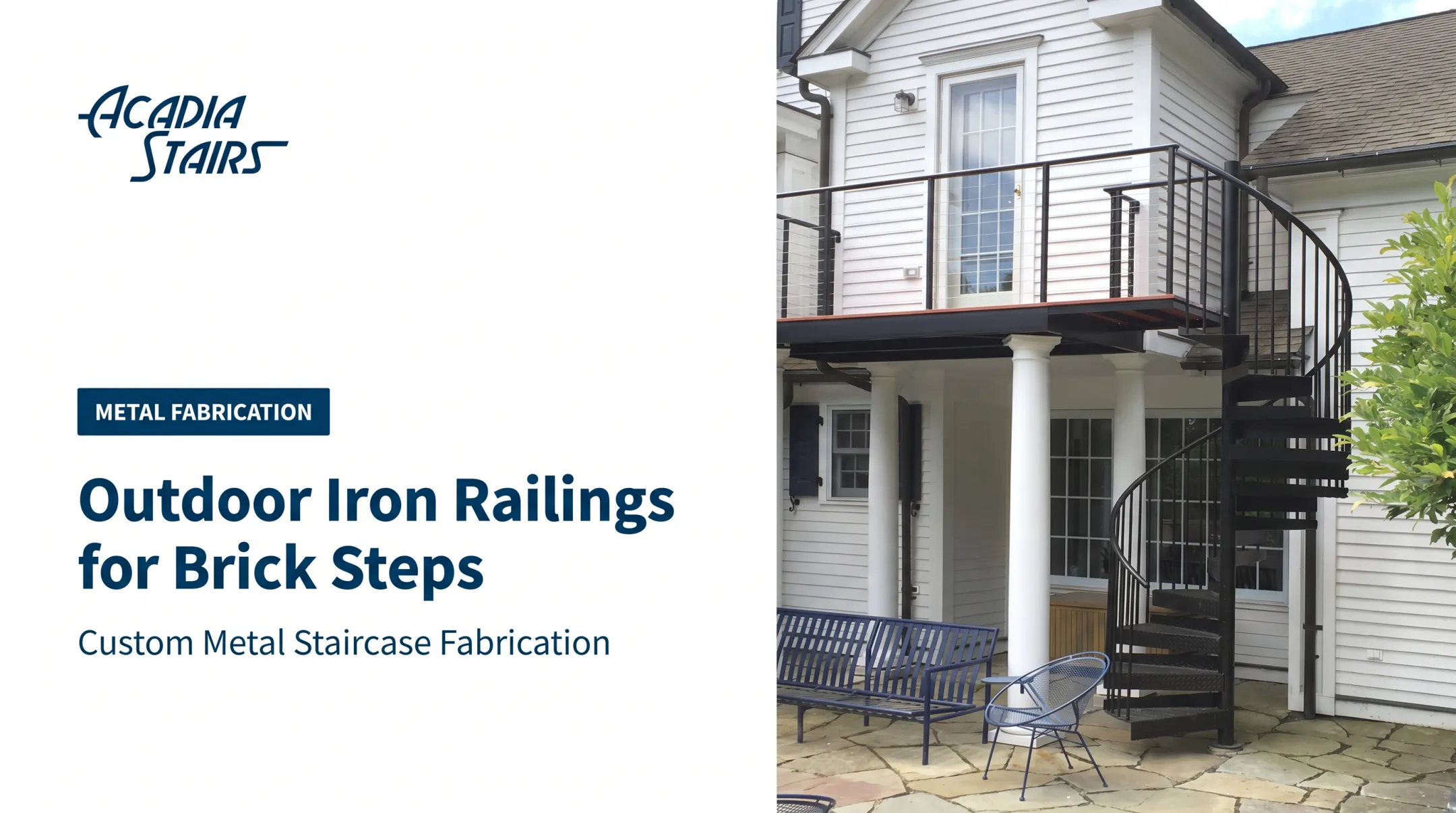
But that same natural material creates real railing headaches. Stone surfaces get slick when wet. Treads are rarely perfectly uniform. The material can be brittle under the wrong drilling technique. And it's sitting outside, absorbing sun, rain, ice, and salt year-round.
This guide walks US homeowners and building professionals through choosing a railing that grips securely, meets code, works with the stone instead of against it, and holds up outdoors for decades. We'll cover materials, measurements, installation methods, safety planning, and long-term maintenance, plus when to bring in a professional fabricator.
Key Takeaways
- Stone condition and site safety should drive your railing choice, not appearance alone.
- Metal railings offer durable, graspable top rails and can be custom-fit to irregular stair geometry.
- Drilling into stone demands careful assessment of the stone, substrate, fasteners, and load path to avoid cracking.
- Local codes govern railing height, opening size, and handrail continuity — confirm requirements before ordering.
How to Choose the Best Outdoor Railing for Stone Steps
There's no universal "best" railing for stone steps. The right choice depends on your stone type, stair width and slope, climate exposure, maintenance tolerance, and available anchoring surface.
Comparing Railing Materials
| Material | Strengths | Watch For |
|---|---|---|
| Steel | High strength, endless custom shapes, strong architectural presence | Needs a quality exterior finish like powder coating to resist corrosion |
| Aluminum | Lightweight, naturally corrosion-resistant, low upkeep | Simpler profiles; less common for heavy custom detailing |
| Stainless steel | Modern look, excellent corrosion resistance in coastal air | Higher material cost; grade should match salt exposure |
| Wood | Warm, traditional appearance | Needs regular sealing or staining; can splinter or decay |
| Glass | Clean, unobstructed sightlines | Requires a secure top rail and frequent cleaning |
Powder-coated steel finishes vary widely in how long they actually hold up outdoors. According to a published AAMA coatings comparison, coatings rated AAMA 2604 are tested for roughly five years of Florida sun exposure, while AAMA 2605 coatings target ten years. That difference matters if your steps face south all day or sit near the coast.

Matching Railing Style to the Stone
The masonry should set the tone, not compete with it.
- Rough or heavily textured stone: simpler metal profiles that frame the texture instead of fighting it
- Smooth-cut stone: cleaner contemporary lines, or selective decorative detail if the architecture supports it
- Finish, posts, and baluster spacing: keep the stone visible rather than boxing it in
Guardrail vs. Handrail: Know the Difference
A guard prevents falls off an open edge. A handrail gives you something to actually grip while climbing or descending. Users need a continuous, comfortable gripping surface, not just decorative balusters or glass panels to lean on.
Stone stairs rarely match stock layouts, so heights and mounting points usually need to be built around the masonry—not forced onto it.
Acadia Stairs fabricates custom metal railing systems with guard heights often at 42 inches and handrails typically 34 to 36 inches from the tread. Panels ship in sections up to 20 feet, powder-coated to spec, with post spacing set to the actual stone geometry.
Skip sticker price as the main filter. Weigh durability, maintenance, installation complexity, and cost over the full lifespan—a cheaper rail replaced in eight years often costs more than a properly finished system that lasts thirty.
Safety, Measurements, and Code Planning
Building codes exist because handrails fail people in predictable ways — too short, too slippery, too far apart. Before you order anything, confirm the requirements that apply to your specific jurisdiction and project type.
What US Codes Typically Require
| Requirement | Residential (2024 IRC) | Commercial (2024 IBC) |
|---|---|---|
| Handrail height | 34–38 inches | 34–38 inches |
| Guard height | 36 inches (34 inches at stairs) | 42 inches generally |
| Opening limit | 4-inch sphere (4-3/8 inches at stairs) | 4-inch sphere (with stair exceptions) |
| Handrail grip | 1-1/4 to 2 inches diameter | 1-1/4 to 2 inches diameter |
These figures come from the 2024 International Residential and Building Codes, but local jurisdictions often amend them. Always confirm the exact edition your building department enforces, along with any ADA requirements if the project serves the public.
Measurements to Collect Before Ordering
- Total stair rise and run, plus individual tread depth
- Stair width and landing dimensions
- Railing length and preferred post locations
- Top and bottom return locations
Once dimensions are locked in, inspect the stone itself—ordering the right length means little if the substrate cannot hold the posts.
Pre-Installation Inspection Checklist
Walk the stairs and check for:
- Cracked, loose, or spalling stone
- Thin slabs or unsupported overhangs
- Deteriorated mortar joints
- Drainage paths that could pool water at post locations
- Freeze-thaw exposure history
- Sound concrete or another structural substrate beneath the stone
Call a professional if you find any of these red flags:
- Unusual or irregular stonework
- Heavy foot traffic
- Significant height changes
- A retaining-wall edge
Drilling into the wrong spot on stone can hide structural damage until the railing fails. A pro flags those risks before posts go in.
How Railings Are Installed on Stone Steps
Railings attach to stone stairs one of two ways, and the choice depends on stone thickness, available clearance, and the railing design itself.
- Surface-mounted posts sit directly on the tread or landing, transferring load through a base plate into the stone surface.
- Side or fascia-mounted posts attach to the vertical stair edge, sending load through the masonry edge and whatever structure backs it up.
Planning the Layout
Before drilling anything, lay out post positions and verify fasteners won't land too close to stone edges, visible cracks, joints, or drainage channels. Confirm the anchor type, embedment depth, base-plate dimensions, and substrate condition against manufacturer specs. For anything unusual, get an engineer's sign-off.
The Drilling Risk Nobody Talks About Enough
Most anchor manufacturers test their products in concrete or standard masonry, not natural stone. Hilti has stated directly that it has no test data for anchors installed through natural stone, meaning a concrete anchor's published load ratings shouldn't be assumed to transfer directly to a stone tread or veneer.
Excessive impact, heat, vibration, or the wrong bit can crack or spall stone that would handle a properly matched drilling technique just fine.
Appropriately sized base plates, multiple anchors, washers, and exterior-rated anchoring materials help distribute load. Epoxy or grout selection still has to match the specific stone, substrate, and manufacturer guidance.

A Safe Installation Sequence
- Measure and mark post locations, double-checking against your layout plan.
- Test-fit components before committing to any drilling.
- Drill carefully, using the correct bit and technique for the stone type.
- Clean holes thoroughly to remove dust and debris.
- Install anchors per manufacturer specifications.
- Seal penetrations where water intrusion is a concern.
- Secure posts, then attach rails and infill.
- Inspect the finished assembly for any movement or play.
This sequence isn't a substitute for professional judgment, especially on anything involving structural stonework.
Verify What's Below the Stone
If the anchor needs to reach concrete or another structural base beneath the stone, confirm the depth and condition of that substrate first. Don't assume the stone alone can carry railing loads — many stone treads are a relatively thin veneer over a structural base, and that base is often what's actually holding your anchor.
Final inspection checklist:
- Post stability and fastener tightness
- Comfortable handrail grip and smooth edges
- Consistent alignment
- Proper drainage around penetrations
- Compliance with your project's approved requirements
Maintenance and Long-Term Performance
A well-installed railing still needs attention to perform for decades outdoors.
Material-specific care:
- Powder-coated or painted metal — wash with mild soap and water every few weeks to prevent dirt and pollutants from degrading the finish
- Stainless steel — use cleaners formulated for stainless to avoid streaking or micro-scratching
- Wood — inspect for finish failure, cracking, or checking, and reseal promptly
- Glass — clean with products that won't damage adjacent hardware or seals
What to inspect seasonally:
- Rust spots or coating damage
- Loose fasteners or movement at post bases
- Cracked stone around anchor points
- Deteriorated sealant
- Sharp edges from wear
- Water pooling near post penetrations
Climate matters more than most people expect. Freeze-thaw cycling, coastal salt air, and de-icing chemicals all accelerate wear differently by material and region. Follow care guidance for your climate zone so finishes and anchors hold up season after season.
If a railing wobbles, an anchor loosens, the stone fractures near a post, or the handrail no longer feels secure, get it evaluated promptly. These aren't cosmetic issues.
Conclusion
The best outdoor railing for stone steps fits your stone, gives a secure continuous grip, handles your climate, and looks like it belongs on the property. Catalog photos alone will not get you there.
Before you commit, confirm:
- Local code requirements for height, openings, and load
- Stone and substrate condition for solid attachment points
- Material and finish matched to real weather exposure
- A continuous handrail path that follows the actual run
For homeowners, architects, and contractors planning a custom install, Acadia Stairs builds metal stair and railing systems to exact dimensions. Powder coating options are available, with shipping across the continental US and Hawaii. The design process starts from your stone stair’s measurements, so the railing follows the layout instead of forcing a standard part into an irregular run.
Frequently Asked Questions
What type of railing is best for stone steps?
Durable metal with a comfortable, continuous top rail is usually the practical choice for outdoor stone stairs. Final selection still depends on stone condition, climate, design goals, and how much maintenance you want.
What can I use instead of a handrail?
Decorative features or partial supports aren't a substitute for a code-compliant, graspable handrail on most stairs. Check your local building code before relying on any alternative.
What is the 4-inch sphere rule for railing?
It limits guard openings so a 4-inch sphere generally cannot pass through the infill. Some stair guards allow a slightly larger gap, such as 4-3/8 inches. Confirm the exact limit in your local code.
What type of railing is best for outdoor steps?
For weather exposure, metal usually offers the best mix of durability, grip, and low maintenance. Wood and glass can work outdoors, but they need more upkeep or stricter structural detailing.
Can you put a railing on concrete steps?
Yes, as long as the concrete and anchoring system are appropriate for the load. Proper layout, correct drilling technique, and code-compliant fasteners are essential.
What type of handrail is best for concrete steps?
Choose a graspable handrail that matches your climate and can be anchored securely into the concrete. Properly finished metal is a common, practical option for concrete stairs.