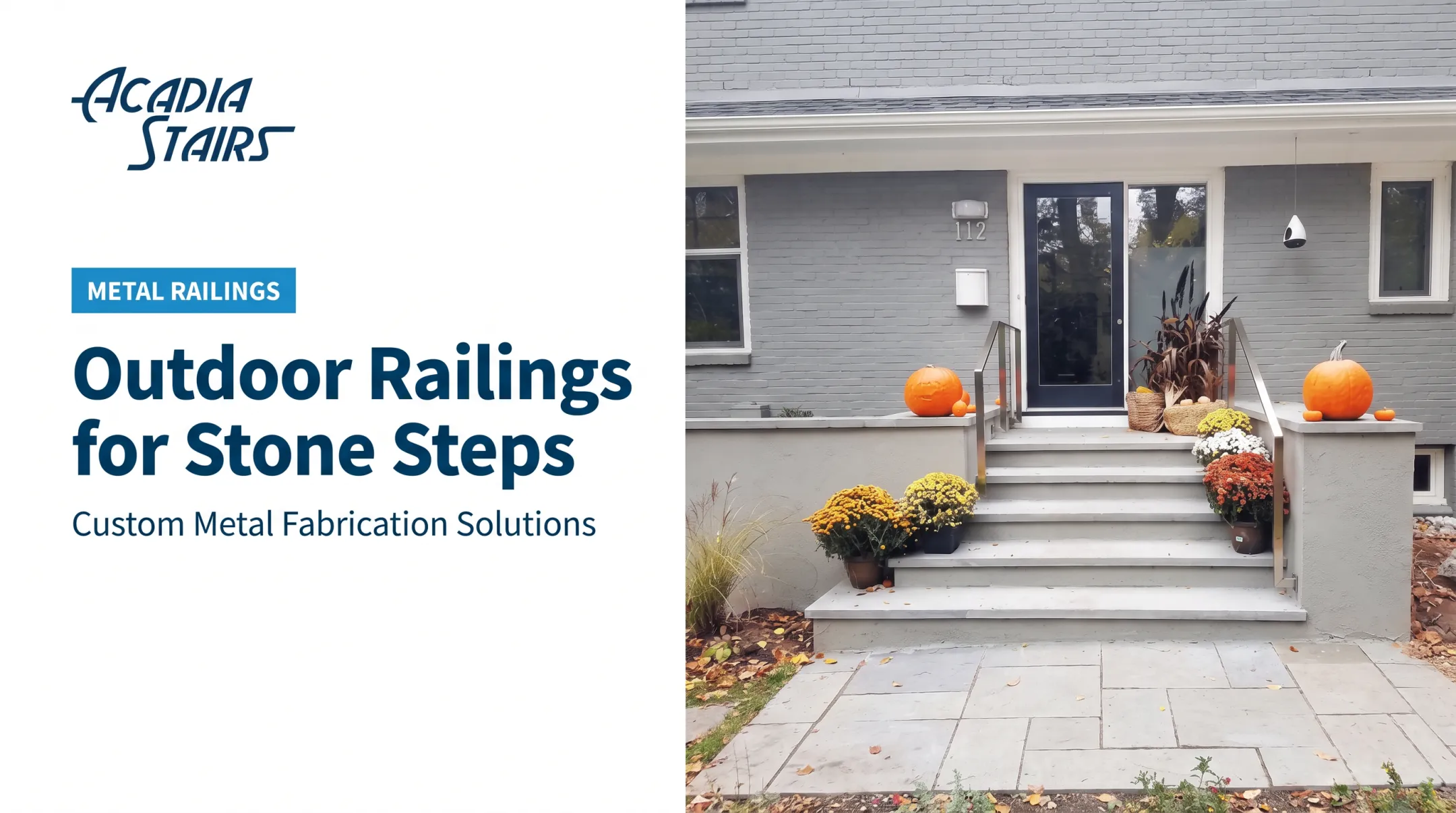
Get it wrong, and you have traded a loose handrail for a cracked step.
Many homeowners face this exact tension. They need a secure railing that meets code, but they are wary of damaging masonry that predates their ownership of the house entirely. The best outdoor iron railing project balances five things: fall prevention, a comfortable grip height, anchoring that respects the brick, weather resistance for the local climate, and a design that actually fits the house.
Under the 2024 International Residential Code, any flight with four or more risers needs a handrail on at least one side. Getting there without cracking the brick is where most DIY plans fall apart.
This guide covers how to assess your steps, compare railing and mounting options, plan installation and cost, and recognize when custom fabrication or professional help is the smarter move.
Key Takeaways
- Match railing and anchors to brick condition, thickness, and layout—not looks alone.
- Anchor into sound brick, not mortar, with masonry-rated bits and specified hardware.
- Tally full cost: fabrication, finish, hardware, prep, shipping, labor, and masonry repair.
- Verify local handrail height and graspability rules before you order.
Why Iron Railings Work Well with Brick Steps
Iron and steel railings pair naturally with brick because they draw a clean, defined line against a textured, warm-toned surface. Whether your home is traditional, transitional, or contemporary, a well-proportioned metal rail reads as intentional rather than bolted-on. Beyond looks, metal railings offer real functional advantages:
- Rigid support that doesn't flex under weight the way wood can over time
- A comfortable, graspable handhold when the profile and diameter are right
- Long service life compared to painted wood, especially with a proper finish
- Fabrication flexibility for straight runs, angled stairs, or irregular step layouts that off-the-shelf kits can't handle
Iron, Steel, or Wrought Iron? Get the Terms Right
These words get used interchangeably, but they describe different materials. According to Titus Steel, true wrought iron is a low-carbon refined iron containing slag, prized for being malleable and easy to shape into scrollwork. Cast iron, by contrast, is poured into molds and is hard but brittle. Steel sits between the two, with carbon content and heat treatment tailored to balance strength and ductility. Most railings sold today, including traditional-looking scroll designs, are fabricated steel finished to resemble historic wrought iron. That distinction matters when you're comparing quotes.
Standing Up to Rain, Snow, and Salt
Exterior brick steps see rain, snow, humidity, and often de-icing salt in winter climates. Salt introduces chloride ions that accelerate corrosion, and standing water at a post base is a common failure point if drainage isn't considered. Contact between dissimilar metals can also cause galvanic corrosion over time, which is why hardware compatibility matters as much as the railing material itself. A properly prepared finish, powder coating in particular, forms a thick, thermally bonded layer that resists moisture and UV better than most wet paints. It also lets you coordinate railing color with brick tones, trim, or door hardware.
Choosing the Right Outdoor Iron Railing for Brick Steps
Before comparing styles, get the fundamentals right: your steps' geometry and your brick's actual condition.
Start With a Site Assessment
Document these details before contacting a fabricator:
- Number of steps, stair width, rise and run
- Top and bottom landing dimensions
- Available mounting surfaces (tread edges, side walls, landings)
- Drainage patterns and any nearby obstructions like existing railings or landscaping
Inspect the Brick Before You Specify Anything
Not all brick can safely accept anchors. Check for:
- Spalling (flaking or chipped brick faces)
- Hollow-sounding sections
- Cracked units or deteriorated mortar
- Signs of moisture damage
Historic brick deserves particular caution. Older masonry may be softer and more vulnerable to cracking under drilling pressure than modern brick.
If you find any of these conditions, plan for repair first or consider a different mounting strategy. Anchoring into damaged brick doesn't just risk failure; it can make the underlying damage worse.
Match the Mounting Style to Your Steps
| Mounting Type | Best For | Key Consideration |
|---|---|---|
| Surface/top mount | Wide treads or landings with solid brick | Base plate needs enough sound brick and proper drainage clearance |
| Side mount | Narrow treads where the tread surface can't take a post | Requires solid (not hollow) vertical brick face |
| Wall mount | Steps running alongside an exterior wall | Doesn't protect an open edge unless paired with a separate guard |
Confirm Comfort, Then Run This Checklist
A railing only works if people actually use it. Prioritize:
- A continuous handrail line
- A graspable profile
- Adequate clearance from adjacent walls
- Rounded or finished edges that won't cut a hand mid-grip
Before finalizing anything, run through this checklist:
- Is the brick sound enough for the anchors this railing needs?
- Does the stair geometry call for straight runs, an angle change, or a landing transition?
- What total railing length and how many support points are required?
- Does the finish suit your local weather exposure?
- Has the layout been checked against local code?
- Is this a DIY-appropriate install, or does it need a professional?
Design, Finish, and Customization Options
With structure settled, you can focus on style, finish, and the custom details that make a railing fit brick steps cleanly.
Style Directions
Common approaches for brick steps include:
- Simple round or square rail profiles for a clean, transitional look
- Vertical picket or baluster designs for a more traditional look
- Horizontal line systems with a round top rail over flat or square lower lines
- Minimalist contemporary frames for modern homes with brick accents rather than full brick facades
- Decorative scrollwork for period-appropriate historic homes
Finish and Color Choices
Exterior-grade finish options each trade off cost, maintenance, and appearance:
- Painted steel — lower upfront cost; plan on periodic touch-ups
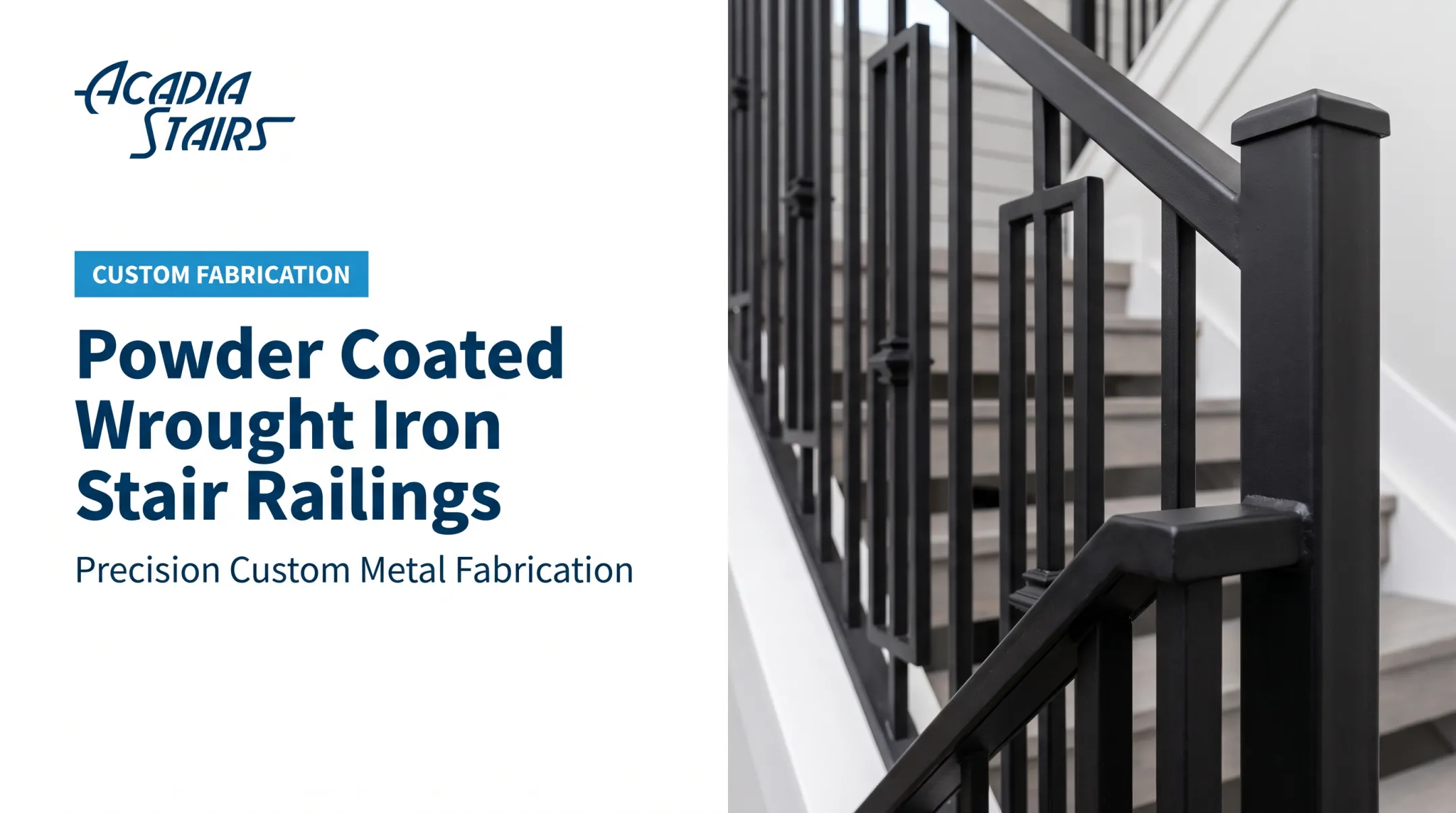
- Powder coating — durable color finish with strong weather resistance
- Hot-dip galvanizing — heavy-duty corrosion protection, often under a top coat
- Stainless-steel components — higher cost; excellent rust resistance in harsh climates Confirm any finish is rated for your climate before you commit. For color, use what's already there as your guide: match or contrast against brick tones, mortar color, door hardware, and existing exterior trim or fencing.
Custom Fabrication Details Worth Discussing
Brick steps are rarely perfectly uniform, which is why custom fabrication is worth the cost. Details worth specifying include:
- Exact stair angle for the rail's rake
- Post spacing based on your actual layout, not a standard template
- Return ends and landing transitions
- Mounting plate sizing adjusted for uneven brick coursing Acadia Stairs builds custom metal railings to exact specifications rather than off-the-shelf kits. Capabilities that matter for brick-step projects include:
- Panels fabricated up to 20 feet long
- Design accommodations for elbows, turn-outs, goosenecks, and splices
- Stainless-steel hardware on exterior rails
- Steel components finished with a zinc-rich primer under the top coat
- Stock powder-coat colors in flat black, white, and silver, plus custom color matching That collaborative design process is built for one-off US exterior projects where standard templates fall short.

How to Install Iron Railings on Brick Steps Safely
Installation is where careful planning either pays off or falls apart.
Before You Drill
Confirm the full railing layout first. Mark post or bracket locations using consistent reference points — a level and a chalk line, not the brick coursing itself, since brick rows are rarely perfectly even. Double-check that the planned path meets a comfortable, code-compliant height before a single hole gets drilled.
Brick-Safe Drilling Basics
Use a masonry-rated bit matched to your chosen anchor system, and drill gradually rather than forcing the bit through. Keep pressure controlled and holes aligned. Stop immediately if the brick shows cracking, excessive crumbling, or unexpected movement — the substrate likely can't support an anchor there.
A few fundamentals apply broadly:
- Place anchors in sound brick, not mortar joints, unless your anchor system specifies otherwise
- Remove all dust and loose debris from the hole before inserting hardware
- Check hole depth and diameter against the anchor manufacturer's specifications
- Never force an anchor into an undersized or damaged opening
Setting Anchors and Posts
Keep posts and brackets true to the layout you marked:
- Tighten fasteners evenly instead of fully torquing one side first
- Check plumb as you go so the post doesn't twist out of alignment
- Confirm the finished rail doesn't wobble or push visible stress into the brick

When to Stop and Call a Pro
DIY installation isn't the right call for every project. Consider bringing in a professional when you're dealing with:
- Deteriorated or historic brick
- Hollow masonry construction
- Uncertain structural conditions
- Elevated steps or complex rail geometry
- Projects subject to commercial or accessibility code requirements
If any of those conditions apply, pause the install and get a structural assessment before drilling further.
Outdoor Iron Railing Costs and Project Planning
Railing cost depends on far more than the metal itself. Length, post count, design complexity, material thickness, finish, mounting hardware, stair geometry, site access, shipping, labor, permits, and brick condition all factor in.
According to HomeAdvisor's 2025 cost data, wrought iron railing installation typically runs $1,600 to $4,600, with a broader possible range of $700 to $6,000. Use this as a directional benchmark, not a brick-specific quote. Your project scope will move the number up or down.
Break Your Estimate Into Line Items
Rather than accepting one lump-sum number, ask for separate figures for:
- Railing fabrication and material
- Finish and color
- Brackets, anchors, and mounting hardware
- Delivery and shipping
- Installation labor
- Masonry repair, if needed
- Design or engineering review
Custom fabrication shops often bill shop time separately from standard products. Acadia Stairs, for example, applies an $85-per-hour minimum with a $40 minimum charge for custom work—another reason itemized quotes beat a single headline price.

Prefabricated vs. Custom Railings
Prefabricated systems can simplify purchasing and speed up installation for standard, straight-run steps. Custom fabrication earns its premium on unusual angles, narrow treads, nonstandard landings, or homes where architectural detail matters.
What to Send When Requesting a Quote
- Clear photos of the steps from multiple angles
- Measurements: width, rise, run, and landing dimensions
- Notes on brick and mortar condition
- Desired railing style and finish preference
- Installation location and whether existing railing needs removal
The lowest bid isn't always the cheapest outcome. Inadequate anchors, a finish unsuited to your climate, or overlooked masonry damage can mean paying twice: once for the install and once for the repair.
When to Hire a Professional and How to Prepare
Some situations call for expert eyes before anyone touches a drill.
Strong Reasons to Bring in a Professional
- Loose or deteriorating brick
- Historic masonry requiring specialized repair
- Unusual stair angles or limited landing space
- High foot traffic or accessibility requirements
- Commercial property use with code inspection involved
- Uncertainty about which code edition your locality has adopted
Before work begins, a qualified fabricator or installer should review:
- Site measurements and structural attachment points
- Material, finish, and anchor compatibility
- Post alignment and applicable code requirements
- Warranty terms
Homeowner Prep Checklist
- Photograph the steps from multiple angles, including close-ups of brick and mortar joints
- Measure width, rise, and run yourself as a starting reference
- Identify which side of the steps the railing should run along
- Clear vegetation or furnishings blocking the work area
- Decide whether your goal is basic safety, accessibility, curb appeal, or all three
Acadia Stairs works with homeowners, contractors, architects, and designers on custom railing projects through a collaborative design process and ships fabricated railings nationwide across the continental US and Hawaii. The company does not provide on-site installation, so plan for a separate installer or contractor for that part of the job.
Your next steps:
- Gather site photos and measurements
- Confirm the brick's condition honestly
- Compare railing and finish options against your climate
- Request a written proposal that separates fabrication, hardware, shipping, installation, and any masonry work into distinct line items
Frequently Asked Questions
What are some good outdoor handrails for brick steps?
Look for exterior-rated iron or steel railings with powder coating, a graspable profile, and masonry-compatible anchors. Check your brick’s condition and local code requirements before choosing a design.
How much do front step railings cost?
Cost depends on material, length, finish, hardware, brick repairs, and installation. HomeAdvisor’s 2025 data puts typical wrought iron railing installation between $1,600 and $4,600. Request an itemized quote for your project.
Where can I buy metal railings for steps?
Compare railing fabricators, building suppliers, and local contractors. For unusual angles or brick conditions, choose a custom fabricator such as Acadia Stairs that reviews your measurements, brick condition, and finish needs rather than a standard kit.