Introduction
Wood has framed staircases for generations. It's familiar, affordable, and easy for most contractors to work with. Steel framing is now the usual pick for modern, floating, commercial, and high-visibility stairs where a slim profile matters as much as strength.
Pick the wrong stringer and you can overspend on structure, come up short on span or traffic load, or fight movement, moisture, and maintenance for years. The choice sets structural capacity, installation method, long-term movement, upkeep, and which treads and railings you can pair with it.
Neither material wins every project. The right call depends on span, traffic, moisture exposure, design goals, budget, and local building code.
This guide compares wood and steel stringers on strength, profile, install, durability, and cost so you can match framing to the job. Verify every technical detail against current US code and manufacturer documentation before fabrication begins.
Key Takeaways
- Steel stringers pack high strength into a slimmer profile, unlocking floating and mono-stringer designs
- For conventional straight runs, wood stringers stay the practical, cost-effective choice
- Wood risks moisture, splitting, and movement; steel needs corrosion protection and engineered connections
- Pair steel frames with wood, stone, or glass treads for a warmer finished look
- Confirm span, load, and code details with a qualified professional before fabrication
Metal vs Wood Stair Stringers: Quick Comparison
| Factor | Steel Stringers | Wood Stringers |
|---|---|---|
| Upfront cost | Higher (material, engineering, welding, finish) | Lower for simple runs |
| Strength-to-size | High load in a slim profile | Needs more depth, sisters, or extra stringers |
| Long spans | Strong choice for long unsupported runs | LVL helps; still limited vs. steel |
| Durability | No rot or insects; needs corrosion protection | Warm and workable; vulnerable to moisture and pests |
| Design range | Mono-stringer, floating, open-riser, custom finishes | Best for traditional, transitional, rustic looks |
| Install & upkeep | Off-site precision fab; low ongoing maintenance | On-site adjustments easier; more refinishing over time |
Cost
Steel stringers typically carry a higher upfront price. You're paying for material, engineering time, welding labor, and finishing. Custom jobs with multiple design revisions add more— a four-page stringer set with several revisions can run $2,000 or more in shop-drawing fees alone, on top of fabrication. Basic modular steel kits start around $299 per unit before treads or shipping, but those are entry-level kits, not custom-engineered systems.
Wood is often the cheaper starting point for straightforward runs:
- Dimensional lumber (2x10, 2x12) is widely available and inexpensive per linear foot
- Engineered products like LVL or LSL cost more than standard lumber but often span farther
- Labor, reinforcement, and finishing can still push total wood costs up significantly
The real comparison isn't material price. It's total installed cost—design, labor, and long-term upkeep.
Strength and Span
Steel carries serious load in a much slimmer profile than wood. The 2024 International Building Code assigns stairs a 40 psf live load plus a 300-lb concentrated load for one- and two-family dwellings, rising to 100 psf for other occupancies, per IBC Table 1607.1. Engineered steel stringers meet those loads while staying visually light.

Wood handles conventional stairs well, but usually needs more material to do it:
- Deeper stringers, sistering, or closer spacing depending on span and load
- Extra stringers on wider stairs (36-inch treads commonly need two; 42–48 inches typically need three)
- LVL can span farther than dimensional lumber at the same depth, but it still isn't a drop-in stand-in for steel on a long, unsupported run
Durability and Environmental Exposure
Steel doesn't rot, warp, or attract insects. Untreated steel does corrode, so exposed or exterior work needs a protection plan:
- Powder coating, hot-dip galvanizing, or three-coat paint systems
- Stainless steel for coastal or high-moisture environments
- Compatible fasteners to avoid galvanic corrosion between dissimilar metals
Wood has the opposite trade-off. It's warm and easy to work, but vulnerable to:
- Moisture absorption, checking, and cracking if left unsealed
- Warping and shrinkage as humidity and temperature shift
- Rot and insect damage in exposed or poorly ventilated conditions
Interior wood stairs hold up with basic finishing. Exterior or high-moisture jobs need pressure treatment or a protected design—and still demand more maintenance than steel.
Appearance and Design Flexibility
Steel supports configurations wood can't match on its own:
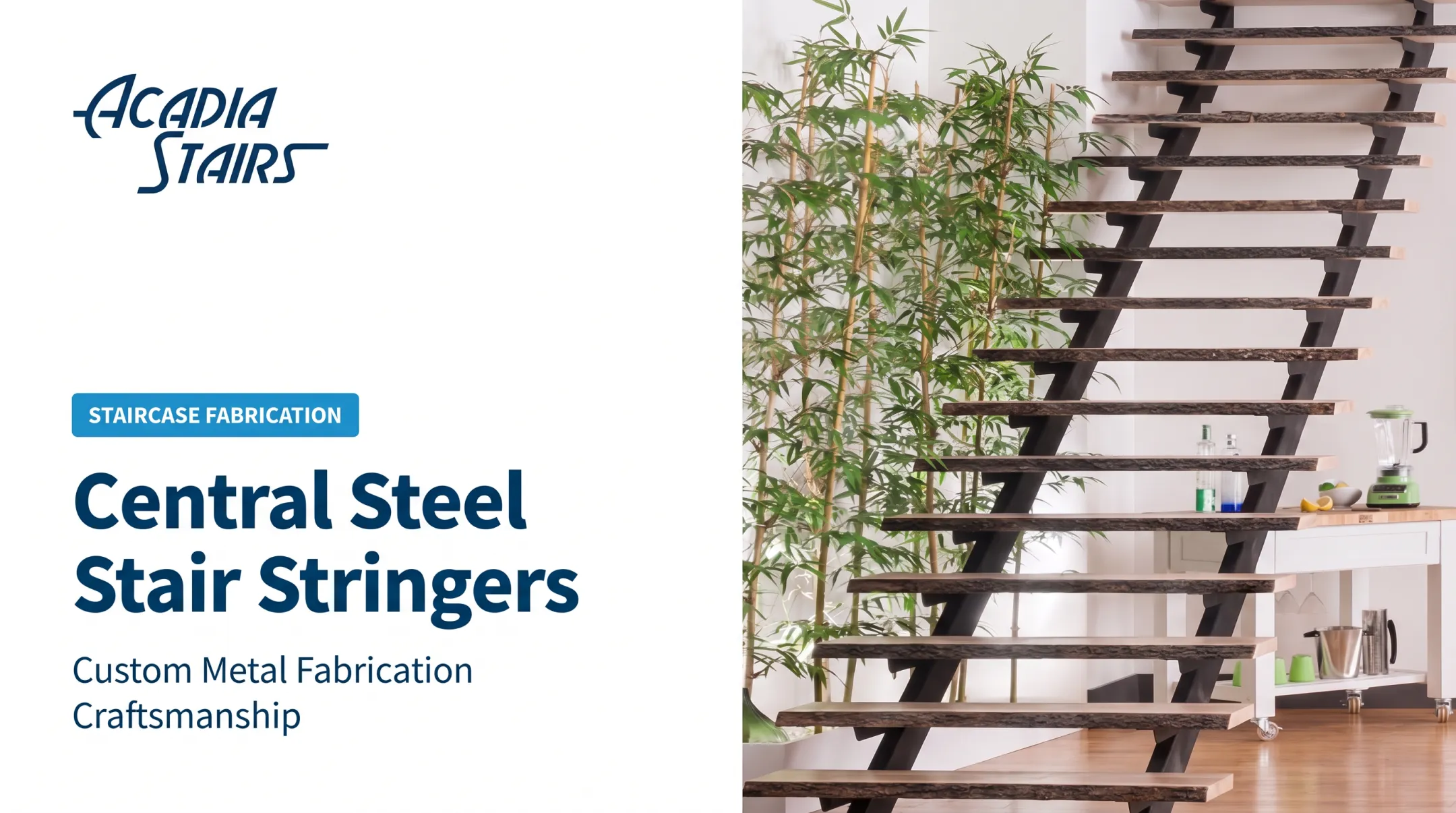
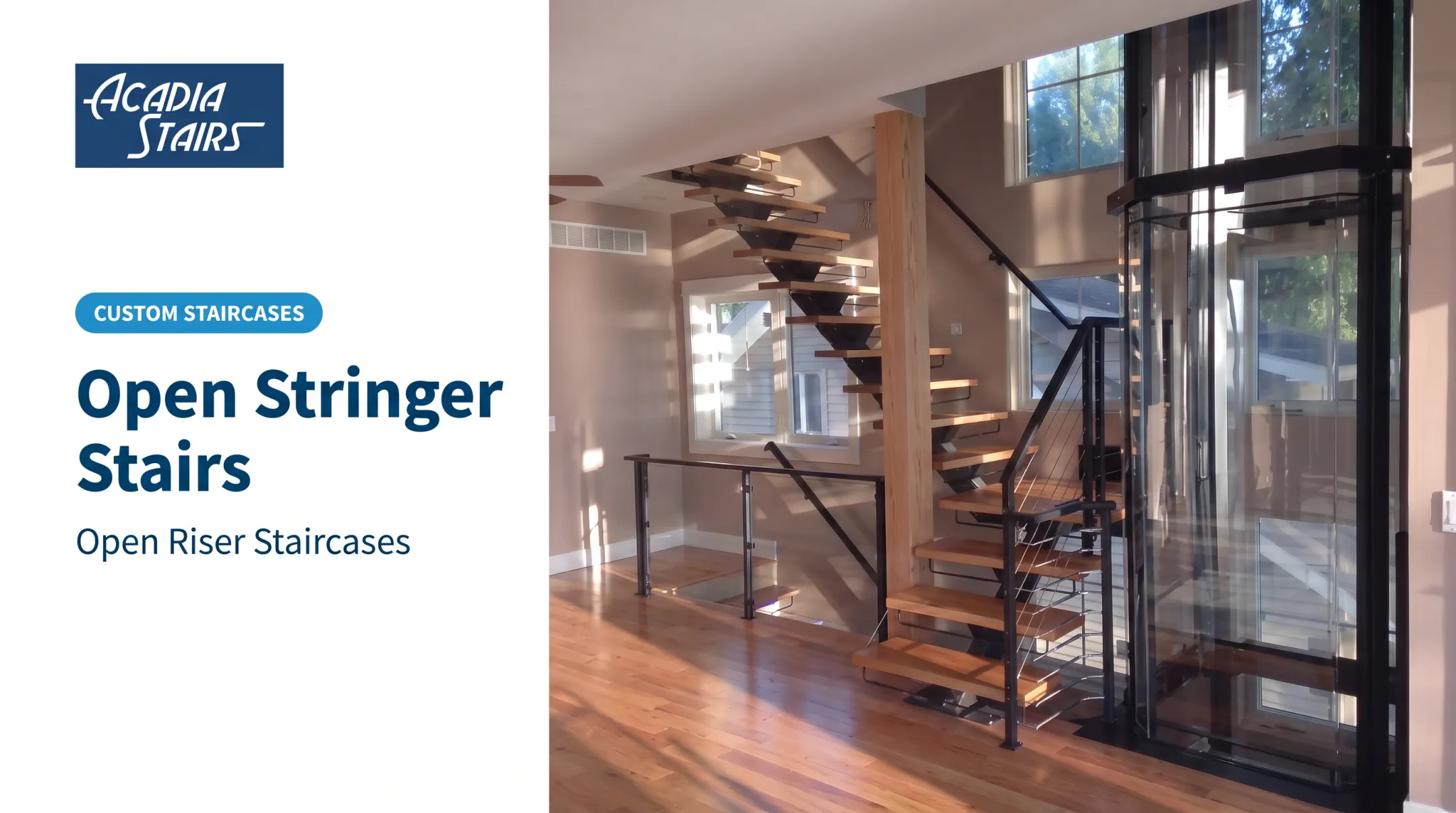
- Mono-stringer and floating stair layouts
- Open-riser, industrial, and minimalist aesthetics
- Custom powder-coated finishes in nearly any color or texture
Wood's strength is warmth. It fits traditional, transitional, or rustic interiors, and it's easy to stain, paint, or match to existing trim and millwork.
Installation and Maintenance
Steel installation demands precision. Stringers are fabricated off-site to exact dimensions, then delivered, anchored, and connected with welds or bolted hardware. That accuracy pays off later with minimal movement and low routine maintenance.
Wood installation is more forgiving in the field:
- Cuts and adjustments can happen on-site
- Most contractors already know the process
- Trade-off: moisture protection, ongoing inspection, and eventual refinishing or repair
What Are Metal and Wood Stair Stringers?
A stair stringer is the structural backbone of a staircase—the member that carries the treads and, in closed designs, the risers. It's distinct from the treads, railings, or decorative trim layered on top.
Metal Stair Stringers
Steel stringers come in several configurations, including plate, channel, tube, and box forms, along with mono-stringer designs for a single-beam floating look. Common types include:
- 1/4-inch or 3/8-inch by 10-inch steel plate
- 10-inch by 1.5-inch structural channel
- Fabricated box beams
- Steel tube in various profiles (2x6, 4x6, and larger, depending on span and load)
Always verify terminology, grade, and connection details with a qualified fabricator or structural engineer before finalizing a design.
Benefits:
- High strength-to-profile ratio, meaning less visible material for the same load capacity
- Dimensional consistency with no shrinkage or warping over time
- Compatibility with floating and open-riser designs
- Natural resistance to rot and insect damage
Limitations:
- Requires corrosion protection if exposed to moisture
- Can transmit heat or sound more readily than wood
- Heavier fabrication and lifting requirements during installation
- Connections must be engineered, not improvised on-site
Where Steel Works Best
Steel earns its keep in:
- Modern residential interiors and floating staircases
- Commercial buildings and high-traffic areas
- Exterior stairs, when finish and hardware are specified for moisture
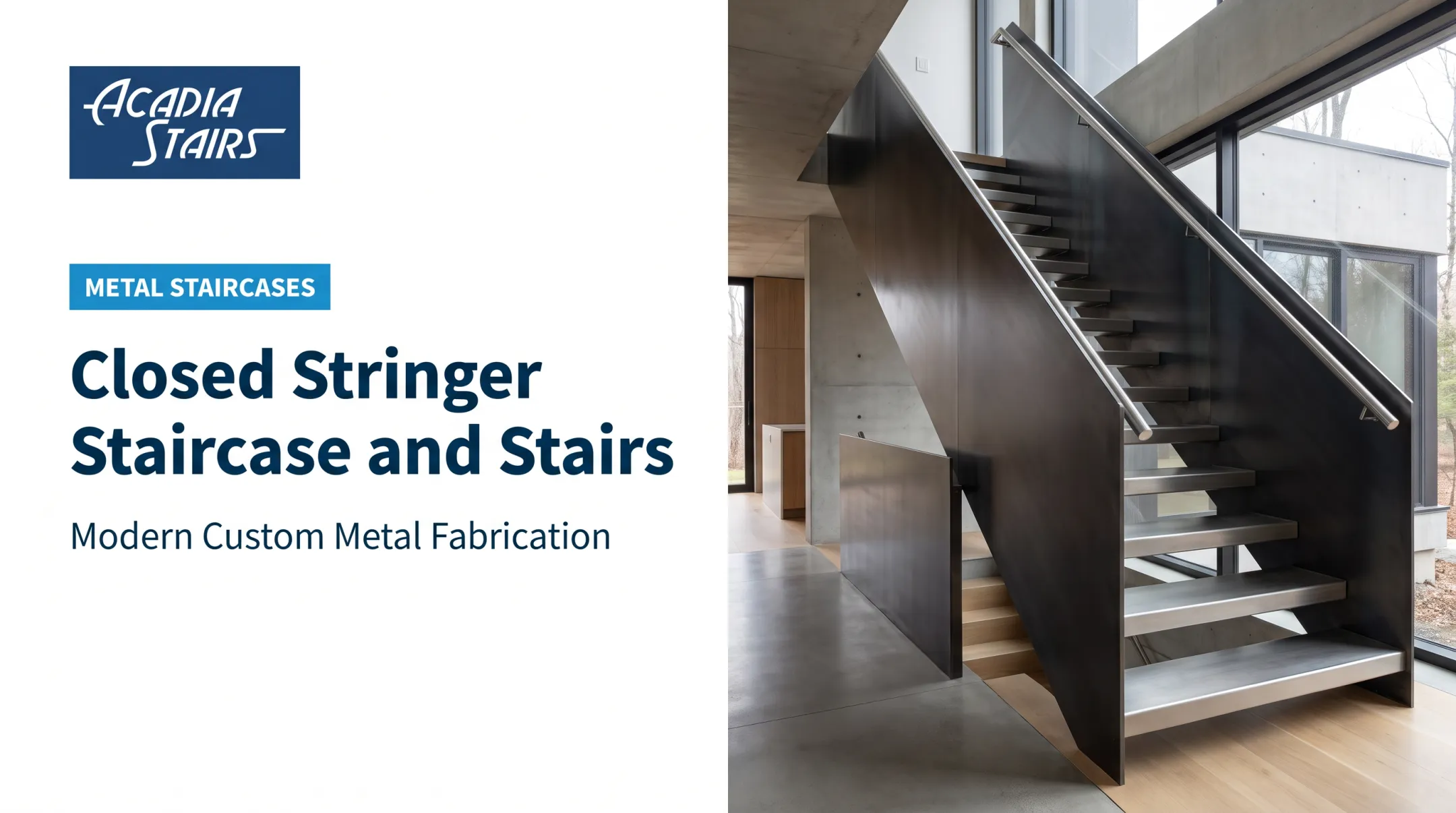
A steel frame can support wood treads, glass panels, stone, or composites—structural capacity with a warmer finish on top.
One documented example: a Fine Homebuilding feature detailed a site-built steel-stringer stair project built with a metal-cutting saw and welder, using wooden treads mortised onto steel brackets.
The goal was a steel stair within reach of a carpenter's basic tools and budget—proof that steel framing doesn't require an inaccessible price tag.
Wood Stair Stringers
Conventional wood stringers are cut from dimensional lumber, typically 2x10 or 2x12 stock. Engineered products such as LVL or LSL are a different category: manufactured for dimensional stability and longer spans, and not interchangeable with ordinary sawn lumber.
Benefits:
- Broadly available and familiar to most contractors
- Field-adjustable during installation
- Natural appearance that matches surrounding trim and millwork easily
- Well-suited to most conventional stair layouts
Limitations:
- Notching for treads and risers reduces effective structural depth
- Moisture exposure leads to warping, splitting, and squeaks over time
- Grade, dimension, and spacing all need to match the specific load and span
Where Wood Works Best
Wood remains a solid choice for:
- Conventional residential stairs and enclosed interiors
- Straight runs where warmth and traditional detailing matter more than a slim profile
Pressure-treated or engineered wood can extend that range outdoors or into higher-demand uses. Always follow manufacturer span tables and code-approved design data rather than assuming standard lumber sizing applies.
A Fine Homebuilding project using Weyerhaeuser TimberStrand LSL for stair stringers reported straight stock resistant to warp and shrinkage, with 14- and 16-inch depths achieving greater spans than 2x12 dimensional lumber without added intermediate support. When a project wants wood's warmth plus better span performance, engineered lumber is the practical middle ground.

Metal vs Wood Stair Stringers: What Is Better?
Start with the project itself, not the material. Ask:
- Is the stair interior or exterior?
- Straight run or complex geometry?
- Conventional or floating design?
- Exposed to moisture, heavy traffic, or unusual spans?
From there, weigh upfront cost against lifecycle value. Engineering, fabrication, labor, finishing, and future maintenance all factor in, along with the cost of correcting layout or connection mistakes after the fact.
Structural and safety considerations matter just as much as aesthetics:
- Total and individual rise, tread run, and stair width
- Live loads, deflection, and vibration under foot traffic
- Stringer spacing and landing support
- Guard and handrail coordination with the stringer design
You'll often hear stair "rules of thumb," like keeping rise plus run between 17 and 18 inches for comfort. These are useful planning tools, not substitutes for code review. The applicable IRC or IBC provisions, plus manufacturer span tables, always take precedence over a rule of thumb.
Situational recommendations:
- Steel when you need a slim architectural profile, floating or mono-stringer geometry, custom fabrication, or long-term dimensional stability
- Wood for a conventional layout, natural warmth, straightforward field installation, or lower initial material cost
- Hybrid when you want a steel structural frame with wood treads—strength underneath, a warmer walking surface on top
Match the stringer material to the geometry, exposure, and finish goals—not to habit. Acadia Stairs builds custom modern and contemporary metal staircases to exact specs, working with homeowners, architects, engineers, and contractors on mono-stringer, double-stringer, and steel-frame systems that carry wood or stone treads.
Real-World Examples and Project Scenarios
Steel over wood: A high-end residence in Montecito, California needed exposed stair stringers spanning both interior and exterior sections, with direct ocean exposure.
The project team selected 316/L stainless steel with custom tapered channels and laser welding for a sharp-cornered profile that could withstand coastal corrosion. Standard wood framing could not handle that environment.

Wood as the right fit: The TimberStrand LSL project mentioned earlier chose engineered wood for straight, warp-resistant stock with a crisp edge for precise layout—without steel’s fabrication overhead. It needed a reliable, warmer-looking stair, not a floating or exposed structural statement.
Quick decision guide:
- Slim floating centerpiece → steel
- Conventional enclosed stair → wood or engineered wood
- Wet or coastal exterior → stainless steel
- High-traffic commercial run → steel, engineered for code-required loads
- Warm tread surface over a strong frame → wood treads on a custom steel stringer
Conclusion
Steel is often the stronger choice when you need a modern, slim-profile look, an open high-visibility stair, or a heavily loaded run. Wood still holds its ground for conventional layouts where warmth and straightforward installation matter most.
Either way, the result depends on getting the details right:
- Correct stringer sizing
- Sound connections
- Proper finish protection
- Code review that treats the stringer, treads, railings, and surrounding structure as one system
If you're weighing a custom metal staircase for your next project, Acadia Stairs can walk through span, load, and finish options with you. Call (845) 765-8600 or email info@acadiastairs.com to start the conversation.
Frequently Asked Questions
What is the best material for stair stringers?
Span, loads, environment, design, and budget all factor in. Steel offers strength and design flexibility with a slim profile; wood offers familiarity, natural appearance, and lower upfront cost for conventional stairs.
What is the 27 rule for stringers?
No single "27 rule" is codified in building codes. Stair comfort guidelines typically use rise-plus-run formulas (around 17-18 inches) to balance rise and run. Your applicable US building code and project-specific engineering always take precedence.
Should stair stringers be 2x10 or 2x12?
Sizing depends on effective depth remaining after tread and riser notches, plus span, load, spacing, and code or engineering requirements. A structural engineer should confirm sizing for your specific stair.
Are steel stair stringers more expensive than wood?
Initial material and fabrication costs for steel are often higher than dimensional lumber. Total installed and lifecycle cost still depends on complexity, finish, maintenance, and design requirements—factors that can narrow or reverse that gap.
Can wood treads be installed on steel stair stringers?
Yes, this is a common hybrid approach. It requires correctly designed tread brackets, fasteners, bearing, and connections to account for the different behavior of wood and steel over time.
Are steel stair stringers code-compliant in the United States?
Steel stringers can be fully code-compliant when engineered and installed per applicable IBC provisions, local requirements, and manufacturer documentation. Compliance depends on proper design and approval, not the material alone.