Modern railing design has moved well past plain metal bars. Today's options include sculptural forms, mixed materials, open cable infill, custom powder-coated finishes, and designs built to respond to the room around them.
This guide covers distinctive railing ideas, material and finish choices, ways to refresh an existing railing, safety and code checkpoints, and what to expect when planning a custom system.
Key Takeaways
- Modern railings can add contrast, openness, warmth, or a sculptural focal point without compromising safety.
- Material and infill choice depends on layout, style, maintenance tolerance, and how much visibility you want.
- Existing railings can often be refreshed through refinishing, new infill, or lighting instead of full replacement.
- Any new or modified railing needs review against applicable US building codes before fabrication begins.
Unique Modern Stair Railing Ideas
The International Residential Code defines a handrail as a graspable rail intended for guidance and support, while a guard is the barrier that prevents falls at open sides of an elevated walking surface. A strong design plans for both, not only the look of one or the other.
Mixed-Material Combinations
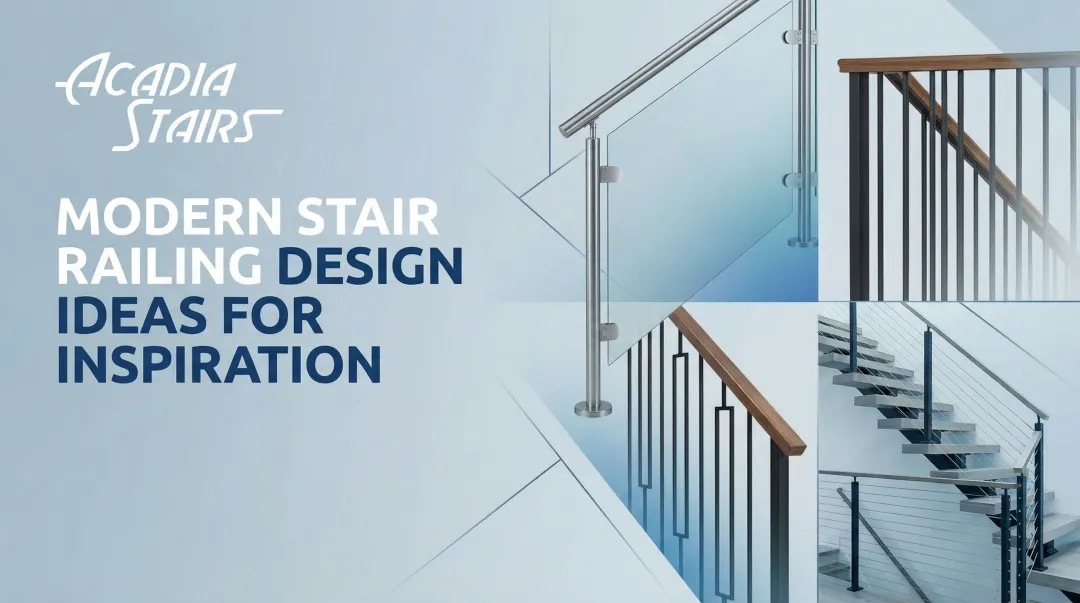
Pairing metal with wood, glass, stone, or a contrasting wall finish is one of the fastest ways to add character. Acadia Stairs builds systems in steel, aluminum, and stainless steel, and combines them with:
- Vertical balusters or solid lines for a clean, structured look
- #316 marine-grade stainless-steel cable for an open, minimal feel
- Decorative spindles for a more traditional accent within a modern frame
- Glass panels for maximum transparency
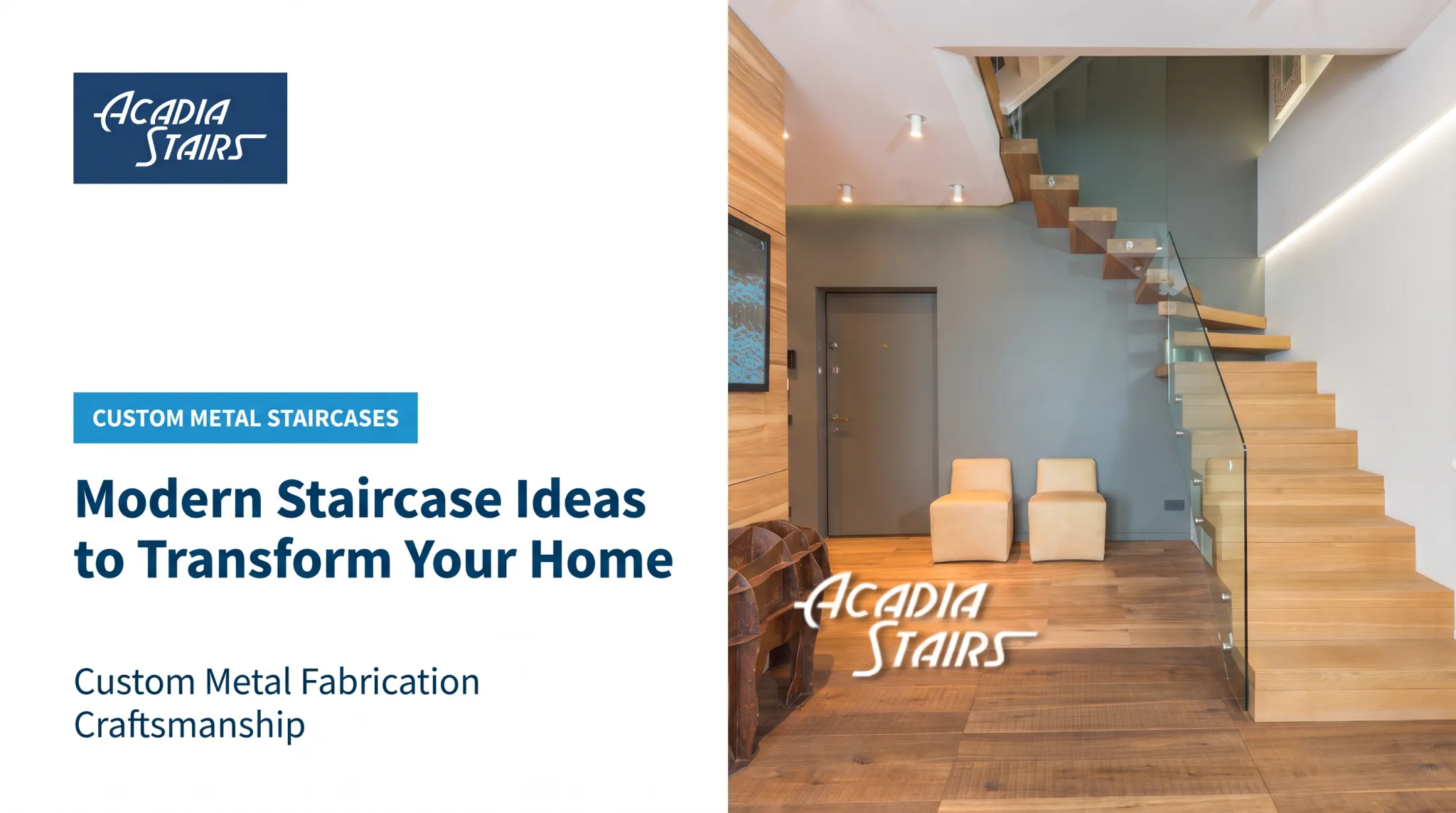
Wood handrails on a metal frame add warmth. Stone or Venetian plaster walls behind an iron rail add texture. Each combination shifts the mood of the same basic structure.
Minimalist Profiles
Slim steel or stainless steel rails with simple geometric lines keep the eye on the architecture rather than the railing itself. Connections that look nearly seamless reinforce this effect. This approach works especially well on straight, single- or double-stringer staircases where the goal is a quiet, contemporary accent rather than a statement piece.
Open and Light-Enhancing Infill
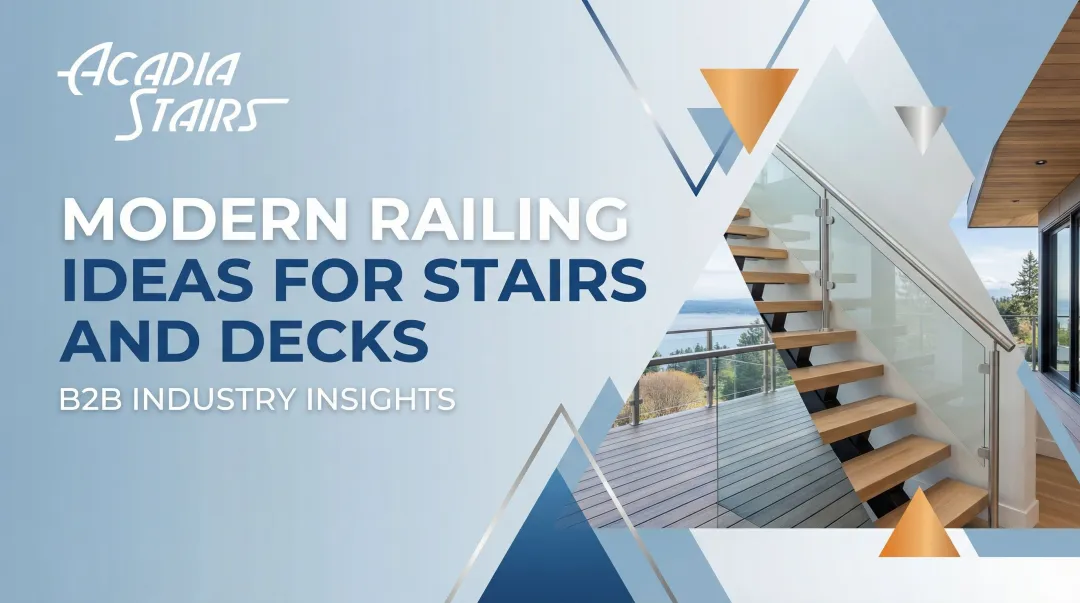
Cable rail, vertical pickets, perforated metal, mesh, and glass panels all preserve sightlines and let light move through a stairwell. Each balances openness and upkeep differently:
- Cable infill: most transparency, least bulk; periodic tensioning
- Perforated metal or mesh: added texture while light still passes through
- Glass panels: cleanest open look; more cleaning with kids or pets
Sculptural and Architectural Statements
Curved rails, angular transitions, and repeated vertical elements can turn a staircase into a focal point rather than pure circulation. Acadia Stairs often builds these as sculptural pieces, with sloping line rails in round, square, or flat profiles to match a clear design language.
Any of these directions can work; the difference shows up in context. When you present or review a design, show the full staircase, a close-up of the connection or infill, and how the railing sits with flooring, walls, lighting, and furniture.

Materials, Finishes, and Design Combinations
The right material depends on where the staircase lives and how it will be used.
| Material | Strengths | Considerations |
|---|---|---|
| Painted/powder-coated steel | Strong, versatile, wide color range | Needs corrosion protection outdoors |
| Stainless steel | Durable, low maintenance, corrosion-resistant | Grade matters; contamination can cause surface rust |
| Aluminum | Lightweight, naturally corrosion-resistant | Finish can be damaged by harsh cleaning |
| Wood | Warm, comfortable to grip | Needs sealing or staining; not structural on its own |
| Glass | Open, modern appearance | Requires regular cleaning and careful handling |
Finish Changes the Character
The same railing shape reads completely differently depending on finish:
- Matte black — sharp definition against light walls
- Lighter colors — blend into the architecture instead of standing apart
- Metallic finishes — emphasize precision and clean fabrication lines
Acadia Stairs offers matte, gloss, textured, and metallic powder-coat options, plus brushed, mill, glass-bead-blasted, or mirror finishes on stainless steel.
Powder Coating as a Durability Choice
Powder coating is both a customization layer and a protection system. According to a technical paper on AAMA 2604 and 2605 coating standards, these two coating classes are differentiated by weathering and corrosion testing, not a single universal warranty period. Confirm that your fabricator's coating, surface preparation, and site environment match your project. Acadia Stairs applies a zinc-rich primer beneath the topcoat on exterior steel rails and typically uses stainless-steel hardware to prevent premature corrosion at fasteners.
Handrail Comfort Matters as Much as Looks
A railing people actually want to touch needs the right shape, diameter, and surface temperature. Cold, thin metal can feel harsh in an entry stairwell. Pairing a wood cap rail with a metal baluster system often solves this, giving the visual lightness of metal with a warmer grip surface.
Coordinate, Don't Isolate
Comfort and finish choices only work if the railing sits in the larger composition, not as a standalone purchase. Match it against:
- Tread and stringer material and finish
- Flooring type and color throughout the space
- Wall finishes and trim
- Existing lighting fixtures
Before you lock a material, match the finish and metal grade to the stair’s location and traffic, then confirm cleaning and maintenance guidance for that exact spec.
How to Choose a Modern Railing That Works
Start with the physical constraints of your staircase, then layer in code and lifestyle requirements.
Build a Decision Framework
Consider:
- Staircase type (straight, curved, spiral, or open-riser)
- Available width and number of open edges
- Landing configuration and turns
- Indoor versus outdoor exposure
- Traffic level and who uses the stairs daily
- The visual effect you want: bold contrast, quiet minimalism, or full transparency
Safety and Code Checkpoints
Codes vary by jurisdiction and occupancy type, so verify specifics with your local building department or a licensed professional. Generally, both the 2021 IRC/IBC and the 2010 ADA Standards, Section 505, address handrail height, continuity, graspability, and required extensions at the top and bottom of a run. Guard height, opening limitations, and load resistance are typically covered separately from handrail requirements.
Typical checkpoints include:
- Handrail height often landing in the 34–38 inch range
- Continuous, graspable profiles with required extensions at top and bottom of a run
- Guard height, opening limits, and load resistance checked apart from the handrail itself
Some Acadia Stairs projects need a 42-inch guard rail plus a 36-inch handrail; others need only a handrail set 34 to 36 inches from the tread nose. Never finalize these dimensions without confirming the code edition adopted in your area.

Transparency Versus Containment
Glass and cable systems preserve sightlines and make a space feel larger. Denser infill, closer baluster spacing, or solid panels create more visual containment and a stronger sense of separation between levels. Neither is universally "better"; it depends on whether you want the staircase to disappear visually or announce itself.
Design for Who Actually Uses the Stairs
- Continuous, graspable handrails and tight infill help households with children or older adults
- Denser-than-code infill stops pets from nosing through gaps that still pass inspection
- Durable, easy-to-clean finishes and contrasting colors support high-traffic commercial use
Plan Your Budget in Categories
Rather than fixating on one number, break the project into stages: design and engineering, fabrication, finishing, freight, site preparation, installation, and future maintenance. Costs shift significantly based on material, length, and finish complexity, so request an itemized quote before committing.
Ways to Update Existing Stair Railings Without Replacing Them
Not every tired railing needs to go. If the structure is sound, a refresh can transform the look for a fraction of the cost of full replacement.
Cosmetic Refresh Options
- Clean and repaint or refinish after removing rust and old paint for better adhesion
- Replace just the handrail to update grip and appearance without touching the guard system
- Change the infill by swapping pickets for cable, mesh, or glass
- Add a contrasting finish to make an older railing feel intentional against updated flooring or walls
- Introduce lighting along the stringer or handrail for a subtle, modern upgrade
When a Refresh Isn't Enough
Stop and call a professional if you notice:
- Loose connections or a rail that moves when grabbed
- Visible corrosion, especially at welds or fasteners
- Damaged structural members
- Openings large enough to raise safety concerns
- A handrail that isn't continuously graspable
A rail that shifts under hand pressure needs a full system evaluation—not another coat of paint.
Making Old and New Work Together
A fresh powder-coat color or new infill can tie an older railing to a renovated staircase, updated flooring, or new furniture. Aim for visual consistency. Match your finish undertone to nearby metal fixtures, and keep proportions close to what's already in the room so the update doesn't look bolted on.
Designing a Custom Modern Railing or Staircase
Custom railing and staircase projects follow a clear sequence, even when the finished design is one of a kind.
The Process, Step by Step
- Measure the opening, structure, and site constraints
- Choose a direction—minimalist cable rail, glass, or a mixed-material design
- Select materials and finish based on exposure and maintenance
- Review drawings (and a 3D rendering if offered) before shop drawings are final
- Lock the finish and align fabrication timelines
- Plan delivery or assembly around shipping distance and site access
Acadia Stairs typically turns around shop drawings within two to three days of a signed deposit, with fabrication taking six to eight weeks for most projects. Shipping generally runs three to five days to the Eastern Seaboard and up to a week or more for Pacific states.

Building a Useful Project Brief
A strong brief speeds up the entire process. Include:
- Photos of the existing space or opening
- Dimensions, floor plans, and ceiling heights
- Preferred materials and inspiration images
- Household or occupant needs, such as pets or small children
- Your preference between an open, transparent design and one with more visual containment
If nothing in a fabricator's gallery matches your vision, send a sketch or reference photo directly.
Acadia Stairs builds custom modern and contemporary metal staircases to exact specifications, ships throughout the continental US and Hawaii, and works directly with homeowners, architects, engineers, and contractors.
Questions to Ask Before Production
- How is structural engineering coordinated with the design?
- What tolerances and finish samples are provided before fabrication?
- What do the connection details look like, and are they field-adjustable?
- Who handles delivery, and what's expected from you on installation day?
- What's the realistic lead time, and how are mid-project changes handled?
Get these answers in writing before you approve shop drawings. After that point, most custom orders can't be changed or canceled.
Frequently Asked Questions
What are some ways to update my stair railings without replacing them?
Refinishing, swapping the handrail or infill, and adding lighting can refresh a sound railing quickly. Always check structural and code conditions first before making purely cosmetic updates.
What are some modern ideas for stair rails?
Strong options include mixed materials, minimalist metal profiles, glass or cable infill, and powder-coated finishes with floating stairs. Custom sculptural forms work well when you want the railing to be the focal point.
What are the stair railing trends for 2026?
Recent design coverage points toward warm mixed-material combinations, personalized powder-coat finishes, and open visual systems like cable and glass. Treat these as current design signals rather than guaranteed forecasts.
Which material is best for a modern stair railing?
It depends on your exposure, maintenance tolerance, safety needs, budget, and desired look. Metal offers durability, glass maximizes openness, wood adds warmth, and mixed-material systems often balance all three.
How do I make a stair railing look modern?
Simplify the profile, coordinate the finish with surrounding materials, and update the infill to something cleaner like cable or slim vertical pickets. Removing decorative clutter and tightening connection details also helps.
What should I check before installing a unique stair railing?
Confirm measurements, structural support, and that handrail and guard requirements meet applicable US building codes. Plan for accessibility, finish durability, and a qualified professional before fabrication starts.